Is it Time for Humanity to Learn Sustainable Living from Plants?
Dr. Prasert Pin-ngam (Ph.D., TREES-A NC)
B.Sc. Public Health, Mahidol University
Diseases have been plaguing the world for a very long time. In the early days, epidemics caused by bacteria, with cholera being the last of its kind, were prevalent. Following that, epidemics caused by viruses emerged. Thanks to modern science, we have a good understanding of almost all types of disease-causing bacteria, allowing us to track and control their cycles effectively. It is widely accepted today that we still do not fully understand the mechanisms by which viruses adapt, especially the virus causing COVID-19 today.
The world of science, which has influenced human life for over a thousand years, has led humanity to believe in what can be seen and touched as real, while neglecting the unseen and untouchable. When unexpected events occur, such as the current situation, humans tend to use their intelligence to analyze causes based on what they have learned, much like a snake chasing its own tail, because we do not truly know or understand the factors that lead to these problems.
We Still Do Not Know Ourselves Well Enough
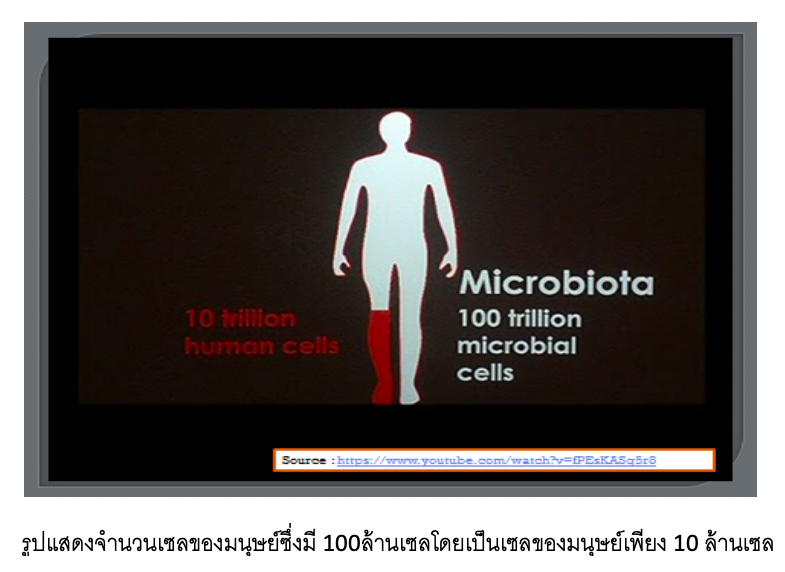
In 2003, the field of biotechnology (National Human Genome Research Institute) announced the success of mapping the human genome, which allowed us to easily and quickly differentiate human genetic codes from those of surrounding organisms. This led to a significant increase in research related to genes or genetic codes in humans, animals, plants, and microorganisms. One surprising finding is that over 90% of all human cells are microbial cells (Microbiome). This fact has profound implications for medicine and nutrition, as deeper studies reveal that most of the chemicals responsible for human immunity are produced by the microorganisms in our bodies. This suggests that we may not know ourselves well enough, as while we can identify these microbial groups, we still cannot culture them effectively to study their life cycles. This is something we need to continue to monitor.
Are Humans Truly the Smartest Species on Earth?
Since the Earth was formed 4.6 billion years ago, we have firmly believed that our species is the most evolved and intelligent, capable of inventing numerous things and creating technologies that enhance our daily lives. Conversely, some argue that in the past 200 years, humans have consumed natural resources equivalent to what was used in the previous 200,000 years. It has been noted that we have depleted the Earth's natural resources by more than one and a half times.
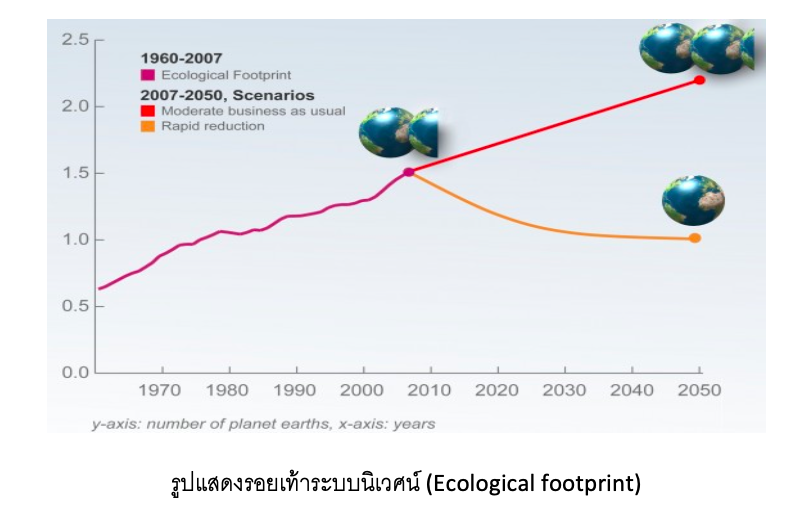
Source: https://www.greenprophet.com/2012/02/ecological-footprint-measure/
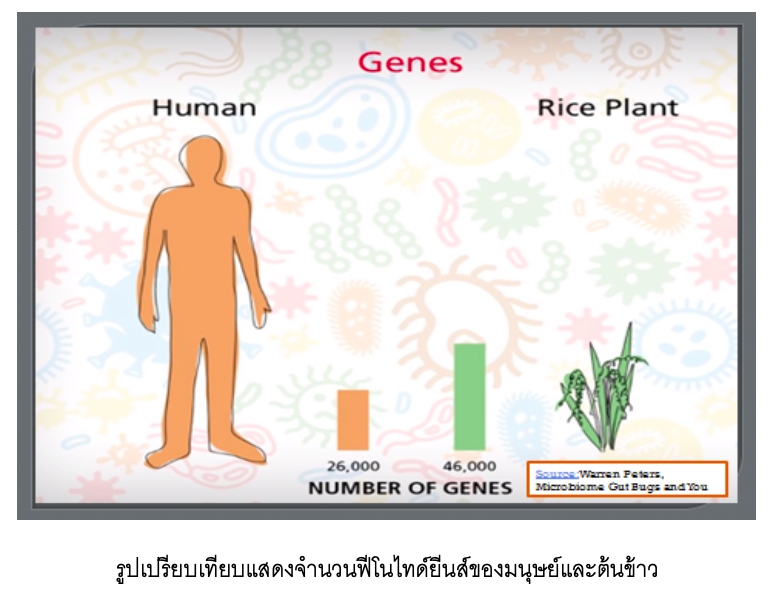
This leads to the Gaia Theory by James Lovelock, which posits that the Earth is a living entity with self-regulating mechanisms. When imbalances occur in the Earth's systems, the Earth has automatic mechanisms to adapt. Whether the unpredictable natural disasters and epidemics we face today are related to this theory remains unconfirmed. Nevertheless, the phrase The Revenge of Gaia will linger in our memories for a long time, as we begin to lose confidence in ourselves. This is further emphasized when comparing the phenotypic genes (genes that express genetic traits) of humans with rice, where it is found that rice has nearly twice as many genes as humans, confirming the complexity of life, indicating that rice is more complex than we are.
Regarding the capabilities of plants, there have been efforts to study them for quite some time. The first person to conduct such studies was Charles Darwin, who wrote a book titled Power of Movement in Plants. Today, there are ongoing efforts to understand plants better, as seen in Daniel Chamovitz's book What a Plant Knows, which explains the mechanisms by which plants respond to stimuli such as sight, sound, touch, and smell, providing us with a new perspective on plants. However, all these experiments merely confirm the abilities of plants in ways that human senses can perceive. In reality, there are many things in this world that exist beyond human sensory capabilities, which plants may be able to sense better than we can.
Plants and Mutual Dependence (Endosymbiosis Theory of Lynn Margulis)
If we were to ask which species could go extinct and the world would still survive, the answer would clearly be Homo Sapiens or humans. We take advantage of our dominance over this planet while neglecting the consequences that follow. If this continues without any corrective measures, the Gaia mechanism will undoubtedly operate in a way that we cannot stop.
As for the appropriate mode of existence, Charles Darwin's theory of evolution can serve as a starting point for easier understanding. This theory has been confirmed to some extent, with many scientists stating that changes can occur more rapidly than Darwin suggested. Currently, the term Epigenetics, or above genetics, is being discussed more frequently as it refers to rapid changes in response to environmental conditions. If we were to ask who has a lesser ability to adapt sustainably and impact their surroundings, humans or plants, it must be said that plants have had this process for a long time, while we have only recently come to understand the mechanisms of Epigenetics. The mechanisms of plant functioning are based on Lynn Margulis's principles, proposing a new model of interdependent relationships among living beings, where there is no destruction of one another but rather coexistence, with one organism becoming an organ of the main organism and living together forever through generations.
With this concept, humans, as the top of the food chain, must reconsider whether what is happening to us today is right for this world. What model will allow this world to thrive? We already know that this world can survive without humans and other animals. So what should we look to as an example? The answer is to look to plants, which convert carbon dioxide into oxygen to sustain all living beings on this planet. When they die, they decompose into nutrients for the Earth. When the environment becomes unsuitable, they adapt, changing leaves into thorns or reducing leaf size, for instance. These actions should be enough to prompt humanity to pause and reflect on our surroundings, to not hold ourselves and our kind as supreme, because we, humans, animals, plants, and the environment, are all equally important members and components of this world.
A recommendation for the current tense situation is to start growing plants or vegetables for consumption, beginning with soil preparation, care, harvesting, and seed collection. If we begin to engage in these processes ourselves, we will see that what we cultivate is not just a single plant but the cultivation of the completeness of humanity that truly understands the system of mutual dependence, just as plants have shown us for millions of years.