When Chinese Agents Get Caught in the Thai Real Estate Trap: Stay or Leave?
When Chinese Agents Get Caught in the Thai Real Estate Trap: Stay or Leave?
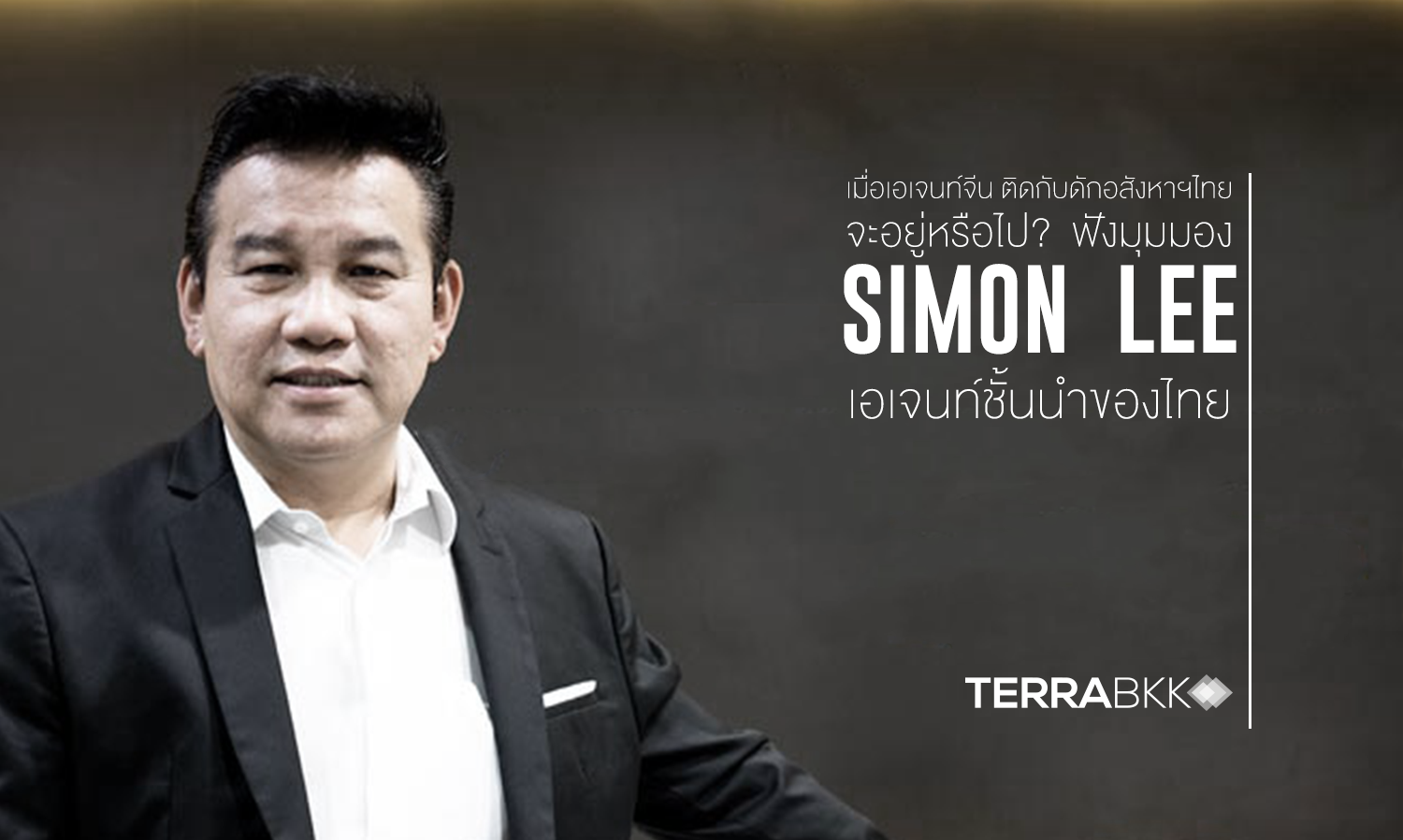
Listen to the perspective of “Simon Lee,” a leading agent in Thailand.
Over the past 4-5 years, it can be said that it has been a golden era for the Thai real estate business, particularly in condominium investments. The prices are relatively affordable compared to condos abroad, and they offer high returns, attracting both Thai and foreign investors, especially from China, who have heavily invested in Thailand. This has led to a booming Thai condo market with strong sales, prompting developers to continuously launch new projects to meet demand.
However, as the real estate market cycle has reached saturation, supply has outstripped demand, and prices for condos in some central locations have become unaffordable for many buyers. Similarly, the purchasing power of consumers has diminished, making them hesitant to spend. Although the situation is not as dire as the 1997 bubble crisis, it is clear that this year is no longer a golden year for the real estate business. Therefore, sustaining the business amidst various challenges has become a crucial mission for developers, who must deploy strategies to navigate this fierce competition. The Bank of Thailand's LTV measures are also a significant factor trapping the real estate business and directly impacting Thai investors!
On the other hand, foreign investors, who previously flooded into the Thai real estate market during the boom years, are now feeling the effects of the global economic downturn and currency fluctuations, which influence their purchasing decisions. Mr. Simon Lee, Chairman of Angel Real Estate Consultancy Co., Ltd. (ARE), a leading marketing and sales consultancy in Thailand, particularly in the foreign quota sector, noted that over the past four years, sales of condos to Chinese clients have steadily increased, with annual sales to foreign clients reaching over 20-30 billion baht. However, sales began to falter in 2018 as property developers raised prices and introduced more new condos, while Chinese clients started comparing locations, project types, and prices, which were often higher than those for Thai buyers, making it harder for agents to sell and leading them to promote condos in other countries instead.
The main issues causing Chinese clients to withdraw from the Thai real estate market include the depreciation of the yuan, while the Thai baht has appreciated by 25%, along with the China-U.S. trade war, which has led Chinese consumers to slow down their spending and investment. Additionally, the oversupply of condos and high selling prices have resulted in property price differentials of less than 20%, and rental yields before tax are only around 3-4%, causing a decline in Chinese investors.
At the same time, Thailand lacks clarity regarding short-term rental investments, as some investors prefer short-term leasing, which is currently not permitted by law in Thailand. In contrast, other countries such as Japan, Cambodia, Turkey, Cyprus, Greece, and various European nations allow short-term rental businesses, prompting investors to shift their funds to countries that permit such operations, as they perceive better profitability compared to long-term rentals.
Despite the overall challenges facing the Thai real estate market, the company remains focused on selling properties in Thailand, believing that certain projects still have potential. They aim to identify projects favored by Chinese clients, who typically prefer mixed-use developments in prime locations such as Rama 9, Rama 3, Charoen Nakhon, Ladprao, and Ratchada. Simultaneously, the company must adapt to real estate markets in other countries like Japan, Cambodia, Turkey, and France, which are attractive for investment.
In Japan, the company has purchased single-family homes near JR Line stations, currently renting them out through Airbnb for 10,000-13,000 yen per night, primarily to tourists. They also have four condo projects in Osaka, totaling 200 units, with each building valued at 400-500 million baht, offering units of approximately 28 square meters at around 8-9 million baht, expecting annual returns of 6-8%. In Turkey, there are significant incentives, including price reductions and policies that grant Turkish citizenship to foreigners purchasing properties worth 8 million baht, which has attracted a large influx of investors.
Nevertheless, Mr. Simon Lee believes that the real estate agency business for foreign investors worldwide can continue to thrive despite the current global economic conditions. He anticipates that the Thai economy will recover by 2021, and next year will still be challenging for developers as they work to clear substantial stock. He believes that condo prices in central urban areas may need to be reduced by over 50% per square meter to facilitate sales, and if the Thai real estate sector can recover quickly, it will positively stimulate the overall Thai economy.