When China's Economic Growth Slows, It Affects Exports of Over 100 Countries Worldwide
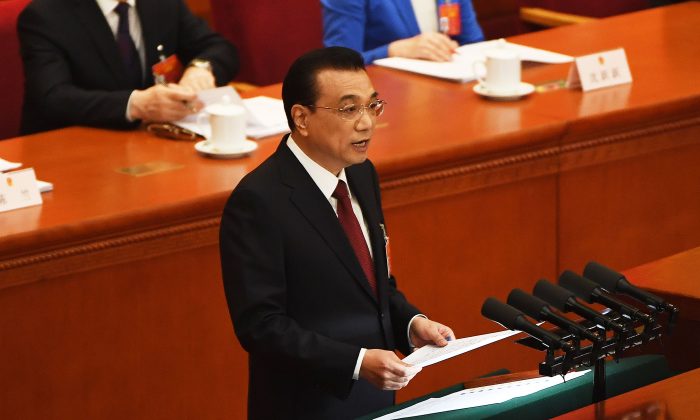
On Tuesday, March 5, during the annual meeting of the National People's Congress of China, Prime Minister Li Keqiang reported to the assembly that the Chinese government has set the economic growth target for 2019 at 6-6.5%, aiming for higher quality development amid increasing uncertainties in the international economy. However, since 2015, China's economic growth has remained below 7%, yet in 2019, China will still create over 11 million jobs in urban areas.
The Chinese government's decision to lower the economic growth target aligns with the World Bank's forecast, which indicates that in 2019, China's economic growth will slow to 6.3%, and in 2020, it will be at 6.2%, as industrial production and exports begin to decline.
Last January, the New York Times reported that China's economy is slowing more than the government has acknowledged. For instance, in the last quarter of 2018, China's economy grew by 6.4%, while the government's figures for the entire year of 2018 indicated a growth of 6.6%, the lowest rate since 1990.
The Role of China in the Global Economy
China has a highly integrated economy with the global manufacturing supply chain, more so than the economies of the United States and the European Union. Nicholas R. Lardy, a China expert at the Peterson Institute for International Economics, states that China is the largest import market for the exports of over 100 countries worldwide. For example, China is the largest export market for iron ore from Australia, and Chile exports the most copper to China.
Therefore, when China's economy slows down, it impacts the economies of over 100 countries, as imports from China will decrease. China is the second-largest importer in the world, after the United States, but its imports are more diversified across countries than those of the U.S. The International Monetary Fund (IMF) estimates that if China's economy grows by 1% less, global economic growth will decrease by 0.25%. If China's growth aligns with that of developed countries, at 2% per year, global economic growth could drop by as much as 1%.
On March 8, the South China Morning Post reported on research from Capital Economics, stating that in the next decade, China's economic growth will slow to 2% per year, which is lower than the forecasts of other economic institutions. Capital Economics noted that China is becoming just another "ordinary emerging economy."
Capital Economics indicated that over the past decade, China's economic growth has halved. In the next decade, if China continues to grow amid structural issues, growth will also halve. The structural economic problems in China include inefficient infrastructure spending, state-owned enterprises still dominating, private companies lacking investment sources, and a growing debt burden. Since 2012, the working-age population (ages 16-59) has been declining, with a drop of 4.7 million people in 2018.
The slowdown of China's economy will significantly impact Asian countries, as Asian economies are linked to China through the global supply chain. In 2017, a World Bank study indicated that 60-70% of global trade is related to the global production network, involving the trade of parts and semi-finished products across borders before being assembled into finished goods. China is thus one of the few developing countries deeply integrated into the global value chain.
Factors for Past Success
To understand the future growth of China's economy, it is essential to comprehend the factors that contributed to its rapid expansion over the past 40 years. From being a poor country in 1978, it has become the second-largest economy in the world. In an article titled Can China’s High Growth Continue? by Rischard N. Cooper, published in the book The China Questions (2018), seven factors are discussed that enabled China's economy to grow at rates exceeding 10% for 30 consecutive years.
The first factor is the change in the resource allocation system from state planning in a socialist system to reliance on market mechanisms. This means that households and businesses make their own decisions regarding consumption and investment based on the prices of various goods, which are influenced by supply and demand, as well as domestic prices linked to global market prices.
The second factor is the change in China's policies from isolation to integration into the global economy, starting with the establishment of special economic zones to promote export-oriented production. Additionally, China encouraged foreign investment, both through joint ventures and wholly foreign-owned enterprises. The initial goal was to earn foreign currency, followed by the import of technology, marketing skills, and management expertise into China.
The third factor driving China's economic growth comes from leveraging the skills of overseas Chinese, who became a bridge between mainland China and global markets. Overseas Chinese entrepreneurs understood which products would sell well in global markets, especially in the U.S. and Europe, and knew the market channels, leading to the success of China's foreign trade. Thus, in the early stages, investments in special economic zones came from Chinese individuals in Hong Kong, Taiwan, and elsewhere.

The fourth factor is what analysts call the demographic dividend —the proportion of the working-age population in China (ages 16-64) compared to the total population. In 1990, this proportion was 66% and peaked at 74% in 2012. As this working-age population entered the workforce, it significantly boosted economic growth, both in overall economic growth and per capita income.
The fifth factor that plays a crucial role in driving China's economy is the migration of labor from agriculture to more productive sectors. This phenomenon is common in poor countries where most labor is in agriculture with low productivity, except during planting and harvesting seasons. In 1980, 70% of Chinese labor was in agriculture, while by 2016, it had dropped to below 30%. Studies indicate that this labor migration contributed to China's economic growth by 1.1-1.3% per year.
The sixth factor is China's high savings and investment rates —some of the investment comes from state-owned enterprises and local governments, but a significant portion comes from new companies established in various cities. For example, investments in housing for workers in cities with rising incomes, infrastructure investments, and essential urban services such as water supply, roads, electricity, and transportation. Another part involves intercity transport systems, such as the construction of ports, airports, highways, and railways.
And the final factor is education —since the 1950s, China has implemented a policy of free primary education, enabling farmers to achieve basic literacy. By the mid-1980s, China expanded free education to the secondary level, and higher education institutions began to accept more students. By 2016, approximately 30% of Chinese youth had a university education, compared to only 2% in the early 1980s.
Negative Aspects of Previously Positive Factors
The seven factors mentioned above have led to rapid economic growth in China. Will these factors continue to play a significant role in China's economic growth in the future? The article Can China’s High Growth Continue? states that, except for the factor of education, the other factors will play a diminishing role in driving China's economy. Today, China has successfully transitioned to a market-driven economy, with exceptions in banking, energy, and telecommunications. Therefore, economic reforms are likely to have less impact on China's economic growth compared to the past.
China's foreign trade will also contribute less to economic growth. From the 1980s to 2010, China's exports in dollar terms increased by 17% annually, making it the world's largest exporter. In the future, China's export growth is expected to slow to 5-7% per year, aligning with the global economic growth rate.
The demographic dividend has also peaked in 2012, when the proportion of the working-age population compared to the total population reached its highest point. Since then, this proportion has been declining, indicating an increase in the aging population in China. The share of agricultural labor in China is now below 30% of the total labor force. In the future, labor migration from agriculture will still contribute to economic growth, but not as significantly as in the past.
The Chinese government is aware of the weakening of these factors and has referred to a "new normal" growth rate. The 13th Five-Year Plan (2016-2020) sets an average growth target of 6.5% per year, focusing on innovation as a key driver for future growth and establishing a new balance in the economy, shifting from reliance on exports and investment to increased domestic consumption.
The article Can China’s High Growth Continue? suggests that if China's economy grows below 6.5% in the next decade or falls below 5% in the future, this should not be seen as a failure, as the slowdown in growth is a result of fundamental changes in the economic landscape, not due to policy failures.
References
Can China’s High Growth Continue? Richard N. Cooper, in The China Questions: Critical Insights into a Rising Power, edited by Jennifer Rudolph and Michael Szonyi, Harvard University Press, 2018. The State Strikes Back, Nicholas R. Lardy, Peterson Institute for International Economics, 2019. China growth to slow to 2 percent over next decade, South China Morning Post, March 8, 2019.
Thank you for the information from thaipublica.org