Opening Economic Borders: Exploring the Impact of Trade Wars on the Heart of AEC + China
As the winds of change blow fiercely from the two global powerhouses, the United States and China, the economy in Southeast Asia must stand firm amidst unpredictable tremors. The report "AEC + China Update – June 2025" serves as a masterful painting by an expert artist, carefully applying shades of the Asian economy with precision and depth.
China: Standing Firm Amidst Turbulent Waves
Despite China's GDP growth of around 4.2%, the tremors from the trade war have made the economic picture appear more fragile. Domestic consumption is slowing, retail sales are stagnant, and some industrial sectors are clearly decelerating. Although financial stimulus measures, such as interest rate cuts, have been continuously implemented, the results have not fully restored purchasing power.
The United States: Tariffs, Technology, and Bargaining Power
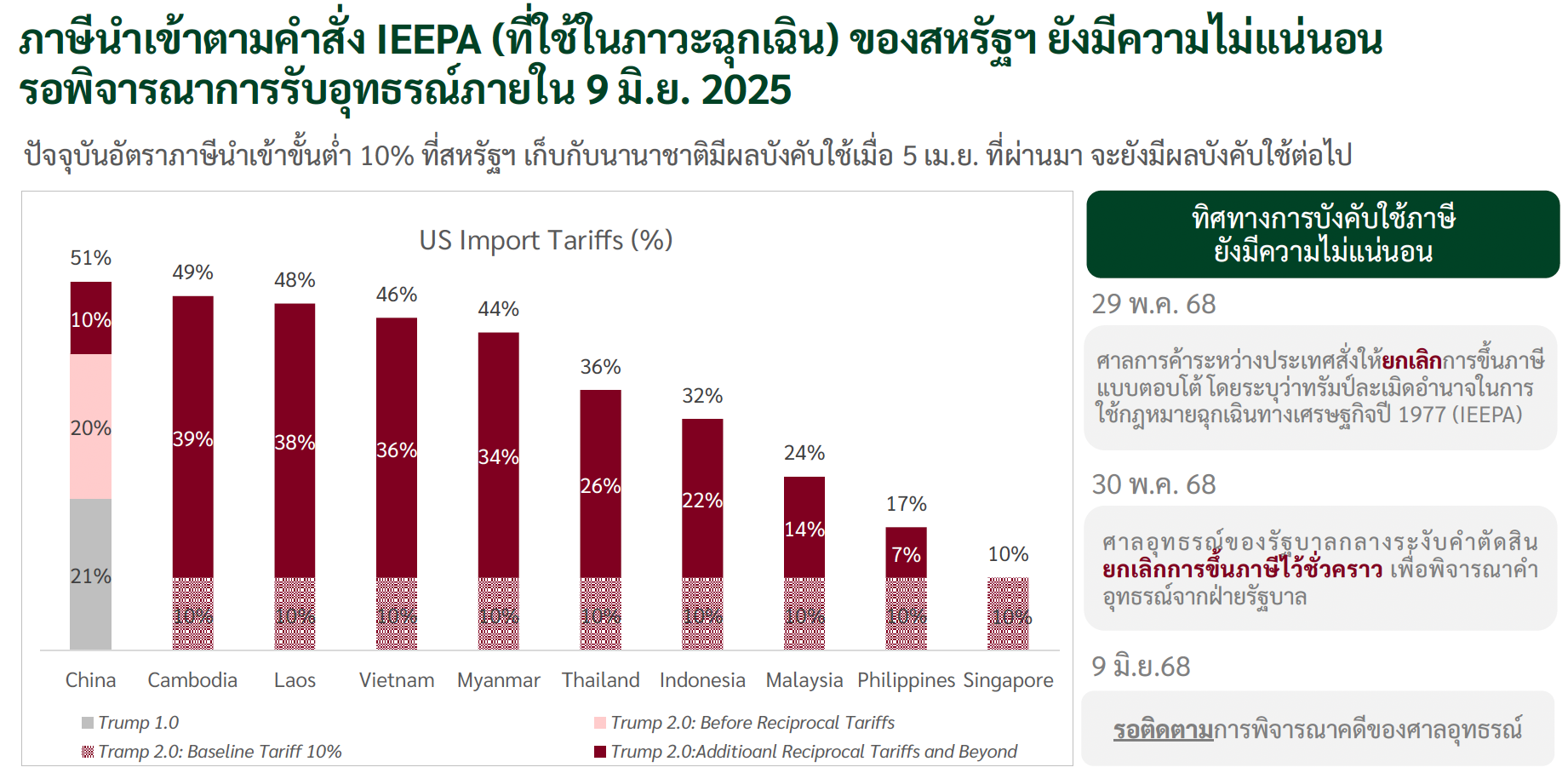
Even with a temporary 90-day tariff reduction agreement, the United States remains steadfast in its original stance. Import tariffs remain high, and the “De minimis” exemption for Chinese goods has been revoked, causing online product costs to soar by up to 300%. Additionally, measures to restrict AI chips from Huawei have impacted the global technology supply chain.
Indonesia: Proactive Adaptation Amid Slowdown
The economy grew only 4.87% in the first quarter, the lowest in three years. Indonesia has opted for a proactive strategy, reducing interest rates to 5.50% and relaxing Local Content requirements to 25% to attract investment. It is also accelerating trade negotiations with the United States regarding essential imports.
Vietnam: A Rising Star in the Shadow of Trade Wars
Vietnam has benefited from electronics exports to China, South Korea, and the United States during the tariff relaxation period. Meanwhile, the tourism sector is booming, with tourist numbers expected to reach 22 million this year, contributing 7.3% to GDP. Despite facing low reserves and a weakening dong, the overall outlook remains bright in a new dimension.
Cambodia: Fruits, Trade Conditions, and Energy Challenges
Cambodia is ramping up its exports, particularly of durian directly to China and ASEAN, while opening trade negotiations with the United States to reduce tariffs on key goods. However, it simultaneously faces backlash from AD/CVD measures that have surged to 3,521% on solar panels from the United States.
Laos: Balancing Energy and Debt Burden
Although inflation has slowed to 8.3%, pressure from foreign debt and a still-weak currency has led to rising energy costs, particularly electricity. Laos must also contend with balancing its budget amidst increasing energy demands.
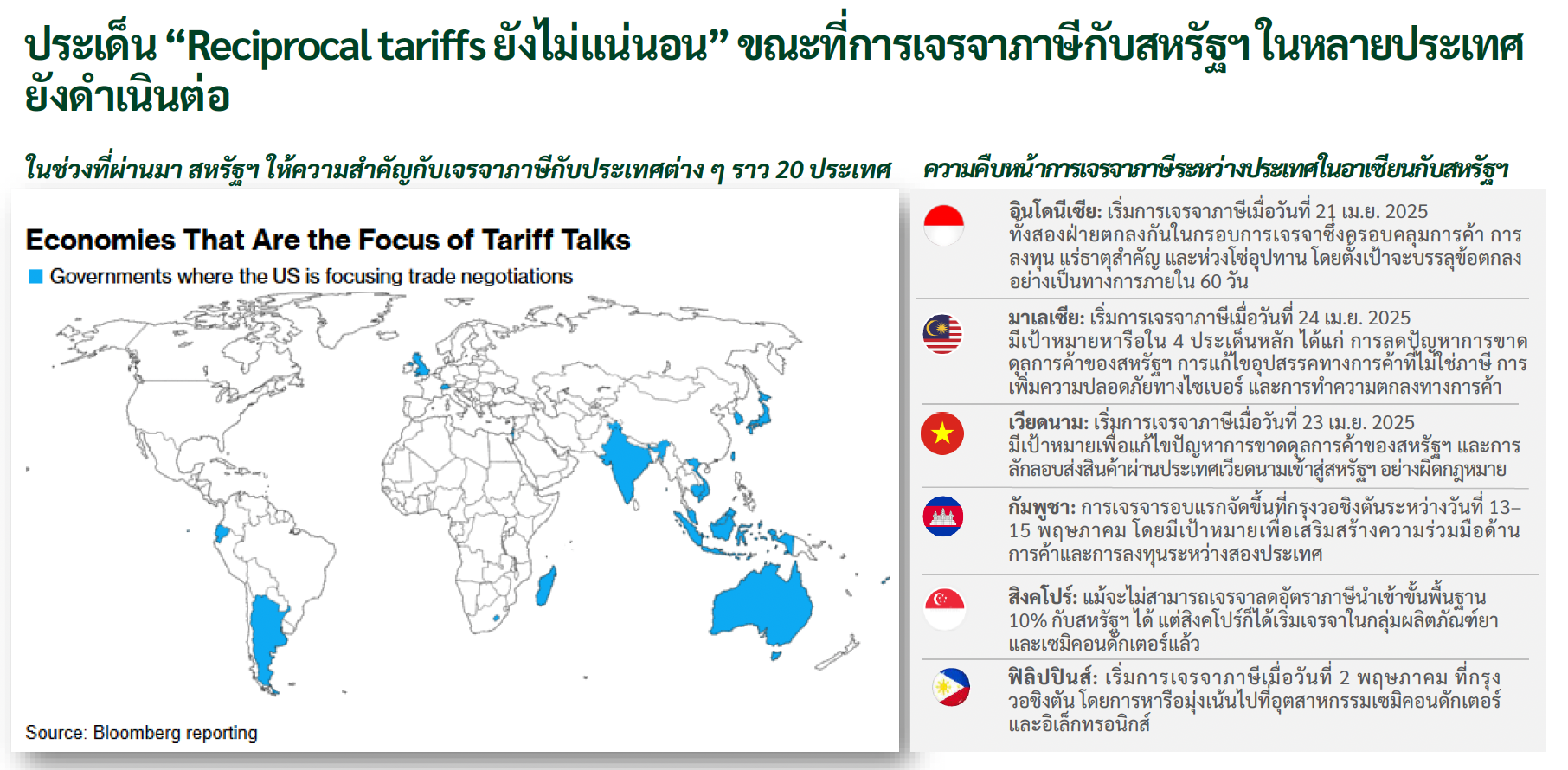
Regional Issues: ASEAN Uniting in a New Direction
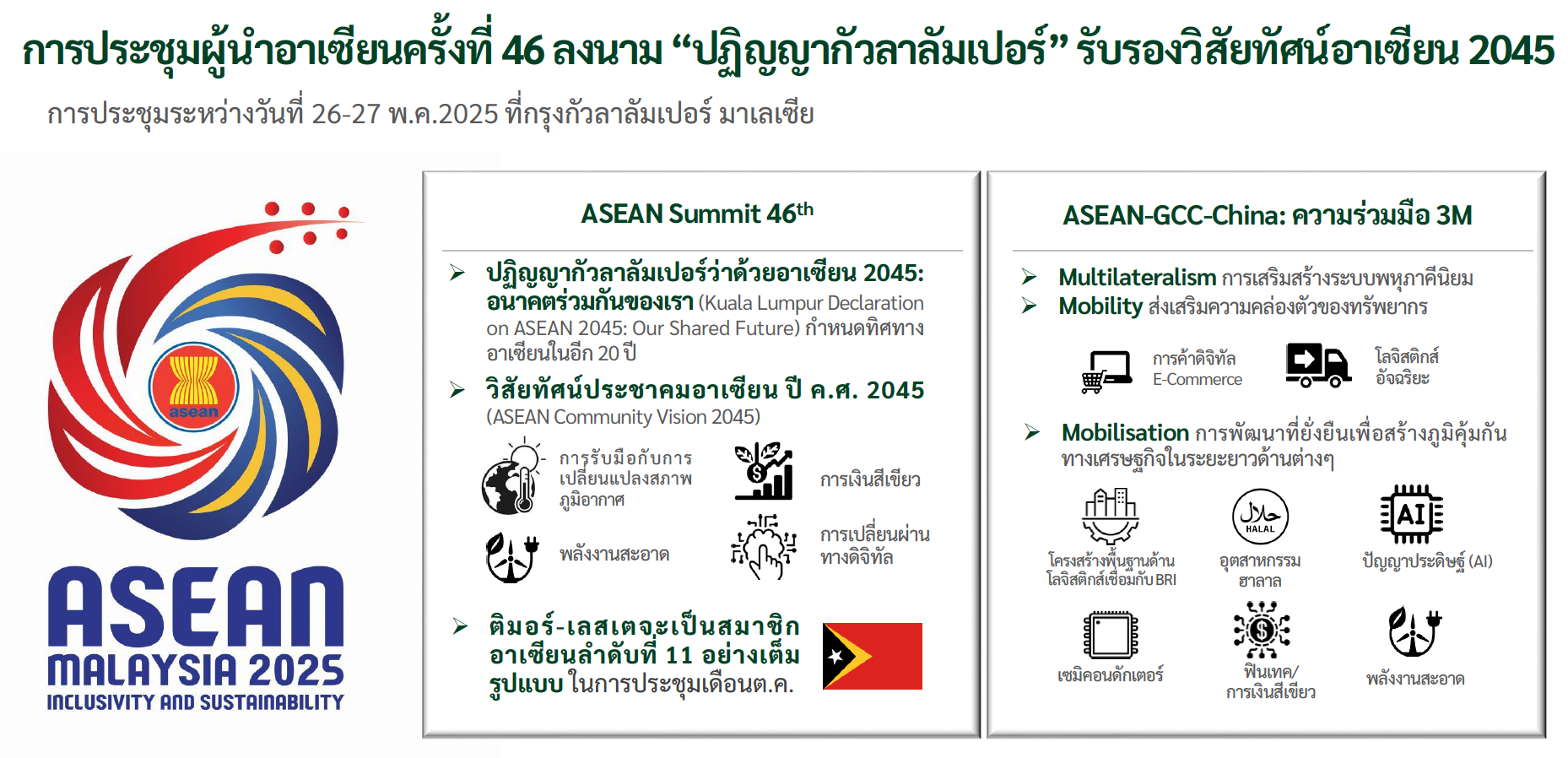
The 46th ASEAN Summit in Malaysia announced the ASEAN 2045 vision, emphasizing multilateral cooperation, digital trade, smart logistics, clean energy, and fintech technology, with Timor-Leste joining as a new member. Meanwhile, cooperation with China and the GCC continues to expand towards a green economy front.
Conclusion: Standing Firm in the Waves of Globalization
By 2025, the AEC has transformed from a follower to a bold player, adapting proactively and employing sharp negotiation strategies. Southeast Asia's economy is no longer just a cog in the global machine but has become the core of a new transformation that demands attention.