Summary of the Economic Situation in ASEAN-China Amidst Pressure from the US Trade War
1. New Trade War: The US, China, and ASEAN
-
The US has announced the implementation of Reciprocal Tariffs, imposing tariffs on Chinese goods as high as 145%, along with several ASEAN countries such as Thailand (36%), Vietnam (46%), and Cambodia (49%).
-
Mainly Affected Products include solar cells, particularly from Vietnam, Thailand, Malaysia, and Cambodia, which face tariffs as high as 3,521.14%.
-
ASEAN countries are accelerating trade negotiations with the US, with Vietnam proposing to reduce tariffs to 0%, while Thailand is suggesting an increase in imports from the US.
2. Economic and Export Impacts
-
It is projected that Reciprocal Tariffs will reduce the GDP of various countries by 2025:
-
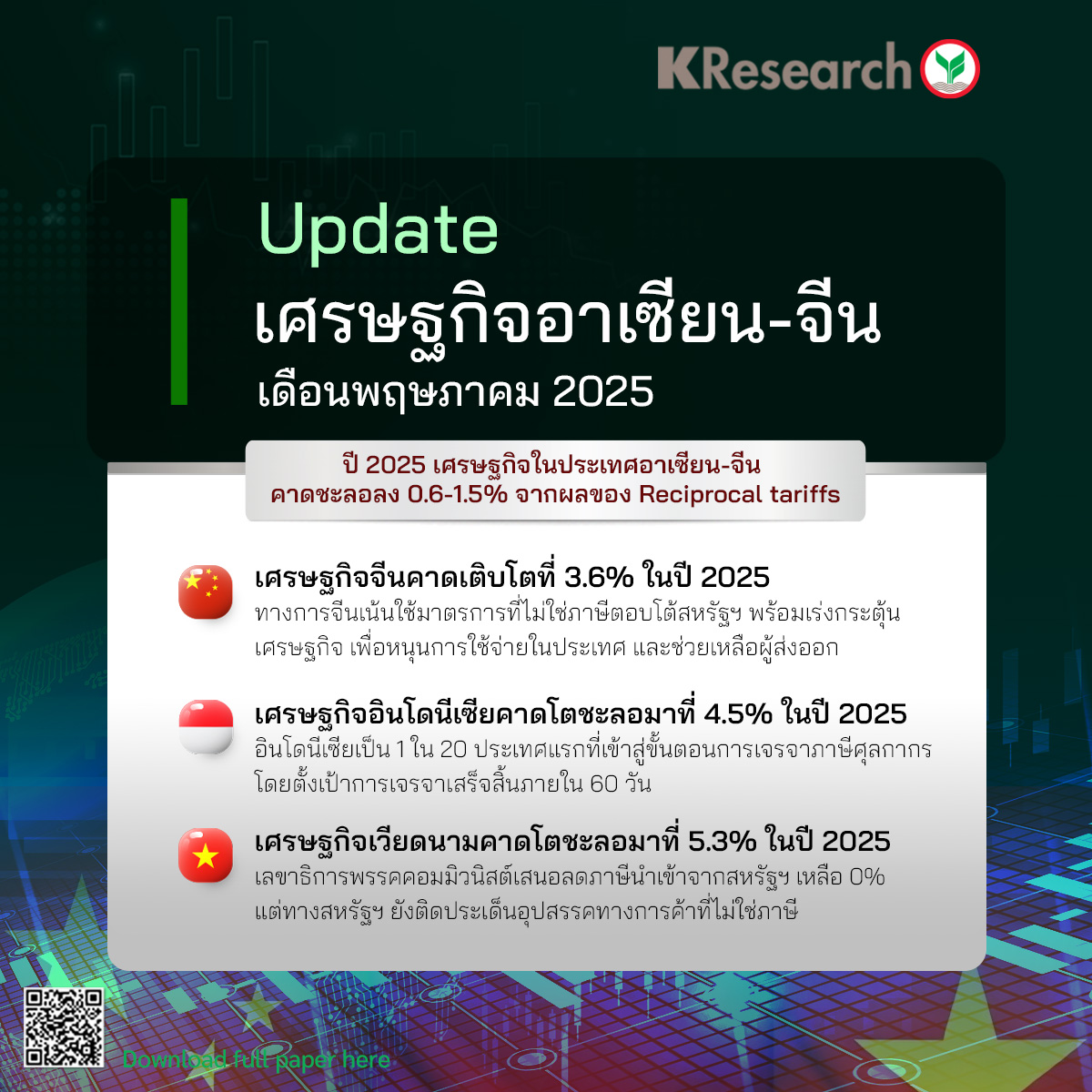
Vietnam: -1.5%
-
Cambodia: -1.4%
-
Thailand: -0.8%
-
China: -1.0%
-
-
Vietnam is expected to be the hardest hit, as it heavily relies on exports to the US (29% of total exports).
-
This could result in Vietnam's economy growing only 5.3% in 2025, down from an initial forecast of 6.8%.
3. China's Reaction: Countermeasures
-
China has raised tariffs on US goods to as high as 125% and has implemented non-tariff measures such as:
-
Restricting the export of rare earth minerals.
-
Sanctioning US companies.
-
Cancelling orders for products such as Boeing airplanes and pork.
-
-
This has led to the yuan depreciating significantly, the worst in 10 years.
-
The Chinese government is therefore injecting liquidity and may lower policy interest rates, along with issuing special bonds to stimulate the economy.
4. Status of Foreign Direct Investment (FDI) from China in ASEAN
-
ASEAN is the second main destination for FDI from China, after Hong Kong.
-
Vietnam, Malaysia, and Cambodia are the top three countries receiving the most investment in ASEAN, accounting for 22%.
-
Notable projects include the Kunming-Haiphong high-speed railway and the expansion of cooperation under the Belt and Road Initiative.
???? Case Study: Indonesia and Vietnam
Indonesia
-
GDP is expected to slow down to 4.5% in 2025 due to:
-
Reciprocal tariffs from the US at 32%.
-
The rupiah depreciating significantly, the worst in Asia.
-
Investor concerns regarding the Danantara Sovereign Fund, despite being one of the largest wealth funds in the world.
-
-
The government needs to implement measures to stabilize the currency, capital markets, and expedite trade negotiations with the US.
Vietnam
-
Although it previously benefited from the relocation of production from China during the Trump trade war 1.0, this new round has hit hard.
-
Solar cells are facing tariffs as high as 813.92%, making exports nearly impossible.
-
Trade issues are not limited to tariffs but also include Non-Tariff Barriers such as changes in product origin and intellectual property issues.