Investment Opportunities in ACMECS: Expanding Thai Distribution Businesses into a Seamless Regional Market of Four Countries
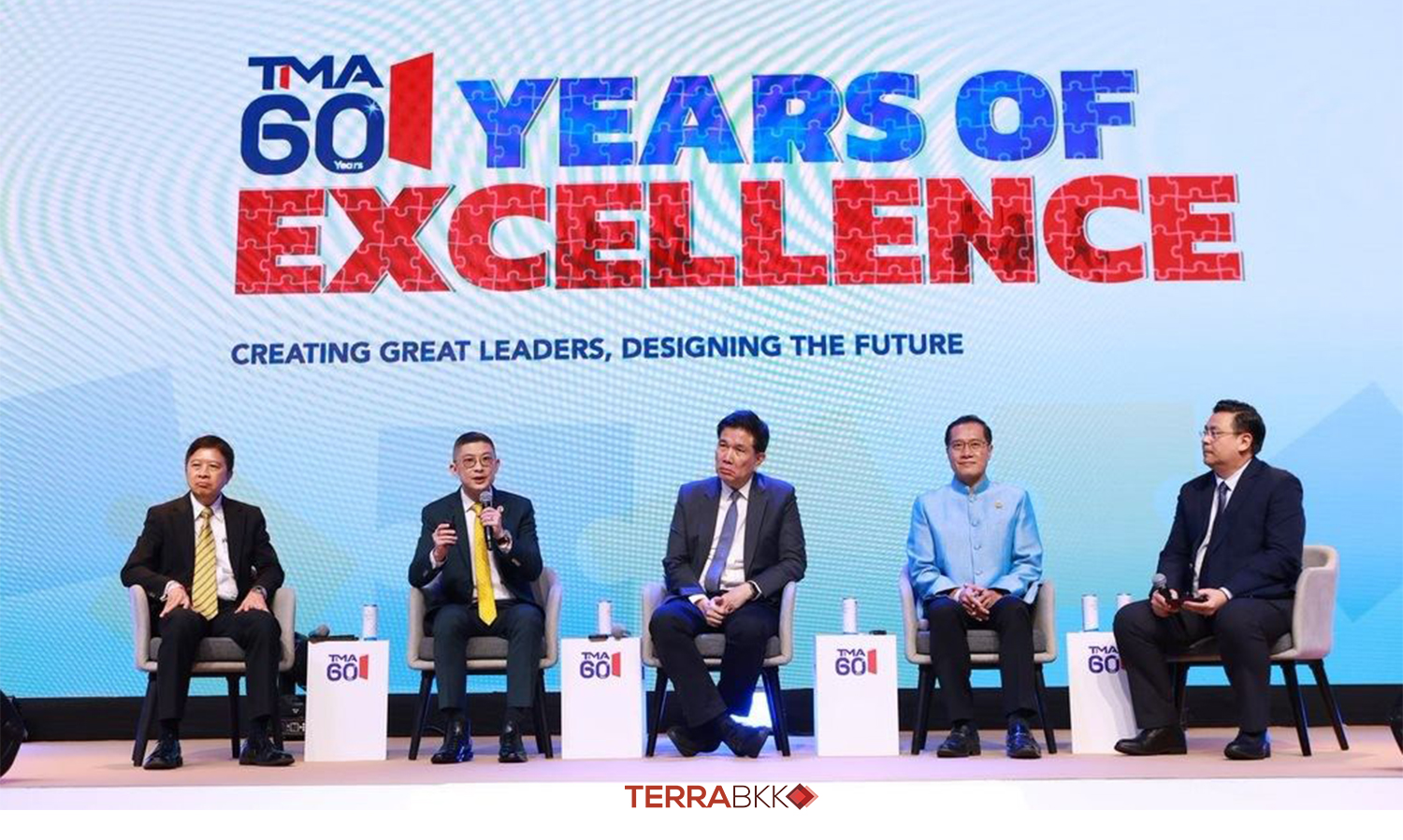
At the seminar "Towards The Prosperous ACMECS" organized by the Thailand Management Association (TMA) in collaboration with the Thailand Convention and Exhibition Bureau (TCEB), part of the 60 YEARS OF EXCELLENCE event, the Thai private sector urged the government to accelerate economic cooperation in the Irrawaddy-Chao Phraya-Mekong region, or ACMECS (Ayeyawady-Chao Phraya-Mekong Economic Cooperation Strategy), which includes Thailand, Myanmar, Laos, Cambodia, and Vietnam. The aim is to foster equitable growth at the sub-regional level while expanding economic growth globally.
Dr. Pasu Loharjun, Chairman of the Thailand Convention and Exhibition Bureau (Public Organization) stated that ACMECS is a sub-regional economic cooperation that began in 2003 and has now lasted for 21 years. It serves as a crucial platform for driving the economies of the five member countries, contributing to regional development and sustainable growth amidst changes in technology, geopolitics, demographics, and climate conditions that impact each country's economic progress. Sub-regional cooperation like ACMECS is essential for enhancing sustainable development efficiency among member countries.
Mr. Montree Dechasakulsom, Deputy Permanent Secretary of the Ministry of Transport mentioned that a key goal of ACMECS cooperation is to enhance trade and investment capabilities among the five member countries, which collectively have a population of over 230 million. In the past, there have been collaborations and agreements to develop the potential of these countries, including a five-year master plan (2019-2023) established during a meeting in Bangkok in 2018, focusing on three main development goals: Seamless Connectivity, Synchronized ACMECS, and Smart and Sustainable ACMECS.
To achieve seamless connectivity in the sub-region, the Ministry of Transport has been enhancing infrastructure development to connect transportation among member countries via land, water, and air, promoting trade and investment. Thailand has invested in dual-track railways to connect northern Thailand, including the Den Chai-Chiang Khong route (167 km), Chachoengsao-Kaeng Khoi route (106 km), Jira-Khon Kaen route (157 km), Nakhon Pathom-Hua Hin route (169 km), and Lopburi-Pak Nam Pho route (148 km), along with high-speed rail investments of 253 km from Bangkok to Nakhon Ratchasima and 356 km from Nakhon Ratchasima to Nong Khai, as well as high-speed rail connecting three airports, facilitating transportation links to neighboring countries.
Additionally, the development of water transport systems includes the 114 billion baht investment in Laem Chabang Port, along with land transport improvements to create road networks connecting to neighboring countries and enhancing domestic airports to accommodate growing travel demands, thereby fostering trade and investment growth at the sub-regional level.
“Thai Private Sector” Accelerates Investment in ACMECS to Support Sub-regional Connectivity
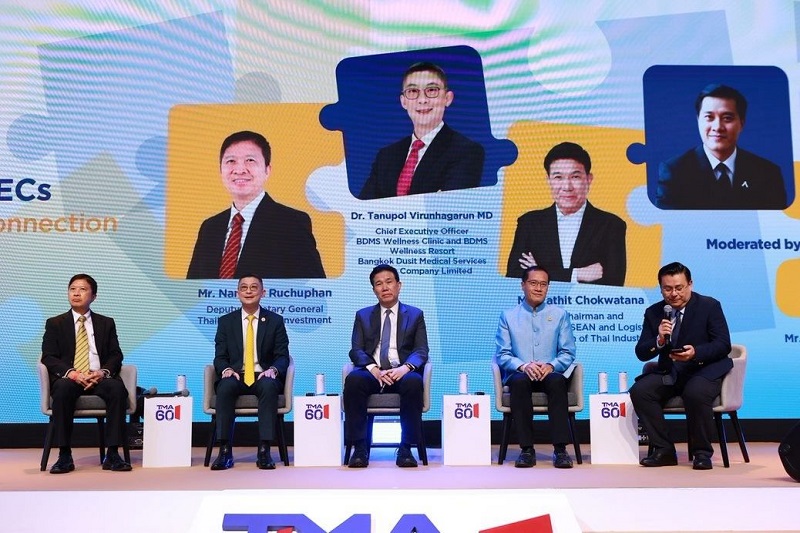
Mr. Narucha Ratchuphan, Deputy Secretary-General of the Board of Investment (BOI) stated that ACMECS provides increased investment opportunities for Thai businesses in member countries. Currently, the BOI supports foreign businesses investing in Thailand and encourages Thai businesses to invest abroad, particularly in ACMECS countries. Training programs have been established for Thai investors to invest overseas, with over 300 participants from the BOI investing in ACMECS countries. “Expanding investments from Thailand to sub-regional countries is part of fostering regional economic growth, strengthening and growing together, and addressing economic disparities, contributing to Synchronized ACMECS and Smart and Sustainable ACMECS,” he added.
In the Wellness business sector, Dr. Tanupol Virulhakanun, CEO of BDMS Wellness Clinic and BDMS Wellness Resort, Bangkok Dusit Medical Services Public Company Limited, revealed that ACMECS member countries, with a combined population of over 230 million, present a significant opportunity for collaborative business development, especially in the Wellness sector, which is experiencing a global growth rate of 9% per year, with a market value projected to reach 6.3 trillion USD by 2024 and 8.5 trillion USD by 2027. When focusing solely on Wellness Tourism, the market value is expected to reach 651 billion USD by 2024.
The growth of Wellness Tourism is a significant opportunity for the ACMECS sub-region, as the member countries possess essential elements for developing Wellness Tourism together, including natural and environmental resources suitable for relaxation, diverse herbal health foods, service and hospitality capabilities, rich cultural heritage, and quality medical services. If we can drive ACMECS to become a center for Wellness Tourism development, it will create growth opportunities in the region, Dr. Tanupol stated.
Building Connections Towards Sustainable Development
Associate Professor Dr. Piti Srisangnam, Executive Director of the ASEAN Foundation emphasized that the importance of ACMECS lies in accelerating growth and reducing disparities in economic growth rates in this vital sub-region. Although ACMECS has been established for 21 years, a clear framework for action has only been developed in the past six years, with the first work plan established in 2018 leading to a five-year master plan from 2019 to 2023. Investments have been made to connect transportation systems among member countries, discussing joint economic development amidst increasing geopolitical conflicts leading to regional economic tensions, notably the economic interests conflict between China and the United States, which has shifted from free trade concepts to increased trade barriers. Sub-regional cooperation like ACMECS will strengthen the region.
“The current economic driving concepts must emphasize economies of scale to attract trade and investment, along with the speed of economic movement and considerations of business scope. This includes eliminating middlemen, establishing appropriate supply chain systems, and considering environmental, ethical, and governance issues in business. These elements are crucial for driving ACMECS towards becoming a connected and sustainably growing sub-regional cooperation,” the Executive Director of the ASEAN Foundation stated.
Mr. Warit Rattanachuen, Assistant Governor for Research, Innovation, and Business Development at the Electricity Generating Authority of Thailand (EGAT), mentioned that EGAT is currently investing in Laos and Myanmar to develop alternative energy or green energy. In its investments, EGAT prioritizes development and mutual growth, considering the different development levels of regional members. When investing in each country, EGAT designs its investments to align with the varying environments, gradually developing neighboring countries to reduce disparities and achieve equitable development in the future.
Mr. Wasit Taepaisitpong, CEO and Managing Director of Betagro Public Company Limited, stated that Betagro is currently investing in Myanmar and Laos with the goal of creating sustainable investments in neighboring countries, including developing sustainable agriculture in Thailand and the neighboring countries where it invests. The ACMECS cooperation framework aids in expanding and creating markets in the sub-region, which has a population of over 230 million.
“The approach to creating sustainable agriculture in Thailand and the sub-region is crucially focused on developing effective irrigation systems, establishing quality and efficient farmer groups or cooperatives, and having good central markets for management. When these three components are in place, sustainable agriculture can thrive in both Thailand and the ACMECS sub-region, making ACMECS a valuable cooperation framework for joint sustainable agricultural development,” Mr. Wasit stated.
Dr. Benjarong Suwankhiri, Deputy Managing Director of the Export-Import Bank of Thailand, noted that the ACMECS sub-region is significant, with trade with Thailand accounting for about 9% of Thailand's annual trade value. Sub-regional cooperation is part of fostering mutual growth among member countries in economic, social, and environmental aspects, especially regarding environmental issues that require regional collaboration amidst global warming challenges.
“Currently, the bank is providing loans for several projects investing in ACMECS. Thailand serves as an important financial market for member countries in the sub-region, which must continue to develop together, particularly in the financial transaction systems among member countries, especially developing QR Code Payment systems between countries to standardize financial systems, which will enhance growth rates and economic development among member countries,” Dr. Benjarong concluded.