KBank Private Banking Reveals Real Estate Investment Strategies Amid Challenges, Highlighting Investment Opportunities and Land Utilization That Property Owners Need to Know
KBank Private Banking emphasizes that economic factors significantly impact real estate prices. They organized a seminar titled “Is Real Estate on the Decline? How to Handle Challenges in 2024” to update and analyze perspectives on whether real estate prices are indeed declining this year, how land can be utilized effectively, and to explore opportunities for generating income from held land through the Land Loan for Investment product, which converts land into investment loans. Jones Lang LaSalle (Thailand) (JLL), the largest global real estate service provider in the country, joined in to discuss opportunities for land utilization, ensuring that high-net-worth clients with land and real estate holdings, or those interested in investing in the real estate sector, are well-informed and prepared to respond appropriately.
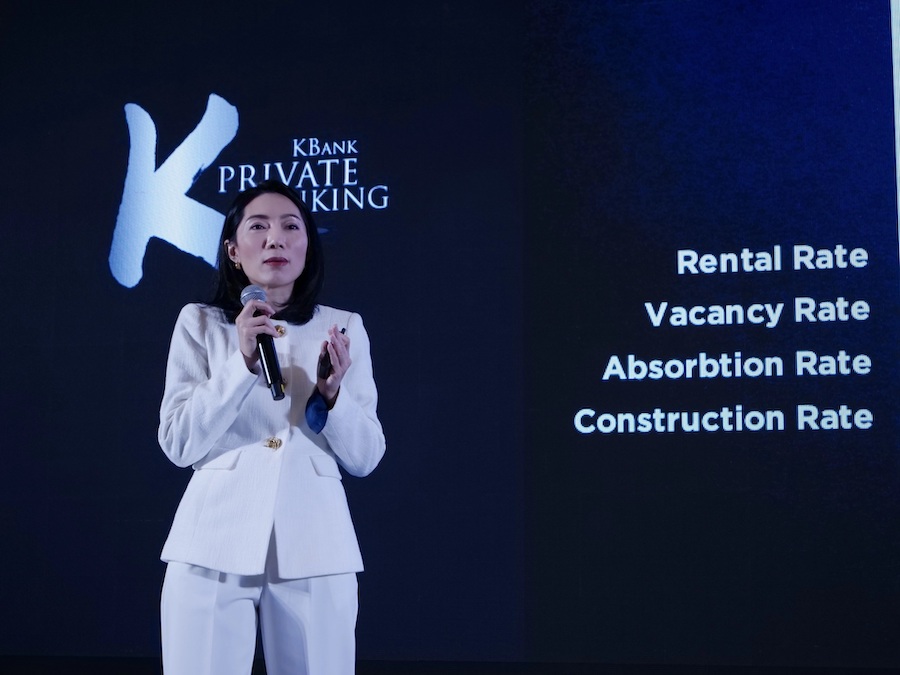
Mrs. Korakot Attasukulchai, Executive Director, Head of Non-Capital Market Solutions, Private Banking Group at KBank, revealed that the overall Thai real estate market this year faces challenges similar to those in the broader economy and other businesses, with five factors that present both opportunities and challenges worth noting:
1. Supply Saturation: Surveys indicate that 90% of land is utilized for residential development. However, the housing market is saturated, with developers having 240,000 units for sale while only 80,000 buyers are looking to purchase each year. Additionally, there is an increasing amount of land ready for development entering the market due to transportation network developments, such as roads and railways, alongside a significant amount of land owners looking to sell due to the impacts of land tax burdens.
2. Decreased Domestic Demand: Domestic purchasing power is declining due to high household debt levels, real estate prices being high relative to income, and elevated interest rates. Furthermore, the demand for land from developers and speculative investors has also decreased due to market conditions and the costs associated with holding land and tax burdens.
3. Foreign Demand: The recovery of tourism, long-term residency demand due to conflicts abroad, and the relocation of production bases to Thailand have allowed related businesses to grow well, presenting increasing opportunities over the past year.
4. Market Dominance by Major Players: Many real estate business sectors face high barriers to market entry due to the need for capital, data, and expertise, resulting in fewer market players. The entry of new players is challenging, giving major players high bargaining power, especially in land transactions during periods of low demand and high supply.
5. Rural Land Potential: In some locations with government development policies, speculation has arisen, increasing demand for agricultural land and awareness of carbon credits, leading to more land being used for reforestation. However, speculative investment in land remains high-risk due to the clarity of various projects still being in the early stages.
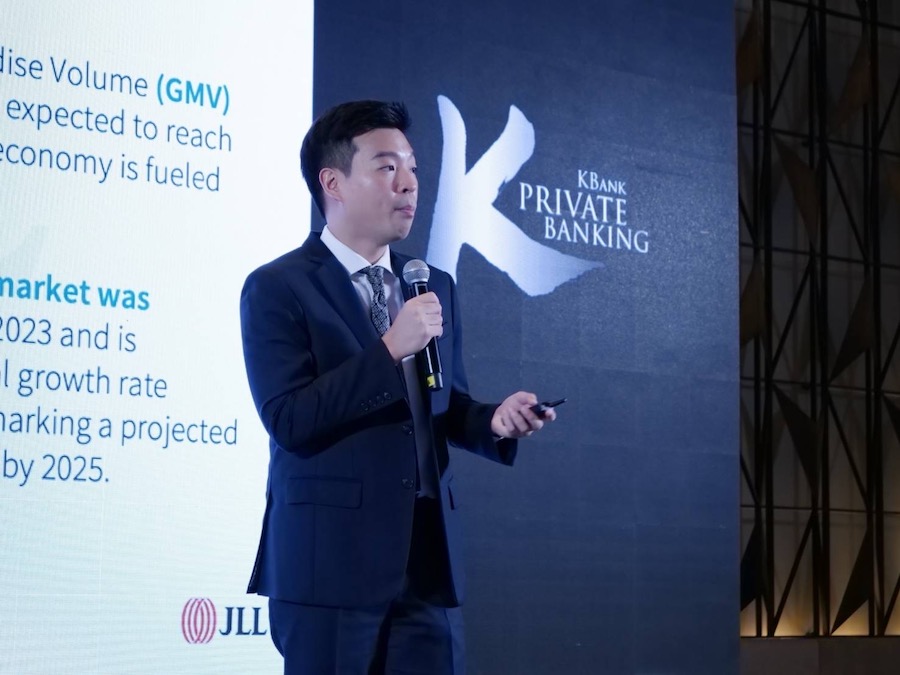
Mr. Anavil Chiamprasert, Head of Research and Consulting Services at Jones Lang LaSalle (Thailand) Limited (JLL), discussed opportunities for Thai real estate, noting that while the overall economy is still in a slowdown, consumer confidence and spending have recovered from last year. The tourism sector is expected to welcome over 40 million foreign tourists in 2024, positively impacting real estate, including hotels and shopping malls located in tourist and commercial centers. Additionally, JLL anticipates continued growth in the warehouse, factory, and industrial land markets due to the expansion of the e-commerce market post-COVID-19 and the relocation of production bases from China to Southeast Asia, with Thailand being a key destination for investors and competitive in attracting high-value industrial investments, particularly in the Eastern Economic Corridor (EEC). Meanwhile, the housing market in Bangkok and its vicinity continues to face challenges from high-interest rates, directly affecting projects priced below 5 million baht due to liquidity issues and reduced purchasing power, resulting in a continuous upward trend in rental prices for condominiums and apartments in urban areas.
Recently, new projects entering the market are predominantly large mixed-use developments that integrate various types of space utilization, including shopping centers, office buildings, hotels, and residences, to meet the demands of buyers and renters who now prefer convenience in living, working, and engaging in activities within project areas. There is also an effort to create project selling points, such as pet-friendly concepts, health and wellness activities, and, most importantly, environmentally friendly projects, which will help attract customers sustainably.
Moreover, there are new opportunities for alternative real estate, such as data centers for storing hardware and software for cloud services, healthcare centers, research and development centers for drugs and vaccines, warehouses for personal or goods storage, cold storage for food, medicines, or other products, and international schools. Landowners and investors looking to develop various projects need to truly understand the specific real estate business to create business plans that align with rapidly changing demands in both the short and long term.
Mrs. Korakot concluded that with KBank Private Banking's experience in providing holistic real estate consulting services for over eight years, the bank understands the needs of landowners. Initially, the bank recommends that landowners organize their land portfolios to understand the potential of each plot to determine strategies for each location based on business needs and whether the land can be utilized effectively to reduce tax burdens. Therefore, assessing whether real estate prices are on the rise or decline depends on the market direction of each business type. However, as mentioned above, the overall trend in land development appears to be slowing, making it increasingly difficult to sell land or achieve expected prices. In some locations, it may be necessary to wait for greater potential and readiness, such as waiting for changes in zoning regulations, or some landowners may wish to hold onto land to pass on to their descendants. KBank Private Banking thus recommends that landholders who are not currently utilizing their land consider converting it into an investment to create returns that can help alleviate tax burdens and enhance wealth through the Land Loan for Investment product, which offers various investment options to generate returns from held land while still allowing landowners to use the land as usual, including short-term rentals. If they wish to sell the land, they can cancel the loan agreement at any time. However, investors should conduct thorough research or consult experts to foster growth for their assets and avoid investment traps.
For more information about the Land Loan for Investment product, details can be found on the KBank Private Banking website at https://kbank.co/3NrNbw9