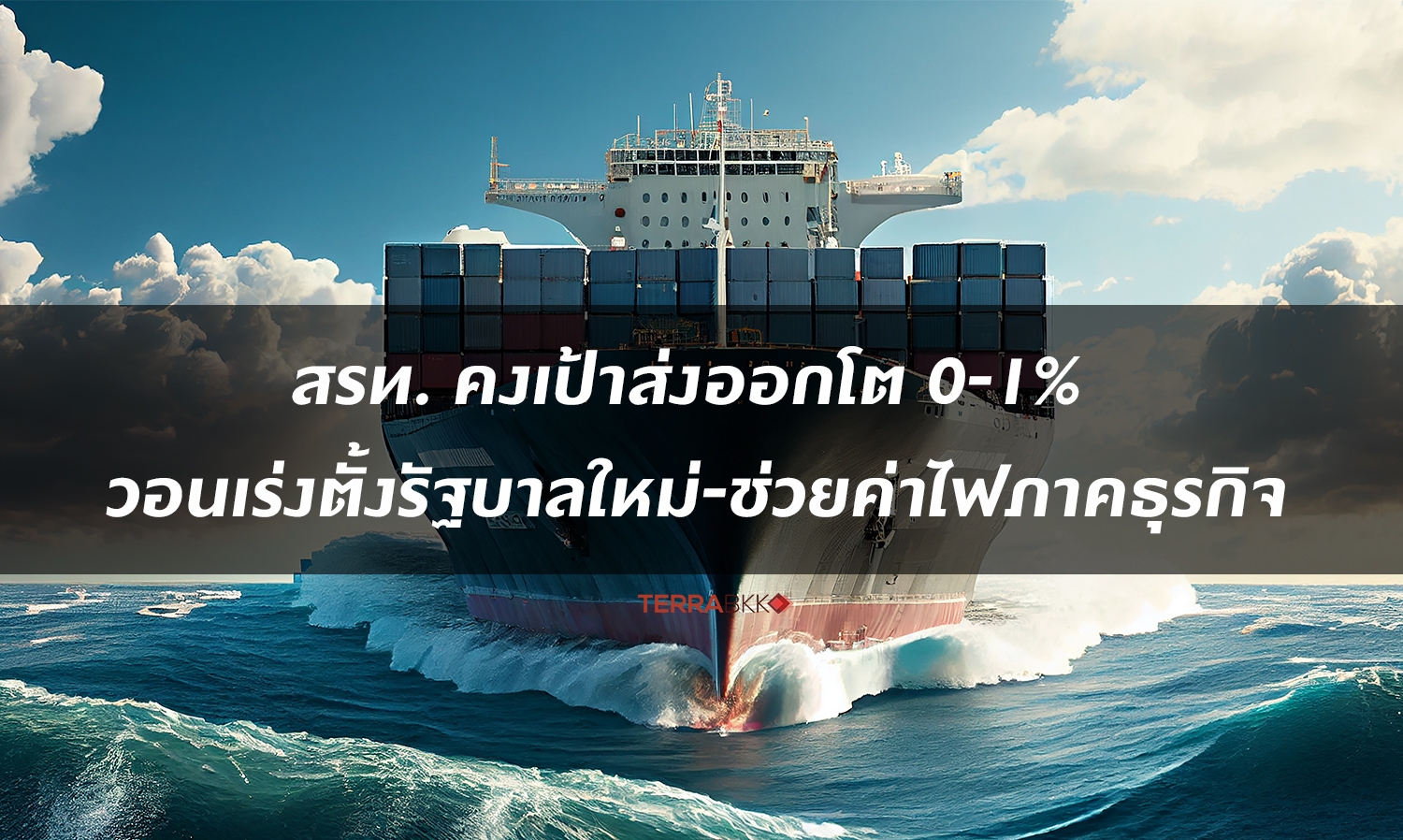
Thai Exporters Maintain 0-1% Growth Target, Urge Swift Formation of New Government and Support for Business Electricity Costs

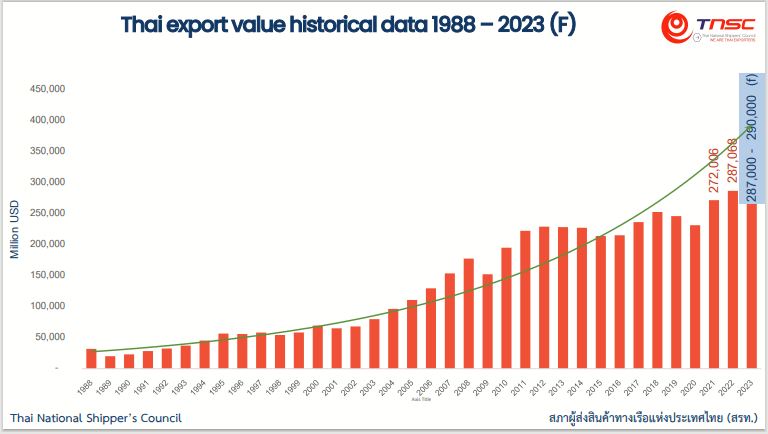
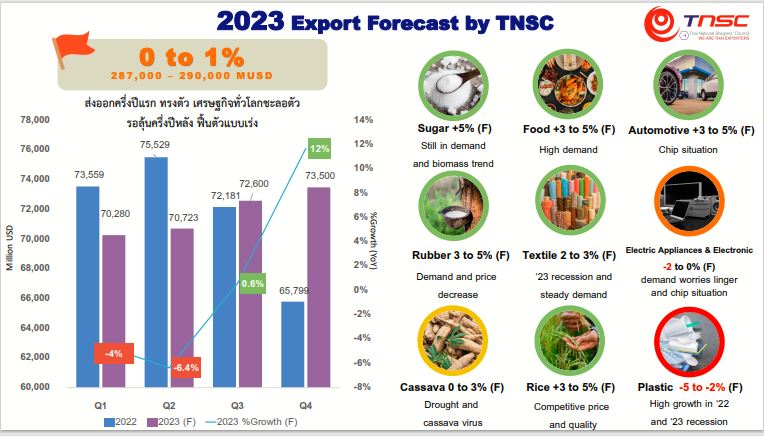
Dr. Chaiyan Charoensuk, President of the Thai National Shippers' Council (TNSC) stated that the TNSC is maintaining its export growth forecast for 2023 at 0-1% due to ongoing risk factors, particularly the delay in forming a new government, which may impact export promotion plans in the second half of the year and the overall economy of the country. Additionally, high electricity costs are affecting production costs, and climate change issues may impact the agricultural sector. The global economy continues to face significant uncertainties, with global interest rates remaining high, leading to an economic slowdown and increased borrowing costs for businesses. Meanwhile, trading partners still have high inventory levels, causing delays in new orders.
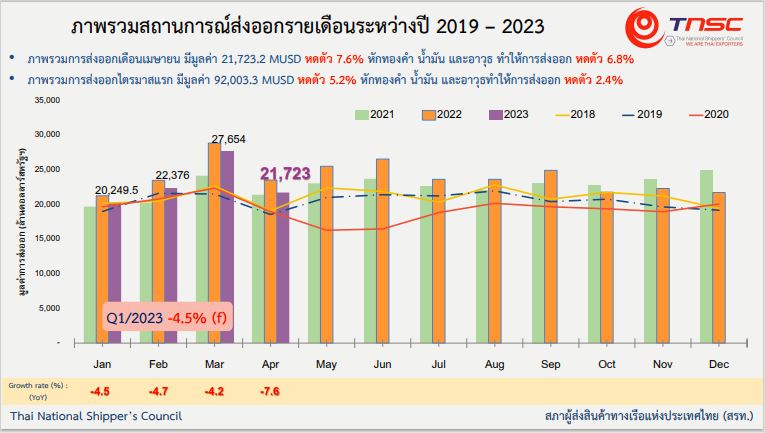
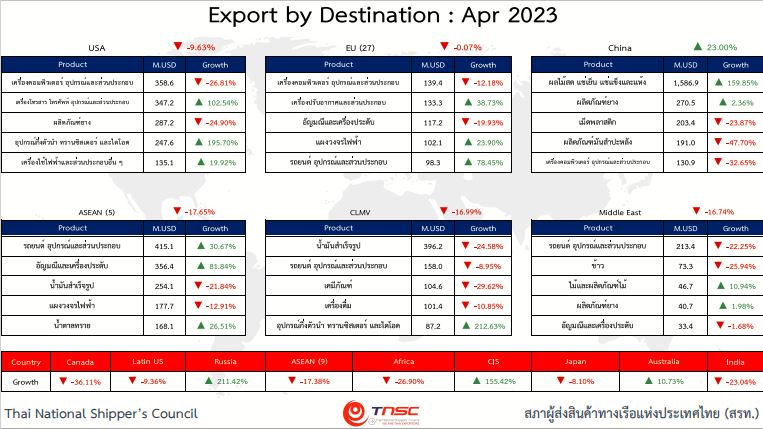
In April 2023, exports were valued at $21.723.2 billion, a decrease of 7.6% compared to the same month last year (YoY) (excluding gold, oil, and military equipment, exports in April contracted by 6.8%). Imports were valued at $23.195 billion, down 7.3%, with a value of 797.373 billion baht, a decrease of 5.4%, resulting in a trade deficit for Thailand in April 2023 of $1.471.7 billion or 59.584 billion baht.
For the overall international trade picture of Thailand from January to April 2023 (YoY), total exports amounted to $92.003.3 billion, a contraction of 5.2%, with a value of 3.110.977 trillion baht, down 2.2% (excluding gold, oil, and military equipment, exports during January - April contracted by 2.3%).
Imports were valued at $96.519.3 billion, a decrease of 2.2%, with import value in baht amounting to 3.305.763 trillion baht, an increase of 0.8%, resulting in a trade deficit for Thailand between January and April 2023 of $4.516 billion or 194.786 billion baht.
Nevertheless, the Thai National Shippers' Council urges the government to expedite the formation process to drive export plans and address the overall economic issues of the country. It also calls for prompt measures to manage electricity costs appropriately to mitigate the impact on rising production costs, which may disadvantage local businesses against key competitors. The Bank of Thailand should carefully consider adjusting the policy interest rate to avoid placing excessive burdens on SMEs.