Real Estate Sector Urges Government to Accelerate Infrastructure Development to Alleviate Congestion and Promote Economic Growth
The Chamber of Commerce highlights the hope for a rail system with 500 stations by 2029 as a turning point for real estate, enabling urban distribution of prosperity and reducing congestion, allowing people better access to housing. SCB reports strong demand for homes priced between 1-2 million baht and second-hand houses, while there are concerns about stockpiles of townhouses and duplexes priced between 3-6 million baht. Factors pressuring the market include inflation and household debt, which are dampening purchasing power. The government is advised to maintain LTV measures and reduce transfer burdens. Meanwhile, major developers worry that people's dreams of homeownership are at odds with their financial capabilities, suggesting that the government should develop housing for 2,700 overcrowded communities as a crucial foundation for the economy, helping to stimulate the grassroots real estate sector. The president of the Thai Condominium Association emphasizes Thailand's potential as a health hub to attract foreign businesses, tourism, work, and retirement.
.jpg)
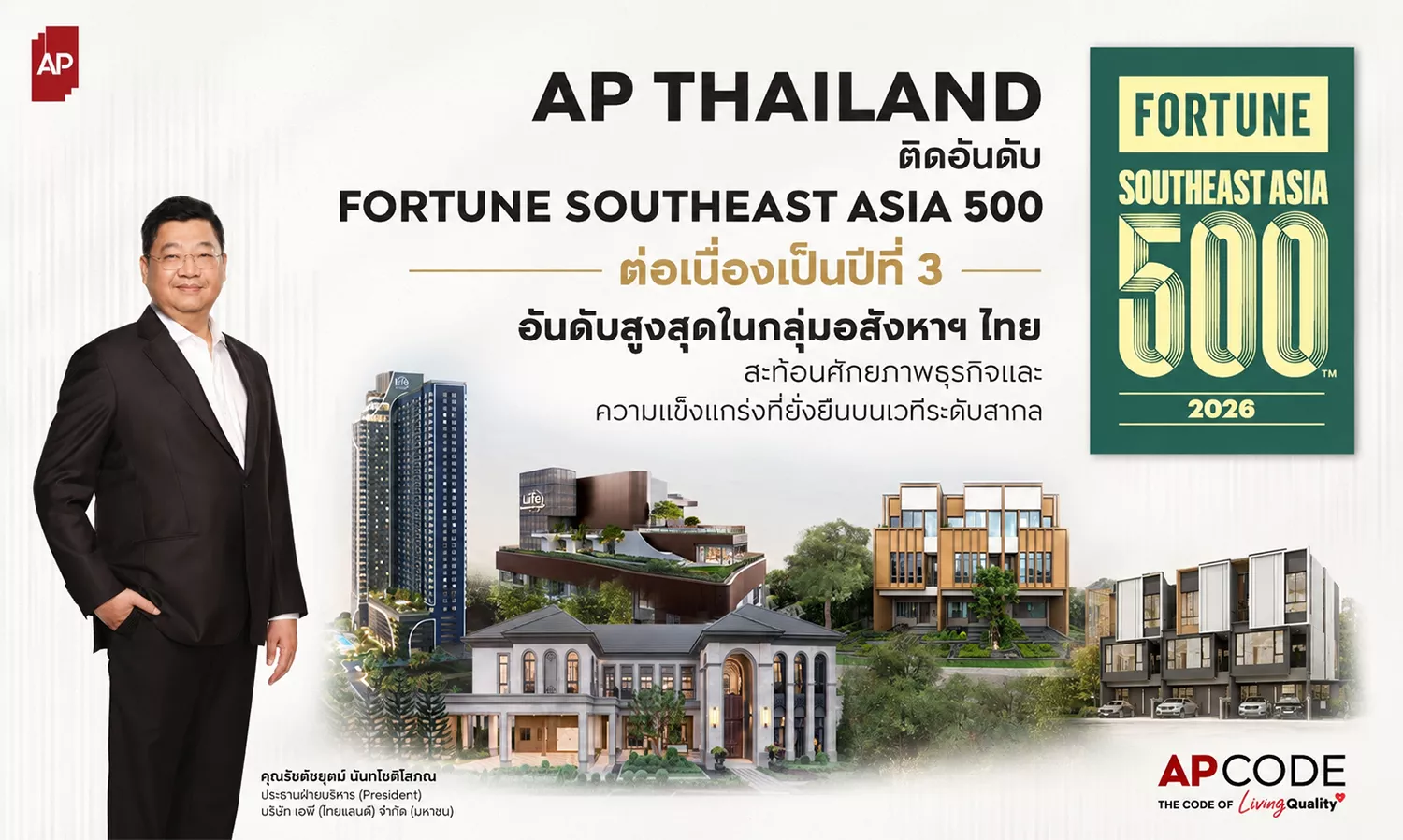
On September 21, 2022, during the annual seminar titled “Bangkok Quadrant: Transforming Bangkok into a New Era, Where Will Real Estate Go...?” organized by Prop2morrow Co., Ltd., insights were shared regarding trends in the real estate sector and legal issues affecting its growth. Mr. Isara Boonyang, Chairman of the Real Estate Business Trade Association, Design and Construction, and Honorary President of the Housing Development Association, revealed the overall real estate market in Bangkok and trends for 2023, stating that a significant factor that will transform real estate development in Bangkok for the first time in 70-80 years is the development of a rail system, which will replace car travel, increasing from over 100 stations currently to 500 stations by 2029. This presents a challenge for the government to prepare for systematic public transport development, thus promoting residential investment.
Simultaneously, urban planning should be revised to promote the decentralization of city centers throughout Bangkok, which is set to be announced in the next two years. This will significantly influence investors' decisions. If the existing model remains largely unchanged in suburban areas, improvements will be crucial for developers' investment decisions. Adjustments should include expanding the floor area ratio (FAR) to allow for development in nearby areas, which will help reduce density and promote urban distribution.
Condominiums are experiencing a 200% growth compared to last year. New project launches this year have increased across all categories, with condominiums seeing a growth rate of 200% compared to last year (2021), marking the highest growth in a decade since the flooding in 2011. This has positively impacted the condominium market, while horizontal properties have increased by 14%. Overall, this year, the real estate sector is expected to grow by at least 5% in terms of units and value compared to last year. “The COVID-19 pandemic over the past two years has caused the real estate market to grow slower than the economy, but it is fortunate that there are still transfer transactions, even though condominium transfers have decreased slightly, but not significantly. This year, it is expected that transfer volumes will not decline significantly and will remain stable. If the economy recovers, it can be sustained. What will stimulate home-buying decisions is the extension of property promotion measures, which will help stabilize the economy, such as waiving transfer and mortgage fees. Meanwhile, the second-hand housing market is expected to grow better than in previous years due to reduced consumer purchasing power and the need to address NPLs of financial institutions,” said Mr. Isara.
Regarding the trend of real estate purchases, recovery should involve opening new markets to foreign buyers, as well as relaxing regulations to allow foreigners to own land and creating long-term visas, which will help stimulate the overseas market and attract tourists back, providing a straightforward method to boost the market.
.jpg)
SCB indicates that demand in the 1-2 million baht segment continues to grow, while concerns arise over stockpiles of townhouses and duplexes priced between 3-6 million baht. Mr. Chethwat Songprasert, an analyst at the Economic Intelligence Center (EIC) of Siam Commercial Bank (SCB), views the real estate market this year and next year, noting that the economy is beginning to recover, leading to market growth compared to last year, with sales increasing by 30%. The segment that continues to perform well is condominiums priced at 1-2 million baht, while horizontal properties, including duplexes and townhouses, are experiencing declines. The segment expected to turn positive is single-detached houses, with projections for 2023 indicating continued gradual sales growth. The low-priced condominium market remains in demand, while single-detached houses priced between 6-10 million baht are still performing well.

In terms of transfer volumes, both in value and units, it is expected to increase by 4-5%, with the possibility of reaching 10%. Meanwhile, the transfer of first-hand residential properties, including condominiums and townhouses, is recovering but remains below pre-COVID-19 levels. “EIC has inquired about consumer demand and found that consumers primarily want horizontal properties, accounting for 40%, but the price range they are interested in is not exceeding 3 million baht. This reflects that the trend of buyers favors horizontal properties, but purchasing power leads them to choose condominiums first and then expand later. The rapidly growing market this year is the second-hand housing sector, as it is more affordable and located in similar areas to new properties, making it appealing due to lower price factors,” said Mr. Chethwat.
Positive factors for the economy next year are expected to improve as domestic purchasing power recovers, and if the government implements measures to stimulate sales through relaxing loan-to-value (LTV) ratios, extending the waiver of transfer and mortgage fees, and investing in infrastructure, particularly the expansion of the electric train system, it will stimulate real estate investment. However, negative factors hindering real estate growth include persistently high inflation and household debt, which impact consumer purchasing power and construction costs. Caution is needed regarding the high stock levels exceeding demand, and next year’s new launches will add to the accumulated stock in the market, particularly townhouses priced at 2-3 million baht and single-detached houses priced at 3-5 million baht. Trends influencing investment decisions and purchasing power include an aging society, technology, hybrid work, and social and environmental business practices, which are trends consumers are seeking from developers (ESG).
.jpg)
Sena Development highlights oversupply against market prices, urging urban planning adjustments to create stable housing for overcrowded communities. Associate Professor Dr. Kesara Thanyalakphak, Managing Director of Sena Development Public Company Limited (SENA), stated that overall demand this year remains below supply, leading to an oversupply situation. The market that is selling well is the segment priced at 1-2 million baht, prompting Sena to expand its condominium market in this price range instead of townhouses. It must be acknowledged that consumer demand does not align with the products developers can produce due to rising costs of land and construction materials, while the purchasing power of the public remains in the lower price range, which is a significant factor hindering market growth.
For the government to effect change in the real estate market and promote the decentralization of urban centers throughout Bangkok to develop housing prices that meet people's needs, urban planning must be adjusted to facilitate the distribution of development around Bangkok, helping to slow land price increases, which is another crucial cost factor. Another approach is to develop projects in overcrowded communities to accommodate the approximately 2,700 overcrowded communities in Bangkok, all of which are located in prime areas. This represents a significant labor market that can address urban development needs. Therefore, the government should seek ways to develop housing for those earning below 20,000 baht per month, or homes that low-income individuals can afford, which should be priced around 300,000 baht, creating an ecosystem that supports these individuals as a vital foundation for the economy. “Changing urban planning could lead to changes in the economy and land prices that are not the same as before. While it may not be possible to reduce land prices, it can help slow them down, which is better than taking no action at all. Homes and condominiums priced below one million baht have a market, but developers cannot develop them. Therefore, we must find ways to develop homes that are as accessible as possible to low-income groups,” said Associate Professor Dr. Kesara.
.jpg)
Origin suggests attracting foreigners to live in Thailand, positioning it as a wellness hub, and recommends developing leasehold apartments to meet the needs of low-income individuals. Mr. Pirapong Jaroonaek, President of the Thai Condominium Association, stated that in an era where real estate operators face overlapping crises from the COVID-19 pandemic to the Russia-Ukraine war, as well as changing economic power dynamics from the US and China, Thailand must find a suitable balance. A key issue in the current era is Thailand's aging society, which should leverage its strengths as a country with an open culture welcoming people from around the world and good hospitality to attract tourism. Therefore, it should encourage people to live in Thailand, including skilled workers, tourists, laborers, and retirees, to gain an advantage in attracting people globally to participate in the country's economic development. Furthermore, real estate developers should collaborate with health businesses to promote Thailand as a wellness destination, welcoming all nationalities, especially Europeans, Americans, and Chinese, who were significant buyers of real estate in Thailand before COVID-19 and are looking to invest, leading to living, healthcare, and second homes. Thus, laws should be developed to support long-term property ownership.
In the post-COVID real estate market, it must be acknowledged that prices have dropped to levels comparable to five years ago, even though land prices have not adjusted, particularly in prime urban areas where prices have increased by up to 20%. This presents a challenge for real estate businesses in project development, even for suburban projects where the average price used to be no more than 20,000 baht per square meter (sqm), but now has risen to 30,000-40,000 baht per sqm, necessitating expansion into farther locations, making it impossible to develop townhouses at previous price levels. Developers may need to shift to condominium development instead.
A solution for developers is to develop long-term rental apartments for low-income groups, which meets the urban demand, allowing for products priced at 3,000 baht per month. This can be achieved by raising funds through selling completed projects into REITs to generate capital and create value for the projects.