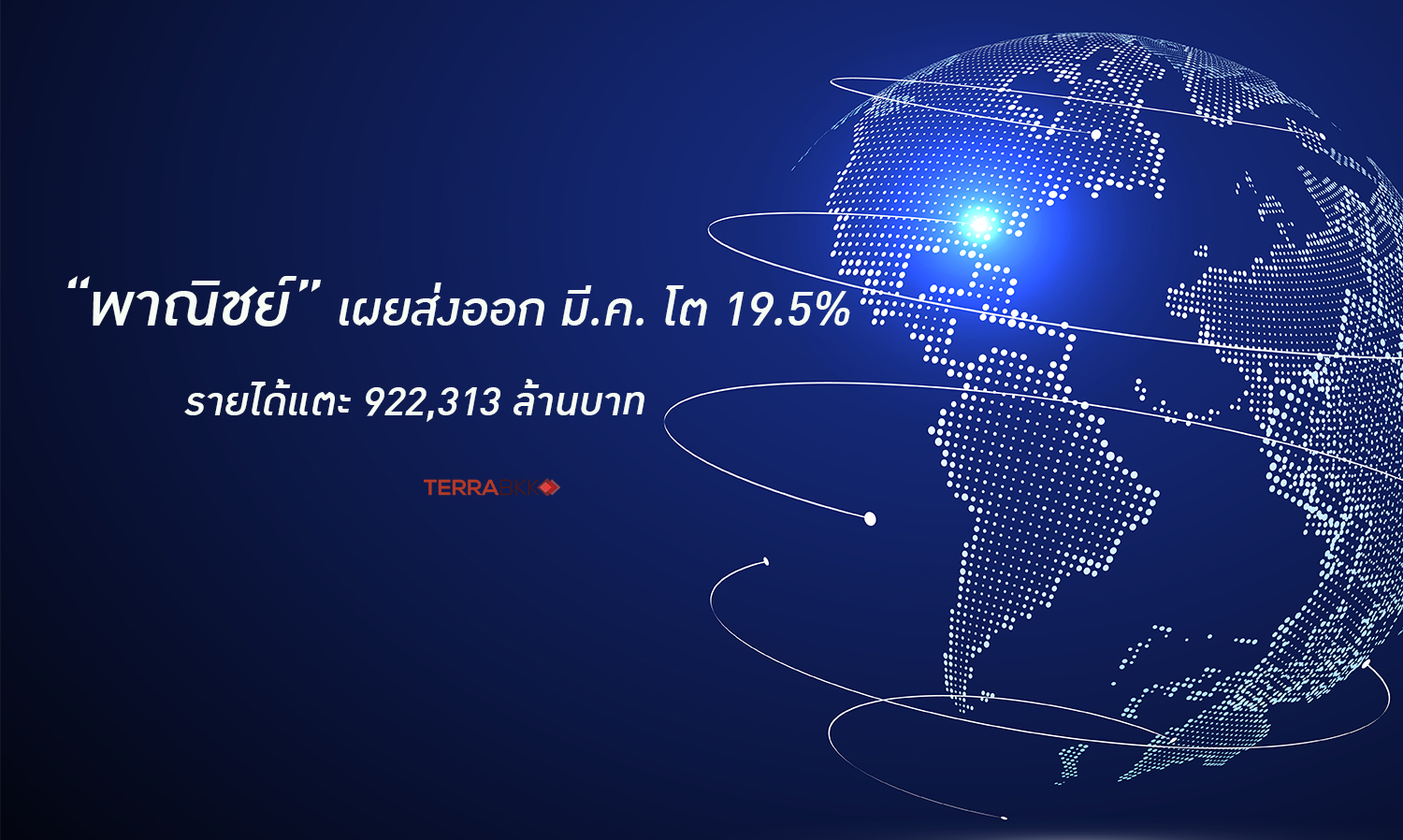
Commerce Ministry Reports March Exports Grow 19.5%, Highest Value in 30 Years at 922.313 Billion Baht
Mr. Jurin Laksanawisit, Leader of the Democrat Party, Deputy Prime Minister, and Minister of Commerce stated that the export figures for March 2022 totaled 922.313 billion baht, representing a growth of 19.5%, marking the highest export value in 30 years since records began in 1991. The trade balance increased by 34.96 billion baht.
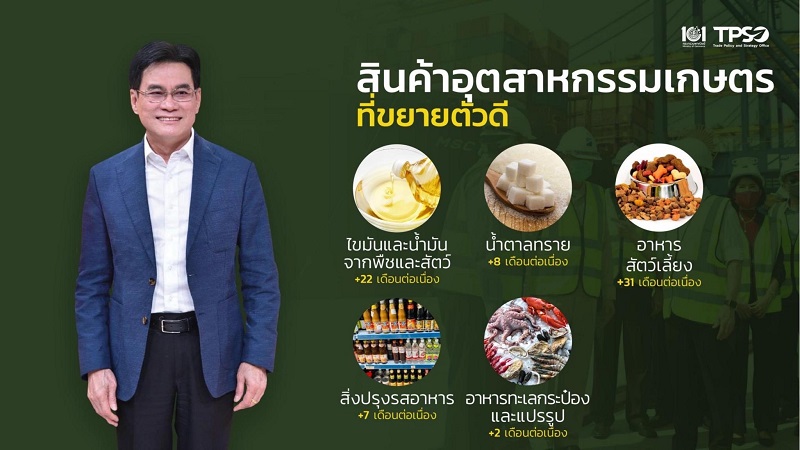
Key product categories include: 1. Agricultural products 2. Agro-industrial products 3. Industrial products.
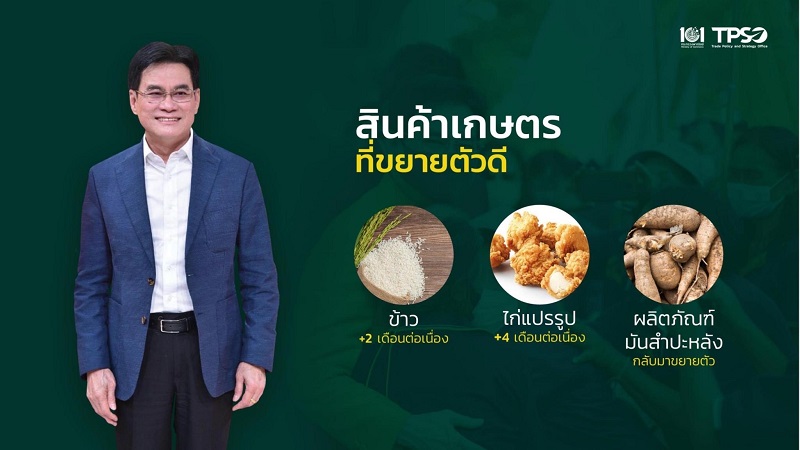
In the agricultural product category, exports grew by 3.3% with a value of 69.31 billion baht. Significant agricultural products included rice (+53.9%), processed chicken (+6.6%), and cassava (+6.3%).
Meanwhile, the agro-industrial product category saw a growth of 27.7%, totaling 69.153 billion baht. Key items included vegetable oil (+350%), particularly palm oil (+768.3%), granulated sugar (+204.3%), pet food (+15.5%), seasonings (+9.7%), canned seafood, and processed seafood (+2%).
The industrial product category grew by 20.6%, with a total value of 755.312 billion baht. Notable items included electrical appliances (+71.9%), fax machines and telephones (+37.9%), jewelry and ornaments (+37.1%), computers and equipment (+36.9%), oil-related products (+15.5%), circuit boards (+11%), and medical instruments (+10.6%).

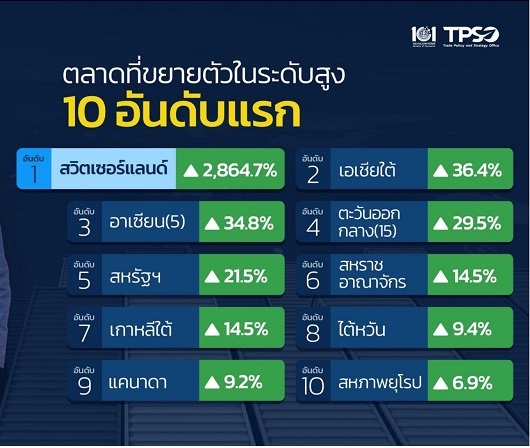
Top 10 Fastest Growing Markets:
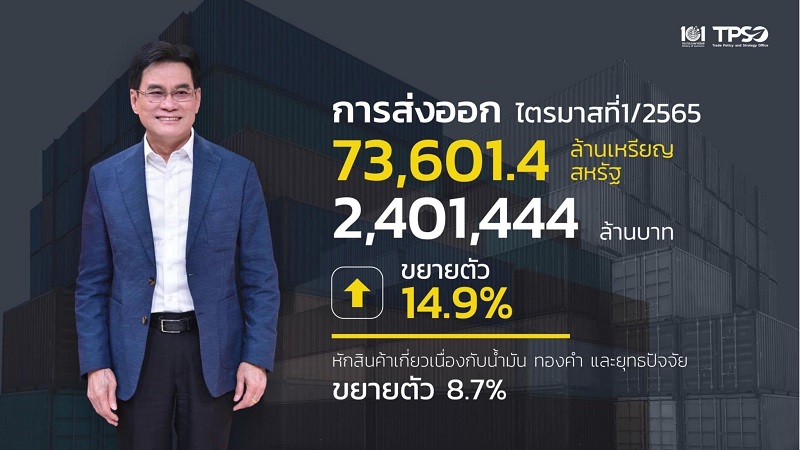
As a result, the export figures for the first quarter of 2022 (January-March) showed a growth of +14.9%, totaling 2.401 trillion baht, or approximately 15% growth, reaching 2.4 trillion baht. Key factors supporting the overall increase in export numbers include:
1. Promotion through the Soft Power policy of the Ministry of Commerce, which has pushed for four key product groups: food, digital content, health and beauty, and products with Thai identity. Since October 2021, the Ministry has supported Thai entrepreneurs in Soft Power, providing training and assistance to achieve export results for 1,878 businesses.
2. Proactive measures for managing fruit exports have positively impacted overall export figures, especially in the Chinese market, where negotiations with various checkpoints for land exports have taken place. Recently, the Dongxing checkpoint, which had been closed for some time, has reopened, facilitating smoother fruit exports from Thailand to China.
Additionally, the shipping export situation regarding container shortages is beginning to ease, with the Ministry of Commerce coordinating with agricultural and foreign affairs representatives to facilitate operations at three southern Chinese ports, leading to increased shipping export numbers. The Department of International Trade Promotion has also negotiated with airlines and exporters regarding shipping costs and airline bookings, achieving success during the peak fruit season earlier this year.

3. Promotion of border trade has been expedited, with the recent elevation of the Huai Ton Nun checkpoint in Mae Hong Son province to a permanent border crossing, expected to enhance trade value between Thailand and Myanmar.
4. The Purchasing Managers Index (PMI) for the manufacturing sector has remained above 50 for 21 consecutive months, particularly in key trading partner countries such as the U.S., Europe, South Korea, Australia, and ASEAN, indicating increased opportunities for purchasing goods from Thailand.
5. Shipping rates from Thailand to Europe have started to decrease, while some routes have not increased, providing additional support.
6. The depreciation of the Thai baht has contributed to making Thai exports more competitive in the global market.