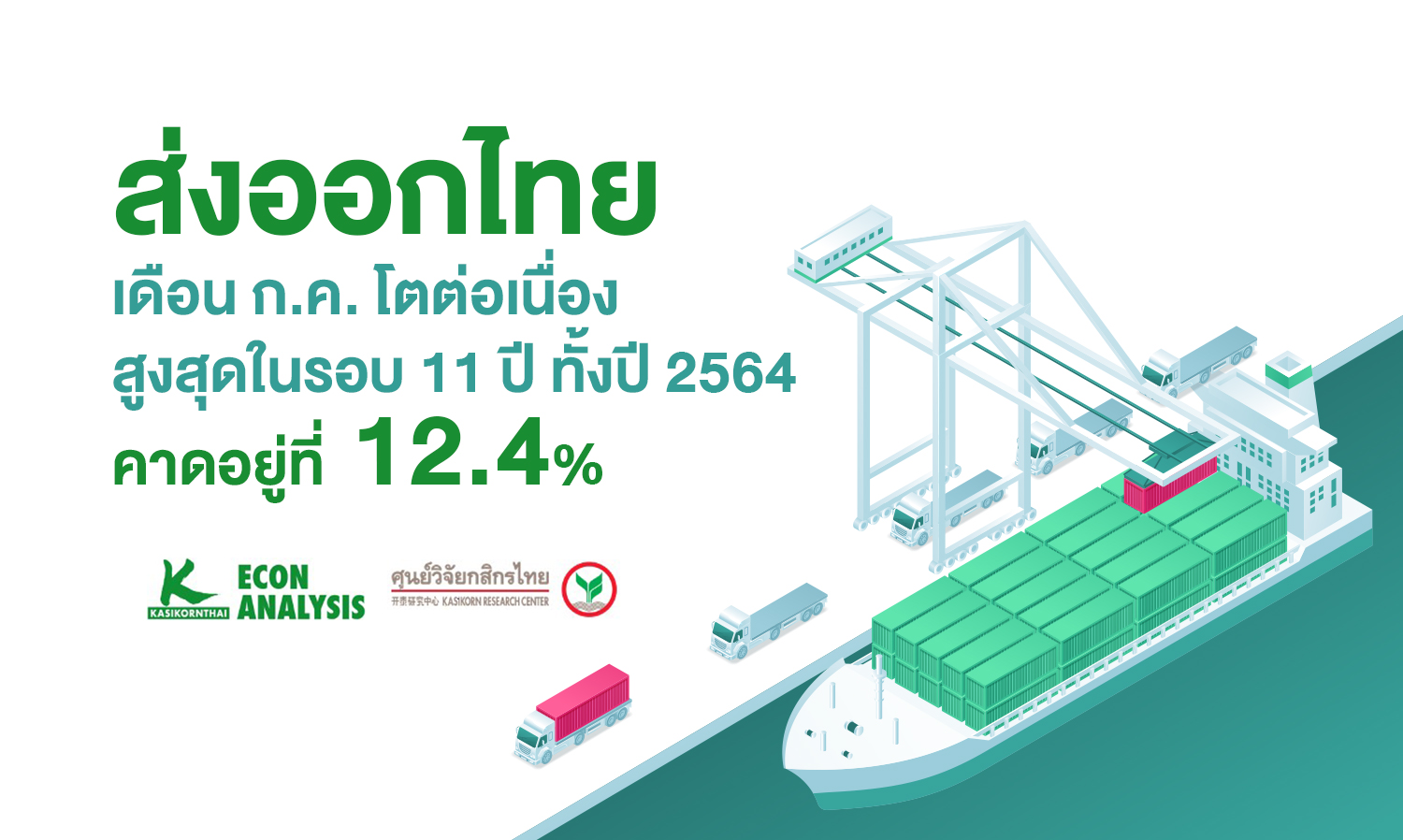
Thai Exports in July Continue to Grow at Highest Rate in 11 Years, Projected to Reach 12.4% for 2021
- In July, Thailand's export figures continued to show strong growth at 20.27% YoY, marking the highest level in 11 years and surpassing market expectations of 19.7%. In the first seven months of 2021, Thai exports grew by 16.2%, aligning with regional market trends, although the growth rate remains lower than other countries that have expanded by over 20%. Excluding oil-related products, gold, and military equipment, exports in the first seven months grew by 21.47%, reflecting a clear growth in the real economy.
- The rapid vaccination rate has led to the normalization of economic activities in several key trading partner countries, supporting Thailand's export sector. In July, exports to major trading partners showed strong growth across almost all markets, particularly to the United States (+22.2%), which has seen 14 consecutive months of growth, and the European Union (+20.4%), which has expanded for five consecutive months. In Asia, despite ongoing pandemic challenges, exports to China grew by 41.0%. Japan, facing a state of emergency and high infection rates, still managed to see exports grow for nine consecutive months, with a 23.3% increase in July. Key export products continue to be related to agriculture and agro-industry, such as fresh, chilled, frozen, canned, and processed fruits and vegetables. However, clusters of infections from seafood markets have impacted exports of fresh, chilled, frozen, canned, and processed seafood. The government has intervened to address these issues by implementing policies to ensure confidence in Thai products as COVID-free, providing ongoing guidelines for producers, exporters, and operators. Additionally, products related to remote work and the recovery of the manufacturing sector continue to expand, while the purchasing power of trading partners has resumed, reflected in the growth of high-priced consumer goods like gemstones and jewelry (excluding gold).
- In the remaining months of 2021, the export sector, a key driver of the economy, is beginning to face increased risks. External factors include the emergence of the Delta variant, which poses a significant threat, while domestic production faces heightened risks from outbreaks in factories. If the outbreaks cannot be controlled, it may lead to factory closures and subsequently impact the production chain, affecting Thailand's export sector. Recent data indicates that factory cluster outbreaks are concentrated in five main industries: food, electronics, textiles, metal, and plastics. However, the pilot project for preventing and controlling outbreaks in factories (Factory Sandbox) is expected to help alleviate some of these issues. Furthermore, the global economic recovery, particularly in the U.S. and Europe, along with a weakening Thai baht, is likely to continue supporting high export growth for Thailand this year. Kasikorn Research Center has thus revised its export growth forecast for Thailand this year to 12.4%, up from 11.5%.
Situation of Key Export Products and Markets for Thailand
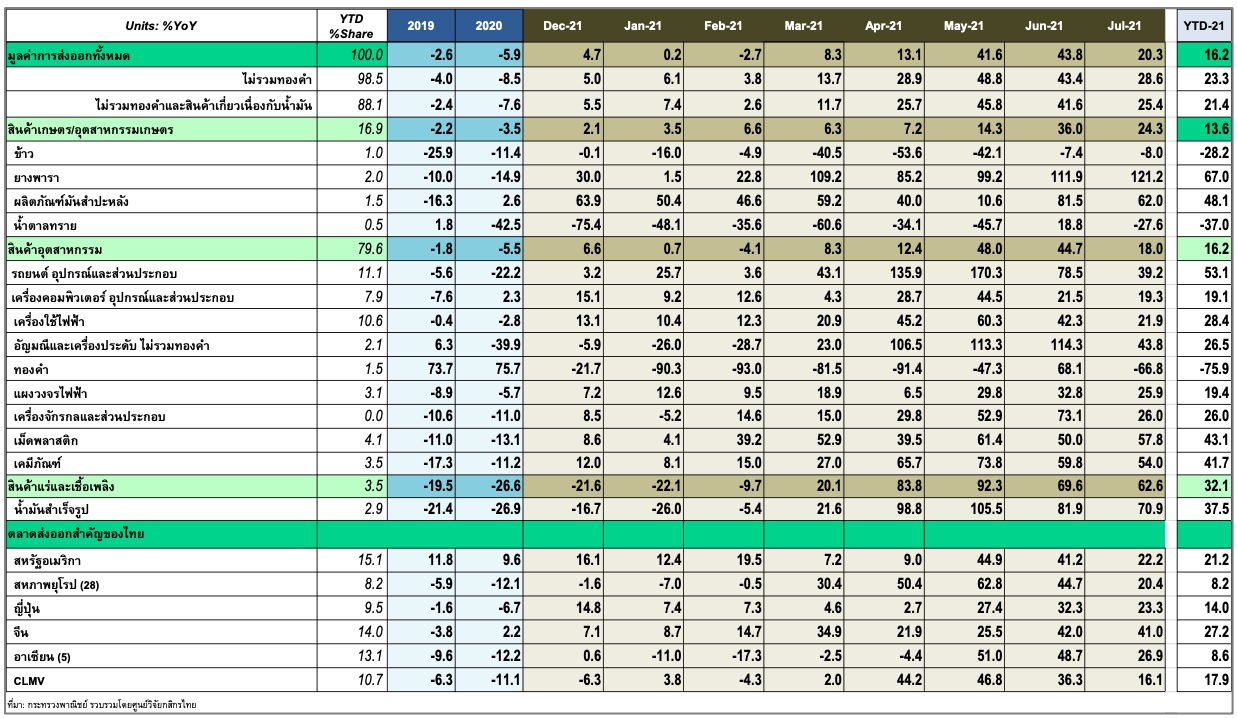
Source: Ministry of Commerce, compiled by Kasikorn Research Center
Discussion
Follow breaking news Investment property articles on Facebook, click here.