EIC Lowers Thailand's Economic Growth Forecast for 2021 to 0.9% (Previously Estimated at 1.9%) Due to COVID-19 Crisis
EIC has revised its economic growth forecast for 2021 down from 1.9% to 0.9% due to the rapid and widespread increase in COVID-19 cases in the country. This surge is expected to significantly impact consumer spending, driven by stricter disease control measures (lockdowns), heightened public concerns about spending amid increased uncertainty (Fear Factor), and deeper economic scars (Scarring). Meanwhile, government financial aid has been insufficient and uneven, only partially alleviating the impact.
- Private consumption is expected to be severely affected in the third quarter before gradually recovering towards the end of the year. The domestic outbreak is in a critical state, reflected in the rising number of daily infections, severe cases, and deaths, alongside a slower-than-planned vaccination rollout that is less effective against the highly transmissible Delta variant. EIC anticipates it will take until the end of November for daily infections to drop below 100, which is over eight months since the outbreak began in April (originally predicted to take only four months to control). This situation is likely to cause damage to private consumption exceeding 770 billion baht (approximately 4.8% of GDP), primarily due to lockdown measures, public fears of infection, and significantly increased economic uncertainty, along with reduced incomes for businesses and workers across various sectors. Although some businesses and consumers have shifted to online transactions, which may help mitigate some impacts, the prolonged outbreak is likely to deepen economic scars, including worsening business closures, a more fragile labor market, and households burdened with high debt levels, leading to long-term debt overhang issues that will hinder future spending and economic recovery.
- The main driver of Thailand's economy in the second half of this year will continue to be strong export growth. However, it faces risks from the COVID-19 outbreak that may disrupt supply chains in the industrial sector. Overall, while global trade has slowed somewhat, it remains robust, supported by a strong recovery in developed economies, as indicated by the Global PMI: Export orders and the sustained high export values in the region. EIC still forecasts Thai exports to grow by 15.0% this year, but risks must be monitored, particularly supply disruptions caused by factory closures due to outbreaks in Thailand and other countries in the same production chain, demand impacts from the outbreak in ASEAN trading partners, and the ongoing shortage of shipping containers that keeps freight rates high, along with semiconductor shortages that could affect the automotive and electronics industries.
- The reopening of the country to foreign tourists will not significantly aid the tourism sector's recovery this year amid worsening outbreak conditions. The pilot projects like Phuket Sandbox and Samui Plus will lay the groundwork for future tourism recovery by improving infrastructure for effective tourist screening processes, vaccine passport systems, and business readiness to welcome tourists. However, the current situation may not attract many tourists this year, as most countries that are major sources of foreign tourists for Thailand still have cautious travel policies due to concerns over new virus variants, compounded by worsening outbreak conditions in Thailand, leading EIC to revise the number of foreign tourists expected this year down to 300,000 (from an earlier estimate of 400,000).
- Effective and sufficient government assistance measures will be crucial in supporting the economy and reducing economic scars. Although the government has attempted to implement relief measures alongside lockdowns, the measures currently in place are insufficient in terms of coverage, duration, and total financial resources. The economic impact is widespread across all provinces, as reflected in Facebook Movement Range data indicating that travel and economic activities have declined in every province, even those not under lockdown, due to public concerns about infections. The duration of the impact is expected to last at least through the third quarter. Therefore, the latest income compensation measures for workers and businesses, which only cover lockdown provinces and last for just one month, are unlikely to adequately compensate for the overall economic impact. EIC anticipates that the government will need to introduce additional economic support measures totaling around 150 billion baht, bringing the total use of funds from the 500 billion baht borrowing decree to about 200 billion baht this year. The government may also consider additional spending if the outbreak persists longer than expected. Urgent measures the government should expedite include: 1. Health measures, particularly rapid and comprehensive vaccine procurement and administration, increasing access to testing to separate patients from healthy individuals, and ensuring adequate medical supplies, facilities, and personnel to meet rising demand. In terms of vaccine distribution, beyond healthcare workers and vulnerable groups, the government should allocate sufficient vaccines to workers in industrial clusters to prevent outbreaks that could disrupt key production supply chains for both exports and domestic consumption. 2. Economic relief and recovery measures, in addition to targeted, sufficient, and extended financial support at least through the third quarter when the outbreak is expected to remain high, to help sustain spending among affected citizens. The government should implement effective liquidity and employment support measures for businesses, particularly SMEs, to prevent rising unemployment and underemployment in the informal sector, alongside workforce upskilling and promoting SMEs to effectively adopt digital technologies in production and sales channels (online platforms), which are essential for competitiveness in the new normal.
COVID-19 has resurged globally due to the Delta variant, with developing countries being more affected due to lower vaccination progress.
COVID-19 has resurged due to the Delta variant, as shown in Figure 1, where the number of daily infections worldwide has increased again after a previous decline. Although many developed countries have high vaccination rates, the Delta variant, which is the dominant strain currently spreading, has a higher transmission capability than previous strains, resulting in reduced vaccine effectiveness in preventing transmission.
Figure 1: The number of daily infections worldwide has increased again, even as many countries have high vaccination rates, due to the rapid spread of the Delta variant.
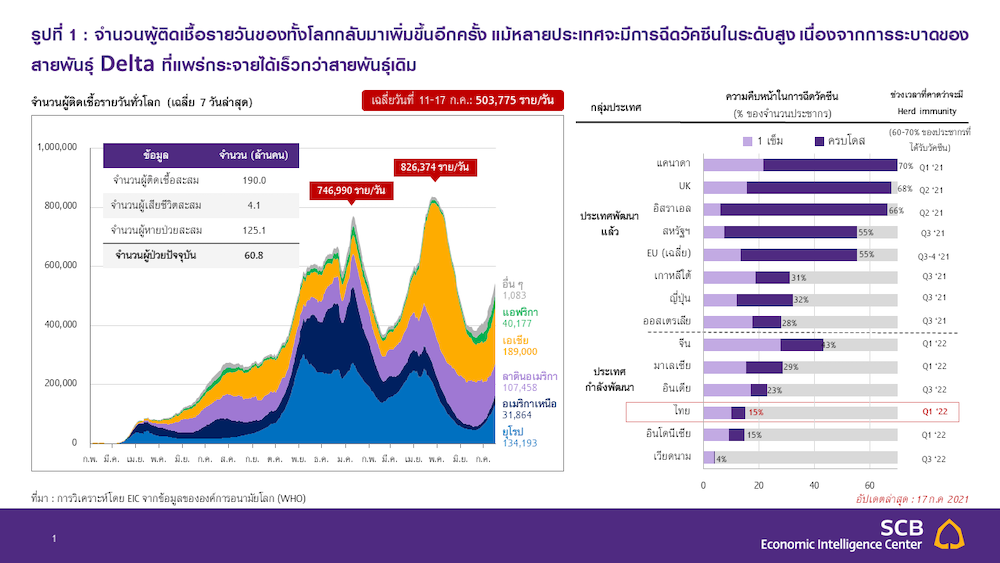
Source: Analysis by EIC based on WHO data.
The economies of developed countries (AE) continue to grow well due to city reopening measures in many countries, such as in Europe and the United States. The PMI for European countries and the UK has continued to expand, especially in the service sector, which reached its highest level after reopening measures and the acceptance of tourists in June. The US PMI has also accelerated significantly since May, driven by the reopening that has rapidly expanded the service sector. Although the growth in June in the US slowed slightly, it remains high, attributed not only to the acceleration from the previous month’s reopening but also to supplier delays and labor shortages that match employer demand, resulting in a tight labor market in the US. Meanwhile, Japan's economy has slowed down relatively quickly due to a new wave of outbreaks and stricter lockdown measures, impacting domestic industrial output.
In contrast, the economies of emerging markets (EM) are showing clearer signs of being affected by the new wave of outbreaks. The manufacturing sector has continued to slow down since the previous month, as reflected in the latest PMI figures that have declined in several countries. For instance, India's PMI continues to decrease, even as the latest infection numbers show a gradual decline, indicating that the recovery of the industrial sector is still impacted by previous outbreaks. Meanwhile, the latest PMIs for Vietnam and Malaysia have contracted rapidly due to the severe impact of the new wave of outbreaks on the manufacturing sector. Additionally, Asian countries are affected by the reopening policies in developed countries (AE), leading to reduced demand for electronic goods from Asia, which in turn has decreased export orders.
Figure 2: The new wave of COVID-19 outbreaks is slowing the recovery prospects for EM countries, while AE countries continue to recover due to reopening measures and the recovery of the service sector.
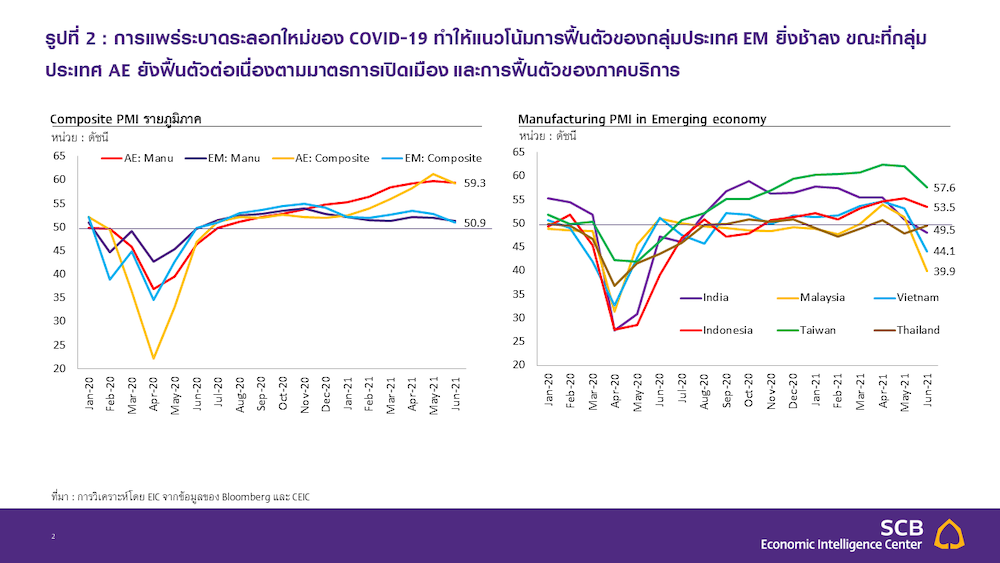
Source: Analysis by EIC based on Bloomberg and CEIC data.
Due to the increasing outbreaks and relatively low vaccination rates, many Asian emerging markets are reintroducing stricter lockdown measures. Examples include Indonesia, Vietnam, the Philippines, Taiwan, China, and Thailand, which will affect the economic recovery prospects in the near future. A key variable that will help improve economic recovery is vaccination. EIC has found that countries with a higher proportion of vaccinated populations tend to have better economic forecasts than those with lower vaccination rates, as this allows governments to relax lockdown measures more quickly and facilitate economic activities, while also reducing the risk of new outbreaks and increasing confidence.
Figure 3: Many countries in Asia are reintroducing stricter lockdown measures as the number of infections accelerates due to the Delta variant and slow vaccination progress, which may slow down economic recovery more than expected.
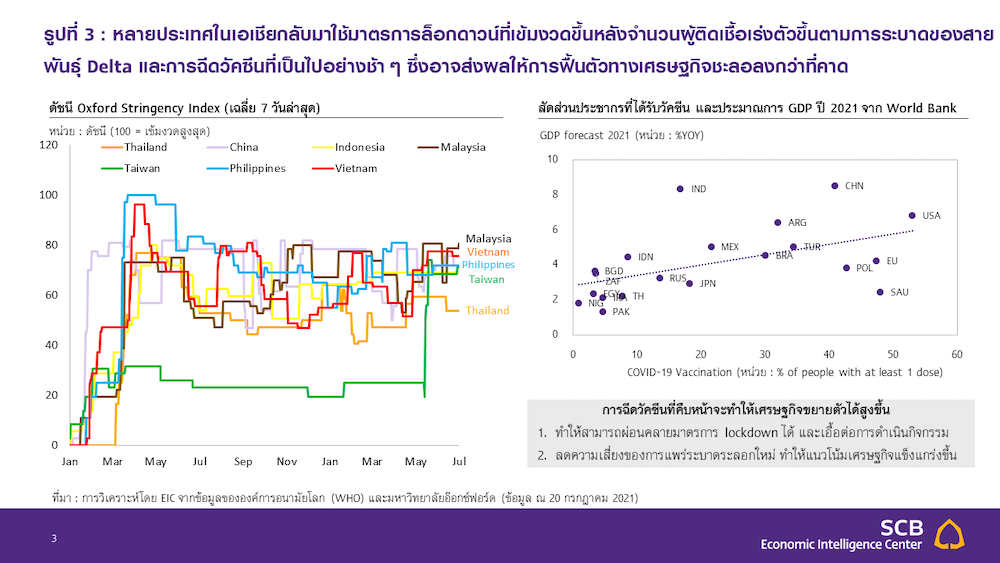
Source: Analysis by EIC based on WHO and Oxford University data (as of July 20, 2021).
Thai exports are still expected to grow, but risks are increasing due to outbreaks in several countries, especially in ASEAN, as well as potential supply disruptions.
Despite worsening outbreak conditions in many countries, global export conditions continue to improve, albeit at a slower pace. This is reflected in the export values of several key exporting countries, which still show high growth rates in June. Additionally, the Global PMI: export orders index in June remains above 50, even though it has slightly slowed from the previous period, indicating that exports are still expected to improve at least in the short term. In the remaining months of the year, consumers in many countries, especially developed countries and China, are likely to gain more confidence in spending as vaccination progresses, positively impacting global economic recovery and trade, leading EIC to maintain its export forecast at 15.0% for 2021.
Figure 4: Exports are expected to continue growing in line with global trade trends, which, although slowing somewhat, remain at high levels.
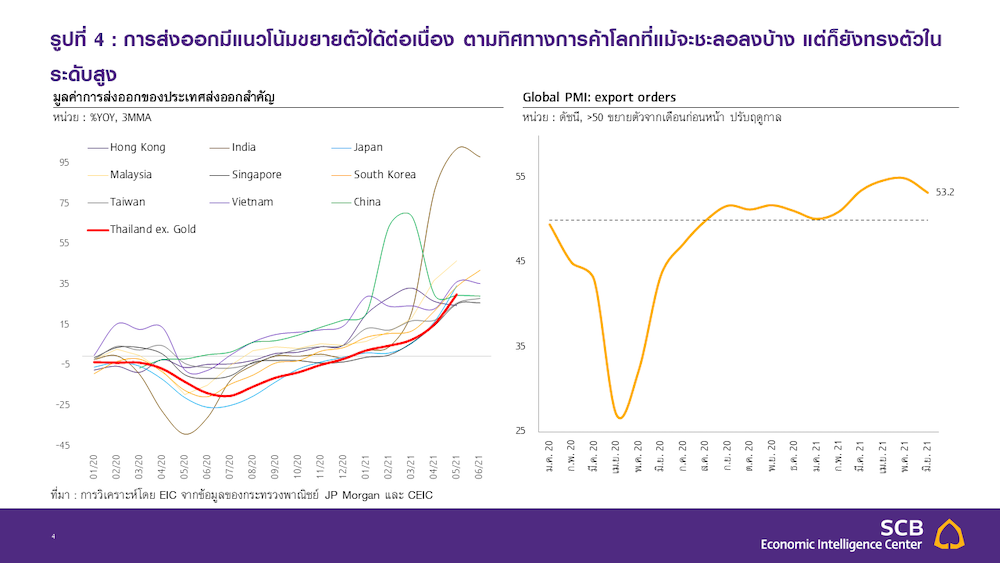
Source: Analysis by EIC based on data from the Ministry of Commerce, JP Morgan, and CEIC.
However, Thai exports still face several risks that need close monitoring (Figure 5), starting with potential supply disruptions from factory closures. EIC has observed that several factories have closed temporarily in recent times, but most closures have not significantly impacted overall production. However, if outbreaks lead to more or longer factory closures, this would pose a significant risk to future production for exports. Another risk is the COVID-19 outbreak in ASEAN countries, which are important trading partners for Thailand, which has already begun to show some impact, as reflected in the Manufacturing PMIs of several countries that have started to decline or remain below 50, which may affect Thai exports through reduced demand or supply chain disruptions. Additionally, Thai exports continue to face ongoing pressures, including the shortage of shipping containers that keeps freight rates high, impacting transportation costs, as well as the shortage of semiconductors (chips), which are essential raw materials in various industries such as mobile phones, gaming consoles, and the automotive industry.
Figure 5: Although Thai exports are still expected to grow, several potential risks must be monitored closely.
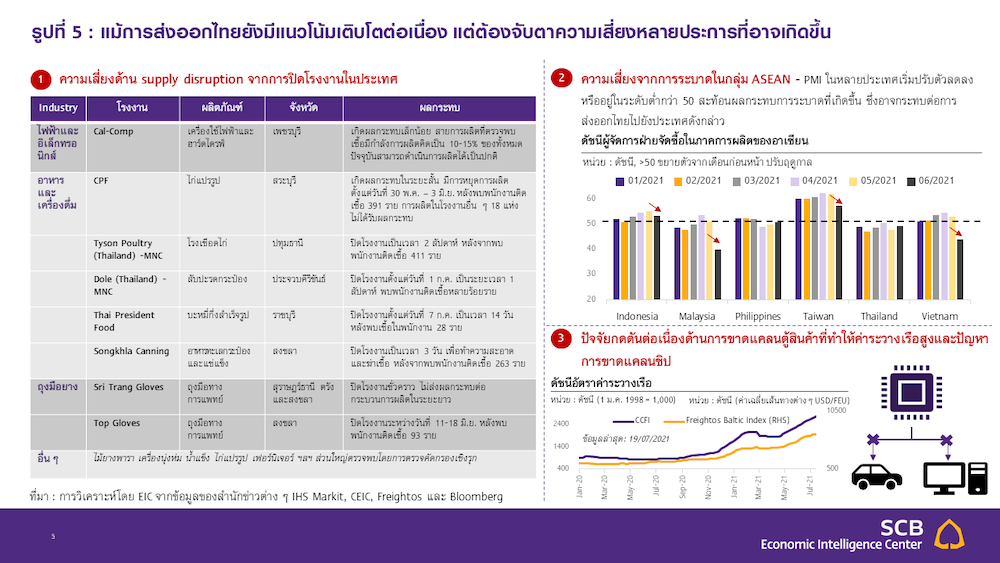
Source: Analysis by EIC based on news agency data, IHS Markit, CEIC, Freightos, and Bloomberg.
The tourism sector continues to be sluggish, even with the Phuket Sandbox initiative, as many countries still have strict travel policies and the situation in Thailand has worsened.
Due to the deteriorating infection situation in Thailand and the strict travel policies in many countries, EIC has revised its forecast for the number of foreign tourists in 2021 down to 300,000 (Figure 6) from the previous estimate of 400,000. The pilot projects like Phuket Sandbox and Samui Plus will provide benefits in laying the groundwork for future tourism recovery by improving infrastructure for tourist screening processes, vaccine passport systems, and business readiness to welcome tourists. However, the current situation may not attract many tourists this year due to:
•The prolonged third wave of outbreaks in Thailand and the high uncertainty surrounding Thailand's vaccination plan, leading some foreign tourists to be concerned and potentially affecting their travel plans to Thailand, including tourists from EU countries who may have increased concerns after the EU decided on July 15 to remove Thailand from the list of countries considered safe from COVID-19 (White list).
•The cautious travel policies of many countries regarding the outbreak of new virus variants. When considering the measures of countries that are major sources of tourists for Thailand, it is found that some governments still have restrictions on traveling abroad, allowing only business travel to Thailand, such as China, Singapore, and Japan. Meanwhile, countries that allow their citizens to travel abroad for tourism still have strict quarantine measures upon returning from Thailand, making travel inconvenient, such as Thailand being classified as a yellow country in the UK's Traffic Light System, which requires tourists returning from Thailand to quarantine at home for 10 days (Figure 7).
Overall, only 34,753 tourists traveled to Thailand in the first five months, while only 7,462 tourists entered through the Phuket Sandbox in the first 17 days since July 1, and only 17 tourists entered through Samui Plus in the first four days since July 15. This raises the likelihood that the number of tourists will fall below the government’s estimate of around 100,000 tourists in the first three months of the pilot project (July-September). Coupled with the two reasons mentioned above, EIC has revised its forecast for the number of tourists down to 300,000 this year from the previous estimate of 400,000.
Figure 6: EIC revises its forecast for foreign tourists in 2021 down to 300,000 due to tourists' concerns over the outbreak situation in Thailand and the strict reopening policies in many countries due to the new variant outbreaks.
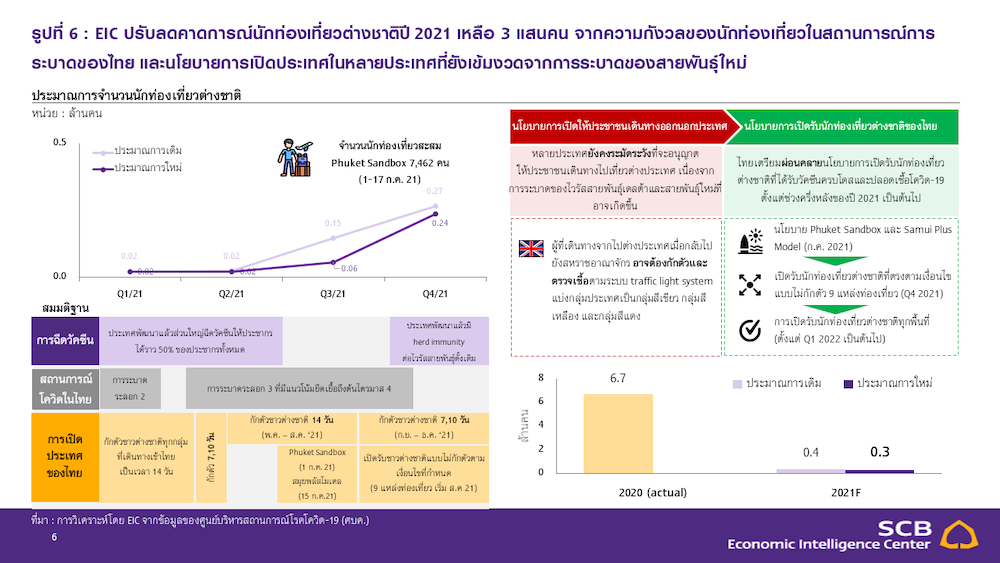
Source: Analysis by EIC based on data from the COVID-19 Situation Administration Center (CCSA).
Figure 7: Many countries continue to implement strict travel restrictions, including conditions for travel and quarantine when entering and exiting the country.
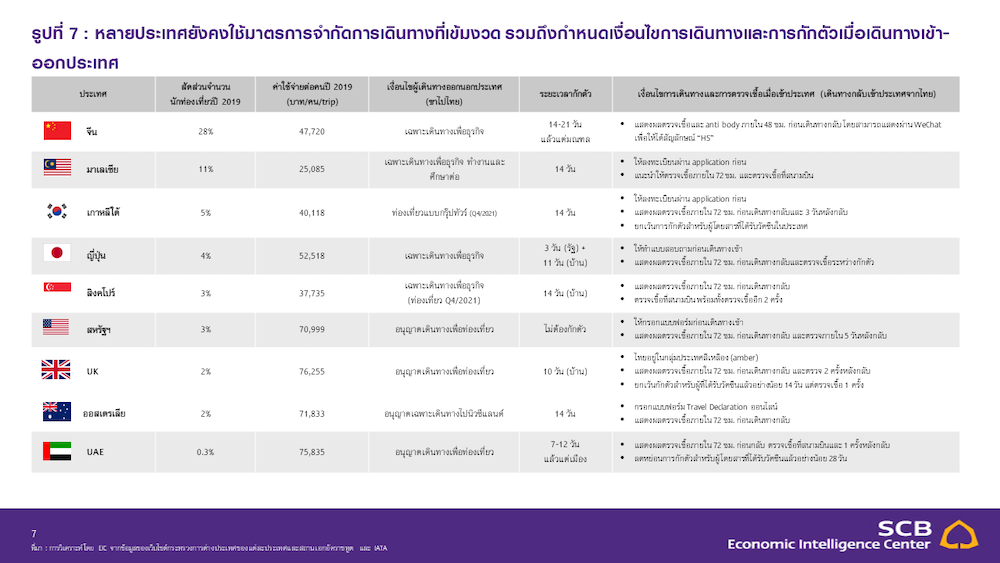
Source: Analysis by EIC based on data from the foreign ministries of various countries and embassies, and IATA.
The domestic outbreak is in a critical state, with expectations that it will take until the end of November for daily infections to drop below 100.
The latest situation of the outbreak in Thailand remains concerning, reflected in the average daily infections reaching 9,500 (average from July 12-18, 2021), which is about 133 cases per million people, ranking Thailand 45th in the world for infection rates, compared to late March when Thailand was ranked 160th. Meanwhile, the average number of recoveries per day is about 5,100, leading to an average increase of 4,400 patients per day in the healthcare system, pushing Thailand's healthcare system close to its capacity limits.
Additionally, the detection rate of infections has also increased. Data from 342 COVID-19 testing laboratories nationwide shows that the average detection rate from July 11-17 has risen to 12% of the total tests, averaging 69,000 tests per day (Figure 8), particularly in Bangkok, where the average detection rate reached 16.8% during the same period. The John Hopkins University recommends that the detection rate should not exceed 5%, as a high rate indicates significant local transmission. Therefore, if testing capacity increases, it is likely that more cases will be detected.
Figure 8: The number of new infections in Thailand continues to rise due to the emergence of new clusters, such as infections in construction camps, markets, and various factories.
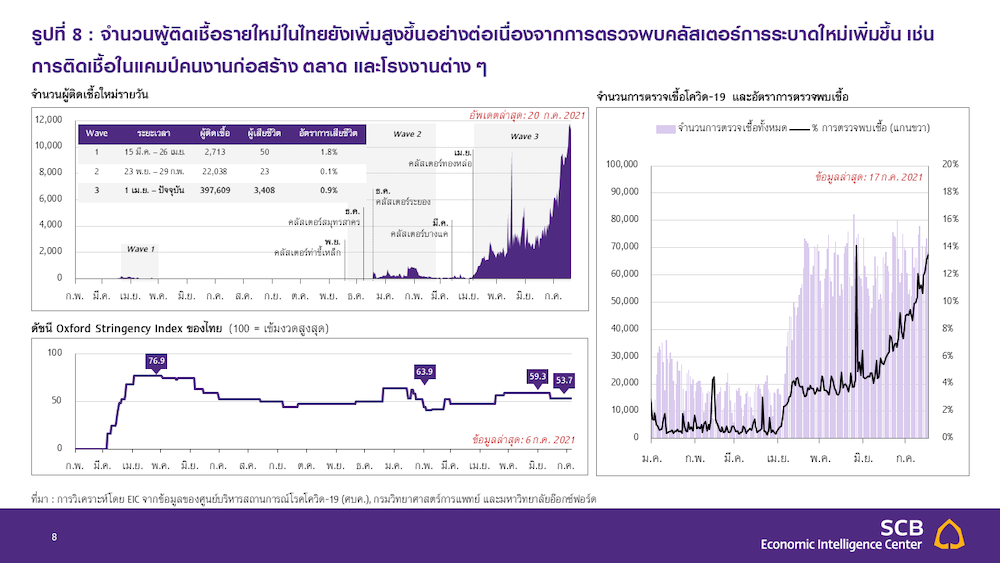
Source: Analysis by EIC based on data from the COVID-19 Situation Administration Center (CCSA), the Department of Medical Sciences, and Oxford University.
Given the critical infection situation, EIC expects that controlling the outbreak will take until the end of November for daily infections to drop below 100, totaling eight months since the third wave began in April. This is longer than the previous estimate of about four months for controlling the outbreak, and it is expected that daily infections will continue to rise to a peak in the first half of August. Recently, the Ministry of Public Health has allowed hospitals to treat patients with mild symptoms at home (Home Isolation), differing from the previous requirement to admit them to hospitals, which may lead to increased testing. Additionally, the use of Antigen test self-test kits for COVID-19 has been authorized, which could also contribute to increased daily testing and infection numbers in the near future. If vaccination rates continue at the recent pace, it is projected that about 40% of the population will have received at least one vaccine dose by the end of the third quarter, which will help reduce the number of infections more clearly in the fourth quarter.
Figure 9: Given the worsening situation, EIC expects that controlling the outbreak will take until the end of November for daily infections to drop below 100, totaling eight months (since the outbreak began in April).
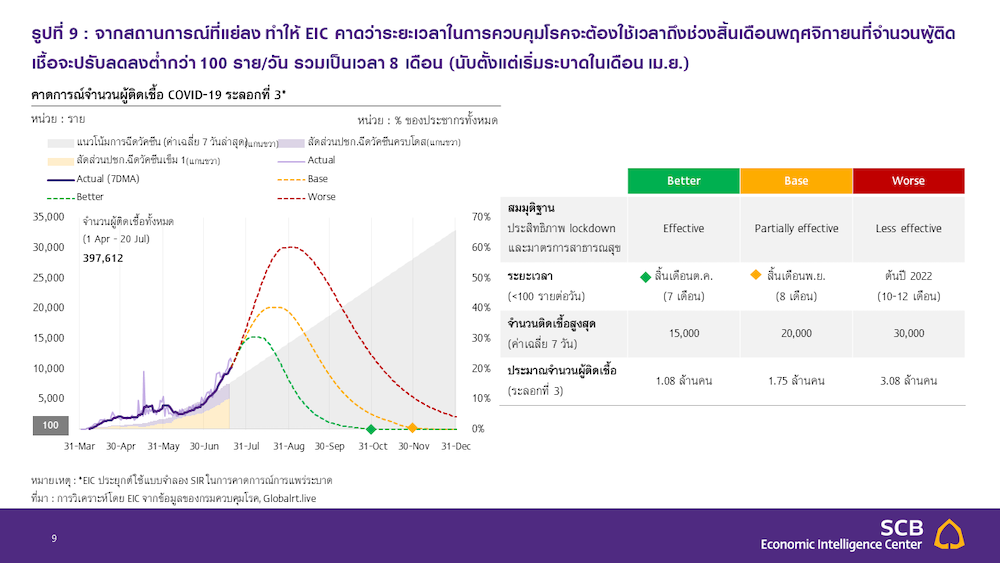
Note: *EIC applies the SIR model to forecast the outbreak
Source: Analysis by EIC based on data from the Disease Control Department and Globalrt.live.
The worsening outbreak will have long-lasting impacts on the Thai economy, particularly on private consumption, as citizens are concerned about spending in various places and face income loss.
High-frequency data indicates that this outbreak has a greater impact than the second wave and is lasting longer than all previous outbreaks. As shown in Figure 10, both Google and Facebook mobility indices indicate that the impact of this outbreak is more prolonged than previous outbreaks, having declined again in July after a slight recovery in June (Double-dip). Furthermore, the number of infections and their spread across many provinces exceed those of the second wave earlier this year, resulting in a more severe impact. The duration of the impact is also expected to last longer than the previous two outbreaks.
Figure 10: The impact of the third wave outbreak is more severe than the second wave due to the higher number of infections and wider spread, with a longer duration than the first two outbreaks.
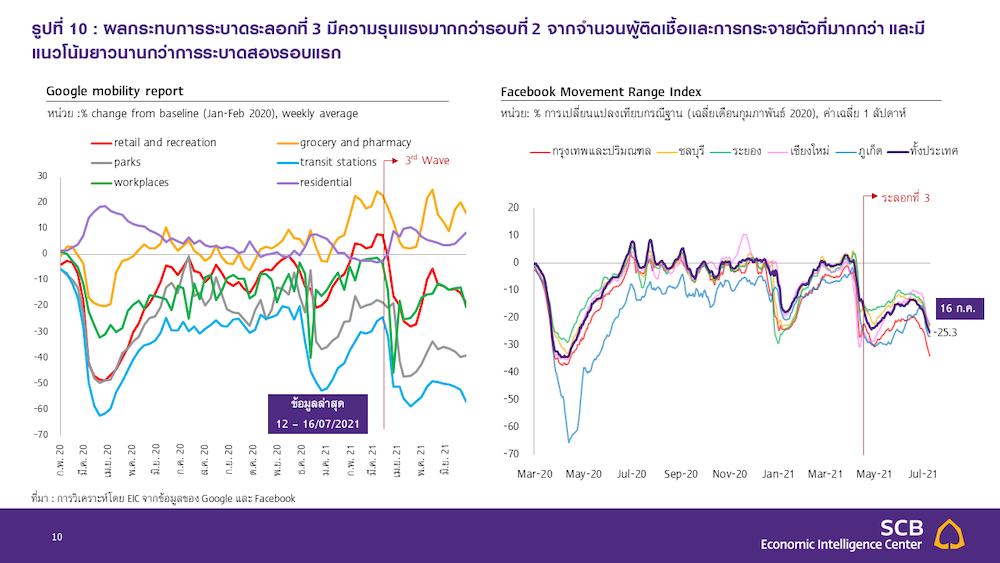
Source: Analysis by EIC based on data from Google and Facebook.
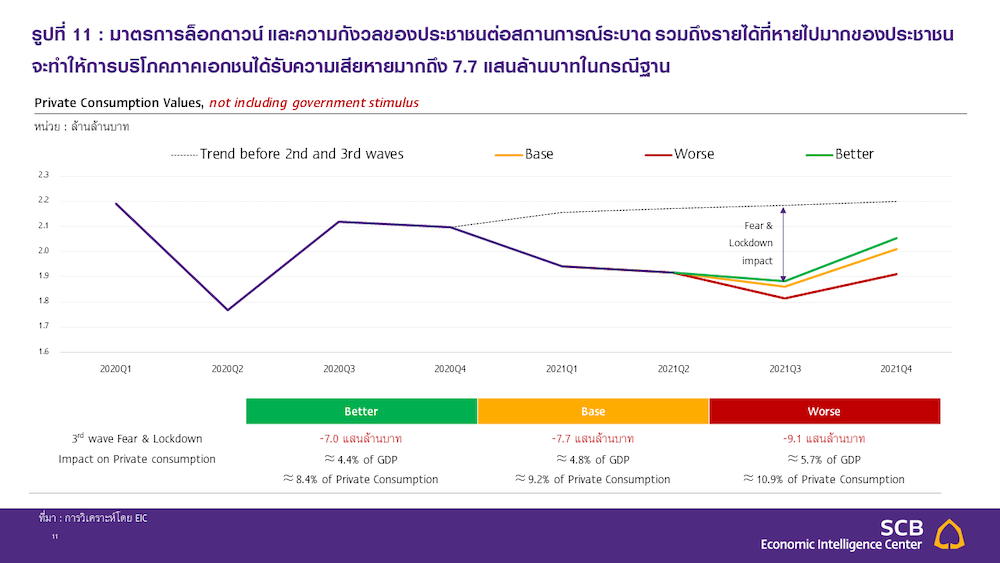
The total damage from the prolonged third wave outbreak is expected to exceed 770 billion baht (approximately 4.8% of GDP), compared to the previous estimate of around 300 billion baht. As shown in Figure 11, the level of private consumption, excluding government stimulus funds, is expected to decline in the third quarter, nearing levels seen in the second quarter of the previous year when nationwide lockdown measures were in place. This is due to strict lockdown measures in many provinces, public concerns about traveling and spending, and significantly reduced incomes for many businesses, especially face-to-face sectors such as hotels, restaurants, massage, spas, and nightlife businesses. This will consequently affect the incomes of employees in these sectors, with some potentially losing their jobs. While online platforms have helped mitigate some impacts compared to last year, the overall prolonged outbreak will severely damage consumer spending for the remainder of the year.
Figure 11: Lockdown measures and public concerns about the outbreak situation, along with significant income losses, will lead to private consumption damage of up to 770 billion baht in the baseline scenario.
Source: Analysis by EIC.
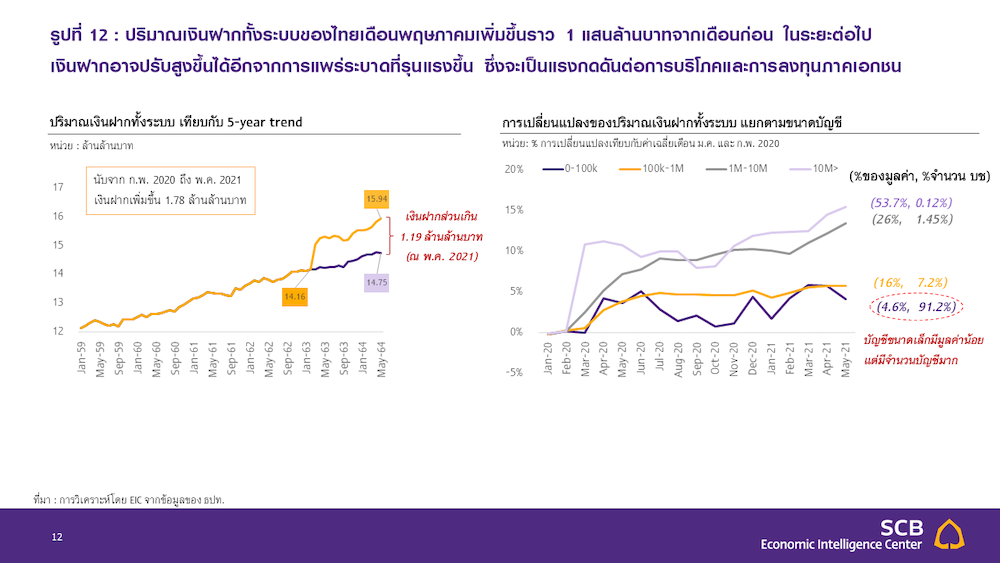
Additionally, the worsening situation is likely to lead citizens to save more (Precautionary saving). Data shows that total deposits in Thailand accelerated in May following the third wave outbreak in April, with total deposits from February 2020 to May 2021 increasing by 1.78 trillion baht. Comparing May to April 2021, deposits increased by about 100 billion baht, primarily from high-income groups (Figure 12) who are saving to prepare for future risks (precautionary saving). However, the growth rate of deposits among low-income groups has begun to show signs of slowing down, which may reflect liquidity issues for this group. In the near future, it is expected that the savings rate will continue to rise due to the worsening outbreak situation, which will put pressure on consumer spending in the future.
Figure 12: Total deposits in Thailand increased by about 100 billion baht in May compared to the previous month. In the future, deposits may rise further due to the worsening outbreak, which will pressure consumption and private investment.
Source: Analysis by EIC based on data from the Bank of Thailand.
The deteriorating economy will deepen economic scars.
This includes weak business dynamics, a fragile labor market, and high household debt levels. The prolonged outbreak will exacerbate three significant economic scars in Thailand, detailed as follows:
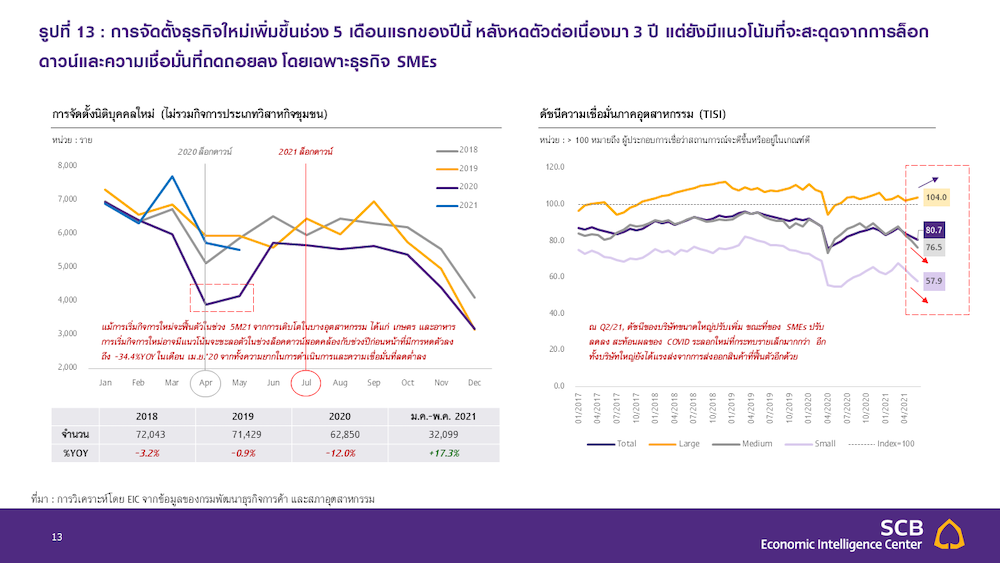
The recovery of new business openings is likely to stall due to lockdowns and declining confidence. In the first five months of 2021, the number of newly registered legal entities (excluding community enterprises) was 32,000, an increase of 17.3% year-on-year (Figure 13). This recovery is concentrated in certain business sectors that still have supportive factors, such as agriculture (increased agricultural prices) and food and beverage production. However, sectors severely affected, such as hotels, continue to contract. EIC believes that the new business openings of legal entities are likely to slow down during lockdowns, similar to what occurred during last year's lockdown due to operational obstacles, deteriorating economic conditions, and declining business confidence, particularly among SMEs. In contrast, confidence among large businesses has improved, partly due to the recovery in exports, reflecting that the impact of the COVID-19 crisis is likely to affect SMEs more. The deterioration of business dynamics will limit employment and investment recovery in the future.
Figure 13: The establishment of new businesses increased in the first five months of this year after contracting for three consecutive years, but is likely to stall due to lockdowns and declining confidence, especially among SMEs.
Source: Analysis by EIC based on data from the Department of Business Development and the Federation of Thai Industries.
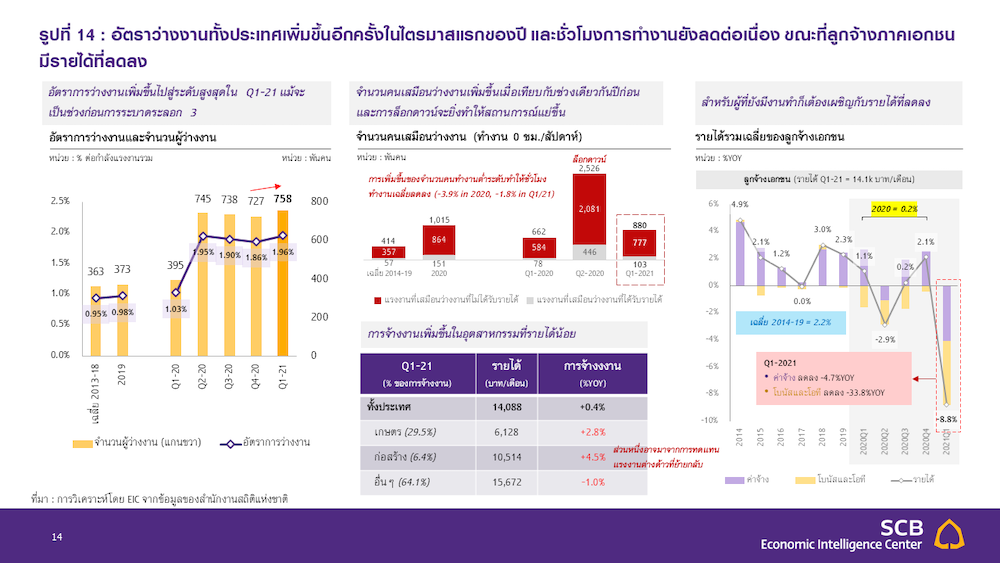
Another significant scar is the labor market, which remains sluggish and is likely to deteriorate further due to the worsening outbreak. Thailand's labor market indicators have been deteriorating since early this year, with the unemployment rate in Q1 2021 at 1.96%, up from 1.86% in the previous quarter. Meanwhile, average working hours have continued to decline at -1.8% year-on-year, alongside an increase in low-level workers, particularly among those who are effectively unemployed (working 0 hours/week). Additionally, private sector employee incomes, including salaries, overtime, and bonuses, have decreased by -8.8% year-on-year, with declines across all major business sectors outside of agriculture. Even the salary portion of the salaried group has decreased for the first time in 12 quarters. The sluggish labor market situation in Thailand is also reflected in the shift of workers to industries with lower average incomes, with increased employment in agriculture and construction, which have lower average incomes, while employment in other sectors with higher average incomes has decreased (Figure 14).
Figure 14: The national unemployment rate increased again in the first quarter of the year, and working hours continued to decline, while private sector employees experienced reduced incomes.
Source: Analysis by EIC based on data from the National Statistical Office.
Moreover, the indicators of labor market weakness mentioned above do not yet include the full impact of the third wave of COVID-19, which has been felt in Q2 and continues to have severe effects on the labor market. The economic impacts are significant, compounded by lockdown measures to limit the spread of the outbreak, representing a concerning situation for Thailand's labor market in the near future.
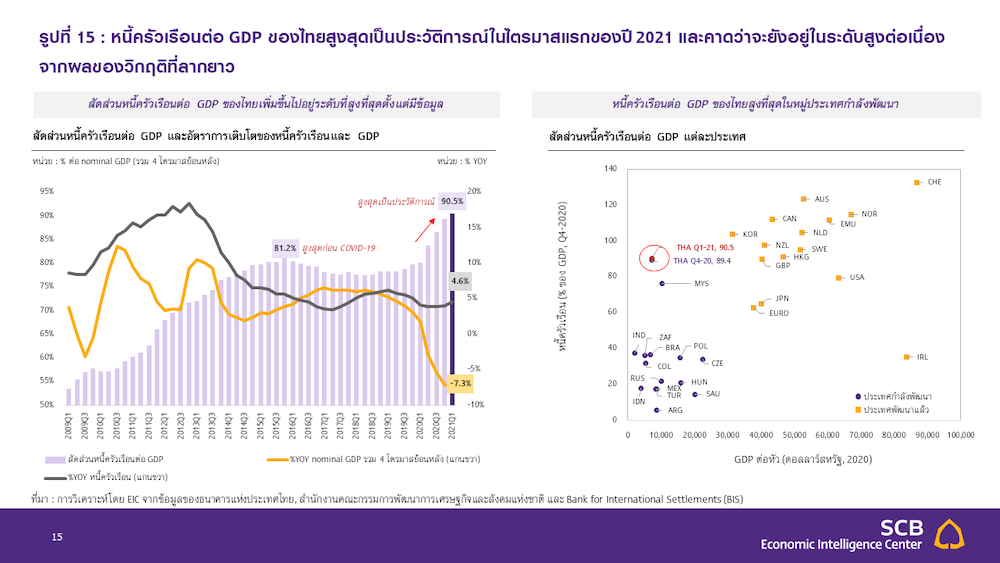
The additional sluggishness in both the business sector and labor market will impact household incomes and increase household debt issues, becoming another significant economic scar. Thai households have faced high debt levels for several years, even before the COVID-19 crisis, and the impacts of COVID-19 have continuously worsened the household debt situation in Thailand. In Q1 2021, household debt to GDP in Thailand rose to 90.5%, the highest on record and the highest among developing countries (Figure 15). This reflects the income impacts of the COVID-19 crisis, while household debt continues to grow partly due to debt suspension measures and the need for loans to compensate for significantly reduced liquidity.
Figure 15: Household debt to GDP in Thailand reached a record high in Q1 2021 and is expected to remain high due to the prolonged crisis.
Source: Analysis by EIC based on data from the Bank of Thailand, the National Economic and Social Development Board, and the Bank for International Settlements (BIS).
EIC estimates that the ratio of household debt to GDP in Thailand is likely to remain high for the remainder of 2021, potentially exposing Thai households to debt overhang situations, where high debt levels become a problem for future spending. The most concerning group is low-income households with high debt burdens relative to their income, in a situation where incomes have significantly decreased and current relief measures are insufficient, leading to a high risk of further issues arising in vulnerable households, such as spending problems, bad debts, informal debts, and other social issues. EIC views household debt as another significant economic scar that will take a long time to resolve, requiring a balance sheet repair for households through increasing income, reducing spending, lowering existing debt burdens, and delaying new borrowing. The effects of this trend will contribute to a slower economic recovery.
Government assistance measures are still insufficient in terms of coverage, duration, and funding.
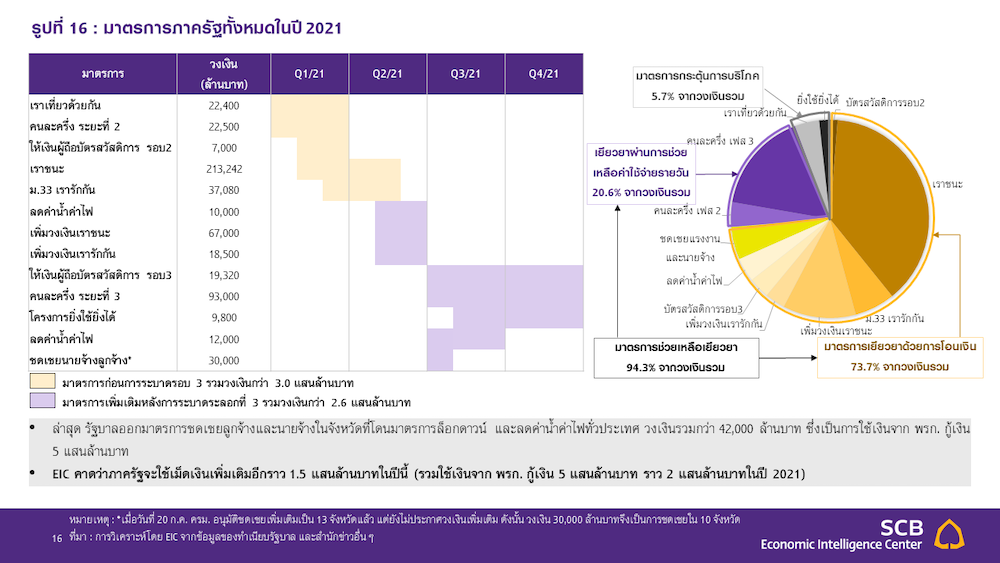
Figure 16: All government measures in 2021.
Note: *As of July 20, the Cabinet approved additional compensation for 13 provinces, but the additional budget has not yet been announced, so the 30 billion baht budget is for compensation in 10 provinces only.
Source: Analysis by EIC based on data from the Government House and other news agencies.
The latest government measures introduced after the third wave outbreak amount to only 260 billion baht, which includes measures to expand the budget for the 'We Win' and 'We Love Each Other' programs, cash assistance for welfare cardholders, reduced utility bills, and the latest measures to compensate the incomes of businesses and workers in provinces affected by lockdown measures. EIC assesses that these measures are still insufficient in three dimensions:
1. Insufficient duration – The measures compensating for losses from lockdowns directly only cover one month (July), which is inadequate for the impacts that are expected to last longer than one month as previously assessed.
2. Insufficient coverage – Currently, the government has chosen to compensate only 10 provinces. However, the outbreak situation has affected the entire country, as indicated by the Facebook Movement Range index (Figure 10), which shows that provinces not under lockdown have also seen declines due to public concerns about the outbreak, leading to reduced economic activities.
3. Insufficient funding – As mentioned earlier, the government has only allocated 260 billion baht in measures after the third wave outbreak, which is inadequate compared to the estimated damage of over 770 billion baht. When compared to the second wave outbreak earlier this year, which had over 300 billion baht in economic support measures, despite being less severe and shorter, it can be concluded that the existing measures are still insufficient in terms of funding. Additionally, if we calculate the income of workers covered by the assistance measures, those insured under Section 33 (receiving 50% of their income and 2,500 baht in assistance, totaling no more than 10,000 baht per person) compared to their normal income data, it is found that the amount received from these relief measures is significantly less than their normal income by about 40% on average.
Furthermore, the government's measures to close worker camps will also have additional impacts on both public and private construction. Although the government order to close worker camps is only for one month, the effects may last longer than one month, as once the government allows worker camps to reopen, it will take time to find workers again, as many have decided to return to their home provinces during the closure. Additionally, even if they can return to work, the ongoing high infection rates pose a significant risk of outbreaks in worker camps, which will affect work speed. Therefore, it is expected that both public and private construction will be adversely affected by these events, leading to lower growth than previously anticipated.
In conclusion, EIC expects that the government will need to introduce additional economic support measures totaling around 150 billion baht due to the severe economic downturn, necessitating further government action. This will involve utilizing funds from the 500 billion baht borrowing decree, of which 42 billion baht has already been used for the latest utility bill reduction policies and income compensation measures for businesses and workers. Overall, EIC anticipates that the government will use approximately 200 billion baht from the 500 billion baht borrowing decree this year.
The government should expedite the following measures:
1. Health measures particularly rapid and comprehensive vaccine procurement and administration, increasing access to testing to separate patients from healthy individuals, and ensuring adequate medical supplies, facilities, and personnel to meet rising demand. In terms of vaccine distribution, beyond healthcare workers and vulnerable groups, the government should allocate sufficient vaccines to workers in industrial clusters to prevent outbreaks that could disrupt key production supply chains for both exports and domestic consumption.
2. Economic relief and recovery measures should include targeted, sufficient, and extended financial support at least through the third quarter when the outbreak is expected to remain high, to help sustain spending among affected citizens. The government should implement effective liquidity and employment support measures for businesses, particularly SMEs, to prevent rising unemployment and underemployment in the informal sector, alongside workforce upskilling and promoting SMEs to effectively adopt digital technologies in production and sales channels (online platforms), which are essential for competitiveness in the new normal.
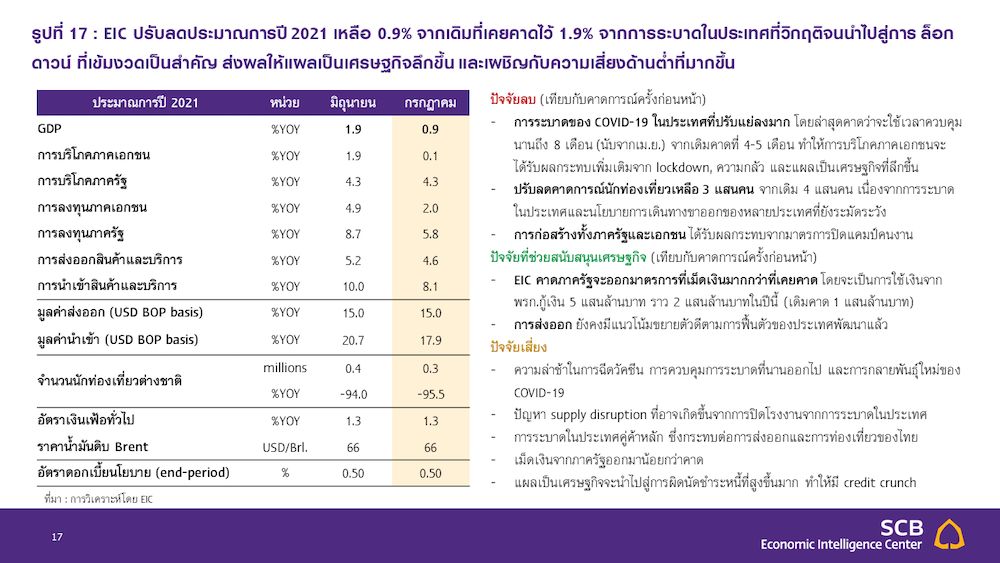
In summary, EIC estimates that the economy will grow by only 0.9% in 2021,
down from the previous estimate of 1.9% due to the significantly worsening outbreak situation in the country.
In summary, the worsening outbreak situation has impacted the economy in several areas, including a decrease in the number of tourists entering Thailand, increased damage to private consumption, and impacts on public and private construction due to worker camp closure measures, along with the potential for deeper economic scars. Although it is expected that the government will provide more economic support than previously anticipated, it will still be insufficient to address the impacts. Therefore, EIC has revised its economic forecast down to 0.9% for 2021. In the future, there are still many downside risks, including delays in vaccination, the emergence of new virus variants, supply disruptions from factory closures in Thailand that may escalate and affect overall production, outbreaks in trading partner countries that may impact Thai exports, and less government funding than expected.
In a worst-case scenario, EIC estimates that the Thai economy could contract by -0.4%, resulting from a significantly worse outbreak situation than expected, both globally and in Thailand, which will impact Thai exports through reduced demand and potential supply disruptions from widespread factory closures in both trading partner countries and Thailand itself. Additionally, the worsening domestic outbreak will directly affect consumer spending due to public concerns about traveling and spending, reduced incomes, and increased unemployment, while the number of tourists entering Thailand is likely to be lower than expected due to concerns over the outbreak situation. As the economy worsens, investors are likely to delay investments, further deepening economic scars and creating additional obstacles to recovery. Even if the government introduces additional economic support measures beyond the baseline scenario, it is likely to only partially compensate for the damages, leading to a forecast of a second consecutive year of economic contraction at -0.4%.
Figure 17: EIC revises its 2021 forecast down to 0.9% from the previous estimate of 1.9% due to the critical domestic outbreak situation leading to stringent lockdowns, significantly deepening economic scars and facing increased downside risks.
Source: Analysis by EIC.
For detailed analysis, click >>> https://www.scbeic.com/th/detail/product/7700
Author of the analysis: Economic Intelligence Center (EIC)
Siam Commercial Bank Public Company Limited
EIC Online: www.scbeic.com