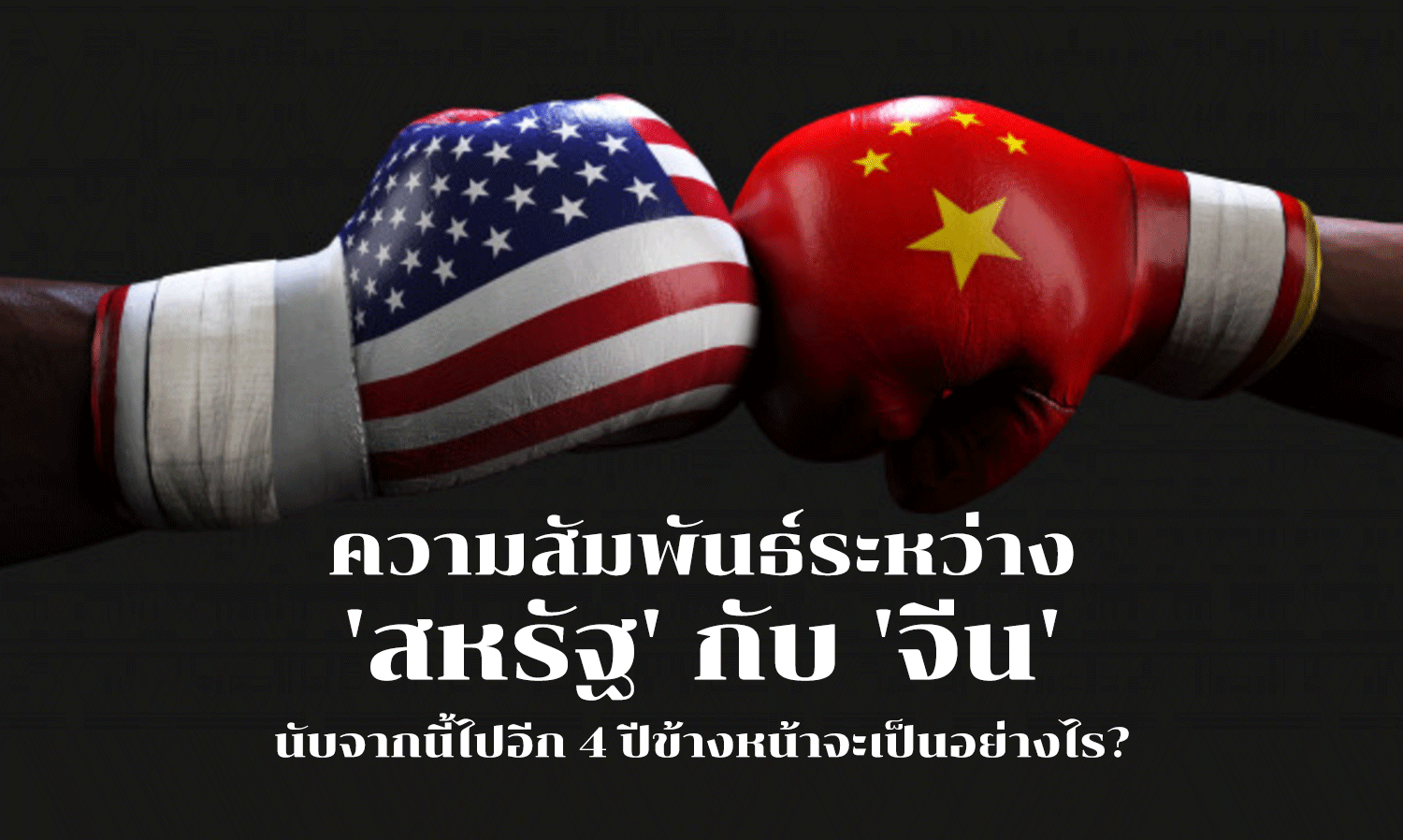
What Will the Relationship Between the 'United States' and 'China' Look Like in the Next Four Years?
Monitoring International Relations Between the 'United States' and 'China' After the Recent Major Election in the U.S. Resulted in a New Leader, 'Joe Biden', Who Will Play a Significant Role in Policies Affecting Both the U.S. and the World. What Will Happen in the Next Four Years?
Last Saturday night, the renowned U.S. media outlet Washington Post revealed that Mr. Donald Trump intends to challenge Mr. Joe Biden again in the 2024 election. This situation will certainly keep Mr. Biden on his toes. Why? Let’s take a closer look.
First, we should all recognize that the COVID-19 pandemic has transformed into the largest financial crisis in modern capitalism, reshaping the global supply chain. The world is increasingly moving from globalization to a more pronounced regionalization.
This shift is partly due to the 'America First' policy under the Trump administration, which directly targeted economic competitors. Countries that are economically tied to the U.S. have leaned more towards trade relations with the U.S. and have made concessions. It seems that China has not pressured its trading partners directly, as that has never been its approach.
However, Mr. Joe Biden has promised clear policy changes, indicating his intention to rejoin the Paris Agreement on climate change on his first day as President, as well as to cooperate with the World Health Organization (WHO) in leading the global fight against the COVID-19 pandemic, restoring confidence in the U.S. as a superpower.
Addressing climate change cannot be done by the U.S. alone; it requires significant support from China. The U.S. and China together account for over 50% of global energy imports and emit more than 30% of the world's greenhouse gases.
Therefore, Mr. Biden's intention to rejoin the Paris Agreement implies a need for cooperation with China in various areas. This indicates that the U.S. will not be the same as it was in the past four years.
China is likely aware that the game has changed. Since the unofficial election results indicated that Mr. Joe Biden would become the 46th President of the U.S., China has stepped up its game by joining the Regional Comprehensive Economic Partnership (RCEP), which includes 10 ASEAN countries along with China, Japan, South Korea, Australia, and New Zealand, representing a combined population of about 2.2 billion and accounting for 30% of the world's GDP, a figure that will continue to grow.
RCEP will help mitigate the financial crisis caused by COVID-19 and enable ASEAN countries to recover more quickly, as this agreement allows companies to diversify their supply chains and enhance economic resilience in the region (Regionalization).
As soon as RCEP was announced, global trade experts expressed various opinions, with some highlighting concerns from the U.S. Chamber of Commerce that the U.S. might be left behind, and access to Asian markets could diminish.
The U.S. may need to reconsider the Trans-Pacific Partnership (TPP), initiated during the Obama administration, now known as CPTPP (Comprehensive and Progressive Agreement for Trans-Pacific Partnership), which would allow China to play a role in the region and enhance its bargaining power. It would be impossible for the U.S. to remain in a more challenging game.
China is also aware of this (like a shark sensing blood). Chinese media reported last Saturday that President Xi Jinping has expressed interest in joining the CPTPP.
Currently, CPTPP consists of 11 member countries: Australia, Brunei, Canada, Chile, Japan, Malaysia, Mexico, New Zealand, Peru, Singapore, and Vietnam. Whether the 12th country will be the U.S. or China will make this the largest trade agreement, surpassing RCEP. The question is, which of the 11 countries would prefer to have in the deal, the U.S. or China?
If Mr. Biden's foreign trade policy strategy does not work and China surpasses and leaves the U.S. behind for a while, it is believed that the White House under Mr. Biden will have no choice but to continue the Trade War and Tech War with China. If not, Mr. Donald Trump will certainly return to tell Americans in four years why they were left behind and why he needs to come back in 2024.
SOURCE: www.bangkokbiznews.com