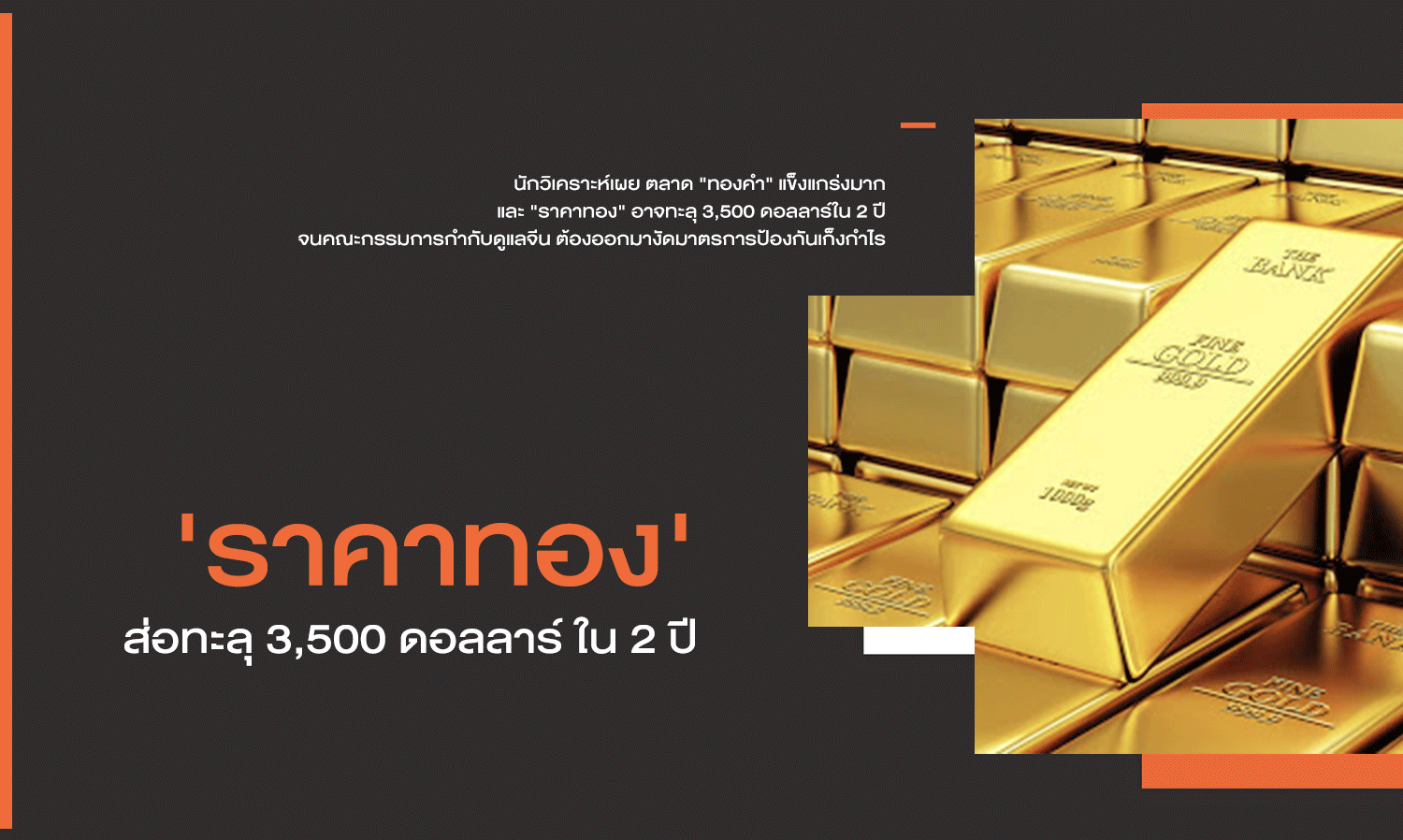
'Gold Prices' Likely to Exceed $3,500 in 2 Years
Analysts Reveal Strong Gold Market, Predicting Prices May Surpass $3,500 in 2 Years, Prompting Chinese Regulatory Authorities to Implement Anti-Speculation Measures
Gold prices have surged to an all-time high on Monday (July 27), amid concerns over the COVID-19 pandemic and rising tensions between the U.S. and China.
Barry Dawes, CEO of Martin Place Securities, stated on CNBC's "Street Signs Asia" that the gold price breaking above the previous high of $1,923 per ounce indicates a very strong market. He believes prices could reach $3,500 within two years.
Garth Brakeman from BNP Paribas Wealth Management, head of investment services for the Asia-Pacific region, expects gold prices to stabilize around $2,000 before rising again.
“We do not see any short-term catalysts that could stop gold prices from continuing to rise; only factors that will support new highs for gold,” he added.
Jörg Keener, managing director of Swiss Asia Capital, also sees gold prices climbing steadily. A preliminary technical analysis suggests prices could reach $2,834, potentially surpassing this target relatively soon.
“For the long-term target, prices will be much higher,” this analyst noted, indicating that gold prices are currently seven to eight times higher than their lows.
Keener also mentioned that gold is expected to yield significantly higher returns over the next 12 months compared to U.S. bonds, which offer lower yields.
This aligns with David Gode, chief investment officer for Asia at Pictet Wealth Management, who believes gold remains a valuable asset to hold.
“The key reason is low interest rates, which are likely to remain low not just in the long term but also in the medium and long term. Holding gold continues to make sense,” he stated.
Dawes from Martin Place Securities pointed out that a significant amount of gold has been absorbed by Asia and the Middle East, while Western countries have purchased less, necessitating a re-establishment of their positions, which is being done by pushing prices higher.
Factors driving gold prices include currency fluctuations and economic stimulus measures in response to COVID-19.
Additionally, uncertainty surrounding COVID-19, combined with tensions between China and the U.S., has led to nearly a 30% increase in gold prices this year, reaching a new record of $1,981.27 per ounce in the Asian market on Tuesday before slightly retreating.
Some analysts predict prices could exceed $2,000 as early as this week.
Meanwhile, regulatory authorities and major banks are accelerating controls on gold trading in the country to reduce speculation, with some fearing a repeat of past mistakes seen in oil speculation.
ICBC, China's largest bank, announced yesterday that it will prohibit customers from opening new investments in platinum, palladium, and gold-related products in the short term, starting Friday (July 31), to address severe price volatility and manage risks.
The Agricultural Bank of China revealed it has recently suspended new business related to gold, while the Bank of China stated it has halted the opening of new accounts for trading platinum and palladium.
On Tuesday (July 28), the Shanghai gold market announced that holdings of gold and silver are high, and if necessary, the market will implement risk control measures to protect investors.
SOURCE: www.bangkokbiznews.com