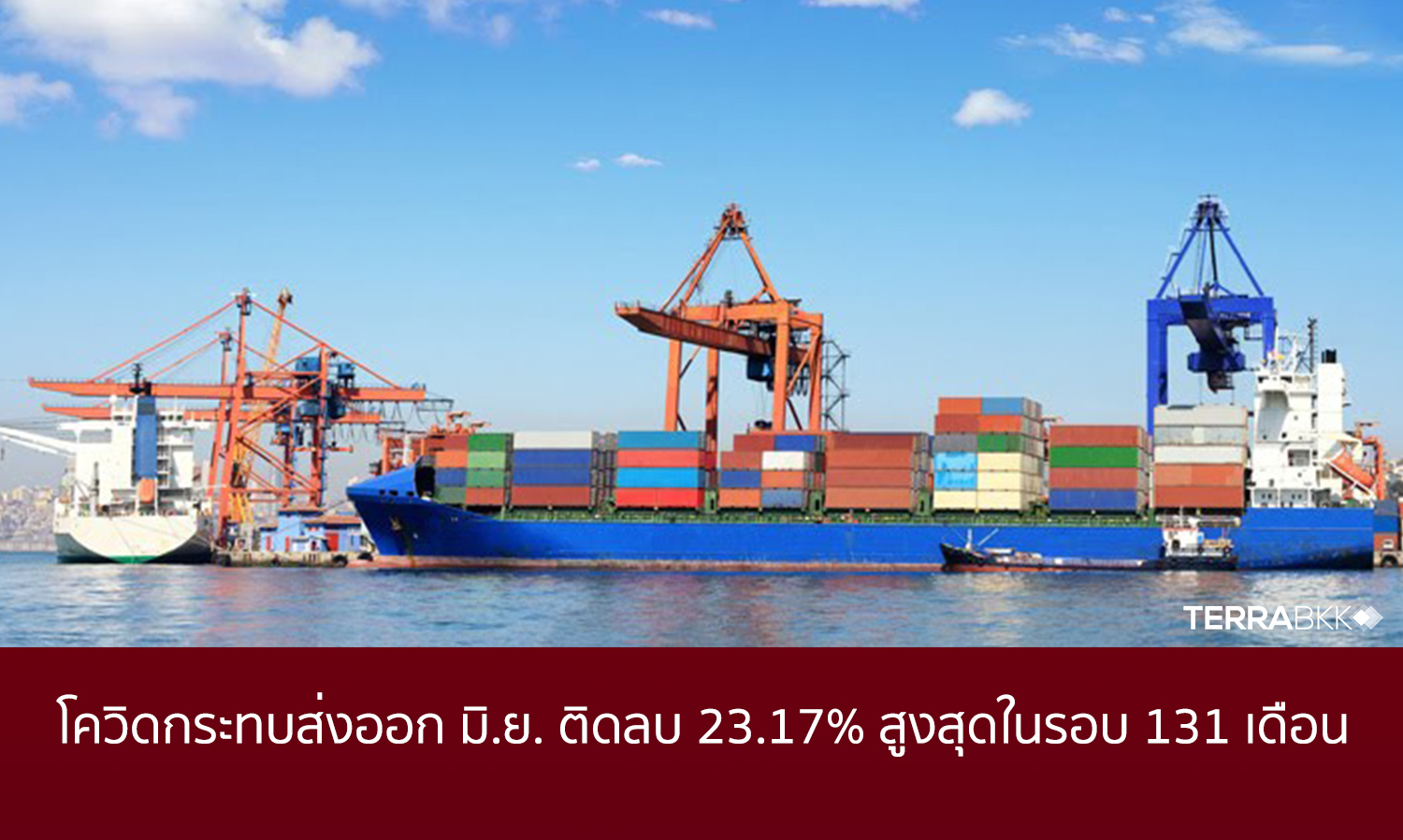
COVID-19 Impacts Exports: June Sees 23.17% Decline, Highest in 131 Months
In June 2020, Thailand's exports fell by 23.17%, marking the largest decline in 131 months due to the COVID-19 crisis affecting major importing countries. It is anticipated that the annual decline could reach between 8% and 9%.

Ms. Pimchanok Wonpatravanich, Director of the Trade Policy and Strategy Office (TPSO) stated that Thailand's exports in June 2020 were valued at 16,444.3 million USD, a decrease of 23.17%, representing the most significant contraction in 131 months since July 2009.
Imports were valued at 14,833.9 million USD, down 18.05%, resulting in a trade surplus of 1,610.4 million USD.
In the first six months of 2020 (January to June), exports totaled 114,343 million USD, a decrease of 7.09%, while imports amounted to 103,642 million USD, down 12.62%, leading to a trade surplus of 10,701 million USD.
The factors contributing to the decline in exports continue to stem from the impact of the COVID-19 pandemic, which has pressured global trade and affected exports from many countries, including Thailand. There is also a risk of a second wave of outbreaks that could lead to further lockdowns, impacting the economic recovery of several countries. Additionally, the ongoing conflicts between the U.S. and China, as well as between China and India, have affected global trade and economic policies. Oil prices remain lower than the same period last year, leading to a continued decline in oil-related exports, and the strengthening Thai baht has impacted Thailand's competitiveness.
Exports of key agricultural products have contracted, including rice, rubber, sugar, and cassava products, as well as industrial goods such as automobiles and components, jewelry, and accessories, due to reduced demand as consumers prioritize essential goods. Plastic pellets have also decreased in line with oil prices.
However, electronics exports show signs of recovery, while food products have performed well due to increased demand, such as seafood, fresh chicken, seasonings, beverages, pet food, vegetables, and fruits. Products related to remote work have also seen an increase, including computers, furniture, ovens, microwaves, refrigerators, and washing machines, along with medical supplies and rubber gloves that have seen increased exports.
"Looking ahead, the export outlook for the remainder of the year is expected to improve as many countries implement economic stimulus measures, leading to a recovery in spending. For Thailand's annual exports, if the average monthly export value is 18,000 million USD from now on, the annual decline will be 8%. However, if exports exceed 21,988 million USD per month, there is a chance for positive growth."
Nonetheless, the opening of key border crossings to facilitate transportation through multiple channels is expected to allow exports to China to continue expanding in line with the country's economic recovery and effective outbreak control. At the same time, the U.S. market is beginning to expand again as the economy reopens.
Thank you: Trade Policy and Strategy Office (TPSO)