Songkhla City Development Uses Smart Health to Address COVID-19 Issues
Currently, operations are underway in the border district of Songkhla province. Following this, efforts will accelerate to cover all five border provinces in the southern region, with plans to present to the provincial communicable disease committee for consideration.
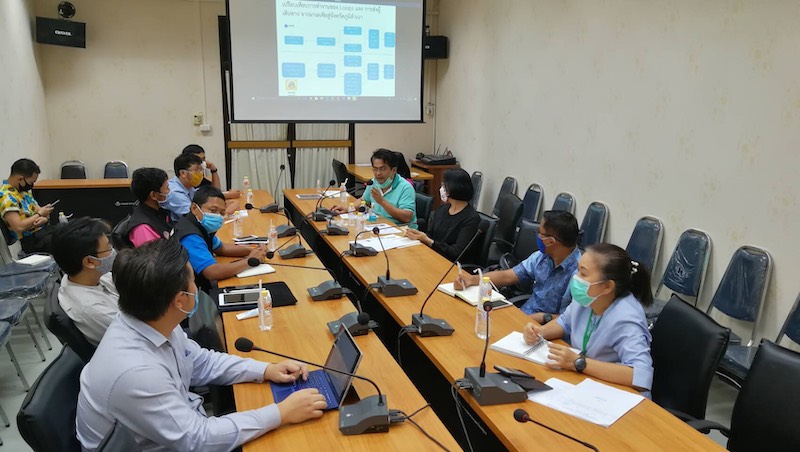
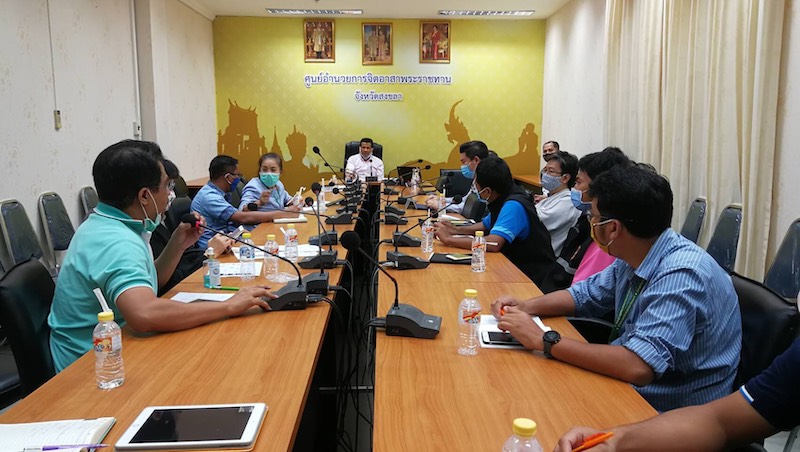
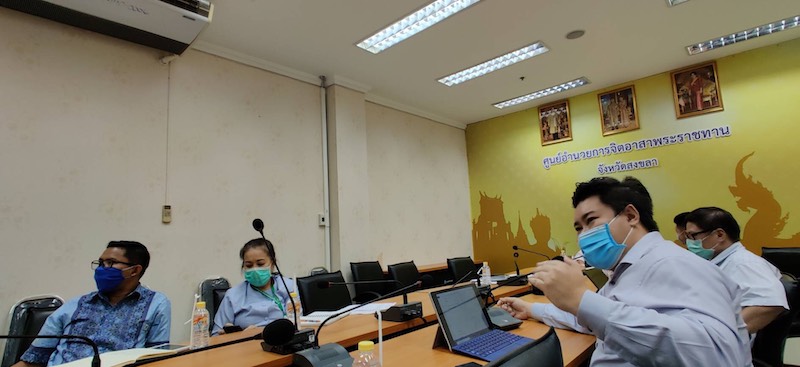
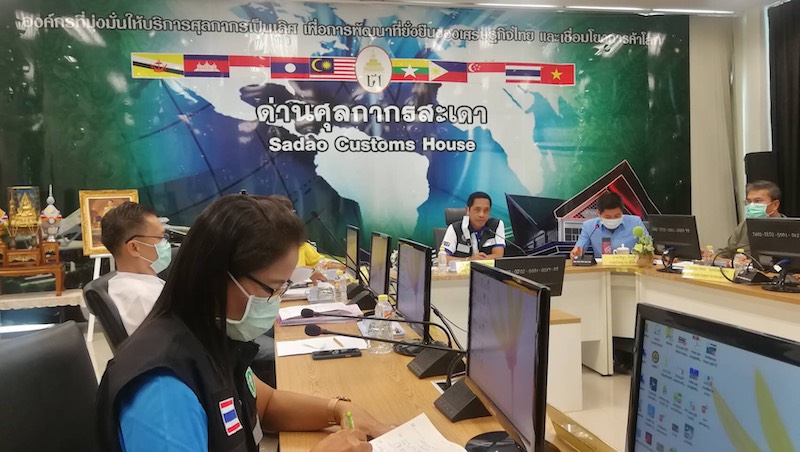
During this time, the five southern border provinces are facing significant challenges with the COVID-19 virus due to the continuous arrival of Thai nationals returning from Malaysia. To ensure preparedness, Songkhla City Development Co., Ltd. has collaborated with relevant agencies to implement the intelligent system "Smart Health" for recording data on Thai individuals entering the country before they are sent to quarantine facilities, ensuring that each location is adequately prepared.
This collaboration includes an exclusive interview with Dr. Pairoj Chaijirathikul, head of the project "Economic Development Plan for Hat Yai City to Enhance the Competitive Potential of Songkhla Province," along with the project "Study of Tools and Processes for Smart City Development," supported under the regional and provincial development plan 4.0 by the Office of the Promotion of Science, Research, and Innovation (TSRI). He discussed the readiness and cooperation in using Smart Health to combat the ongoing COVID-19 outbreak in Songkhla province and the neighboring border provinces, emphasizing that the COVID-19 situation is being monitored alongside the overall status of the province and the country.
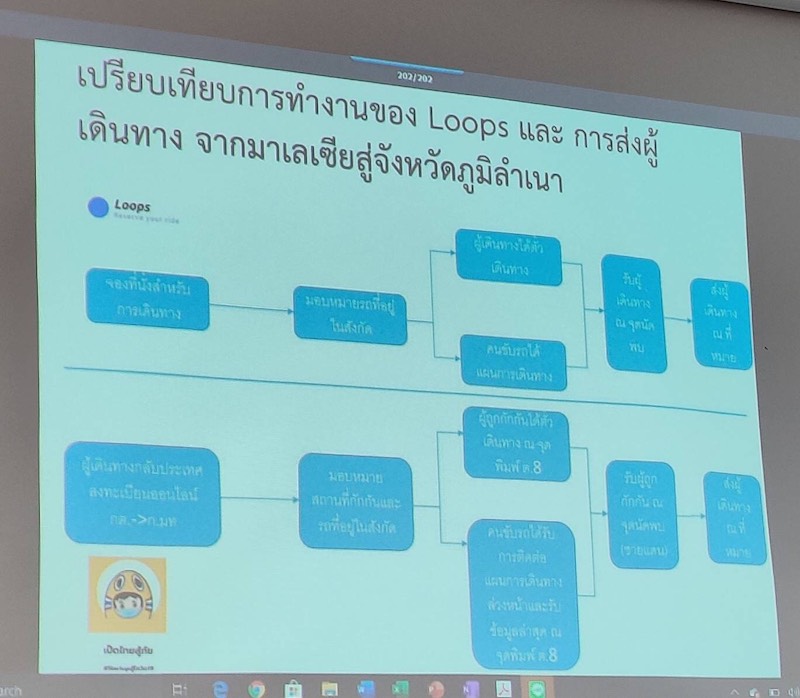
Initially, data on travelers entering Thailand is being collected to identify who they are and where they are located, creating big data to determine where they need to be quarantined for 14 days and where those who have completed quarantine will go, along with their status. This information is connected with the Department of Disease Control at international checkpoints across various border locations to prevent evasion of quarantine.
The continuity of this data allows each quarantine facility to plan adequately, relieving the burden on staff. Quarantine individuals will receive various conveniences, enabling a quicker transition to practical implementation, and various levels of management can monitor results at all times.
Importantly, there are currently enough hotels for quarantine, and medical personnel are aware of the patients' statuses in advance, allowing for planned and effective care while minimizing contact with patients or those under observation. The Smart Health system significantly aids in this regard, functioning seamlessly. Hotels and medical staff can connect to the system comprehensively. Currently, operations are underway in the border district of Songkhla, with plans to expand to all five southern border provinces and present to the provincial communicable disease committee for further consideration.
The operational process will begin from the moment individuals enter the country until they exit quarantine, allowing data to be sent to relevant areas for monitoring and ensuring safety, confirming that no transmission occurs after the 14-day quarantine period.
“All involved units can utilize the database for analysis to effectively respond and plan for care and treatment more accurately and quickly. Preliminary data indicates that on May 4, the hotels at the Sadao checkpoint will be full, but there are also reports of individuals entering through the checkpoint without prior registration, suggesting that hotels may reach capacity as early as May 2. This allows provincial executives to make timely decisions to address the situation.”
How can the Smart Health system be further developed?
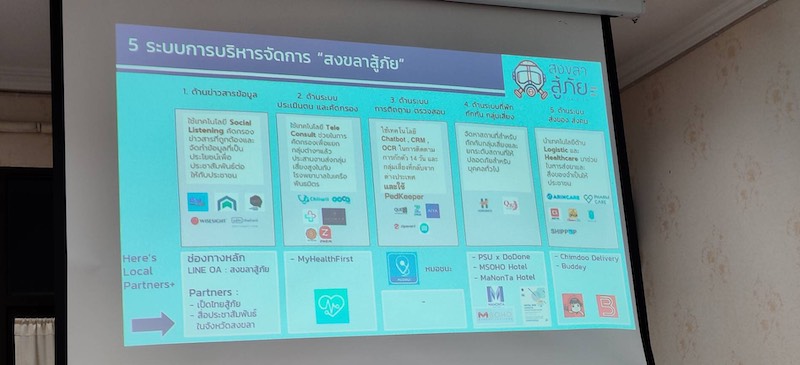
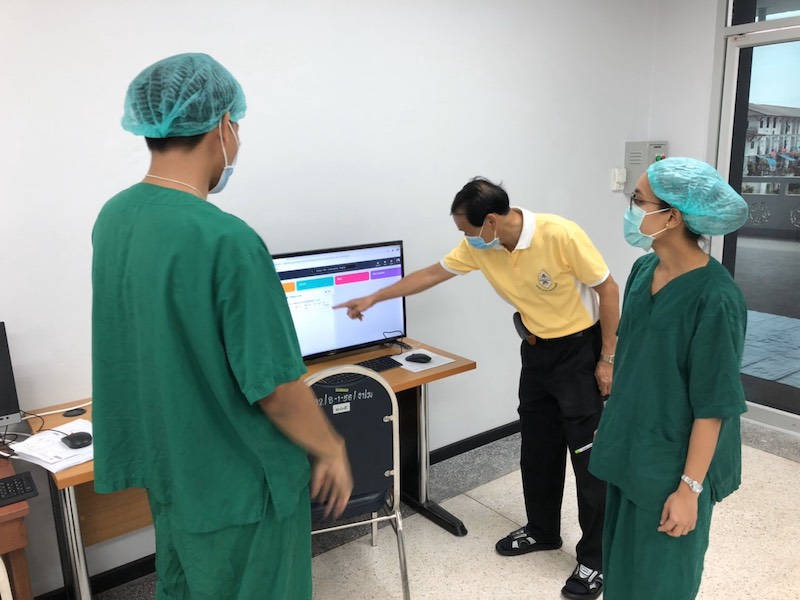
This system connects data to hospitals through the Thai Startup Association, Rajavithi Hospital, and Chulalongkorn University, bringing medical teams to assist in the Sadao area for timely data analysis and decision-making. Additionally, a teleconsultation system has been installed, allowing doctors to consult remotely without physical contact with patients, particularly for asymptomatic COVID-19 cases. Those who are asymptomatic do not need to visit hospitals, and there are arrangements for medication delivery to homes, with Hat Yai Hospital and Songkhla Nakarin Hospital currently planning to implement this system.
“The Smart Health system originated from the Thai Startup Association's initiative for Rajavithi Hospital and Chulalongkorn University. Upon receiving a request from Songkhla, immediate collaborative efforts were made under the name of Songkhla City Development Co., Ltd. and the Digital Economy Promotion Agency (depa) in the southern region, highlighting that there are many skilled Thai personnel on par with any nation globally, with Prince of Songkla University serving as the system's integrator.”
The hotels designated for quarantine at the border can accommodate 1,200 rooms, but there are concerns as unregistered individuals continue to arrive, with approximately 100 people entering through the checkpoint daily. If this number increases, it could lead to further complications.
Are there any proposals for the government?
Regarding proposals for government assistance to the public, it is suggested that the government should expedite integration to support the private sector, finding measures or tools to reopen the city without causing subsequent issues. It should not be solely the private sector's responsibility to manage problems arising from reopening. Furthermore, the provincial chambers of commerce or the joint public-private committee (JPC) should not solely place the responsibility on the private sector for reopening. The government should establish measures to control the outbreak effectively, utilizing any available tools appropriately, especially since there are various applications that the government should integrate and share for collective use.
Moreover, the COVID-19 center in the province has already been established, but measures for reopening should be integrated and controlled. If the government acts as a mediator and shares information collectively, it could benefit practical operations, as everyone shares the same objectives.
“Therefore, I support the five southern provinces as a model area for developing a COVID-19 control system. Currently, the sharing of lessons learned is not yet prominent and should be integrated more effectively, focusing on knowledge sharing and experience exchange, which would genuinely benefit all parties involved. Importantly, the five southern provinces must expedite their actions due to concerns about religious activities, particularly with the onset of Ramadan starting April 25, as behaviors like spitting could impact the spread of COVID-19. Everyone's cooperation is needed to seriously prevent this according to the measures set by the Chularajmontri.”