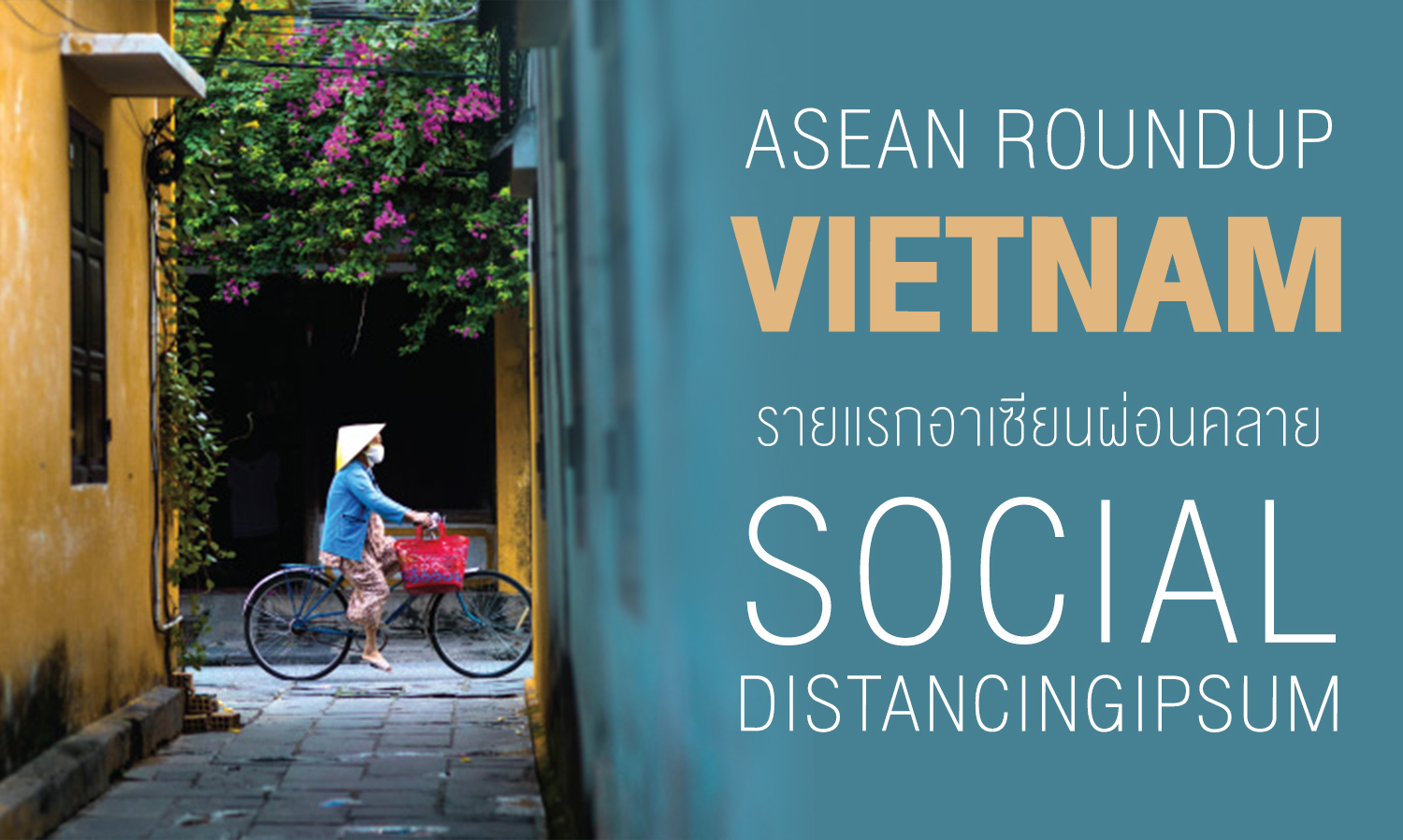
ASEAN Roundup: Vietnam First ASEAN Country to Ease Social Distancing
Vietnam's Prime Minister Nguyen Xuan Phuc has decided to allow 28 districts classified as high-risk and medium-risk areas for COVID-19 to lift physical distancing measures starting April 23, 2020, except for Ha Dong and Bac Ninh in Hanoi.
This decision was made during a meeting to review the implementation of physical distancing measures in each area, categorized by risk levels: high-risk, medium-risk, and low-risk.
Hanoi, Ho Chi Minh City, Ha Dong, and Bac Ninh, which reported new cases before the meeting, have been downgraded from high-risk to medium-risk areas.
Prime Minister Nguyen Xuan Phuc stated that while Hanoi has moved to the medium-risk category, some parts of the city still remain high-risk. The Chairman of the People's Committee of Hanoi can decide how strict the physical distancing measures should be in those high-risk areas.
The Prime Minister praised the Vietnamese people and officials for adhering to guidelines to avoid infection and transmission, urging continued caution to prevent outbreaks from incoming travelers while maintaining restrictions on international travel. He also requested that each area be vigilant and accept that they must coexist with the outbreak for some time, while ensuring the circulation of goods, employment, and economic development.
The COVID-19 Prevention and Control Committee has mandated that high-risk areas continue to follow guidelines, including gatherings of no more than 2 people, maintaining a distance of 2 meters, and wearing masks. Medium-risk areas must not have gatherings of more than 10 people outside workplaces, maintain a distance of 1 meter, and wear masks. Low-risk areas must not have gatherings of more than 20 people outside workplaces, maintain a distance of 1 meter, and wear masks.
The World Health Organization (WHO) has commended Vietnam for its excellent management of the COVID-19 outbreak, attributing it to strong government leadership and public cooperation in controlling the spread.
Takeshi Kasai, WHO Regional Director for the Western Pacific, stated that Vietnam has demonstrated government leadership in implementing measures, and the discipline of the public in following social rules to reduce the outbreak has played a significant role.
Vietnam has reported 268 confirmed cases with no deaths, which is lower than other ASEAN countries and many nations worldwide.
After six consecutive days without new cases, on April 22, 2020, the government allowed certain shops and services to reopen starting April 23, 2020, with some coffee shops opening, although the streets remained quiet.
The easing of physical distancing measures in Vietnam on April 23, 2020, is seen as a result of decisive actions in response to the outbreak, including quarantine measures and expanded contact tracing, leading to successful outbreak control.
Despite having a long border with China and numerous natural entry points, Vietnam has managed to keep its confirmed cases to 268 with no fatalities.
Vietnam was one of the first ASEAN countries to ban flights to and from China in early February when there were only 12 confirmed cases, and approximately 10,000 people were quarantined in villages near the capital, with many others under state quarantine, including returning Vietnamese citizens, using military camps as quarantine facilities, along with rapid contact tracing methods.
Currently, there are almost no international flights entering Vietnam, even after partially easing lockdown measures in early April.
Vietnam is a developing country with a large area, a border with China, and a population of 97 million, yet it has recorded no COVID-19 deaths. As of April 21, 2020, there were a total of 268 confirmed cases, with over 140 recoveries.
The absence of deaths in Vietnam can be attributed to three main strategies employed by the government to control the outbreak.
First, temperature screening and testing.
This measure has been in place since February. Travelers arriving at major airports in Vietnam must undergo temperature checks and provide health information, including contact details, travel history, and health background. This measure applies to everyone entering major cities and some provinces by land, as well as anyone visiting government offices and hospitals.
Individuals with a temperature above 38 degrees Celsius are sent to the nearest hospital for further testing, and those who conceal information or refuse to provide it face legal action. Businesses, including banks, restaurants, and residential buildings, must also implement screening.
Additionally, intensive testing is conducted nationwide, with testing sites established throughout cities where citizens can get tested. In some cases, communities near confirmed cases, which may include entire streets or villages, must undergo testing and quarantine.
By March 5, 2020, Vietnam approved the use of three locally produced testing kits, each costing less than $25 and providing results within 90 minutes, significantly aiding the government's intensive testing strategy.
Second, lockdown targeted areas.
Vietnam's second measure involves quarantine and lockdown. Since mid-February, Vietnamese citizens returning from abroad must be quarantined for 14 days and tested for COVID-19. This measure also applies to foreigners entering Vietnam. For those who have been in contact with confirmed cases, information is disseminated to encourage them to enter quarantine voluntarily, and if someone is found to have been in contact with a positive case, they are asked to self-quarantine.
In March, Vietnam began to lockdown entire cities and specific areas within cities. Intercity travel was heavily restricted. In Da Nang, individuals not registered as residents in the city wishing to enter must undergo a 14-day quarantine at government-designated facilities at their own expense.
In some cases, villages with around 10,000 residents were locked down even with just one confirmed case, including the lockdown of Bach Mai Hospital due to a staff member testing positive.
Third, continuous communication.
Since early January, the Vietnamese government has communicated with citizens about the seriousness of the novel coronavirus, clearly stating that COVID-19 is not just the flu but much more severe, urging citizens not to risk their lives or others.
The government has employed creative communication methods, with various state agencies, including the Prime Minister, the Ministry of Health, and local governments, providing information to the public daily, including detailed symptoms and preventive measures via mobile phones nationwide.
The government has also collaborated with information platforms like Zalo to update information and has produced various media nationwide, including posters in many cities, reminding citizens of their role in curbing the virus outbreak. At the same time, the government has disclosed information about individuals who escaped quarantine, even without officially announcing their names.
By implementing these three measures together, Vietnam has avoided large-scale community outbreaks, which, if they had occurred, would have overwhelmed the healthcare system in Ho Chi Minh City, which has a population of 11 million.
Moreover, while these three measures may not be favored by liberal thinkers, they have proven effective, allowing the healthcare system time to treat each patient without any deaths. Vietnam's approach may serve as a model for other developing countries.
Indonesia Bans Air and Sea Travel Until June
Indonesia has imposed a ban on travel, covering both domestic and international air travel and sea travel, from April 24, 2020, until June 1, temporarily, to prevent the further spread of the virus.
Novy Riyantho Rahardjo, Director of Aviation at the Ministry of Transportation, announced that air travel would be suspended until June 1, while Agus Purnomo, Director of Marine Transport, stated that sea travel would cease until June 8, except for cargo transport and repatriation of citizens or foreign nationals, as well as travel for government officials, diplomats, and international organization personnel.
Meanwhile, the Asian Development Bank (ADB) has approved a budget of $1.5 billion for Indonesia to manage the outbreak's impact on public health, livelihoods, and the economy.
Matsuzaku Asakawa, ADB President, stated that this funding would help Indonesia address the challenges posed by the outbreak, with the government prioritizing assistance to vulnerable groups, including women.
“Quick disbursement of funds is part of ADB's support package to assist Indonesia in managing the outbreak, in close collaboration with other development organizations,” Asakawa said, commending the Indonesian government for implementing strong economic and fiscal measures and coordinating effectively.
Malaysia Establishes Food Security Committee
Datuk Seri Dr. Ronald Kiandee, Malaysia's Minister of Agriculture and Food Industry, announced that the government will soon establish a Cabinet Committee on Food Security, chaired by Prime Minister Tan Sri Muhyiddin Yassin.
This committee will define the country's food security policy.
Dr. Ronald stated that the agricultural food business will be a key target for the agricultural sector to achieve the objective of enhancing the country's food security and increasing income for frontline agricultural businesses.
The goal is to strengthen the food supply chain, improve delivery services, enhance knowledge of technology and skills, and promote adherence to good agricultural practices. Additionally, the ministry has plans to implement measures post-COVID-19 to support farmers in recovering from the outbreak's impacts.
The ministry will play a more significant role in accessing new markets while encouraging investors to reduce production costs in the agricultural sector.
Under the Twelfth Malaysia Plan (RMK-12) and the National Agro-Food Policy (NAFP) 2.0, the government will modernize the agricultural business by leveraging the Industrial Revolution 4.0.
This aims to improve security and safety by increasing efficiency, raising income, and attracting younger generations to become agricultural entrepreneurs, thereby increasing the agricultural sector's contribution to GDP.
Dr. Ronald noted that the agricultural sector faces challenges such as low mechanization and automation, reliance on foreign labor, lack of private investment and funding, difficulty accessing markets, and inconsistent subsidy mechanisms, as well as a shortage of quality seeds and breeding stock.
“One of the main obstacles to achieving food security is our dependence on imports for meat, vegetables, and fruits from temperate regions, leading to a trade deficit in agricultural food, costing us over 50 billion ringgit in imports,” Dr. Ronald Kiandee stated, adding that the self-sufficiency level (SSL) for domestically produced fruits is 78.4%, for vegetables is 44.6%, and for meat is 22.9%.
Dr. Ronald called for a transformation of the agricultural sector, moving beyond the negative image of being dirty, dangerous, and difficult, emphasizing that the involvement of younger generations is crucial for implementing the Industrial Revolution 4.0 and modernizing Malaysia's agricultural sector through the application of new technologies and techniques.
Currently, only 8.5% of farmers are under 40 years old, and the Young Agropreneur Programme run by the ministry has created over 5,000 agricultural food entrepreneurs.
Dr. Ronald warned that the public should not hoard supplies, as the ministry is prepared to manage the food supply chain during the government's movement control measures, and emphasized that Malaysians should appreciate those on the front lines, including farmers, fishermen, and food producers, who risk their lives to ensure a sufficient and continuous food supply during the outbreak.
U.S. Provides Emergency Health Aid to ASEAN of $35.3 Million
The Minister of Foreign Affairs participated in a special ASEAN-U.S. Foreign Ministers' meeting on the COVID-19 outbreak via video conference to discuss expanding concrete health cooperation. Thailand emphasized leveraging the digital economy to mitigate the economic impacts of COVID-19 and to care for citizens during the crisis. The U.S. announced emergency health assistance to ASEAN member states totaling $35.3 million and the “ASEAN-U.S. Health Futures” initiative, as well as plans to enhance the CDC in the region.
On April 23, 2020, Minister Don Pramudwinai attended the special ASEAN-U.S. Foreign Ministers' meeting on COVID-19 via video conference, chaired by Saleumxay Kommasith, Minister of Foreign Affairs of the Lao People's Democratic Republic, as the coordinator for ASEAN-U.S. relations, alongside U.S. Secretary of State Michael Pompeo and all ASEAN foreign ministers, including the ASEAN Secretary-General.
The meeting reiterated the shared commitment to expanding concrete health cooperation and exchanged views on various measures to combat the COVID-19 outbreak and its impacts on health systems, economies, and societies. During the meeting, the U.S. announced emergency health assistance to ASEAN member states totaling $35.3 million, including a new initiative called “ASEAN-U.S. Health Futures.” Additionally, the U.S. plans to enhance the Centers for Disease Control and Prevention (CDC) located in the region to support disease surveillance and monitoring in ASEAN in the future.
The Minister of Foreign Affairs emphasized cooperation points, including (1) timely and transparent exchange of emergency health information to address COVID-19, proposing regular discussions between health authorities on both sides, and commending both sides for holding a ministerial meeting of health ministers and health experts at the end of April; (2) supporting the U.S. in accelerating research on drugs and vaccines for COVID-19; (3) proposing both sides fully utilize the digital economy to mitigate economic impacts and supply chain disruptions, particularly in essential goods, medicines, and medical equipment, and expedite cooperation on digital infrastructure in ASEAN, especially the ASEAN Digital Hub, which is Thailand's proposal; (4) cooperation in caring for citizens on both sides during the crisis; and (5) Thailand thanking the U.S. for bilateral health assistance through the U.S. Agency for International Development (USAID) and the CDC.
The special ASEAN-U.S. Foreign Ministers' meeting was the first video conference to address the COVID-19 situation, highlighting the U.S. role as an important strategic partner of ASEAN. The cooperation, assistance, and initiatives from the U.S. are immensely beneficial to ASEAN in addressing COVID-19 and preparing for future public health emergencies.
Datuk Seri Hishammuddin Hussein, Minister of Foreign Affairs, proposed that ASEAN establish a new mechanism to send surplus food from the region to other countries facing food shortages due to the COVID-19 outbreak.
Datuk Hussein stated that the success of this new initiative would not only boost trade from ASEAN to the world but also increase income for farmers, livestock breeders, and fishermen in ASEAN.
“In normal times, our surplus food would be exported to foreign markets to avoid waste, but during these abnormal times, markets are closed indefinitely, depending on when the global economy will return to pre-outbreak conditions,” Datuk Hussein said at the meeting.
Datuk Hussein noted that Malaysia has proactively ensured that key economic sectors remain operational during movement control and has established a Food Security Fund.
SOURCE: www.thaipublica.org