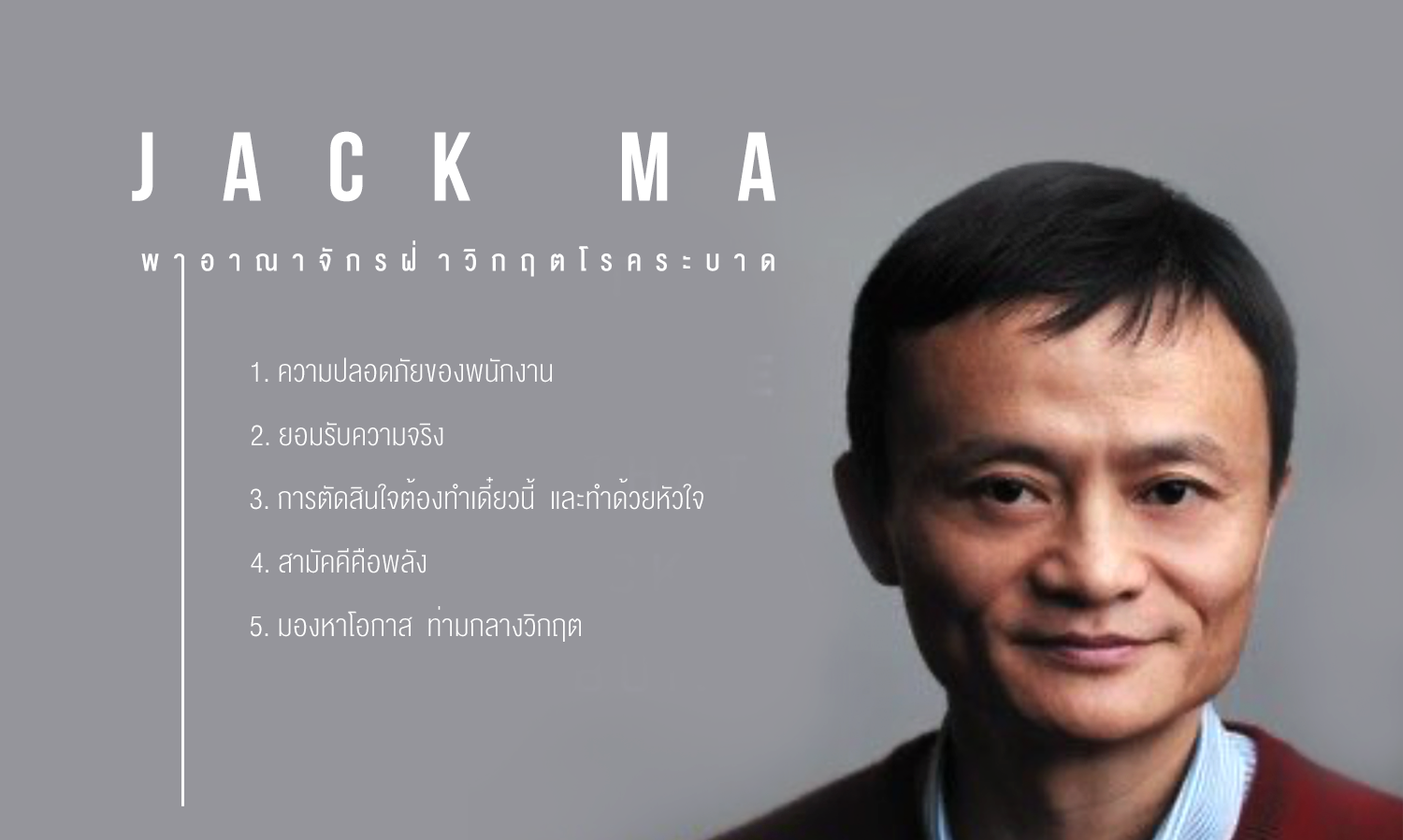
Jack Ma's Strategies to Help His Empire Survive the Pandemic Crisis
As the world battles an unknown pandemic with no end in sight, business owners and SMEs are struggling to adapt in order to keep their businesses afloat. What should entrepreneurs do in such a recessionary economy amidst a pandemic? Here are 5 lessons from the e-commerce mogul Jack Ma, who successfully navigated his empire through the SARS crisis in 2003, allowing it to thrive to this day. <\/p>
Back in March 2003, a mysterious outbreak known as SARS emerged, causing acute respiratory issues and spreading to 26 countries worldwide, infecting over 8,000 people and resulting in nearly 800 deaths. At that time, Jack Ma had just founded Alibaba, an online wholesale e-commerce platform, four years prior in 1999, and was facing a significant challenge with the outbreak in China while the company was still not profitable.<\/p>
Alibaba had plans to launch its retail e-commerce platform, Taobao, but had to delay due to the closure of various shops in China. This inevitably impacted Alibaba, as retail, which was a core business, was unable to sell products, and consumers were confined to their homes. Furthermore, some employees contracted SARS while attending a fair, leading the Chinese authorities to temporarily shut down the company, forcing everyone to stay at home. For business owners, this was a disaster, but not for Jack Ma. So how did he manage to overcome that crisis?
<\/p>
1. Employee Safety is the Top Priority <\/p>
Jack Ma significantly increased the budget for employee health care because if one employee fell ill, it could affect others and ultimately impact the company's overall operations. Therefore, employee health took precedence over company profits, and when one employee contracted the virus, he immediately ordered all employees to work from home.<\/p>
2. Accept Reality <\/p>
All work was postponed indefinitely, and customers canceled orders. Jack Ma told his employees that change is normal and that they should not dwell on lost opportunities, as this would not help them plan for new opportunities in the future. Instead of focusing on the damage caused, they should accept reality and move forward. The quicker they accepted the changes, the faster they could find new opportunities, which is exactly what Jack Ma did by immediately looking for opportunities in the retail e-commerce plan with the Taobao website.<\/p>
3. Decisions Must Be Made Now and with Heart<\/p>
During a crisis, business leaders must calculate costs to keep their businesses alive and determine how much to cut. Often, tough decisions need to be made, which most people tend to postpone. However, delaying decisions can worsen the situation. Jack Ma stated that when it comes to preserving the company, one must act. One of the decisions entrepreneurs face during a crisis includes shutting down operations or laying off employees temporarily or permanently. At that time, Jack Ma struggled with the decision because employees had shared both hardships and successes for a long time. However, he had to make a prompt decision with heart. He had previously made a wrong decision during the dot-com bubble crisis, and when it became necessary to lay off employees, he personally called each affected employee to explain that they would stay in touch and promised to rehire them once the company overcame the crisis, which he fulfilled.<\/p>
4. Unity is Strength <\/p>
During the SARS crisis, Jack Ma communicated openly with employees about the challenges they faced, seeking their cooperation and outlining the company's strategies to overcome the crisis. He made it clear that Alibaba's survival was not just for the company itself but also for the entire business ecosystem connected to Alibaba. Additionally, he used the company's internal communication system to regularly update employees, fostering morale and unity while ensuring they understood the company's situation. He also provided equipment for employees to work from home conveniently. Most employees understood and cooperated well, with everyone taking their desktop computers home and working hard for 12 hours a day to ensure customers were not affected by the work-from-home arrangement. For employees who fell ill, Jack Ma would immediately allow them to take leave and would call to offer encouragement. Even though employees were scattered, Jack Ma organized internal activities to promote unity, such as online karaoke competitions and casual chats among colleagues.<\/p>
5. Look for Opportunities Amidst the Crisis <\/p>
There are always opportunities in a crisis. Jack Ma advised looking for potential customer segments and how the company could assist them. He recognized that SMEs across the country had potential but limited capital. Opening a store during the pandemic was challenging, but by utilizing online tools to help this customer segment grow, Alibaba could thrive as well. Therefore, Alibaba collaborated with the government to bring offline SMEs onto the online platform. Even though the SARS outbreak was still ongoing, Jack Ma decided to launch the online retail website Taobao on May 10, 2003, which received a positive response as consumer demand for online shopping increased during the outbreak, while sellers sought sales channels when their stores were closed. Ultimately, just a few years later, Taobao successfully captured market share from eBay in China.<\/p>
In conclusion, although Jack Ma's lessons during the SARS crisis may not be as severe as the ongoing COVID-19 crisis, one clear takeaway is that a good leader can protect and care for employees with heart, possess a broad vision, not cling to the status quo, and be ready to embrace unpredictable changes. As the saying goes, "You can tell a leader's capability during a crisis."<\/p>
<\/strong><\/p>
Sources<\/p>
https://ibusiness.co/detail/9630000024871<\/a><\/p>
https://www.bbc.com/thai/international-51275277<\/a><\/p>
https://www.blockdit.com/posts/5e80426865634e0cacef33c3<\/a><\/p>
https://www.ceochannels.com/jack-ma-of-alibaba-defeat-sars-two-decades-ago/<\/a><\/p>
<\/p>