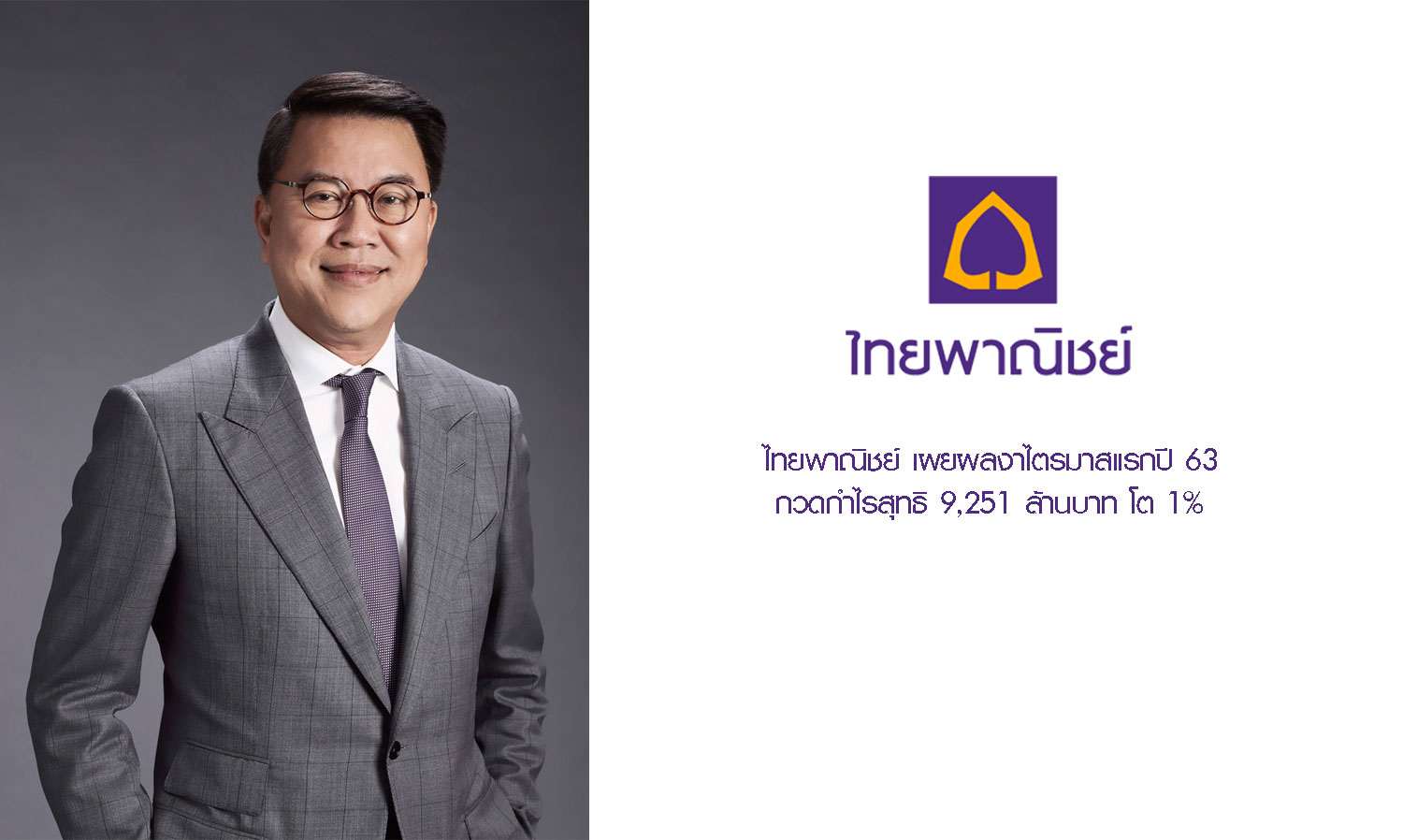
SCB Reports Q1 2020 Results with Net Profit of 9.251 Billion Baht, Up 1%
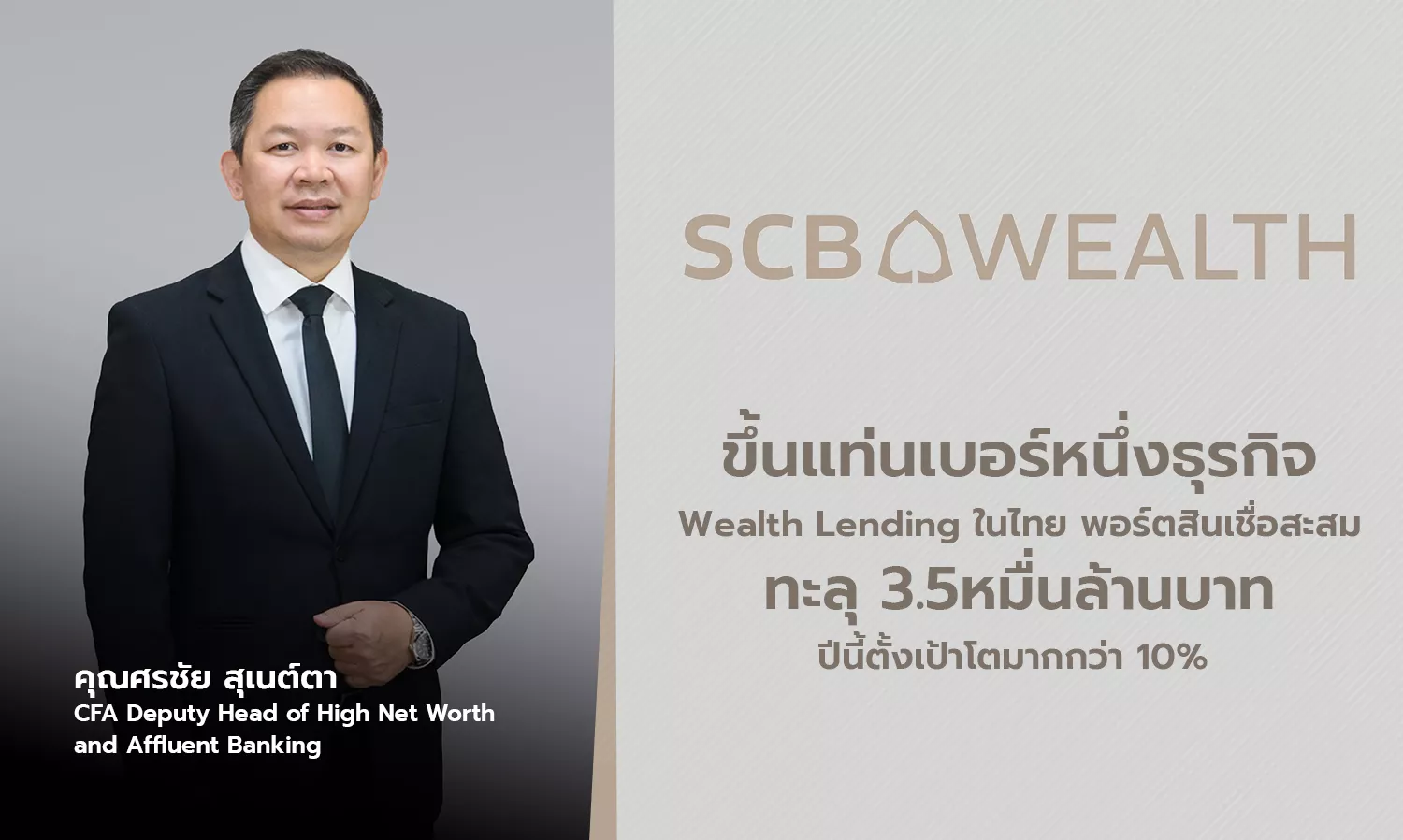
Mr. Arthit Nanthawithaya, Chief Executive Officer of Thai Commercial Bank Public Company Limited (SCB), announced the bank's performance for the first quarter of 2020, revealing a net profit of 9.251 billion baht, an increase of 1%. This growth was driven by a 9% rise in total income and a reduction in operating expenses. At the same time, the bank has increased its reserves due to the current economic uncertainties. The net interest income amounted to 25.777 billion baht, up 4%.
Non-interest income reached 11.864 billion baht, a 20% increase, primarily due to improved recurring fee income. In Q1 2020, wealth management fee income grew by 31% year-on-year, totaling 2.022 billion baht, while income from bancassurance increased fivefold compared to the same period last year, reaching 3.159 billion baht, largely due to collaboration with FWD Group in offering life insurance products.
Operating expenses totaled 16.393 billion baht, down 8% from the previous year, attributed to the absence of one-time employee-related costs associated with new labor laws recognized in the prior year, and the exclusion of Thai Commercial Life Insurance's operating expenses from the consolidated financial statements after the bank sold its shares. Overall, the cost-to-income ratio for Q1 2020 decreased to 43.6%.
"In the current unfavorable economic conditions, the bank has set aside 9.726 billion baht in Q1 2020 to prepare for an increase in non-performing loans, in line with the new accounting standards for estimating asset impairments in a slowing economic cycle. As of the end of March 2020, the bank's non-performing loan ratio stood at 3.17%, while the provision coverage ratio for non-performing loans was sufficiently high at 140%," Mr. Arthit stated.
The bank maintains a strong capital position with a Common Equity Tier 1 (CET1) ratio of 16.1% and a total capital ratio of 17.2%. However, given the current economic situation, which is considered a crisis with high volatility and uncertainty, and with no clear timeline for a return to normalcy, the bank's board has decided to cancel the share buyback program, which was capped at 16 billion baht, to ensure the bank can support its customers.