In 2020, Overcoming the COVID-19 Crisis, Thailand's Fresh Chilled and Frozen Chicken Exports to China Expected to Grow by No Less Than 20%
Currently, China has become the second-largest export market for Thailand's fresh chilled and frozen chicken products globally (second only to Japan) after reopening its market for Thai fresh chilled and frozen chicken in April 2018, following a ban on exports since 2004 due to the bird flu outbreak in Thailand. Thailand is now the fourth-largest exporter of fresh chilled and frozen chicken to China, with exports growing by over 252.0% (YoY) in 2019. Therefore, China is a crucial export market for Thailand's fresh chilled and frozen chicken. Despite facing the COVID-19 outbreak in China since January 2020, there has been a continuous demand for Thai fresh chilled and frozen chicken.
For 2020, Kasikorn Research Center has a positive outlook on the direction of fresh chilled and frozen chicken exports to China, detailed as follows:
- The COVID-19 outbreak in China is expected to improve, which will facilitate Thai exports to China in 2020: China has announced that the COVID-19 outbreak has passed its peak, as reflected by the continuously decreasing number of new infections, signaling positive control over the outbreak. After implementing strict preventive measures for 1-2 months, including closing key transport routes to control the spread of the virus (from January 24 to February 13), the transportation of goods both domestically and internationally, including Thai fresh chilled and frozen chicken, was disrupted. However, as the situation improves, China has begun reopening its transport system since February 14, allowing Thai fresh chilled and frozen chicken to be transported to the Chinese market normally again. The export route for Thai fresh chilled and frozen chicken to China will be by sea through the Chiang Saen port in Thailand to the Kunming port in Yunnan province, from where it will be distributed to various provinces across the country by land.
- Exports of Thai fresh chilled and frozen chicken to China in the second half of the year will also be supported by 12 chicken processing plants awaiting official registration for export to China: It is expected that if COVID-19 does not flare up again in China, by the third quarter of 2020 at the latest, China will officially register these 12 Thai chicken processing plants for export after inspecting them in 2019. One reason for the expectation that China will expedite the registration of Thai plants is consumer concerns over domestic food products during outbreaks of various diseases, including COVID-19 and H5N1, which led to the culling of over 18,000 chickens. Additionally, the ongoing African Swine Fever (ASF) situation in China necessitates increased imports of all types of meat products, with fresh chilled and frozen chicken being a viable option that consumers are likely to continue to favor, as reflected in the USDA's projection that chicken imports to China will reach 750,000 tons in 2020, a 20.0% increase (YoY).
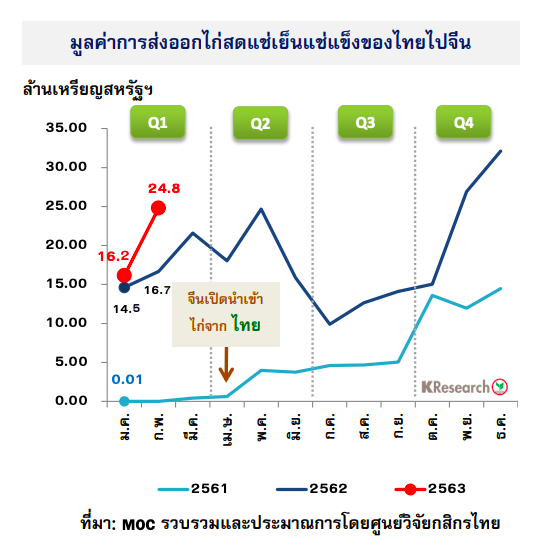
- Exports of Thai fresh chilled and frozen chicken to China in the first half of 2020 are expected to continue growing but may slow down from the first two months, which saw a growth of 31.4% (YoY) or an export value of approximately 41.0 million USD: This growth is partly due to Chinese importers placing advance orders in the first quarter of 2020 before the Chinese New Year and the lockdown, while orders for the second quarter of 2020 have been coming in continuously after the reopening of transport routes, filling Thailand's production capacity from the 16 plants producing fresh chilled and frozen chicken for export. This is due to the reduced inventory levels in China, and the Chinese customs has implemented new trade measures to support the import of agricultural and food products from abroad to facilitate quicker sales within the country, with chicken products being among those benefiting from this initiative, as they are essential food items in China.
However, the COVID-19 situation in Thailand, with an increasing number of infections, has led the government to declare a state of emergency from March 26 to April 30, 2020, and implement lockdowns in several provinces, including border closures and restrictions on interprovincial and cross-border travel to control the spread of COVID-19. This may impact production and transportation of goods to the Chinese market due to stricter inspection processes and limited loading times compared to normal conditions. Therefore, Kasikorn Research Center has a cautious outlook on Thai fresh chilled and frozen chicken exports to China in the second quarter, estimating that the growth rate in the first half of the year may expand by around 20-25% (YoY).
Thus, with expected production capacity increasing from 12 plants and the year-end delivery season likely to see more orders than usual, the overall export of Thai fresh chilled and frozen chicken in the second half of the year is expected to grow by approximately 20-25% (YoY), continuing from the first half.
Nevertheless, while the outlook for Thai fresh chilled and frozen chicken exports to China this year remains positive, Kasikorn Research Center believes that the challenges for Thai exports this year include:
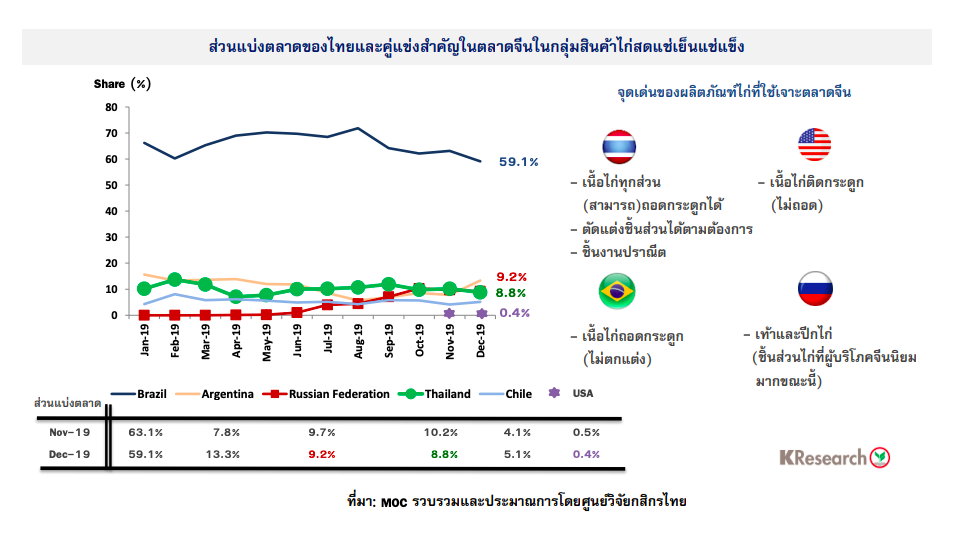
1) Increased competition in the Chinese market from new entrants allowed to compete in the chicken market, risking market share loss: Notably, the U.S. has re-entered the Chinese market this year after China reopened its market for imports in November 2019, with 172 certified plants now able to export chicken products to China. Russia is also a new competitor to watch, as it has significantly increased its market share after being allowed to export chicken products to China since April 2019, with no fewer than 23 certified plants. This intensifies the competitive pressure in the Chinese market, where Thailand already faces significant competition from Brazil, Argentina, and Chile. Although this year may not see much impact from competitors like the U.S. or Russia due to their own COVID-19 challenges, it may become a greater challenge in the future as COVID-19 subsides.
2) The slowing Chinese economy may affect consumer purchasing power: The COVID-19 outbreak has impacted people's lives, society, and China's economic development, particularly as economic activities face significant stagnation, affecting supply chains across all industries globally. Kasikorn Research Center estimates that China's economic growth rate for the entire year of 2020 may slow to a range of 1-3%, down from 6.1% in 2019. However, since fresh chilled and frozen chicken is a necessary consumer good that is hard to substitute, demand is expected to remain, although it may decrease during periods when China is controlling the outbreak, particularly affecting key customer groups like restaurants that cannot operate normally, leading to reduced demand during that time. Additionally, consumer purchasing power this year remains under a slowing economic condition, necessitating more cautious spending.
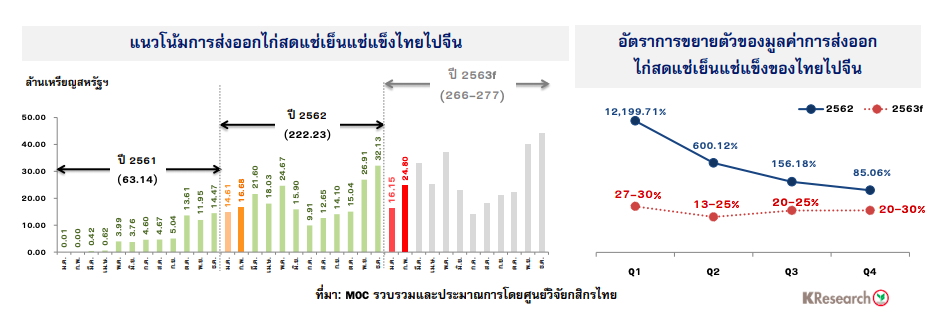
These factors indicate that while demand for chicken consumption in the Chinese market remains high, Thailand's opportunities to penetrate the Chinese market this year also face challenges. Therefore, under the assumption that transport routes are operating normally and that Chinese authorities can stabilize and control the outbreak effectively, as well as that production for export from Thailand is not adversely affected by COVID-19 and potential stricter government measures, Kasikorn Research Center initially estimates that in 2020, Thailand will have the opportunity to export fresh chilled and frozen chicken to China valued at 266-277 million USD, growing by 20-25% (YoY), despite a slowdown from the previous year due to the high base effect, but still representing a good growth rate and one of the export products that can continue to thrive in the Chinese market this year.