Finance Minister Urges Former Central Bank to Prevent Strong Baht from Harming Economy
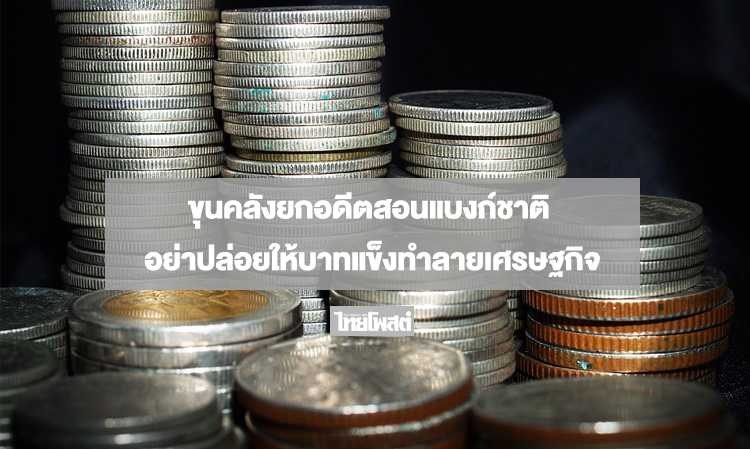
On February 7, 2019, Finance Minister Apisak Tantivorawong stated that the continuous strengthening of the Thai baht is the responsibility of the Bank of Thailand (BoT) to manage. He emphasized that explanations and actions must keep pace with the current changing circumstances.
"Some people say that during the 1997 economic crisis, the cause was monetary policy. Therefore, current monetary policy must be carefully monitored to avoid problems for the economy like in the past," said Mr. Apisak.
Mr. Apisak previously mentioned that the BoT should not allow the Thai baht to appreciate more than neighboring countries, as this would negatively impact exports and competitiveness. He suggested that intervention should be made to keep the currency at an appropriate level, weighing the effects on investment and exports.
Meanwhile, Mr. Thitinan Mallikamas, Secretary of the Monetary Policy Committee (MPC), revealed that the MPC meeting on February 6, 2019, voted 4 to 2 to maintain the policy interest rate at 1.75% per annum, believing that the Thai economy is likely to continue expanding, despite the export sector being affected by the global economic slowdown and trade tensions between China and the United States. However, tourism is showing signs of improvement, especially with Chinese tourists recovering faster than expected. Private consumption is also expected to grow in line with household income, both in and outside the agricultural sector.
The MPC expressed concerns about financial stability, noting that there are still risks to the economy in the future, such as the rising household debt level, which increased from 77.7% of GDP in Q2 2018 to 77.8% in Q3 2018, and is expected to rise further in Q4, driven by a surge in auto loans, which aligns with a significant increase in car sales at the end of the year. Additionally, they need to monitor housing loans, the expansion of assets in savings cooperatives, and the approval of loans to large businesses, which banks may assess as lower risk than they should.
On the investment front, private sector investment is expected to grow due to the relocation of production bases to Thailand and public-private partnership projects in infrastructure. However, public spending is expanding at a lower rate than anticipated, according to actual disbursements and budget frameworks for both current and investment expenditures, along with delays in some state enterprise investment projects. General inflation is under pressure from declining energy prices and faces increased risks from volatility in energy and fresh food prices.
As for the trend of the baht, it continues to be volatile, and the Bank of Thailand (BoT) is ready to monitor and intervene closely if any abnormal movements are detected. They acknowledged that the depreciation of the US dollar due to trade war issues between the US and China, combined with a slowing global economy, has led to the appreciation of emerging market currencies. Since the end of 2018, the Thai baht has appreciated by 4.1%, which is moderate and not the strongest currency in the world, being less appreciated than Indonesia's currency at 4.3%. The volatility of the baht is at 4.3%, which is lower than that of the currencies of Japan, South Korea, China, and Indonesia.
Mr. Suphan Montree, President of the Federation of Thai Industries (FTI), reported on the results of the meeting of the Joint Private Sector Committee of three institutions (JCC) that currently, the private sector is concerned about the baht's appreciation trend in the first half of the year. Since the beginning of 2019 until February 1, the baht has appreciated by 3.4%, ranking second in the region, reaching 31.31 baht per US dollar, up from 32.32 baht per US dollar at the end of 2018, only behind Indonesia's rupiah, which appreciated by 3.7%. This is due to the weakening of the US dollar, which lacks support after the Federal Reserve signaled a reduced likelihood of interest rate hikes. If the baht continues to strengthen, it will impact Thailand's export outlook for the entire year.
“Therefore, if the baht continues to appreciate significantly below 31 baht per US dollar, it will adversely affect exports, especially for small and medium-sized enterprises (SMEs) in the agricultural sector and border trade, where transactions in baht would be preferable. If this situation continues significantly, we will need to discuss with the Bank of Thailand (BoT) officially to implement more protective measures. The acceptable level for the private sector is between 31.50-32.50 baht per US dollar, or an average of 32 baht per US dollar. Another concern for the private sector is not wanting the BoT to raise the policy interest rate throughout this year, keeping it at 1.75%, especially after the Fed signaled a slowdown in interest rate hikes,” Mr. Suphan stated.
Thank you for the information from www.thaipost.net