Phuket Rises as a Hot Destination
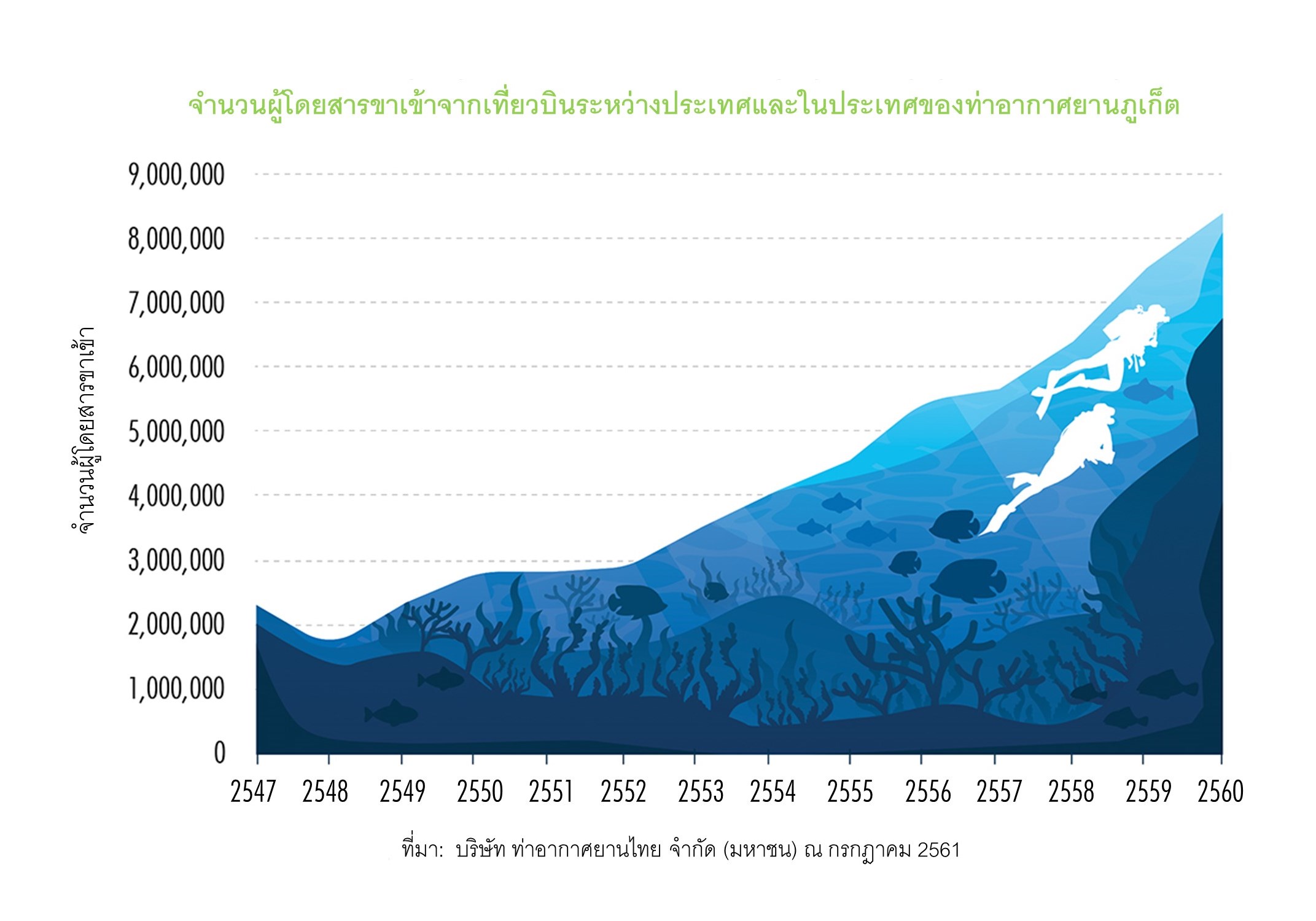
Bangkok, August 7, 2018 – With 8.4 million tourists visiting Phuket in 2017 alone, it is clear that Phuket is the most popular island among tourists in Thailand. The number of visitors has broken records for four consecutive years. Looking back over the past few years, this island has undergone significant developments that have transformed it into what it is today.
In the past, Phuket was primarily a destination for international backpackers, with only a few small resorts available. The number of tourists gradually increased after the Sarasin Bridge was completed in 1967. By the 1970s, Phuket became more well-known with the development of significant projects, such as Amanpuri, the first luxury hotel and villa, which opened in 1987.
Phuket International Airport began operating international flights in 1984, further increasing the island's popularity among tourists. In 1988, the Airports of Thailand (AOT) took over the management of Phuket Airport, which was developed to accommodate up to 966,294 passengers. Its status as an international airport allowed it to continuously support the growth in passenger numbers.
The development of projects on the island began with the Laguna Phuket project in 1988, which was the first integrated resort in Asia, covering thousands of acres that were once tin mines. At the same time, CBRE entered the Phuket market for the first time as a sales agent for the Allamanda project within Laguna Phuket, which was the first large condominium resort project in Phuket completed in 1993.
After a decade of prosperity, Phuket faced challenges from the Asian financial crisis in 1997 and the tsunami disaster in 2004, the same year CBRE opened its branch in Phuket. The island continued to grow as both a tourist destination and a location for second homes, as referenced by Forbes magazine's ranking of the top five tourist destinations in 2005. Despite being significantly impacted during the global financial crisis in 2008, the number of tourists doubled from 1 million in 2007 to 2 million in 2010.
The influx of tourists led to plans for expanding Phuket Airport in 2014, with the first phase completed in 2016. The number of international flight passengers in 2017 reached 8.4 million, an increase of 800% from 2007. Tourism in Phuket has shifted from a focus on Asian and European tourists to a significant market of Chinese tourists, who made up 37% of visitors in 2017, something unimaginable back in 1988.
Currently, Phuket has a total of 23,000 hotel rooms, not including guesthouses, 8,000 vacation condominiums, and 4,000 vacation villas. The vacation rental market has transformed; today, buyers are not only looking for a place to relax during holidays but also want to generate income from their vacation homes. This means developers need to adapt their products to meet buyer demands and comply with hotel business licensing requirements to allow for daily rentals.
Vacation rental projects managed by hotel chains or Branded Residences, such as Banyan Tree and Sheraton, as well as luxury villas priced over 500 million baht each, like Layan Residences by Anantara, Avadina Hills by Anantara, and The Estate at MontAzure, all target high-end market customers.
Ms. Prakaya Phet Meechusarn, Director of CBRE Phuket's Vacation Home Sales Department, has witnessed the evolution of the market since joining CBRE in 2004. “Initially, most buyers were foreigners working in Asia looking for a second home. The market then expanded to include Russian buyers, and now it includes Chinese and other Asian buyers, as well as Thais. Thai buyers also want to benefit from the growing tourism by purchasing properties from projects that generate rental income.”
The success of the Phuket real estate market has extended to neighboring provinces, and now we can refer to the "Phuket and Neighboring Markets" (Greater Phuket Market) or "Andaman Coast Market" for hotel businesses, including opportunities for developing vacation rentals from Khao Lak to Krabi.
Over the past 30 years, Phuket has undergone continuous transformation from an undeveloped island primarily focused on tin mining and rubber plantations to one of the top tourist destinations. In the future, there are growth opportunities from tourists who live within a four-hour flight distance, who are beginning to travel abroad for holidays. This trend emerged in Europe during the 1970s and is now occurring in Asia, driven by the growth of low-cost airlines that make air travel accessible to almost everyone. Hotel and vacation rental developers are benefiting from this, but there are still challenges in the era of mass tourism, from environmental care to managing the excessive number of tourists, as well as efforts to balance the need for tourism industry growth with maintaining Phuket's appeal as a tourist destination.
Thank you for the information from www.cbre.co.th