Draft PDP2026 Plan Towards Net Zero 2050 (Kasikorn Research Center Infographic)
The draft PDP2026 plan has been developed to accommodate the changing assumptions regarding electricity demand in Thailand in line with global circumstances. It is projected that by 2050, Thailand will require 8,611 MW of electricity from Data Centers, 9,639 MW from the Eastern Economic Corridor (EEC) industrial estates, and a total of 24.4 million electric cars and motorcycles. To align with the country's Net Zero target by 2050, the draft PDP2026 clearly signals a shift in the electricity system that will not add new coal-fired power plants but will focus on generating 70% of electricity from clean energy to reduce greenhouse gas emissions, allowing the private sector access to electricity with lower carbon intensity.
• For electricity generation to meet demand, the draft PDP2026 promotes clean energy production from Solar Farms, the use of Battery Energy Storage Systems (BESS), considers pilot projects for small modular nuclear reactors (SMR), and evaluates the inclusion of carbon capture and storage (CCS) technology in the PDP plan at appropriate times to avoid burdening the public, while keeping the average electricity price throughout the plan below 4 baht per unit. Additionally, the draft PDP2026 will create new opportunities for clean energy businesses and mark the beginning of a green electricity market through Direct PPAs, which will provide the private sector with more direct access to clean electricity.
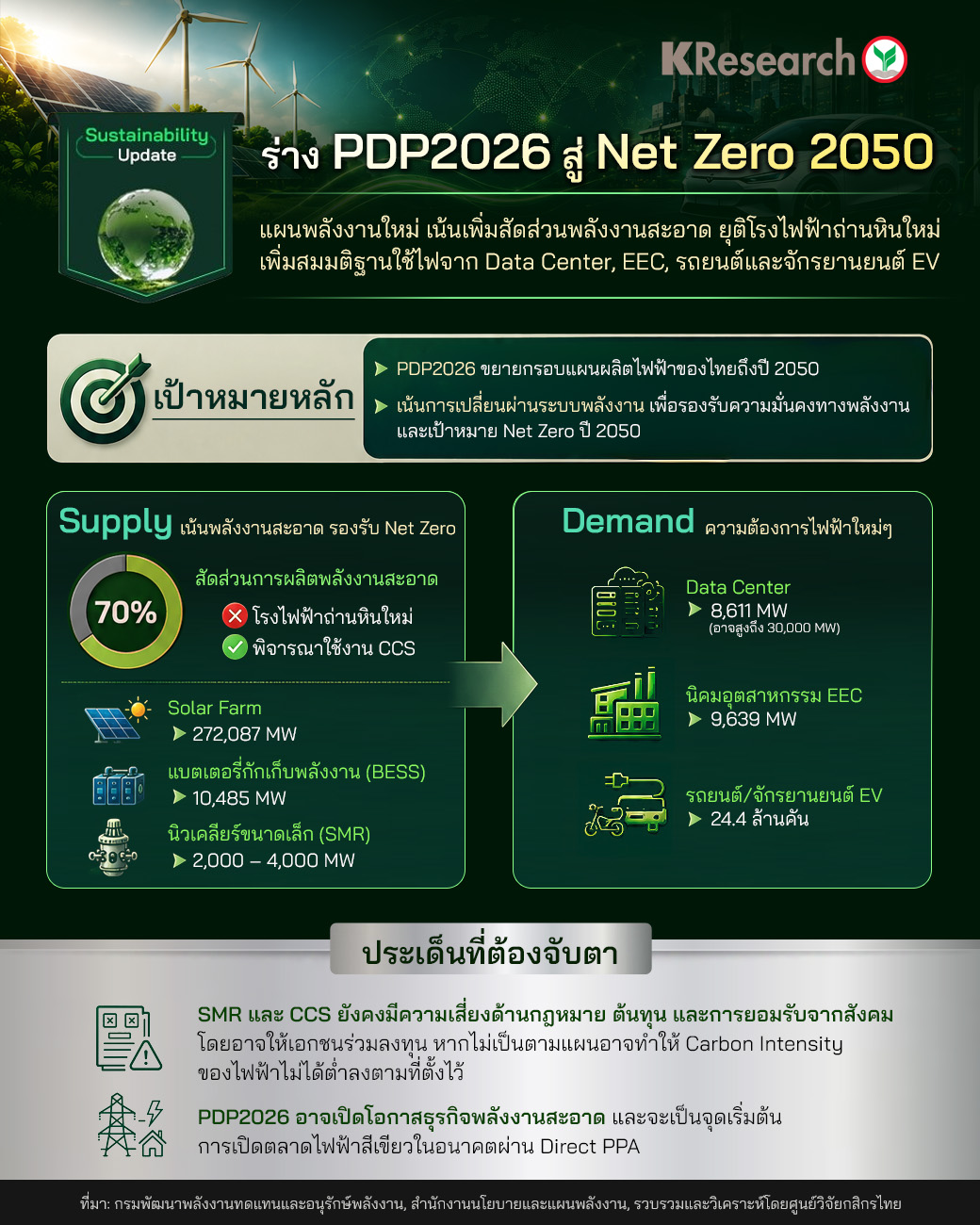
• However, increasing electricity generation capacity to meet rising demand while controlling carbon emissions through technologies like SMR and CCS carries risks related to legal issues, investment, private sector collaboration, and societal acceptance. If these technologies do not develop as planned, the carbon intensity of Thailand's electricity system may not decrease as targeted.
• The Ministry of Energy anticipates that the draft PDP2026 will open for public consultation in August and will be submitted for approval to the National Energy Policy Council (NEPC) to ensure energy security and facilitate the transition to net-zero greenhouse gas emissions for the private sector and the country.