Pathway to Net Zero by 2593: Regulatory Adjustments, Addressing Stranded Assets, and Accelerating Investments for Thailand's Sustainable Future (Kasikorn Research Center)
Prime Minister Anutin Charnvirakul has announced a policy to accelerate Thailand's net greenhouse gas emissions target to Net Zero by 15 years, aiming for 2593. This involves reducing greenhouse gas emissions by 370 million tons of CO2 equivalent per year. At this year's COP30 meeting, countries are expected to announce their carbon reduction plans for the next five years until 2578. If the Prime Minister confirms this new target at the meeting, Thailand's economic model will undergo significant changes, although there are still several critical issues that need to be addressed.
The Kasikorn Research Center believes that the success of this policy will depend on three main factors: regulations, management of future stranded assets, and funding gaps.
Regulations will be the main driver of change in the private sector.
Three key laws will serve as the foundation for achieving the Net Zero target: the Clean Air Act, the Climate Change Act, and the revised Power Development Plan (PDP).
The Clean Air Act is a significant step towards reducing overall pollution and has already been presented to the Cabinet. This law sets penalties for exceeding pollution standards, ranging from fines to criminal prosecution, which will compel most producers to invest in pollution monitoring and control systems.
The Climate Change Act is an important law being drafted by the Department of Climate Change and Environment to be presented to the Cabinet. This law will establish legal mechanisms, including penalties and a sustainability fund, to achieve the Net Zero target. The most critical aspect is the creation of a mandatory carbon market, which will require companies to monitor their CO2 emissions, reduce carbon emissions, and increase carbon credit trading.

In 2567, Thailand will develop a new Power Development Plan, aiming for renewable energy to account for 51% by 2580. However, the Kasikorn Research Center anticipates further revisions to this plan, focusing on the following key points:
- Phasing out coal use sooner than previously scheduled (currently set for 2593) and not constructing new coal power plants.
- Increasing electricity generation capacity from solar energy and energy storage systems due to lower costs compared to new coal power plants (the levelized cost of electricity for solar farms is 21.9–55.4% lower than that of new coal power plants).
- Modifying or replacing combined-cycle gas power plants to use hydrogen as fuel instead.
- Increasing investment in carbon capture technologies.
Future Stranded Assets will pose obstacles to achieving the Net Zero target.
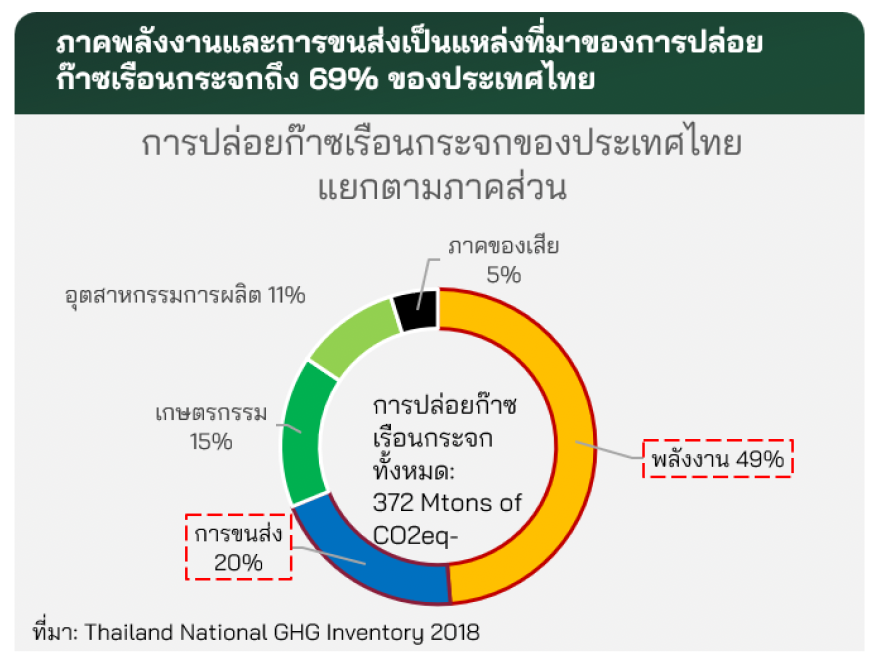
The energy and transportation sectors are the main sources of greenhouse gas emissions in Thailand, accounting for 69% of total CO2 emissions. Addressing this issue is a crucial component of the new policy under Prime Minister Anutin's leadership. However, the significant amount of potential future stranded assets will be a major hindrance to achieving the Net Zero target.
The new Net Zero target mandates the cessation of fossil fuel energy systems by 2593, which will negatively impact both sectors, as there is still a large proportion of assets dependent on fossil fuels.
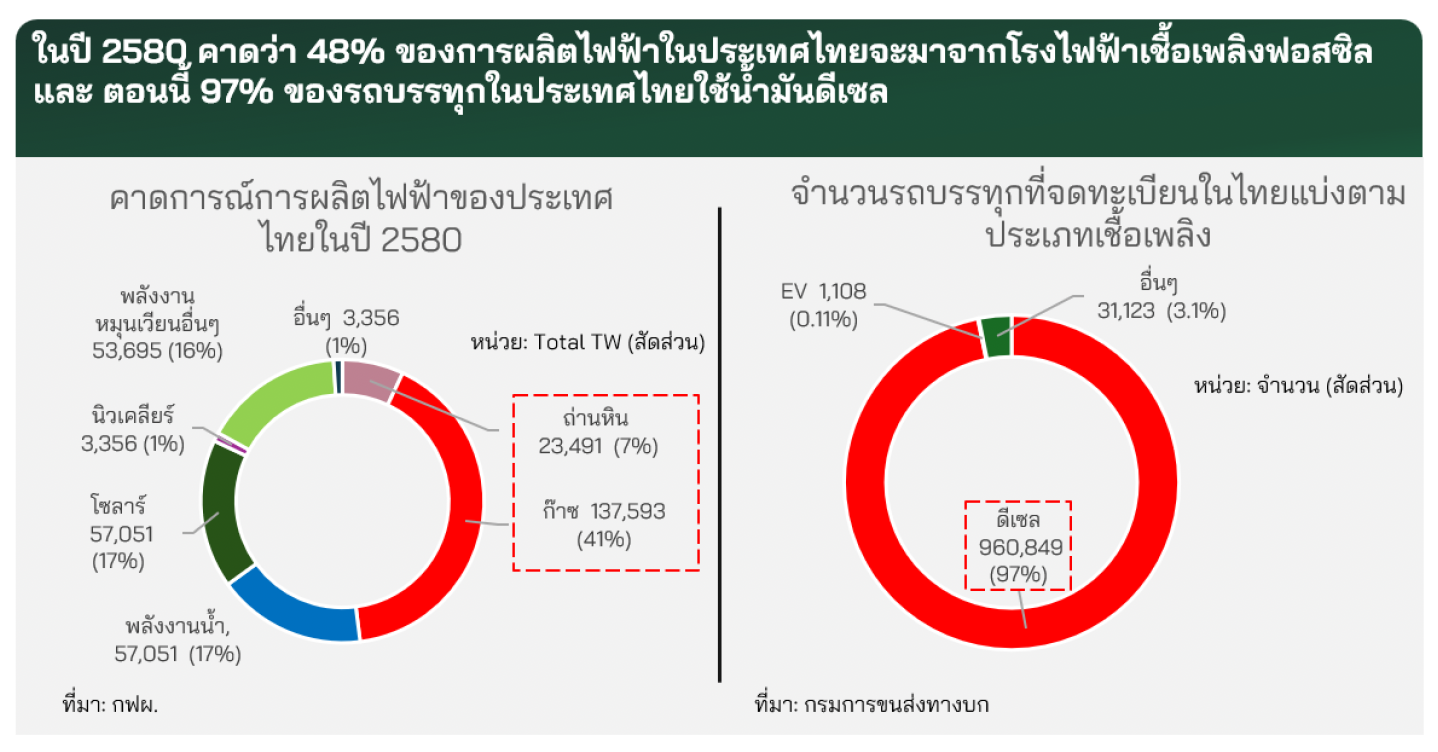
According to the current Power Development Plan (PDP), it is expected that by 2580, 48% of total electricity generation will come from fossil fuel power plants, while 97% of trucks in Thailand still use diesel engines, which the logistics sector continues to rely on.
All coal power plants are scheduled to be decommissioned by 2593, but the Kasikorn Research Center predicts this may be expedited. Meanwhile, several natural gas power plants, both operational and in planning, are expected to continue operating beyond 2593. However, to align with the Net Zero target, these power plants will need to be converted to hydrogen energy systems; otherwise, they risk becoming future stranded assets.

In the transportation sector, new diesel trucks have a lifespan of up to 30 years, which exceeds the transition deadline of 2593. Therefore, the government needs to implement measures to gradually phase out or limit purchases, as the residual value of diesel engine trucks will rapidly decline as the deadline approaches.
Thailand will require substantial public funding to expand investments in renewable energy and further develop electrical infrastructure (grid systems, charging stations, and power transmission systems), while the private sector must increase electricity usage in transportation and manufacturing sectors (e.g., using furnaces in steel or cement plants).