Digital Health: A Turning Point for Thai Health Towards Personalized Care
Digital Health: A Turning Point for Thai Health Towards Personalized Care
Online health package sales have grown by over 32% in just three years, while the number of users and packages sold through digital channels has increased by more than 45%.
These figures not only reflect the expansion of the E-Commerce market but also indicate a significant transformation in the Thai healthcare system, as consumers begin to search for information, compare programs, make appointments, and plan their healthcare through screens before arriving at hospitals.
On another note, Shop.BeDee offers over 10,000 health packages across 16 categories, ranging from health check-ups, vaccinations, specialized tests, genetic testing, to health and beauty services.
These images suggest that hospitals of the future may not start at the entrance of a building but rather from the smartphone screens of consumers.

Phayathai Paolo and Shop.BeDee Connect Health Services to the Digital System
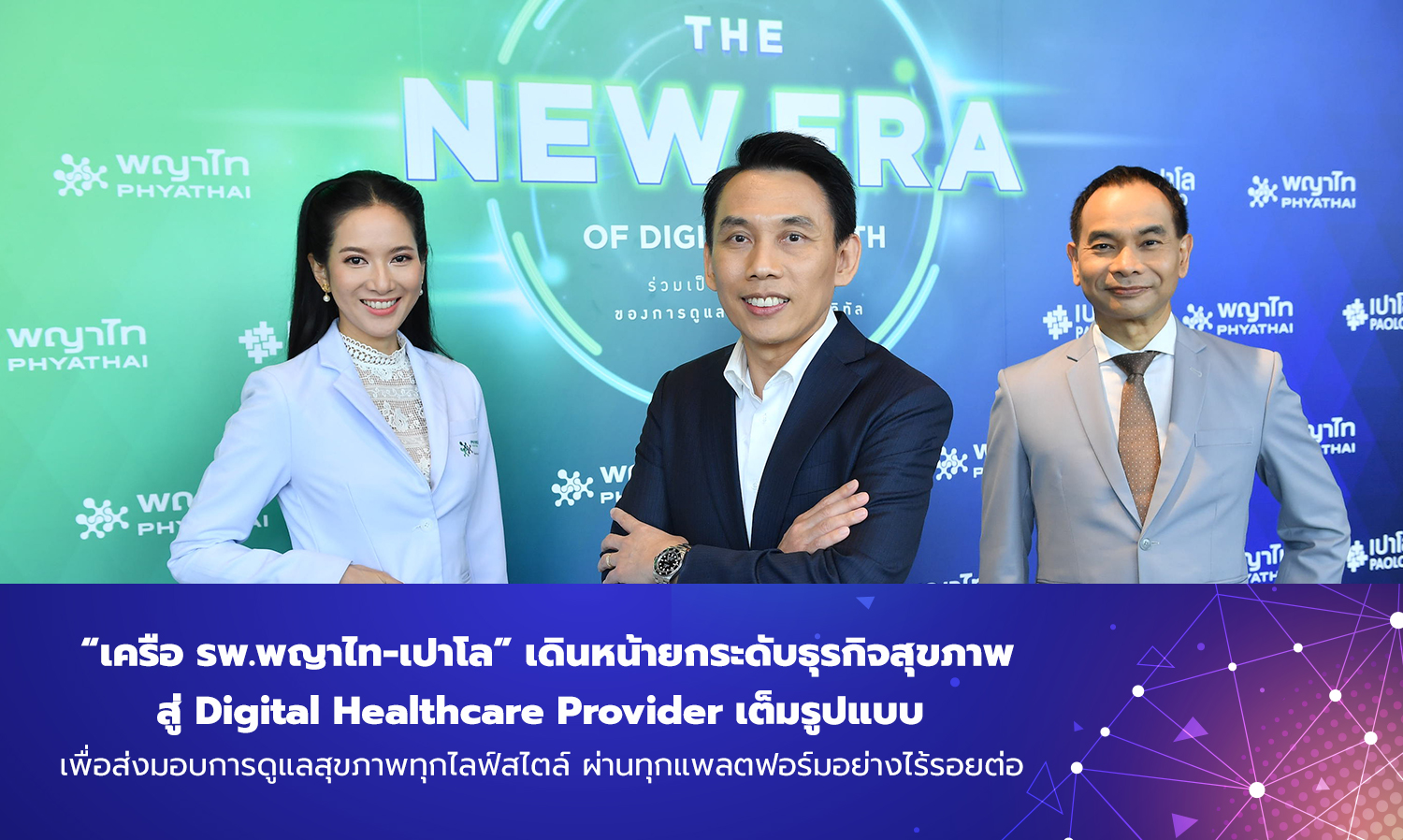
The Phayathai-Paolo Hospital Group, in collaboration with Shop.BeDee, a digital health platform under BeDee Powered by BDMS, is developing a Digital Health Ecosystem to link information searches, health program selections, appointments, service access, and follow-ups into a single pathway.
This collaboration aims not only to sell health packages on the platform but also to transform the medical experience from a one-size-fits-all service to Personalized Healthcare, designed to suit each individual.
In reality, having a similar age does not mean that two people have the same health risks.
Lifestyle behaviors, work, sleep, nutrition, stress, family history, and pre-existing conditions all contribute to the need for different health advice and programs for each individual.
The concept of One Size Does Not Fit All is thus not just a marketing phrase but is becoming a fundamental principle in designing health services in the data age.
From Treatment When Sick to Investment Before Illness
Mr. Supakorn Phawanna, Director of Marketing at Phayathai-Paolo Hospital Group, stated that consumer behavior is shifting from visiting hospitals when symptoms arise to more proactive health checks, vaccinations, and risk assessments.
Health is thus beginning to change from an expense incurred when problems arise to a long-term investment in maintaining quality of life.
This change is significant because health costs do not only occur on the days when treatment is paid for but also include lost income from missed work, recovery time, family burdens, and quality of life that may not return to normal.
Identifying risks before symptoms appear is therefore more valuable than just knowing test results once, as it allows service users time to change behaviors, plan treatments, and make decisions before problems escalate.

Different Age Groups Require Different Answers
The challenge of Personalized Healthcare is not just about segmenting consumers by age but understanding the needs and lifestyles of each group deeply.
Gen Z
The younger generation places importance on mental health, sleep quality, hormonal balance, nutrition, and body care, while also facing an overwhelming amount of information online. The key challenge is not accessing information but discerning which information is credible and truly relevant to them.
Gen Y
Many working-age individuals are knowledgeable about health but face time constraints, needing to balance work, family, children, and parents. Digital channels thus serve not only as convenience tools but also help streamline processes, making health management feasible in daily life.
Gen X
This group is increasingly facing risks from non-communicable diseases (NCDs) such as diabetes, hypertension, high cholesterol, heart disease, kidney failure, and obesity. General health checks may not suffice and must evolve into more detailed risk assessments.
Baby Boomers and Silver Age
Older adults do not only seek disease treatment but also desire a health system that enables them to live healthily and independently after the age of 60, maintaining their quality of life for as long as possible.
This issue will become even more critical as Thailand's elderly population is projected to increase to about one-third of the total population by 2033.
The health system must thus shift from waiting for patients to proactively helping citizens plan their health while they are still healthy.
Gen AI: New Behavior Starting with Questions Before Seeing a Doctor
Another emerging group is Gen AI, which does not divide by age but refers to those who use artificial intelligence as a starting point for symptom searches, risk assessments, or health advice. Instead of searching for information through search engines, many are now conversing with AI before deciding to visit a hospital.
This behavior creates both opportunities and risks.
On one hand, AI allows the public to access information quickly, reduces time constraints, and may help users become aware of bodily abnormalities sooner.
On the other hand, reasonable answers presented in credible language do not always guarantee accuracy, especially for medical information that must be considered alongside patient history, actual symptoms, test results, and evaluations from medical professionals.
The heart of Healthcare in the AI era is thus not just about providing quick answers but ensuring accuracy, evidence-based responses, and accountability to users.
Technology should serve as a bridge connecting consumers to appropriate information and experts, not as a replacement for medical diagnoses.
Digital is the First Door to the New Era of Hospitals
Today, consumers do not only compare experiences among hospitals but also against banking apps, shopping platforms, food delivery services, and digital services they use daily.
Ease, speed, and continuity have thus become the new standards of Healthcare Experience.
Smartphones have become the primary channel for consumers to search for information, read articles, compare programs, and make appointments before receiving actual services.
The Phayathai-Paolo Hospital Group is analyzing data to understand what consumers are interested in, when they search for information, and how long they spend reading different types of content, to enhance communication and services to better meet their needs.
This approach consists of two key components:
Personalized Recommendation
Recommending health programs and benefits tailored to age, interests, behaviors, and lifestyles of individuals.
Customized Communication
Selecting content, timing, and communication channels that align with each consumer group.
The goal is not to send the most information but to provide information that consumers should know at a time when it can genuinely inform their decisions.
From E-Commerce to Health Commerce
Mr. Siwadol Matyakul, Managing Director of BeDee Powered by BDMS, explains that purchasing health services differs from buying regular products because consumers should not decide based solely on price, promotions, or preferences.
Appropriate health programs must be considered alongside age, health history, risk factors, and expert recommendations.
Shop.BeDee aims to be more than just a marketplace; it seeks to be a Digital Front Door that consolidates health services and standard hospital networks onto a single platform.
The system comprises three main service areas:
Teleconsultation
Online consultations with doctors and specialists, helping to reduce time and distance constraints.
Telepharmacy
Consultation with pharmacists along with medication delivery, enhancing continuity of care for service users.
Health E-Commerce
A channel for purchasing health packages and products through digital systems, with decision-making information in one place.
Consumers can thus search, compare, and choose programs from the Phayathai-Paolo Hospital Group more easily, without needing to start with a trip to the hospital every time.
Health Programs That Make Starting Easier
Under this collaboration, programs are offered ranging from general health checks, specialized screenings, vaccinations, to packages designed for different age groups.
One of the programs presented at the event is a health check package priced at 1,900 baht, covering 12 tests, including the All You Can Check program, which allows users to plan continuous health checks within a specified period.
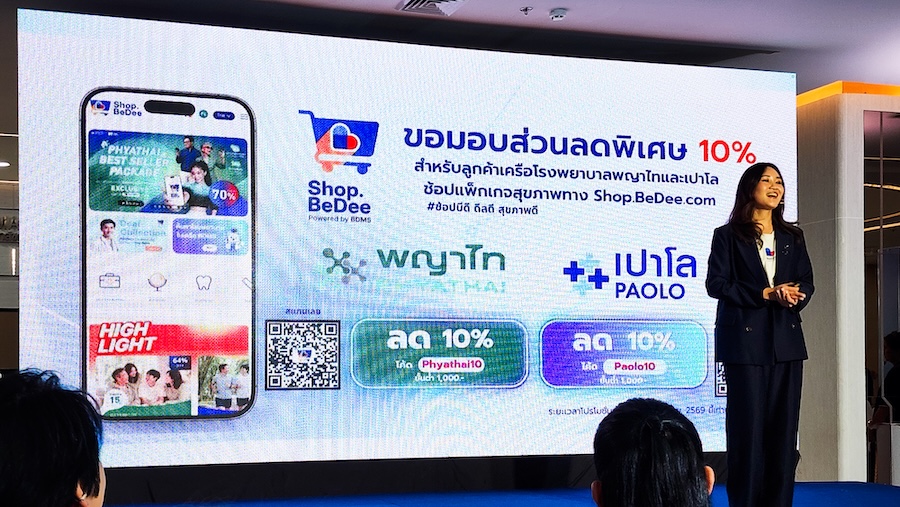
Additionally, there is an HPV vaccine package for 9 strains priced at 17,999 baht, down from the regular price of 25,561 baht, a reduction of over 7,500 baht, along with benefits for packages from Phayathai and Paolo hospitals through Shop.BeDee under specified conditions.
While price and promotions may motivate consumers to start, the more important value is making health checks and disease prevention more accessible.
In many cases, the barrier does not stem from consumers not recognizing the importance of health but from complex procedures, difficult-to-understand information, and not knowing which program to start with.
When a Good Gift May Not Be a Material Thing
Many families spend time choosing gifts for their parents on special occasions, whether flowers, fruit baskets, or items that bring joy for a moment.
However, another type of gift could be a health check program that helps identify risks before symptoms arise, vaccines that reduce the chances of disease, or information that encourages family members to start changing behaviors in time.
Preventive health care does not mean everyone must live in worry but rather means knowing one’s body well enough to make informed decisions.
In this light, health is not just a personal matter but also a relationship among family members, caring for one another, and creating more time together in the future.
The Future of Healthcare is Measured by Accuracy, Not by the Number of Packages
The success of health platforms in the future may not be measured solely by the number of packages available in the system but by their ability to help consumers discover services that suit them.
Having over 10,000 options will only hold true value when the system can organize information, recommend choices, and connect consumers to medical professionals accurately.
The Digital Health Ecosystem thus holds meaning when technology, data, and medical expertise work together to bridge the gap between the day a person becomes aware of their health and the day they decide to take action to care for themselves.
Because high medical costs may not always be the heaviest burden.
The greater cost may be discovering a disease too late, losing opportunities for prevention, or having less time together as family members.
Good health should not begin on the day the body sends severe signals but should start from accurate information, appropriate decisions, and taking action while we still have choices.