Discussion: From Policy to Action - How Sustainability Must Become a Competitive Advantage for Thai Businesses
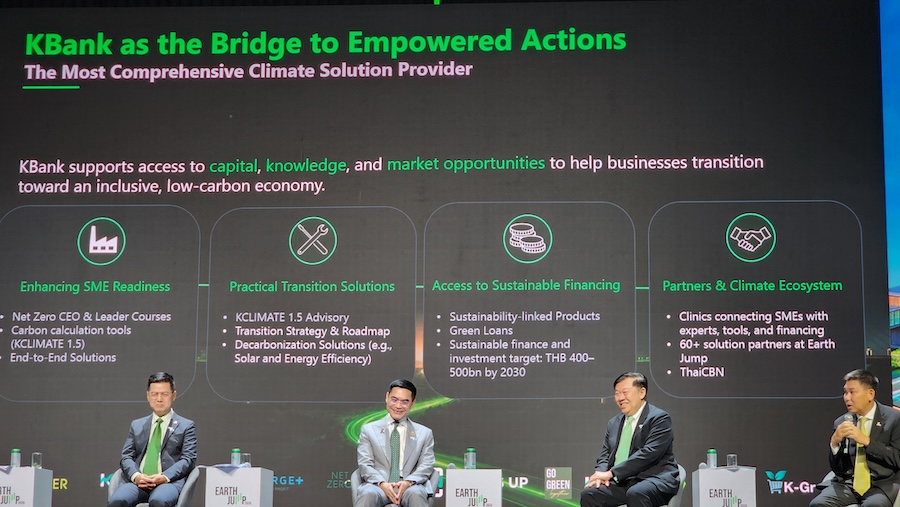
One of the key highlights of the EARTH JUMP 2026 event is the panel discussion that brings together representatives from the government, trade, industry, and finance sectors to decode the major challenges facing the country. The focus is on how to genuinely advance towards a low-carbon economy, especially as Thai entrepreneurs are not only facing pressures from domestic laws but also navigating global trade rules, carbon standards, and rapidly changing expectations from international partners.
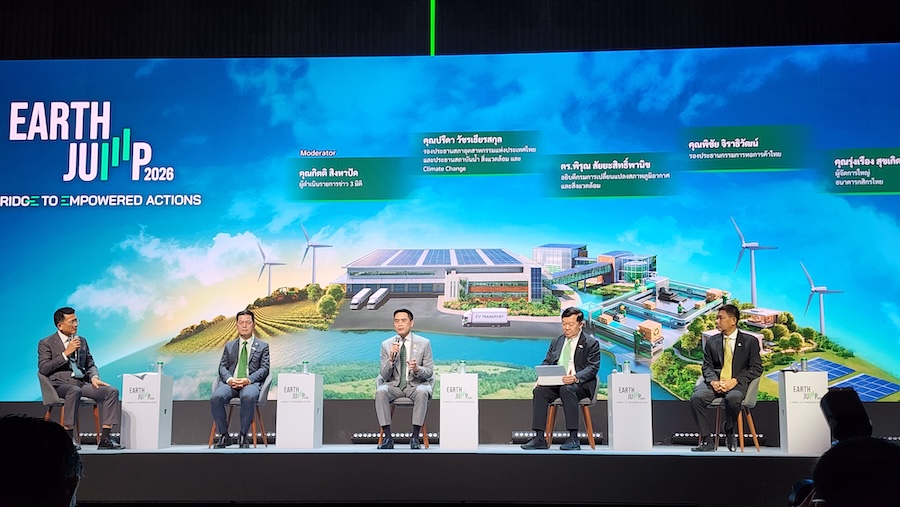
▪️ Dr. Pirun Sayasithpanit, Director-General of the Department of Climate Change and Environment, opened the discussion from the government's perspective, emphasizing that what the business sector needs most is "clarity" in policies. However, clarity here does not only refer to announcing long-term goals but also entails continuity, concrete targets, and actionable pathways that can be tracked over time.
Thailand's Net Zero target for 2050 must be translated from a broad vision into short, medium, and long-term plans to instill confidence in the private sector, particularly regarding long-term investments. If regulations are uncertain, businesses will hesitate to invest in new technologies or environmentally friendly production processes.
Additionally, the government is pushing for climate change legislation, which will be a crucial tool for transitioning from reliance on voluntary measures to a balanced system of regulations and support measures, including greenhouse gas reporting, emission rights allocation, carbon taxes, and other mechanisms to help Thai businesses adapt to new rules.
Dr. Pirun emphasized that carbon laws and tools should not be viewed merely as short-term burdens but as economic infrastructure that will enable Thailand to compete in the long run while reducing risks from disasters and climate change impacts.
▪️ Khun Pichai Jirathiwat, Vice Chairman of the Thai Chamber of Commerce, provided insights from the trade sector and entrepreneurs, particularly SMEs. He noted that while the private sector is beginning to recognize the changing business landscape, many entrepreneurs still have fundamental questions: "Is it worth it?" "What if the laws change?" and "Will there really be a market for this?"
He pointed out that SMEs need clarity from the government on multiple fronts, including consistent policy direction, stable regulations, carbon measurement standards aligned with global rules, and markets that will support green products and services. If entrepreneurs invest without clear demand or customers, sustainability will be viewed as a cost rather than an opportunity.
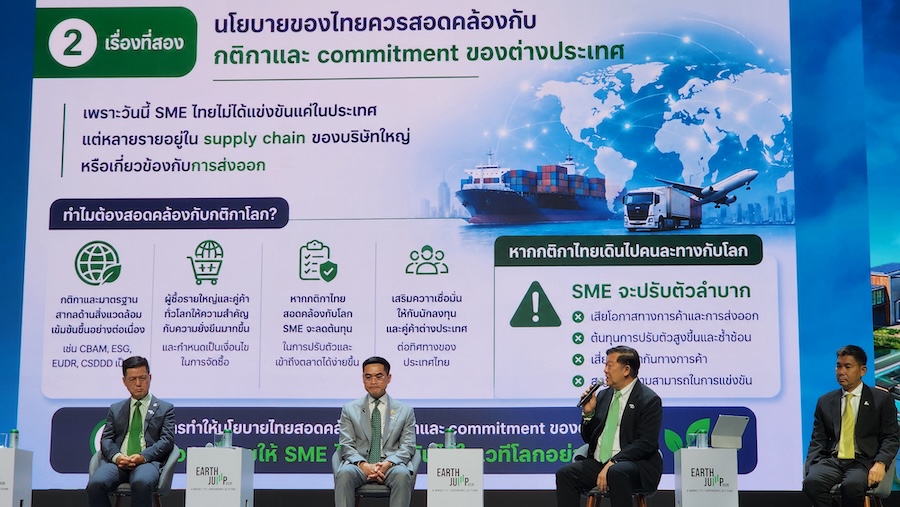
From the Thai Chamber of Commerce's perspective, Khun Pichai emphasized that SMEs are no longer just trading domestically; many are part of the supply chains of large companies connected to global markets. Therefore, if SMEs do not understand the new carbon or ESG regulations, it could impact the entire business chain, from small enterprises to large organizations.
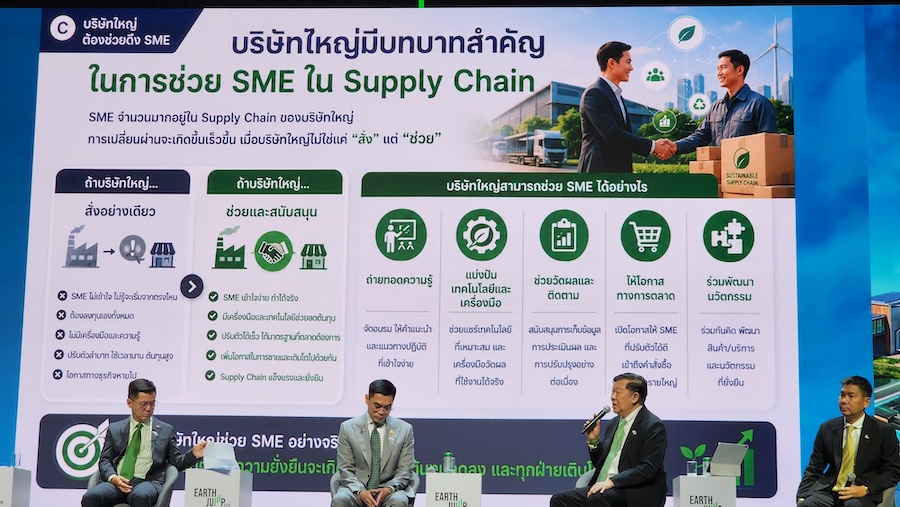
A key proposal is that the government and large organizations should not rely solely on regulations but also help build knowledge, create markets, connect networks, and help consumers recognize the value of green products and services. This will ensure that entrepreneurs are confident that the transition to sustainability is not just about compliance but can genuinely create revenue and business opportunities.
▪️ Khun Prida Watcharathirakulsakul, Vice President of the Federation of Thai Industries and President of the Water, Environment, and Climate Change Institute, pointed out that the industrial sector has historically been viewed as a high energy consumer and a source of pollution. However, this perception is changing as industries begin to see sustainability not just as pressure but as an opportunity to create a green economy.
Net Zero is no longer just about maintaining an image; it is about the competitiveness of the Thai economy. New trade rules from abroad, such as packaging requirements, waste management, carbon reporting, and product information, are becoming critical conditions for entering markets.
For the industrial sector, the significant pressure is that if businesses do not start collecting data, measuring carbon, and improving production processes, they may not only face increased costs but also risk "not being able to sell" as multinational companies and global partners increasingly request carbon information from suppliers.
However, the transition must start with what can be realistically done in factories and daily business, such as reducing energy consumption, improving machinery, enhancing production efficiency, minimizing waste, managing logistics, and using energy efficiently. These actions not only help reduce carbon emissions but also lower costs and yield immediate financial benefits.
It was also suggested that each industry has different challenges; the food and agriculture sector may focus on supply chain issues and reducing waste, while the manufacturing sector may emphasize machinery efficiency, energy, and production processes. Therefore, support measures should be tailored to each industry rather than applying a one-size-fits-all approach.
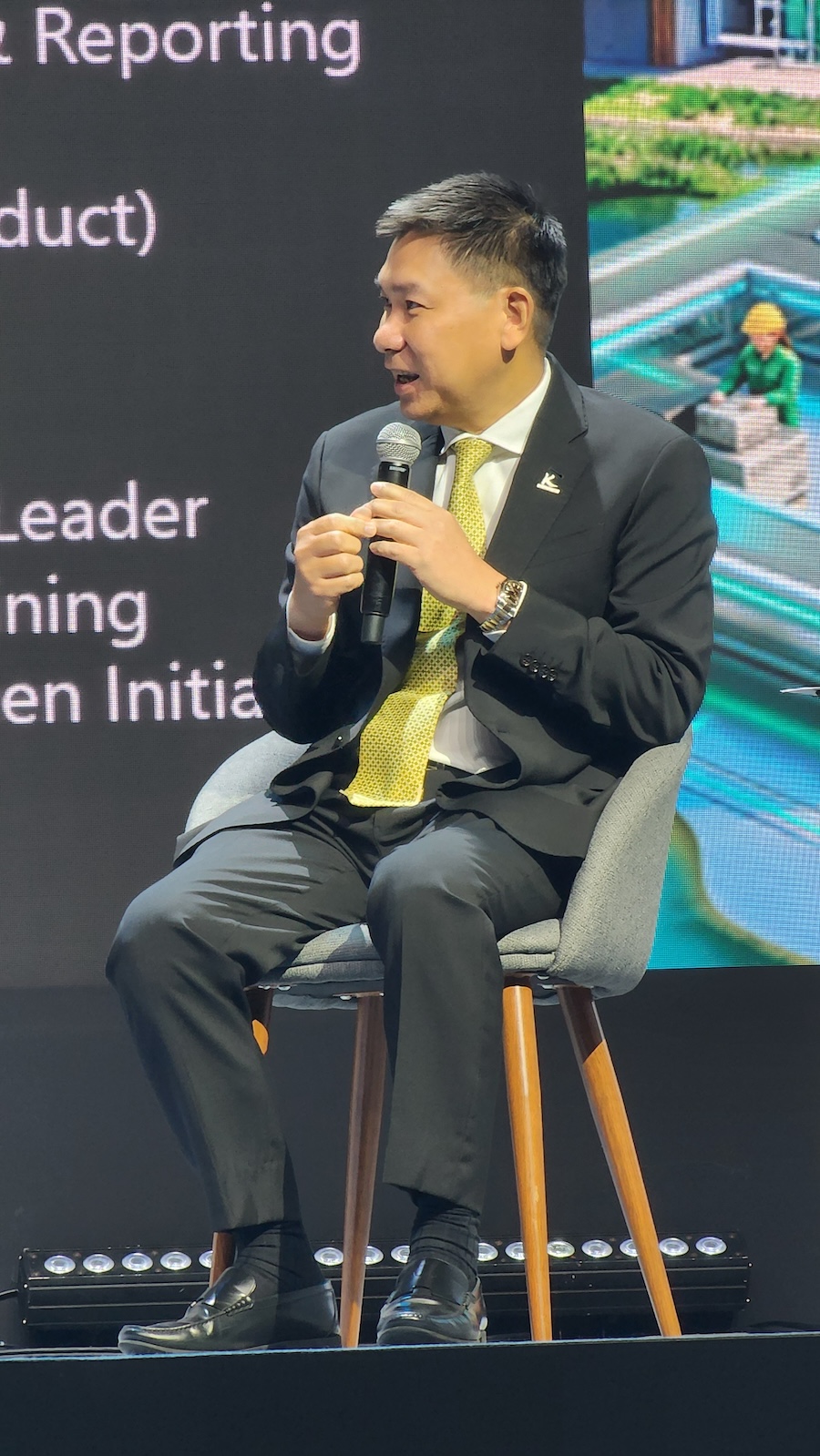
▪️ Khun Rungreung Sukgekkitpipoon, General Manager of Kasikorn Bank, explained the role of banks as "enablers" that support customers in making real transitions. He pointed out that banks do not conduct business on behalf of customers but must help entrepreneurs, both large and small, succeed in the new business world.
Providing loans may be easy for banks, but the more challenging aspect is lending while ensuring that customers can repay without difficulty, which means customers must be able to sell products, have appropriate income, and maintain competitive costs. Thus, the role of banks is not just to provide funding but to be strategic partners.
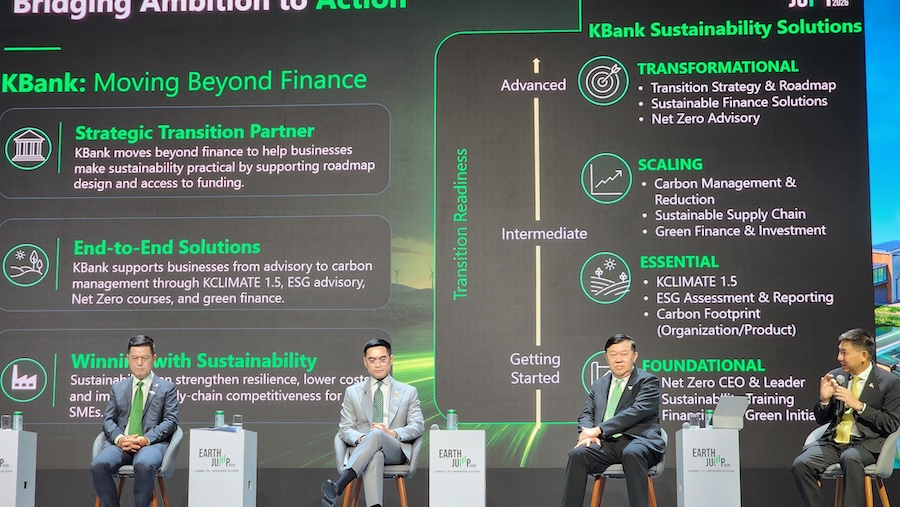
From KBank's experience, which has a large SME customer base, Khun Rungreung noted that the main problem for SMEs is "not knowing where to start." Even though they understand that the world is moving towards Net Zero and that customers may ask for carbon emission data in the future, many SMEs still do not know how much carbon their businesses emit, how to measure it, and where to begin reducing it.
KBank's role is therefore multifaceted, from providing knowledge about the new global rules, helping find basic tools for entrepreneurs to understand their carbon data, offering strategic consulting, to connecting solutions, technologies, and green funding sources to enable SMEs to move from understanding to real action.
Businesses that transition are more likely to survive because they can reduce costs, adapt to new regulations, and maintain competitiveness in the long run. In contrast, businesses that do nothing may face risks related to sales, market access, and future funding.
At the end of the panel, each speaker summarized what the business sector should start doing immediately after the event:
▪️ Khun Prida Watcharathirakulsakul suggested starting with energy issues, as they are tangible, yield quick results, and are directly linked to cost reduction, particularly through energy savings, improving machinery efficiency, and utilizing solar rooftops, which now have more cost-effective technologies than in the past.
▪️ Dr. Pirun Sayasithpanit urged each industry to reflect on their specific challenges at the segment level and discuss these with the government to collaboratively design solutions that help businesses grow, compete, and transition systematically.
▪️ Khun Pichai Jirathiwat recommended that SMEs begin by reducing the easiest losses, such as electricity, water, energy, and resources used in daily business, before moving on to efficiency improvements like upgrading equipment, using LED lighting, or solar rooftops. When SMEs see results in cost savings, they will become more interested and willing to adopt deeper measures.
▪️ Khun Rungreung Sukgekkitpipoon concluded that this is not a new issue but a real and significant one. The business sector must open its mind to accept the new rules and start adapting because if nothing is done, the Thai economy and businesses may face increasing pressures in the future.
Overall, this forum emphasized that sustainability is not the responsibility of any one party but a collective mission of the entire system. The government must create clear policies, the financial sector must provide accessible tools and funding, the industrial sector must share knowledge and technology, and SMEs must start with what they can realistically do today. In the new business world, doing nothing may not be a cost-saving measure but could be the most expensive risk in the future.