From Vision to "Real Action": When Sustainability Becomes Business in the Future by Kattiya Indaravichai, CEO of Kasikornbank
In a world where businesses face multifaceted challenges, including a slowing economy, rising operational costs, rapidly changing technologies, geopolitical uncertainties, and increasingly environmentally-focused global trade rules, the pressing question for businesses is, "How will we navigate this crisis?" Furthermore, once we overcome the crisis, "Will we still have the ability to compete in the medium and long term?" This is a significant challenge that makes topics like Net Zero, Green Economy, and sustainability no longer distant concerns for entrepreneurs. They are not merely aspects of corporate image aimed at boosting ESG scores but are becoming fundamental conditions for doing business in the new world.
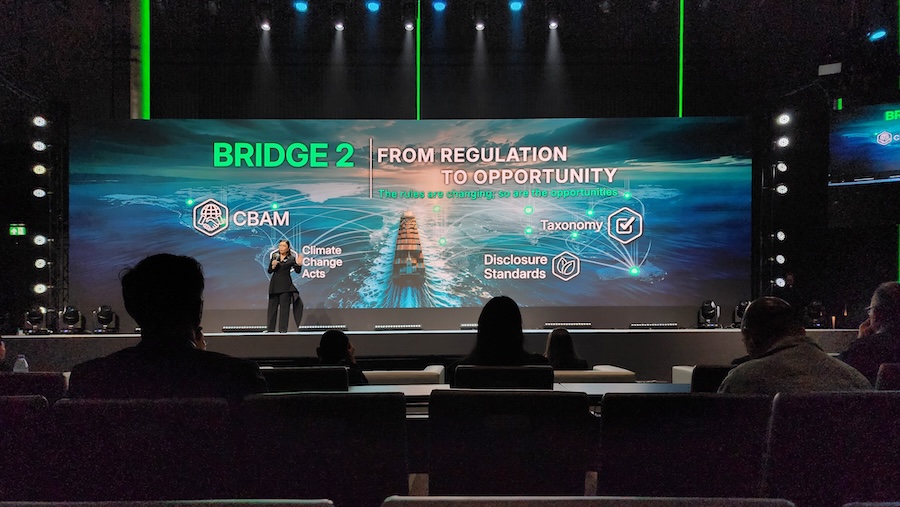
Under the theme "A Bridge to Empowered Actions" at the EARTH JUMP 2026 event, the bridge symbolizes overcoming limitations. It represents the intention to conquer obstacles, whether they are natural constraints, distances, technological barriers, or economic limitations. Similarly, as Thailand transitions to a low-carbon economy, businesses must build their own "bridges" to connect the traditional business world with a new one where new rules are continuously being written.
Today, pursuing Green or Net Zero is not a "bonus," not an "extra," and not an "additional burden on business"; it is a necessity for obtaining a "license to compete" in the future. The world is moving towards new rules that increasingly link the environment with trade, investment, supply chains, and access to global markets. Entrepreneurs must view this from both short-term and long-term perspectives simultaneously.
▪️ Short-term: Adapting to new costs and requirements.
▪️ Long-term: Building new capabilities to ensure businesses remain competitive.
Kasikornbank has been consistently advancing its Green initiatives, aiming for its loan portfolio, which connects with all customer segments, to achieve Net Zero by 2050, in line with national goals.
However, this transition cannot occur solely because of good intentions; it must also consider the realities of today's context, including technological readiness, the preparedness of entrepreneurs, customer readiness, and the national context. In the initial stages, carbon emissions reductions may not be significant due to technology not being fully ready or entrepreneurs lacking sufficient tools and knowledge. But as technology becomes more available and both customers and entrepreneurs gain a better understanding, real and faster transitions can occur. The key is to start with what is available, understand existing limitations, and take concrete actions.
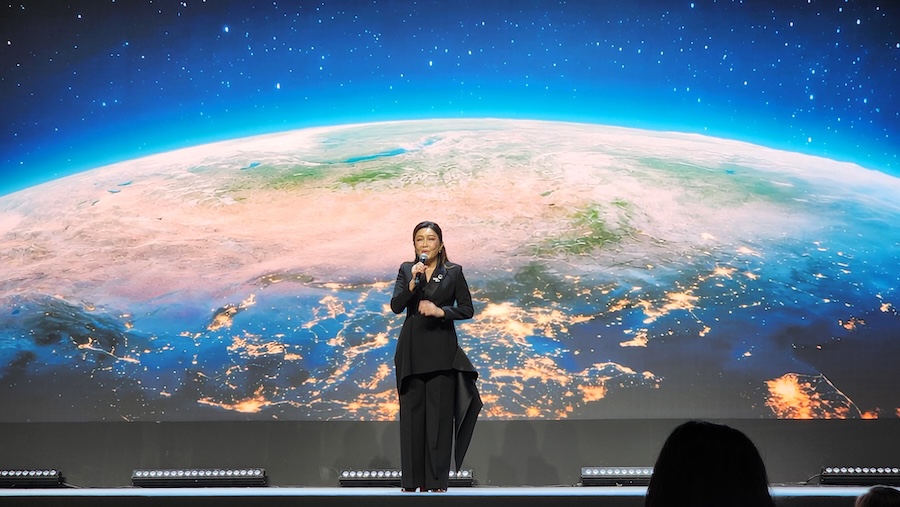
Another crucial point is the relationship between Green Finance and Technology. Advancing towards a low-carbon economy requires not only funding from financial institutions but also investments from various sectors, including government, private sector, large organizations, experts, and supportive mechanisms within the economy.
Environmental technologies have varying levels of readiness. Some technologies are still in the research and development phase, which may carry high risks, but if successful, they can significantly impact carbon reduction. During this phase, they require support from the government, funding, expertise, and international collaboration. Once some technologies reach a level suitable for trial use, large organizations and the private sector can help drive their practical application in business. When these technologies are ready for commercialization, financial institutions and the private sector will play a crucial role in supporting widespread adoption.
Thus, the transition to Net Zero is not the responsibility of any one party but a mission that requires collaboration across the entire system, from government, financial sectors, large organizations, SMEs, to the entire supply chain.
Building bridges to achieve sustainability involves at least four key areas:
▪️ The first bridge is changing the mindset from short-term survival to seizing new opportunities and fostering sustainable growth. Sustainability should not be viewed merely as a cost but as a tool for creating business opportunities.
▪️ The second bridge is changing perspectives on environmental regulations and compliance. While new rules may seem challenging and complex, this very difficulty presents opportunities for those who can adapt early, as not all businesses will succeed. Those who do will have a chance to become winners in the new market.
▪️ The third bridge is promoting the transition from large organizations to the entire supply chain and SMEs. If the supply chain cannot adapt, large companies cannot genuinely move towards Net Zero. In the new business world, production, procurement, raw materials, labor, and carbon emissions will be interconnected and scrutinized across the entire system.
▪️ The fourth bridge is moving from vision and promises to real action. Declaring a Net Zero target by 2050 or having a good plan is just the starting point. What is more important is translating those goals into tangible actions.
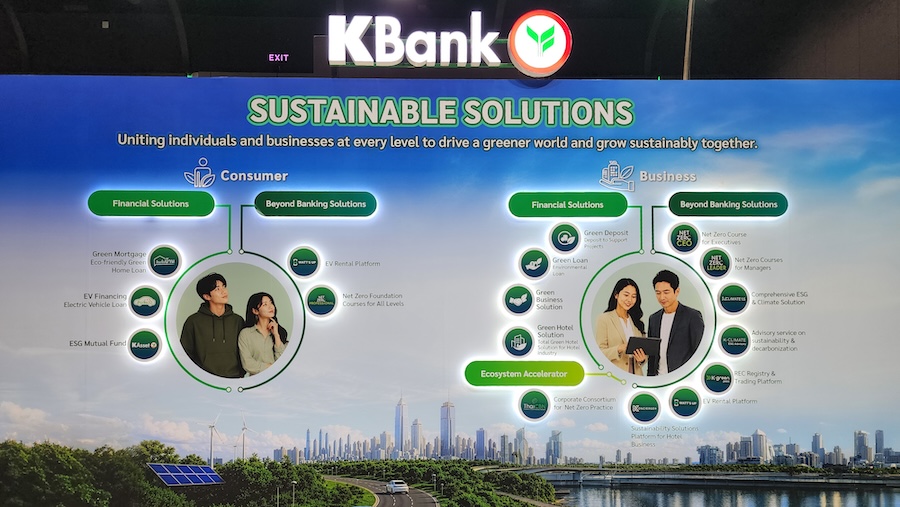
In this context, Kasikornbank aims to act as a "bridge" connecting entrepreneurs and all customer segments to sources of funding, knowledge, tools, and necessary technologies, enabling businesses to transition effectively, whether they are large organizations or SMEs.
Ultimately, crises come and go, but what businesses can choose is how to respond to those crises. We cannot choose which crises will occur or when they will happen, but we can choose how to prepare, how to adapt, and how to create new capabilities to move forward.
EARTH JUMP 2026 aims to be a platform inviting all sectors to collaboratively build a bridge from vision to real action, enabling Thai businesses to overcome limitations, seize new opportunities, and sustainably advance towards a low-carbon economy.