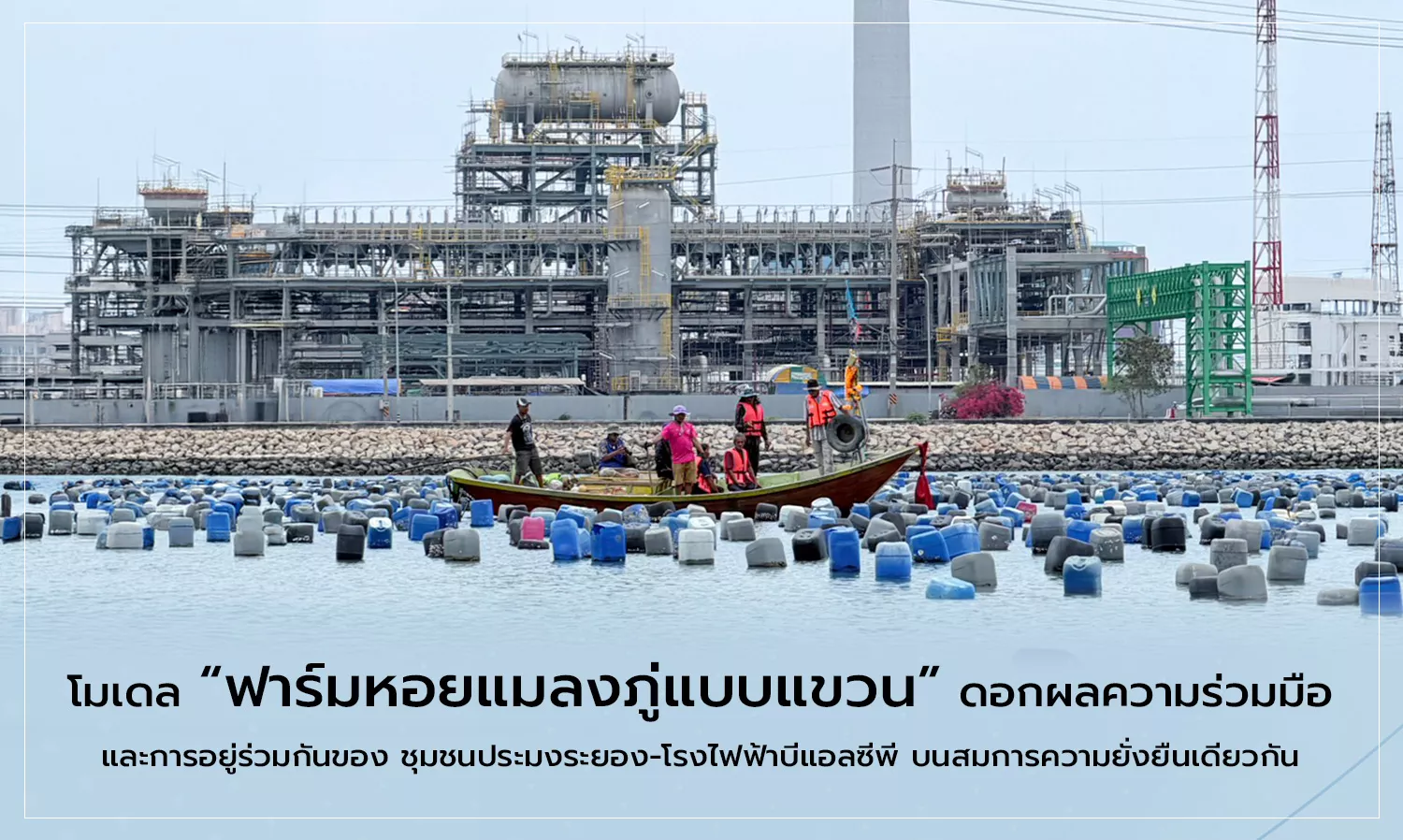
The 'Hanging Mussel Farm' Model: The Fruits of Collaboration and Coexistence Between the Rayong Fishing Community and BLCP Power Plant on the Same Sustainability Equation
In the equation driving the new economy, the sustainability of all sectors is not just a trendy phrase or an option; it is a shared path towards balancing the economy, society, the public sector, and governance. Economic security must not leave anyone behind, and environmental challenges must be managed appropriately. The industrial business sector must coexist with the public sector in a supportive manner, creating "Shared Value" (Creating Shared Value: CSV) so that all sectors can grow together sustainably.
ESG Framework: A Model of Sustainability for the Power Plant Towards Sustainable Coexistence of All Sectors
The key policies and missions of BLCP Power Plant's operations are to create energy security while reducing environmental impacts alongside social, community, and public dimensions. The core of this is the concept of "Social License to Operate." Environmental initiatives are implemented from the production process using modern technology to minimize pollution, along with proactive environmental care projects such as community forest planting and releasing aquatic species back into the sea. In the social sector, there is interaction with the local community and the public with flexibility, openness to feedback, and collaboration to create benefits, whether through assistance projects that align with the genuine needs of local communities, focusing on skill-building and knowledge development for long-term self-reliance.
‘Tri-Party’ as a Bridge to Transparency Alleviating Community Concerns
A significant barrier for the industrial sector in the past was the “gap of understanding” with surrounding communities. Therefore, BLCP Power Plant recognizes the importance of cooperation, communication, and understanding by organizing tri-party meetings every quarter, involving representatives from all sectors, including government agencies, the tri-party committee, community leaders, fishing group leaders, and company executives. This forum serves as a "bridge of understanding" and transparently reports environmental quality monitoring results while providing opportunities for the community to participate at a significant level, express opinions, present needs, and co-design various CSR project directions to be relevant and flexible to the local context, ultimately leading to mutual acceptance and trust.
‘Hanging Mussel Farming’ from a Prototype Project to a New Supplementary Livelihood for the Rayong Fishing Group
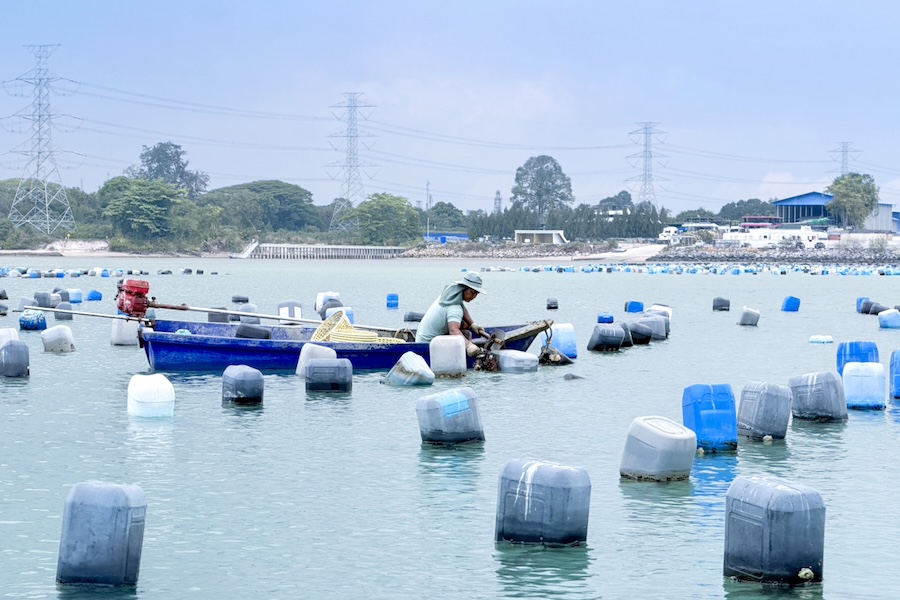
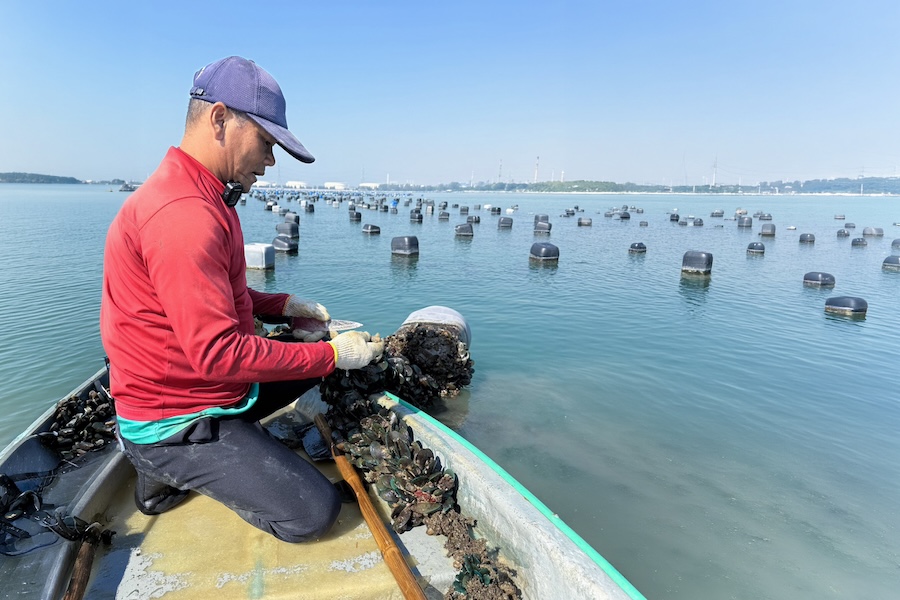
One of the tangible success stories resulting from listening and building upon local wisdom is the “Hanging Mussel Farming Project.” Back in 2005, most residents in the Takwan-Pradu Bay area primarily engaged in fishing with crab and fish nets. When BLCP Power Plant began operations in the area, the plant's team did not impose ready-made projects from outside to change the community's way of life but chose to engage directly with the community to explore the feasibility of suitable projects. It was mutually agreed that mussel farming was the most appropriate approach for the water conditions and the lifestyle of the local community.
Mr. Daeng - Daeng Boonchan, a committee member of the Takwan-Pradu Bay small boat fishing group still remembers the early stages of the project: “The power plant collaborated with the Takwan-Pradu Bay fishing group to invite interested members to try mussel farming. At that time, there were both supporters and observers. Then, we invited experts to provide initial knowledge, potential approaches, mussel care, environmental factors, and cost-effectiveness, along with field trips to Chonburi province to study the process from building rafts, tying ropes, and finding suitable farming methods, ultimately concluding with floating raft mussel farming, starting with one raft per person. BLCP Power Plant assisted with initial funding, provided equipment, and co-managed the farm.”
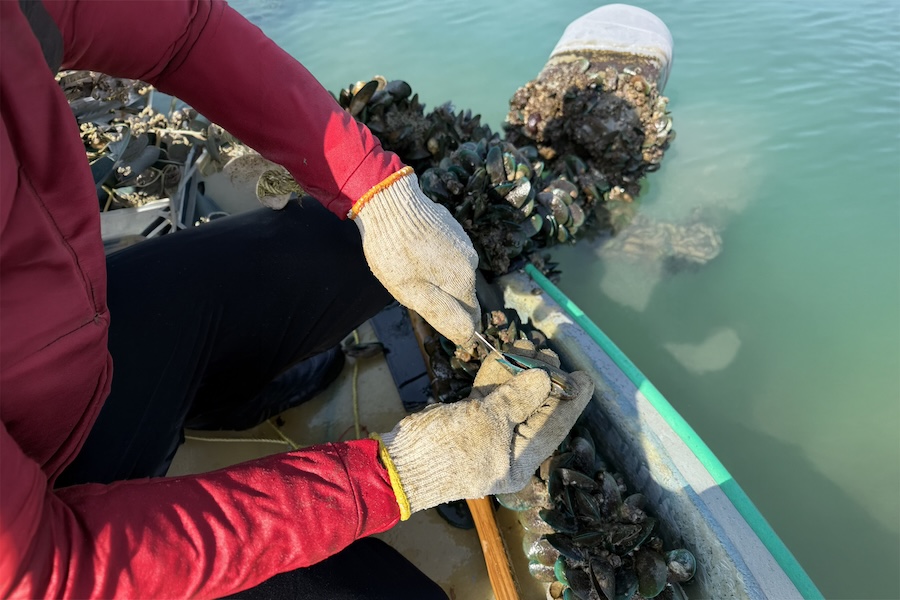
With close supervision and a well-structured system, it took about 8-9 months for the mussels to grow well, reaching large sizes and yielding an impressive first-year production of 20-30 tons. This success and high yield instilled confidence in group members that this was a viable new source of income for the Takwan-Pradu Bay fishing community. Consequently, the group, with assistance from BLCP Power Plant, jointly submitted a request for permission to farm mussels in a systemized manner, which was granted with a limit of no more than 3 rai per individual due to being in an industrial zone.
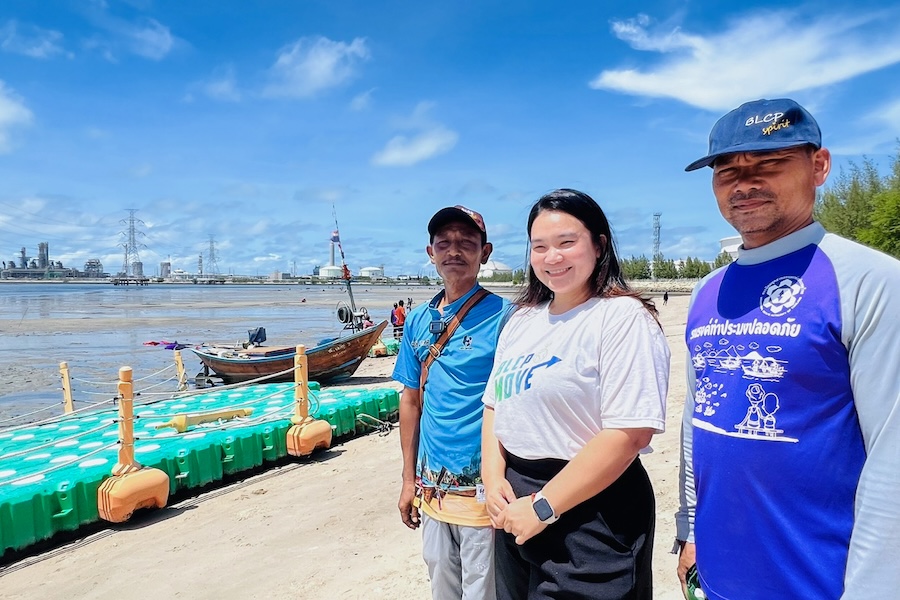
Currently, this project has been elevated and expanded significantly, with approximately 76 members operating mussel rafts. The fishing group's skills have developed into precise local knowledge, including:
- Placement Technique: Arrange ropes in a square grid, spaced 2 meters x 2 meters, to ensure mussels receive nutrients evenly.
- Harvesting Period: Mussels are raised for 8-9 months or more, with the best quality and taste typically found in January-February.
- Controlling Natural Factors: Mussels thrive in clean water with suitable temperatures, abundant plankton, and a balanced amount of freshwater from canals. The salinity level should be between 18-20 psu (if below 14 psu, mussels will die; if no freshwater is mixed, they will grow slowly and lack flavor).
Moreover, the Takwan-Pradu Bay small boat fishing community has integrated the philosophy of sufficiency economy by elevating to household-level industry, developing products such as “Dried Processed Mussels” to add value, preserve food for longer storage, and create stable supplementary income throughout the year.
The Success: The Blossoming Fruits of Sustainability from a Small Fishing Group Back Then
Today, the Takwan-Pradu Bay area, the mouth of Takwan Canal, and Saeng Ngam Beach have become a significant large-scale hanging mussel farming hub in Rayong province, with interesting statistics such as a total of 91 mussel farming operators (73 from Takwan-Pradu Bay, 11 from Takwan Canal, and 7 from Saeng Ngam Beach), an average yield of about 5 tons per operator per production cycle, and a total group yield of up to 350 tons per year, all under the care of BLCP Power Plant, covering 38 communities, 12 fishing groups, and promoting community enterprise economies totaling 52 groups.
The story of BLCP Power Plant, the Takwan-Pradu Bay small boat fishing group, and the surrounding fishing communities reflects clearly that genuine CSR and ESG policies are not merely about making donations and moving on; they involve engaging on the ground to listen, think, and act based on transparency, transforming “concerns” into “collaboration” that revitalizes the grassroots economy and protects marine resources sustainably in Rayong.
BLCP Power Plant “Aiming to develop stable energy for communities and the environment sustainably.” For more information, visit https://www.blcp.co.th/web/index or Facebook: BLCP Power Limited