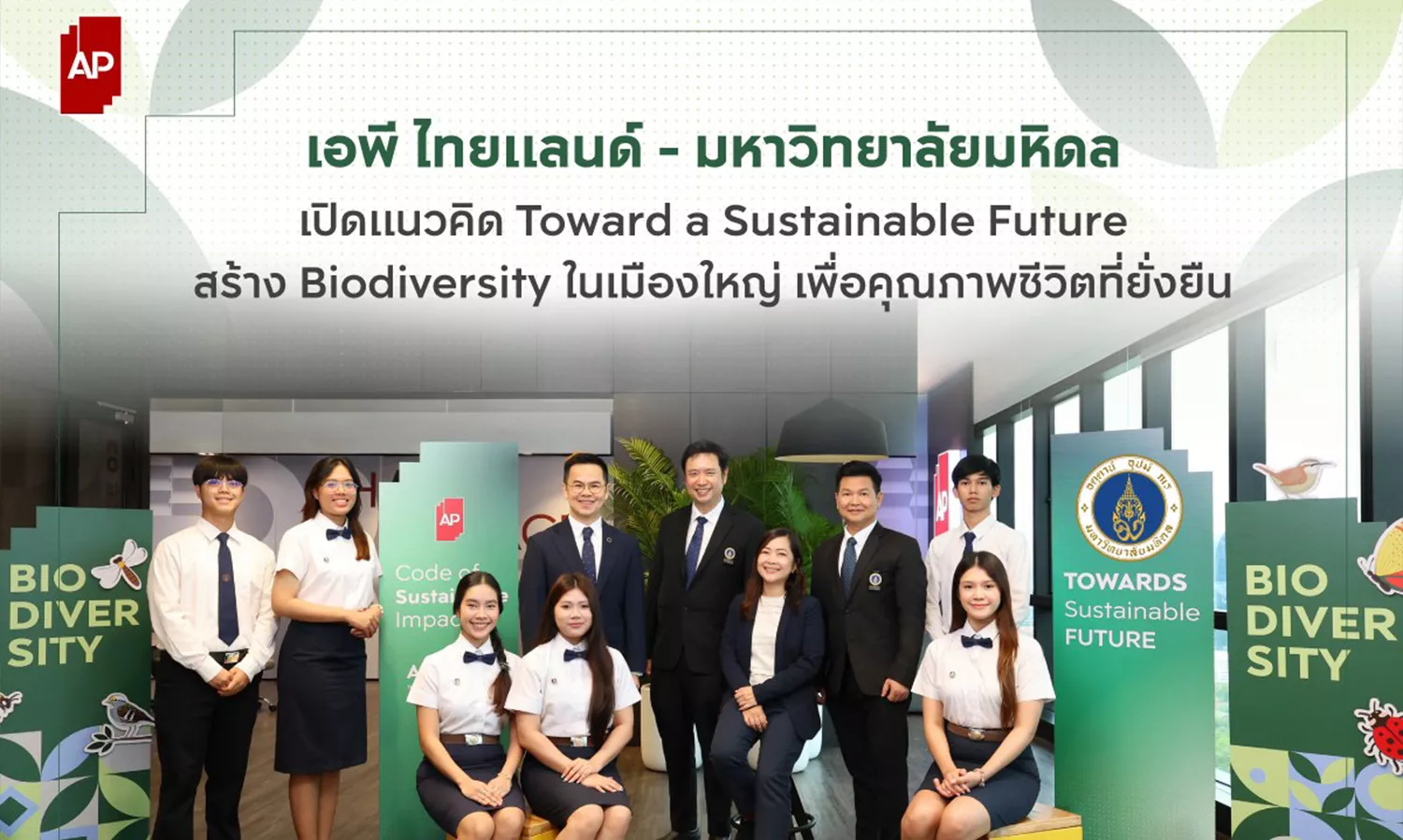
AP Thailand Partners with Mahidol University to Launch 'Toward a Sustainable Future' Concept for Urban Biodiversity Enhancement
Mr. Kittichat Satitnapachai, Deputy Managing Director of Corporate Marketing Strategy and Digital at AP Thailand Public Company Limited, stated, “AP Thailand views sustainability as a core strategy for long-term organizational growth. This collaboration with Mahidol University is part of our initiative 'Toward a Sustainable Future,' aimed at developing areas that create a balance between the environment and ecosystems. This is one of the standards of AP CODE to elevate real estate development towards creating a living ecosystem that integrates knowledge, understanding, and deep ecological awareness with sustainable and systematic life space design. We aspire to establish a new standard for real estate development that enhances Living Quality alongside environmental sustainability, setting a model for future industries.” Beyond creating “green spaces,” we aim to design “living ecologies.”
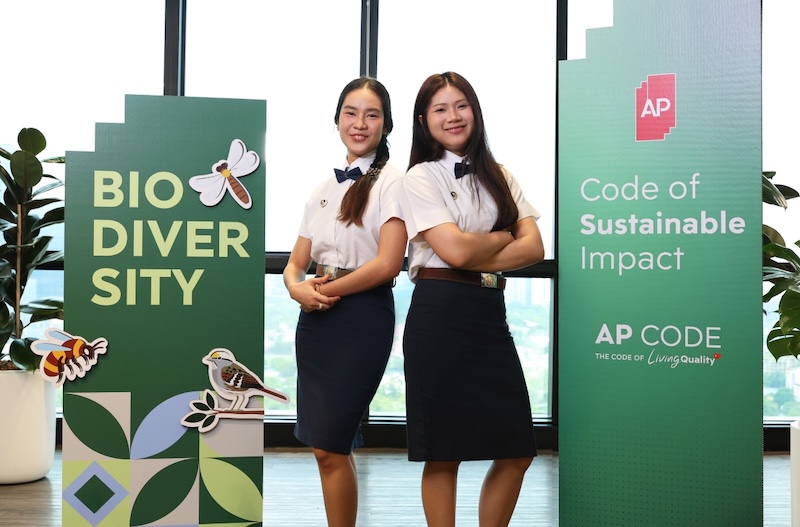
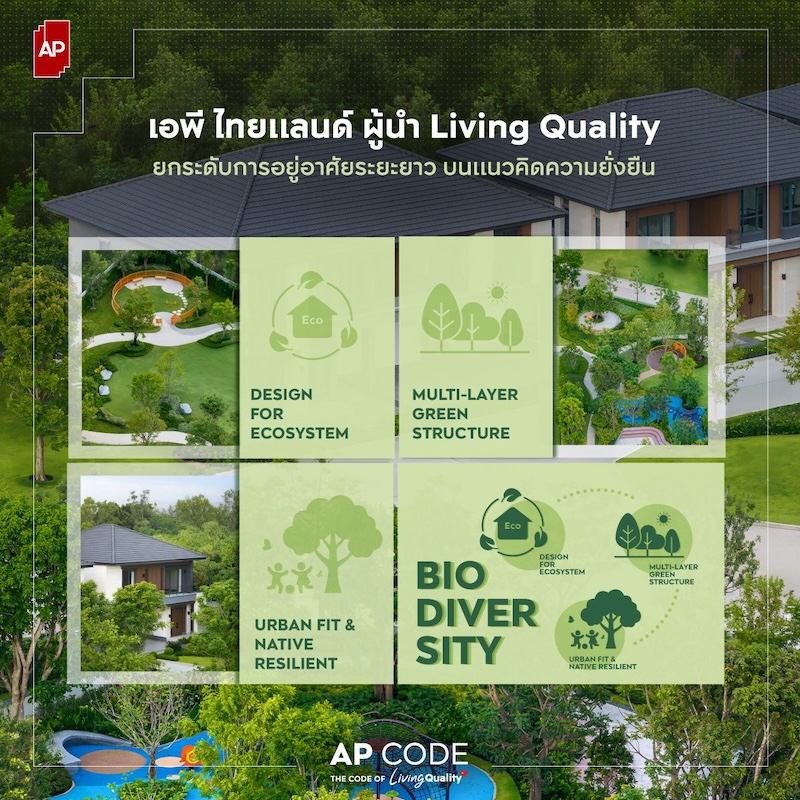
The outcome of this collaboration will enhance the 'forest patch' project, a model for upgrading green spaces from mere landscaping to establishing functional “Green Infrastructure” in AP's residential projects. With the concept of “Ecological Landscape Design,” we are committed to creating a new balance in communal areas, allowing residents to fully benefit while simultaneously restoring urban ecosystems sustainably through three design approaches for biodiversity.
Three Design Approaches for Green Spaces to Enhance Biodiversity
1. Design for Ecosystem - Design green spaces to function and drive ecosystems effectively, not just as beautiful landscapes. These ecological green areas will act as the lungs of the project, helping to reduce the Urban Heat Island Effect, trap PM2.5 dust, sequester carbon, and promote well-being while connecting residents with nature daily.
2. Multi-tiered Planting - Arrange plants to mimic natural forests with a "multi-height" structure, from ground cover and shrubs to climbing plants and large, distinctive trees in terms of shape, color, and fragrance. The complexity of these tree structures will serve as both food sources and shelters, attracting various birds and pollinators back to the city while functioning as ecological connectors.
3. Urban Fit & Native Resilient - Utilize native plant species, Thai flowers with unique fragrances or seasonal colors, that are highly disease-resistant, resilient to urban environments, and have root systems that do not damage engineering structures, whether along roadsides, in condominiums, or rooftop gardens, to create a self-sustaining ecosystem and reduce long-term landscape management burdens.
THE CITY Bangna 3: A Model of Quality Living for Sustainable Urban Housing
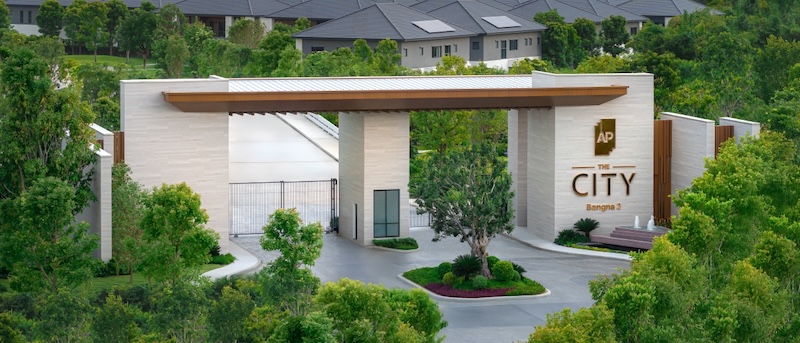
THE CITY Bangna 3 is one of the examples of low-rise projects that builds on the 'forest patch' concept, following the success of the LIFE Sathorn-Sierra condominium, which received the Good Design Award (G-Mark) from Japan for its outstanding green space design that integrates biodiversity into systematic living.
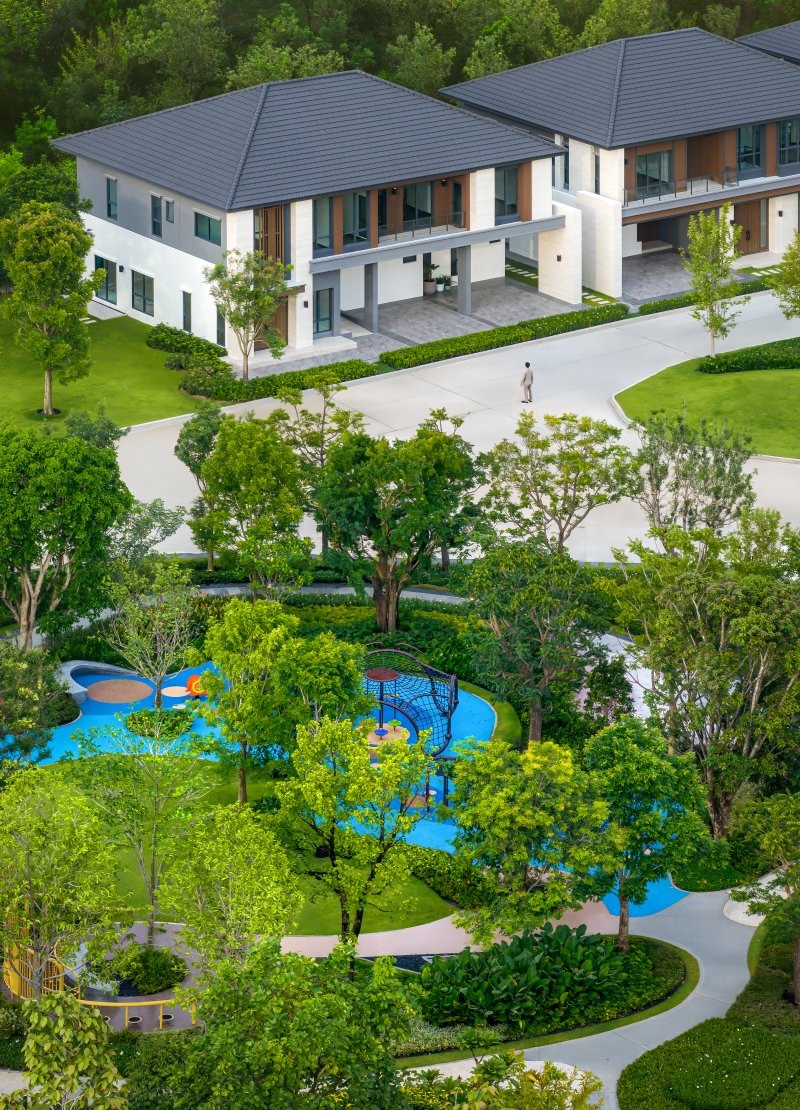
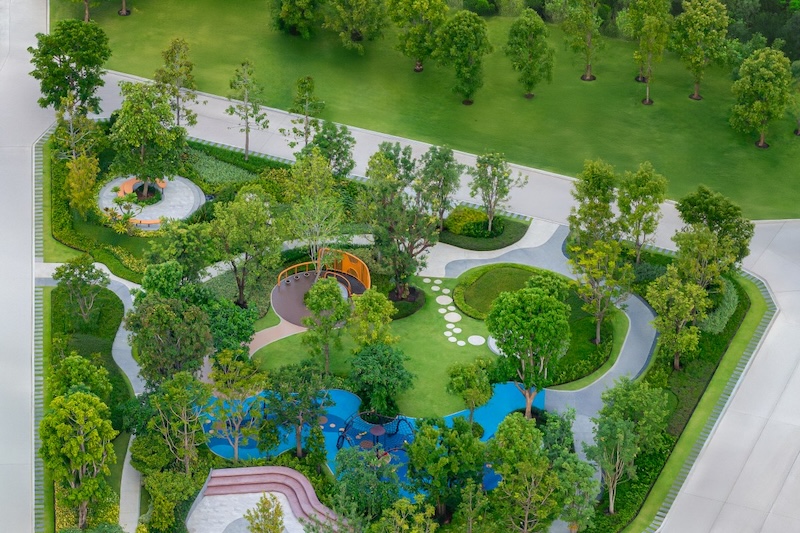
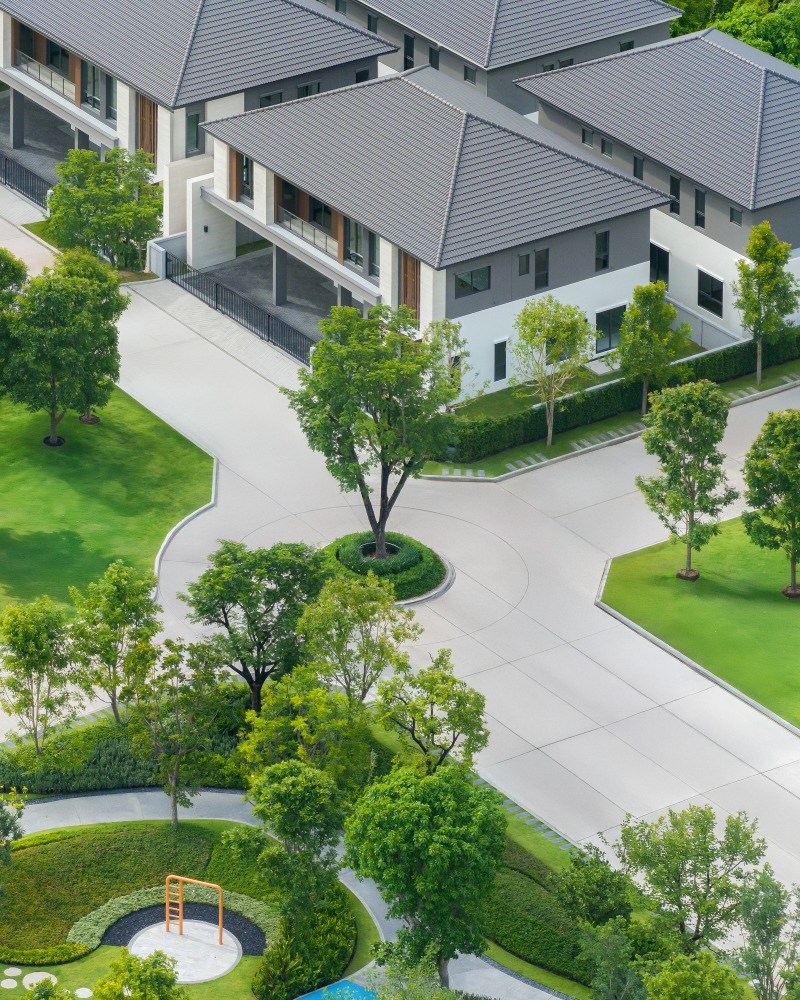
This success has been carried forward to THE CITY Bangna 3 through the development of green spaces in the form of an “Urban Micro Ecosystem,” integrating multi-layered plant structures, from large shade trees to shrubs and ground cover, to create an environment conducive to the coexistence of residents and living organisms within the same ecosystem.
“The goal of this collaboration is not only to develop project development guidelines for the AP Group but also to lay the foundation for future urban development that harmonizes quality living with balanced ecosystem creation,” Mr. Kittichat added.
“AP Thailand - A Life You Can Choose”