Bang Sue Accelerates Revitalization of Vacant Land, Adding 2 New Parks in the City
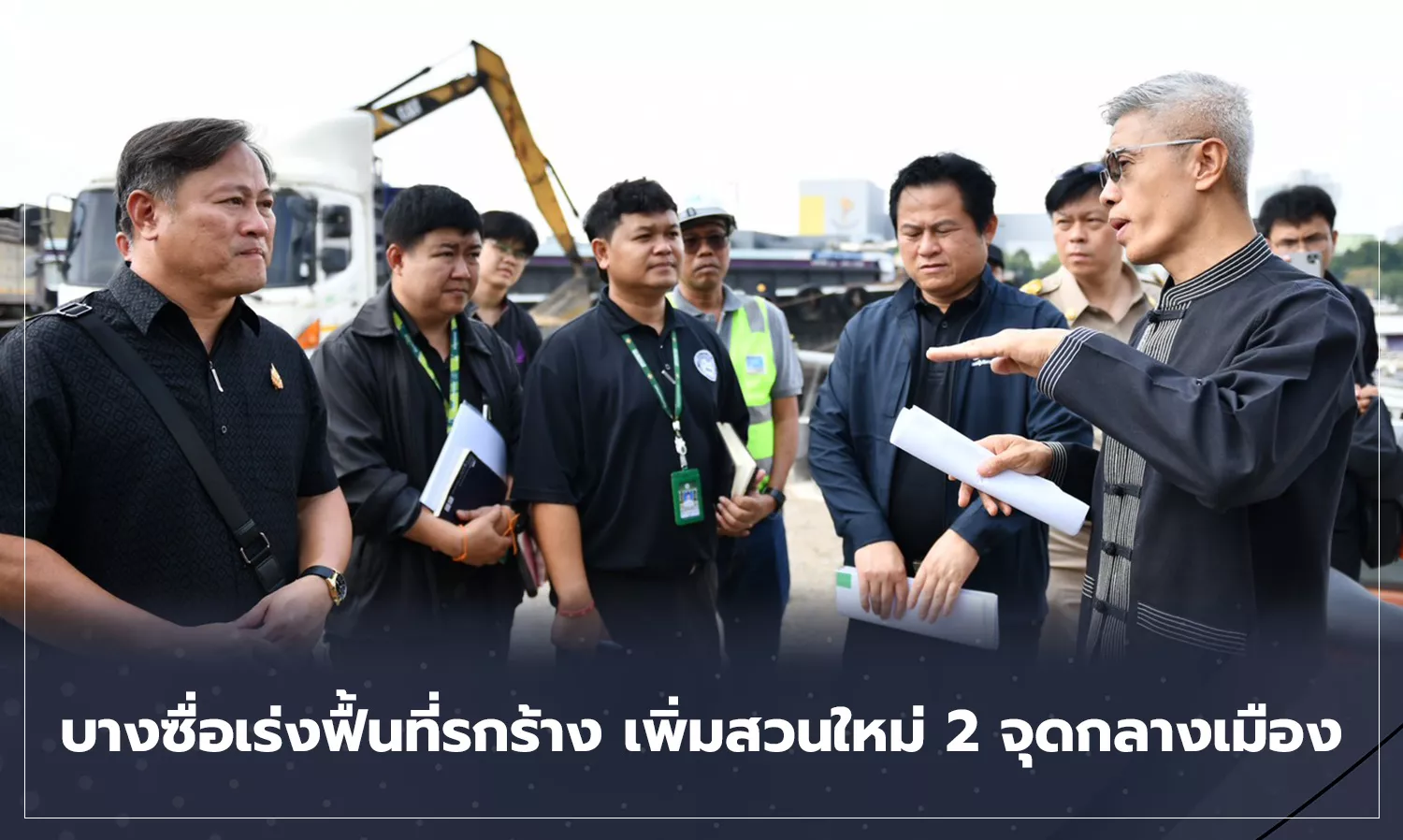
Bangkok is sending a clear signal that "vacant land" should no longer be left as empty spaces. Mr. Taiwut Kankaeo, the Deputy Permanent Secretary of Bangkok, visited the Bang Sue district to monitor the progress of public area surveys, which are set to be developed into green spaces and public areas for citizens. This aligns with the key goal of the Bangkok Metropolitan Administration (BMA) to increase green lungs in the city and enhance the quality of life for Bangkok residents.
The first area is located along the Chao Phraya River near the CPAC company on Pracharat Sai 1 Road, covering approximately 6 rai. This area is currently under survey and planning for landscape improvement to develop it into a green space and relaxation spot for the surrounding community. If this project proceeds as planned, this riverside area will no longer be just an empty space in the city but will transform into a breathing space for the community amidst the density of the inner city.
The second location is behind Wat Thongsutharam, or the buffalo path area, covering about 3 rai. Currently, it is characterized by dense vegetation and serves as a public area known as the buffalo path. This area is also under survey and development planning, with the concept of transforming it into a public park or community space in the future.
In numerical terms, this initiative represents an opportunity to add approximately 9 rai of new public space in the Bang Sue district. While this may not be large compared to the city's main parks, it holds significant importance at the community level, as it adds green space in areas that residents can actually use, close to home, and directly connected to their daily lives.
The Deputy Permanent Secretary of Bangkok has also instructed the Bang Sue district office and the Department of Public Works to expedite the area surveys, coordinate with landowners, and engage the private sector to push for collaborative development and finalize plans quickly. The key approach is not only to beautify the landscape but also to utilize the space efficiently, in line with the community context, and to allow citizens to participate in designing the future of these areas.
Thus, the essence of this initiative is not merely about creating "two new parks" but about changing the perspective on urban spaces from neglected vacant land to a true infrastructure for the quality of life of city dwellers. As Bangkok faces challenges such as density, pollution, and limited open spaces, adding even a few rai of green lungs can yield results far greater than the size of the land itself.