EU Tightens Microplastic Regulations, Pressures Global Supply Chain to Reduce Plastic Pellets by 30% by 2030 (Kasikorn Research Center Infographic)
The European Union (EU) is officially moving forward with the enforcement of laws aimed at preventing the loss of plastic pellets under the Zero Pollution Action Plan, with a target to reduce microplastic emissions from plastic pellets by 30% by 2030. The law will take effect on December 16, 2025, and will gradually introduce stricter requirements each year, reflecting the shift in Europe’s environmental policy from "voluntary" to "legally binding regulations".
Plastic Pellets: Small Points with Big Impact
Data indicates that plastic pellets are a significant source of microplastics, with an estimated 184,290 tons per year leaking into the environment in the EU. Although this accounts for only about 6% of global emissions, the risk is high because plastic pellets are small, easily dispersed, can quickly contaminate the food chain, and persist in the environment for over 10 years.
The key point is that this issue is "preventable" if there are clear management standards from production to transportation and storage.
Main Requirements of the EU Law
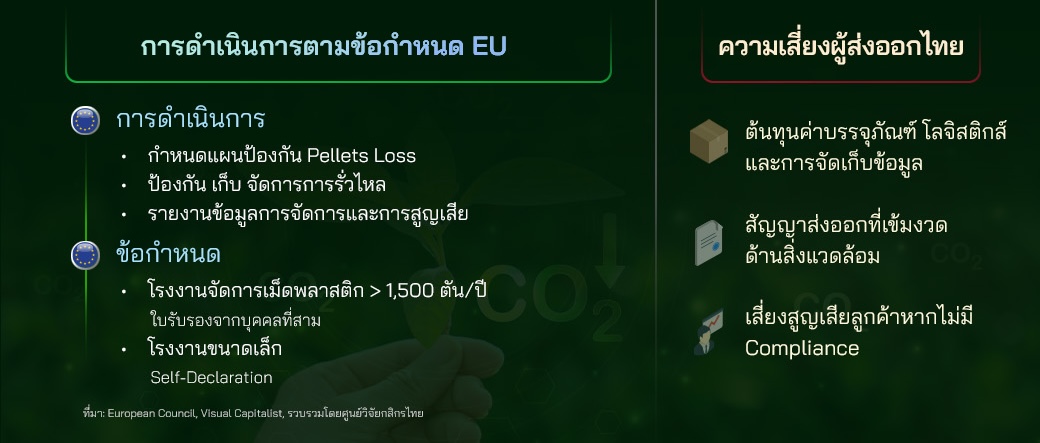
The new law requires operators managing more than 1,500 tons of plastic pellets per year to systematically implement leak prevention measures, such as:
-
Developing a plastic pellet loss prevention plan
<\/li> -
Strictly controlling the processes of storage, transportation, and handling
<\/li> -
Reporting management and loss data transparently
<\/li>
While smaller operators must also provide a Self-Declaration to demonstrate compliance
 <\/p>
<\/p>
Risks Thai Exporters Need to Assess
This law also covers the import of plastic pellets from outside the EU, placing Thai exporters directly at risk. If unprepared, they may face:
-
Increased costs from packaging and logistics that must meet standards
<\/li> -
Burdens related to data collection and reporting systems
<\/li> -
Risks of losing customers and market share if they do not meet compliance standards
<\/li>
Strategic Perspective
The EU's microplastic law is not just an environmental measure; it serves as a "partner screening tool" in the global supply chain. Operators who adapt quickly, invest in prevention systems, and use environmental standards as a selling point will turn this pressure into a long-term competitive advantage, while those who view it merely as a cost may quietly fall behind in an increasingly stringent European market.