Vietnam Prepares to Implement Emission Trading Scheme (ETS)
Amid a world that is heating up every day due to relentless pollution we create ourselves, "carbon" has become a taboo word that industries worldwide are struggling to cope with. Today, our neighbor Vietnam has taken a significant step forward by preparing to fully implement the Emission Trading Scheme (ETS) by 2028.
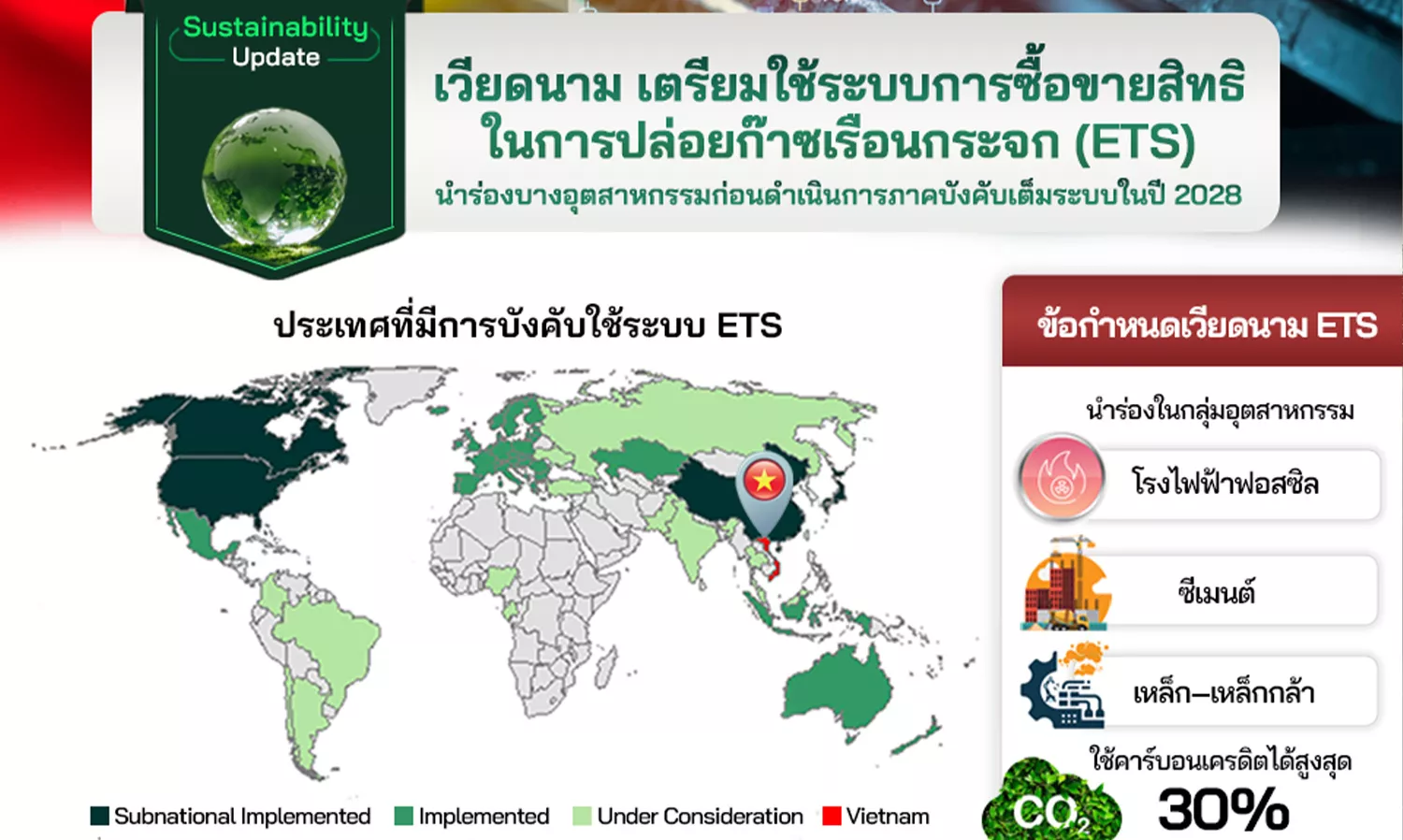
A Major Turning Point for Vietnam's Industry In 2025, Vietnam will begin allocating carbon emission quotas to key industrial sectors, including:
-
Fossil fuel power plants
-
Cement industry
-
Steel and iron
Companies that exceed their CO₂ quotas must purchase excess rights from others in the ETS market or use certified “carbon credits” to offset up to 30%, which also opens the door for cross-border trading.
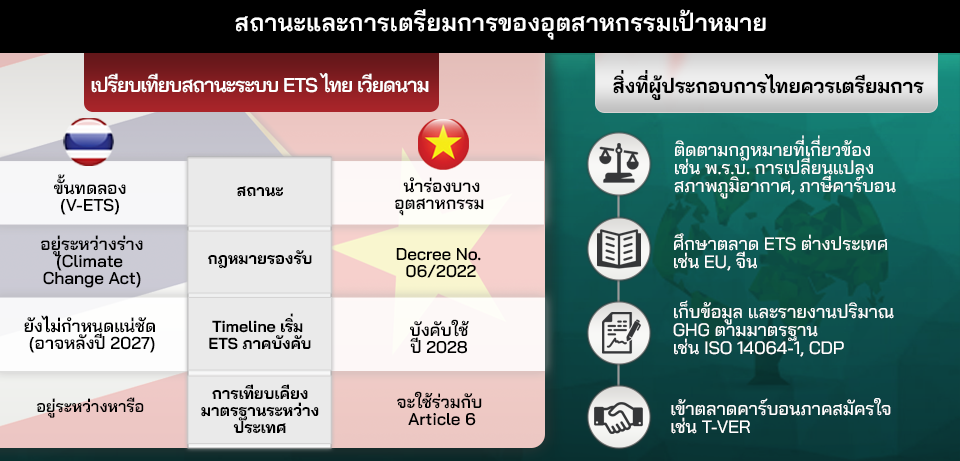
What about Thailand? Although still in the process of drafting the Climate Change Act, the ETS system is also unavoidable. Thailand is expected to start implementing it after 2027 under international legal frameworks and development guidelines.
-
Currently in the phase of developing a V-ETS (Voluntary ETS) pilot study
-
Preparing to use Article 6 guidelines under the Paris Agreement
-
In the “negotiation-testing” phase, but “not far off” anymore
How Should Thai Industries Adapt? Don’t wait to be forced—choose to “be prepared ahead of others” with the following approaches:
-
Monitor laws both domestically and internationally
-
Study the ETS systems of the EU and China
-
Collect GHG emission data according to international standards, such as ISO 14064-1
-
Engage in the domestic carbon market like T-VER to practice forward credit trading
Adapting today… is an advantage for tomorrow. Being “prepared” to handle the ETS not only reduces future production costs but may also become a competitive edge for brands in the eyes of the international community that values sustainability.