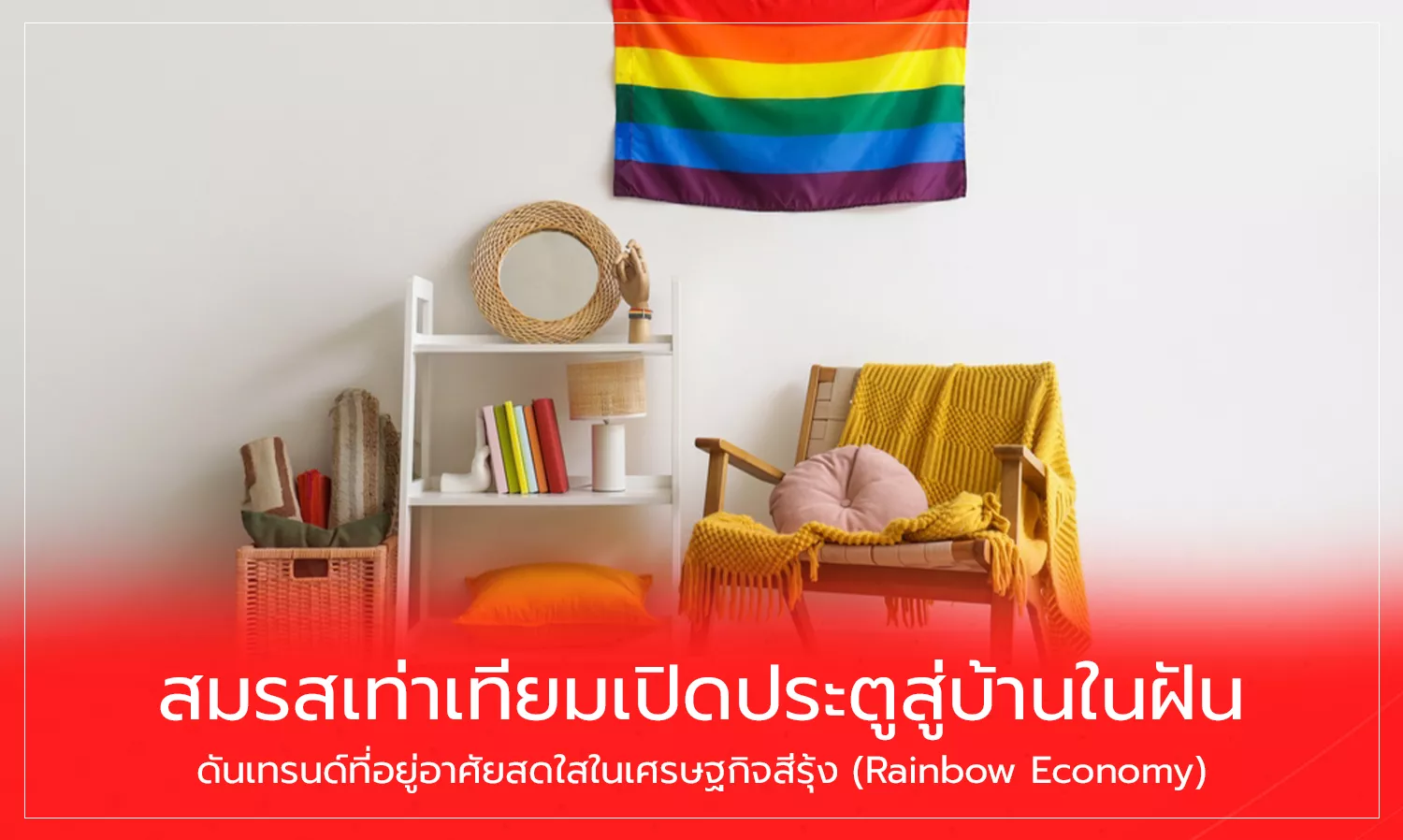
Equal Marriage Opens Doors to Dream Homes, Boosting the Bright Housing Trend in the Rainbow Economy
Today, the LGBTQIAN+ community has become a crucial driving force in the global economy, known as the Rainbow Economy. This is due to their high purchasing power and willingness to spend on personal happiness according to their preferred lifestyles. As Thailand embraces and accepts sexual diversity, evidenced by the social power pushing for the enactment of the Marriage Equality Act (Amendment to the Civil and Commercial Code No. 24) of 2024, which officially took effect on January 23, 2025, it reflects the creation of a more equitable society.

According to data from Mahidol University College of Management (CMMU), a research report titled "Love Wins Marketing: Decoding Marketing After the Marriage Equality Act" found that the LGBTQIAN+ consumer group in Thailand numbers over 5.9 million, accounting for 9% of the national population, making them a new economic powerhouse that businesses should pay attention to, especially in the real estate market.
Moreover, 54% of this population wishes to purchase their own homes, with 79.1% interested in buying single-family homes and 20.9% opting to move in with their partners, with an average budget of 3-5 million baht. Their varied housing preferences reflect that the demand for housing remains a priority for people of all genders and ages.

LGBTQIAN+ Couples Should Know! How to Manage Joint Property Rights in Real Estate
In addition to allowing LGBTQIAN+ couples to legally register their marriage, the Marriage Equality Act also comes with various rights that spouses should have, including managing their life together, handling assets/debts, and managing joint property. DDproperty, Thailand's number one real estate platform, invites LGBTQIAN+ individuals to understand how to manage joint property (according to the Civil and Commercial Code, Section 1474) and what needs to be done together.
The law allows spouses to agree on the form, method, conditions, and limitations regarding the management of their property differently from what the law stipulates. If no agreement is made regarding property management between spouses, upon the dissolution of the marriage, both parties must manage the jointly owned property and divide it equally according to the law.
According to the Office of Justice Affairs, the Civil and Commercial Code, Section 1476, outlines 8 ways spouses can manage their joint property, including important points related to real estate that should be known:
- Property Management: Selling, exchanging, mortgaging, or transferring rights must be agreed upon by both spouses.
- Management of Rights: This includes easements, rights of residence, land rights, rights to harvest, or encumbrances on real estate.
- Leasing Real Estate for More than 3 Years: Both spouses must manage this together. If violated, the non-consenting spouse has the right to sue for annulment. However, if leasing for 3 years or less, either spouse can manage independently without consent from the other.
- Using Joint Property as Collateral: Except in cases where personal capacity is used, no consent from the spouse is required.
Decoding Housing Trends that Meet the Needs of LGBTQIAN+ Couples
It is undeniable that the demand for housing is a genderless trend, with basic needs for finding a home being similar. DDproperty updates housing ownership trends that cater to the lifestyles of LGBTQIAN+ couples today, where the consideration for buying/renting a house or condo no longer needs to adhere to gender norms but should focus on the true needs and lifestyles of the residents.
- LGBTQIAN+ Couples Can Easily Apply for Joint Home Loans: The enactment of the Marriage Equality Act this year allows LGBTQIAN+ couples to apply for joint home loans together. Previously, joint loans for this group faced limitations due to banks requiring that co-borrowers be closely related. Currently, many banks have campaigns allowing LGBTQIAN+ couples to jointly apply for home/condo loans, which increases the chances of loan approval, allows for a higher loan amount to purchase their dream home within their budget, and enhances financial flexibility for both parties. LGBTQIAN+ couples can choose to have their names on the title either as one or both, depending on the bank's conditions.
- DINKs Lifestyle Couples Looking for Investment Opportunities: The DINKs (Double Income No Kids) lifestyle is gaining popularity among modern couples, whether heterosexual or same-sex, who do not have children or plan to remain child-free. This consumer group has dual incomes and no child-rearing responsibilities, giving them high purchasing power to meet their needs, along with significant savings and investment potential compared to other groups. They prioritize financial planning, and real estate investment is an attractive option due to its lower volatility and higher returns than other types of investments, with various formats available for both short-term and long-term returns, such as selling condo reservations, monthly rental investments, or investing in real estate funds.
- Choosing Homes Near Healthcare Facilities for Long-Term Health PlanningAccording to the latest consumer sentiment survey on the housing market by DDproperty, over 1 in 5 (22%) consumers believe that housing near hospitals/healthcare facilities is an external factor that influences their decision to buy/rent a home. This reflects a trend where consumers of all genders and ages are increasingly prioritizing comprehensive health care, whether for strengthening their bodies or seeking treatment when ill. Therefore, living near healthcare facilities provides peace of mind in case of unexpected events and facilitates long-term health care planning.
- The “Pet Humanization” Trend: Healing Hearts with Pets: The "Pet Humanization" or "Pet Parent" trend, where pet owners treat their pets like children and regard them as family members, continues to thrive. This aligns with the current trend of more Thai people living alone or in DINKs, including LGBTQIAN+ individuals who often have pets as part of their family and care for them as if they were children. This trend is expected to grow, supported by data from the Department of Business Development, Ministry of Commerce, which predicts that the pet market will reach a value of 66.748 billion baht by 2026, growing at an average of 8.4% per year. Meanwhile, property developers are adapting to target this demographic by launching various pet-friendly condo projects to provide options for consumers. As seen from survey results from LWS Wisdom and Solutions Co., Ltd., as of the end of 2023, there are 23,031 pet-friendly condos in the Bangkok metropolitan area, a 4,600% increase from 490 units in 2011.
However, LGBTQIAN+ couples who treat their pets like children should not forget to check the readiness of housing projects to accommodate pet-friendly living, as well as study the regulations of the project and the relevant laws in each area. For example, residents in the capital should familiarize themselves with the new Bangkok ordinance on the control of pet ownership and release, effective January 10, 2026, to ensure a smooth and happy living experience for all family members.
DDproperty, Thailand's number one real estate platform, has compiled news and useful information in the real estate sector to assist home seekers of all genders and ages in planning their decisions regarding housing. It also serves as a hub for buying, selling, and renting properties in various locations across the country, helping everyone prepare confidently for their dream home every day.