The Wisdom of Kasikorn Thai Joins K WEALTH to Monitor Trump Policies and Portfolio Management
The Wisdom of Kasikorn Thai, in collaboration with K WEALTH, a hub of financial, investment, and insurance expertise from Kasikorn Bank, organized a special seminar on the topic Investment Strategies for 2025: Thriving in the Trump-Inspired Global Economy. The event featured a team of investment experts providing exclusive investment strategy advice to The Wisdom clients. It highlighted the global challenges posed by two superpowers that could ignite a new trade war, with Trump accelerating three main policies: “pushing out illegal immigrants - increasing tariffs - supporting oil drilling and production”.
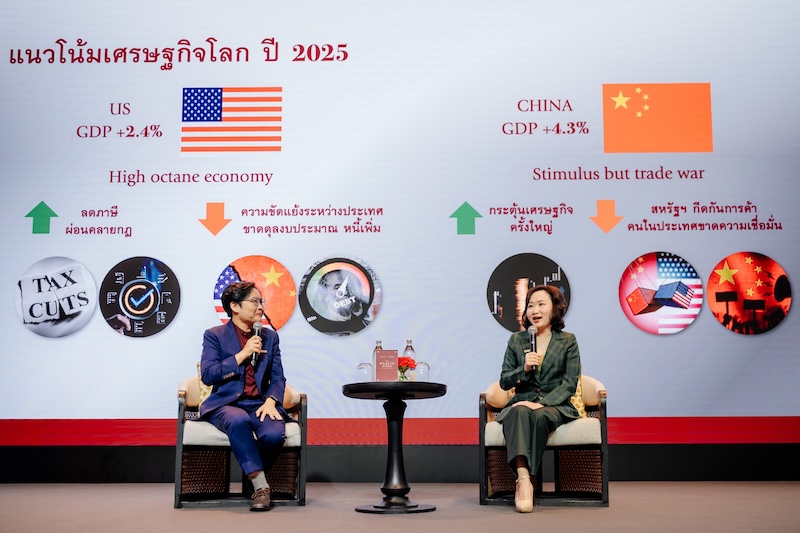
Meanwhile, China is signaling a significant economic stimulus in 2025, focusing on resolving real estate issues, restoring confidence, and boosting domestic consumption. Thailand's economy is preparing to face the impacts of U.S. trade barriers and the slowdown of the Chinese economy, which is a key trading partner. It is recommended to allocate most investment funds in a CORE Portfolio that diversifies investments globally (Global Balanced Fund) and increase investment opportunities in SATELLITE through private debt funds both domestically and internationally, as well as U.S. equity funds.
Mr. Pipawat Patthanawik, Deputy Managing Director of Kasikorn Bank, revealed that amidst the ongoing volatility in the global investment market, The Wisdom of Kasikorn Thai is ready to provide special investment services in all dimensions to manage wealth for its clients. In collaboration with K WEALTH, it regularly organizes special seminars called THE WEALTH MASTER in various regions. This year, it was held for the first time in Chiang Mai, with a team of investment experts from K WEALTH analyzing and formulating exclusive investment portfolio strategies for clients to strengthen portfolio stability and better meet investment goals.
2025 brings new challenges from the policies of Donald Trump, the President of the United States, who is reaffirming and continuing the “America First” approach through trade barriers and strict foreign policies, while also supporting the domestic economy through tax cuts and easing business regulations. Meanwhile, China continues to face challenges in restoring business and household confidence through economic stimulus measures expected to support the Chinese economy in 2025. Close monitoring of the situation and timely strategy adjustments will be key, especially as the main policies of the U.S. begin to have clear impacts.
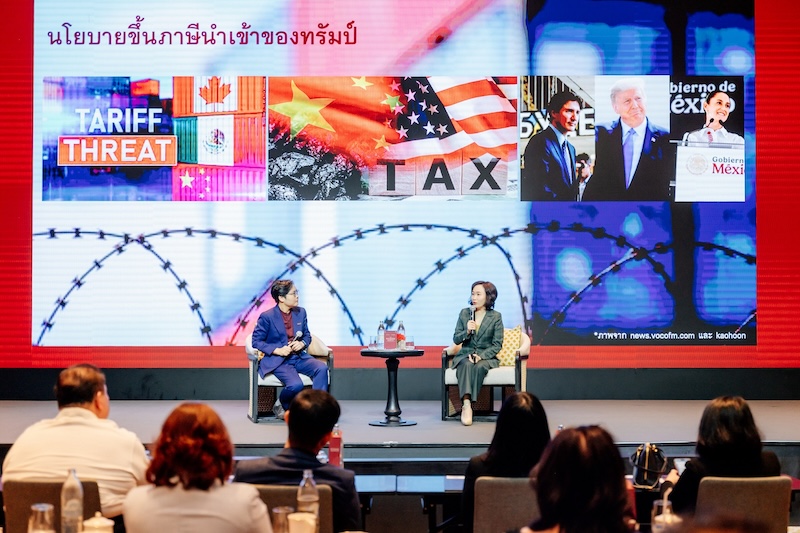
Keeping an Eye on “Trump” Accelerating Three Main Policies
Ms. Siriporn Suwankarn, CFA, CFP®, Chief Investment Officer (CIO) of K WEALTH, Kasikorn Bank, stated that this year, the U.S. economy is expected to continue growing at around 2.4% due to strong consumption and a robust labor market. The declining inflation trend will allow the FED to cut interest rates twice, totaling 0.50%, to a range of 3.75%-4.00%. The intense push for the “American First” policy by President Donald Trump, focusing on domestic prosperity, will exert pressure on trading partners and raise global concerns about a potential new trade war. The three main policies that Trump is accelerating include:
- The policy to push illegal immigrants out of the country, “Back to Their Places,” by declaring a national emergency at the southern border between the U.S. and Mexico, deploying military forces to fully control the border to prevent illegal immigration and deport illegal immigrants.
- The “America First Trade Policy” tariff policy, based on Trump's approach to raise tariffs to generate revenue for the country and address international trade injustices, starting with goods from Mexico, Canada, and China. Recently, leaders have sought a temporary solution, with both Canada and Mexico agreeing to Trump's demands to improve border security measures to combat immigration and drug issues.
- The energy and environmental policy, “Drill Baby, Drill,” where Trump declared a national energy emergency, promoting exploration and production of energy, focusing on large-scale oil drilling, and preparing to eliminate regulatory obstacles to strengthen the U.S. energy industry and reduce energy costs. Additionally, Trump signed the withdrawal from the Paris Agreement on climate change, which will impact the goals of reducing greenhouse gas emissions and limiting the rise in global average temperatures, as the U.S. is one of the top polluters in the world.
Ms. Siriporn further stated that while the Chinese economy continues to slow due to issues in the real estate sector and export pressures from U.S. trade barriers, it is expected to grow only 4.3%, with government spending being the main driving factor. Although the Chinese government has continuously implemented economic stimulus measures, they may only support the economy in the short term until confidence is restored. For Thailand, the economic growth rate is projected to be around 2.4% this year, influenced by a decline in tourism and export pressures from U.S. trade barriers and the slowdown of the Chinese economy, which is Thailand's main trading partner. It is expected that the Monetary Policy Committee (MPC) will cut interest rates twice, totaling 0.50%, to a level of 1.75%. Meanwhile, Thailand's economy in the first quarter will receive short-term support from government budget disbursements, as well as economic stimulus measures such as Easy E-receipt and the Digital Wallet top-up program.
K WEALTH Identifies 5 Factors Supporting Global Investment, Recommends Private Debt Funds and U.S. Equity Funds*
K WEALTH views 2025 as a favorable year for investment, supported by: 1) the global economy continuing to grow, with a low chance of recession; 2) the financial status and performance of listed companies being sound; 3) interest rates trending down in line with inflation; 4) major economies, both the U.S. and China, having economic stimulus policies; and 5) investment funds shifting away from short-term financial instruments as interest rates decline to seek higher returns.
Interesting investment assets include:
- Fixed Income Funds, both domestic and international, focusing on corporate bonds as they offer higher returns than government bonds, and a strong economy reduces the risk of default.
- Equity Funds, particularly in the U.S. stock market, benefiting from a still-strong economy and support from the American First policy, with standout industries including finance and consumer goods.
However, global investment still faces risks from continuously rising asset prices since 2023, leading to potential selling pressure if economic reports or corporate earnings fall short of expectations. Additionally, there remains uncertainty regarding U.S. policies and international political conflicts that could create volatility in asset prices throughout the year. Therefore, constructing an investment portfolio that aligns with the investor's risk level remains a crucial factor not to be overlooked.
Stay updated with financial and investment analysis from The Wisdom of Kasikorn Thai in collaboration with K WEALTH via LINE KBank Live, and register to receive special privileges and news.
*Disclaimer: Investors should understand the nature of the products, return conditions, and risks before making investment decisions.