Thailand Implements Carbon Tax on Oil Products Without Affecting Retail Prices
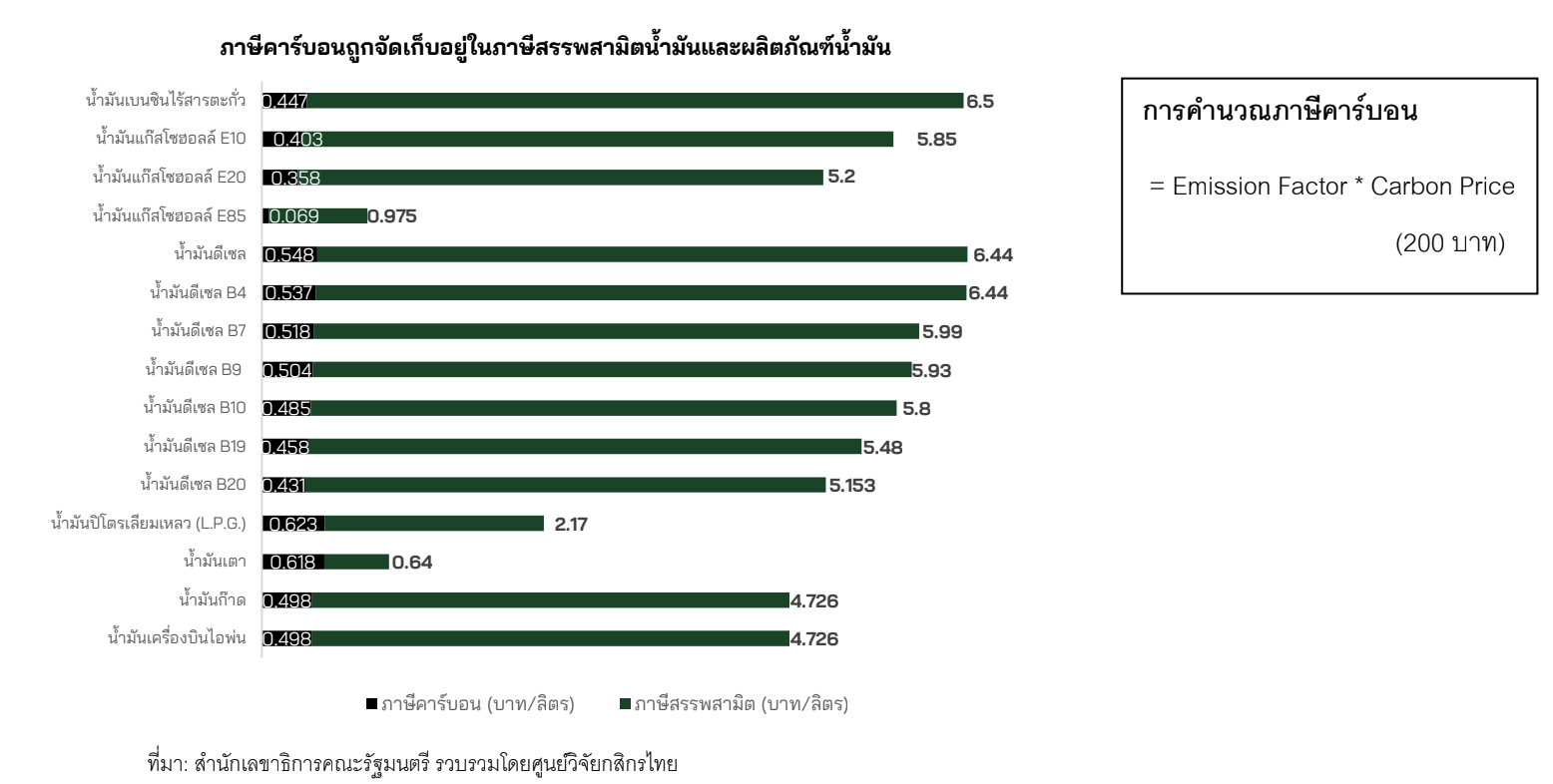
The carbon tax will be levied on oil and oil products at a rate of 200 baht per ton of carbon dioxide equivalent, included in the current excise tax rate to avoid impacting retail prices. This means that oil users will contribute to the carbon tax between 0.069 – 0.623 baht/liter, varying by oil product due to different carbon dioxide emissions.
However, this carbon tax will not burden oil users and will not add costs to the industrial sector since it will be part of the existing excise tax on oil, with a portion allocated as a carbon tax to raise awareness and establish a carbon pricing mechanism for the public.
The carbon price of 200 baht/tCO2eq is considered affordable compared to other countries, such as Finland, which charges 100 US dollars per liter (approximately 3,600 baht), and Singapore, which charges 18 US dollars per liter (approximately 648 baht).
The carbon tax will be collected at different values based on the greenhouse gas emission factors of oil and oil products, with an initial rate set at 200 baht per ton of carbon dioxide emitted (tCO2eq).
Nonetheless, the announcement of this carbon tax rate marks the beginning before the Climate Change Act, which is expected to come into effect in 2029, during which adjustments to the rate and the determination of additional products subject to the carbon tax may occur.