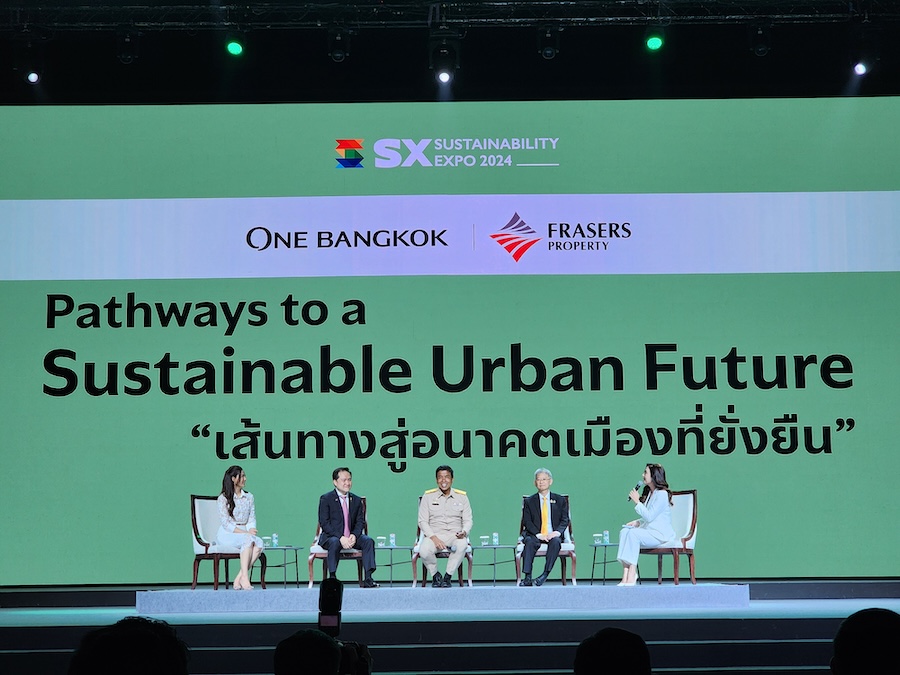
Pathways to a Sustainable Urban Future Seminar
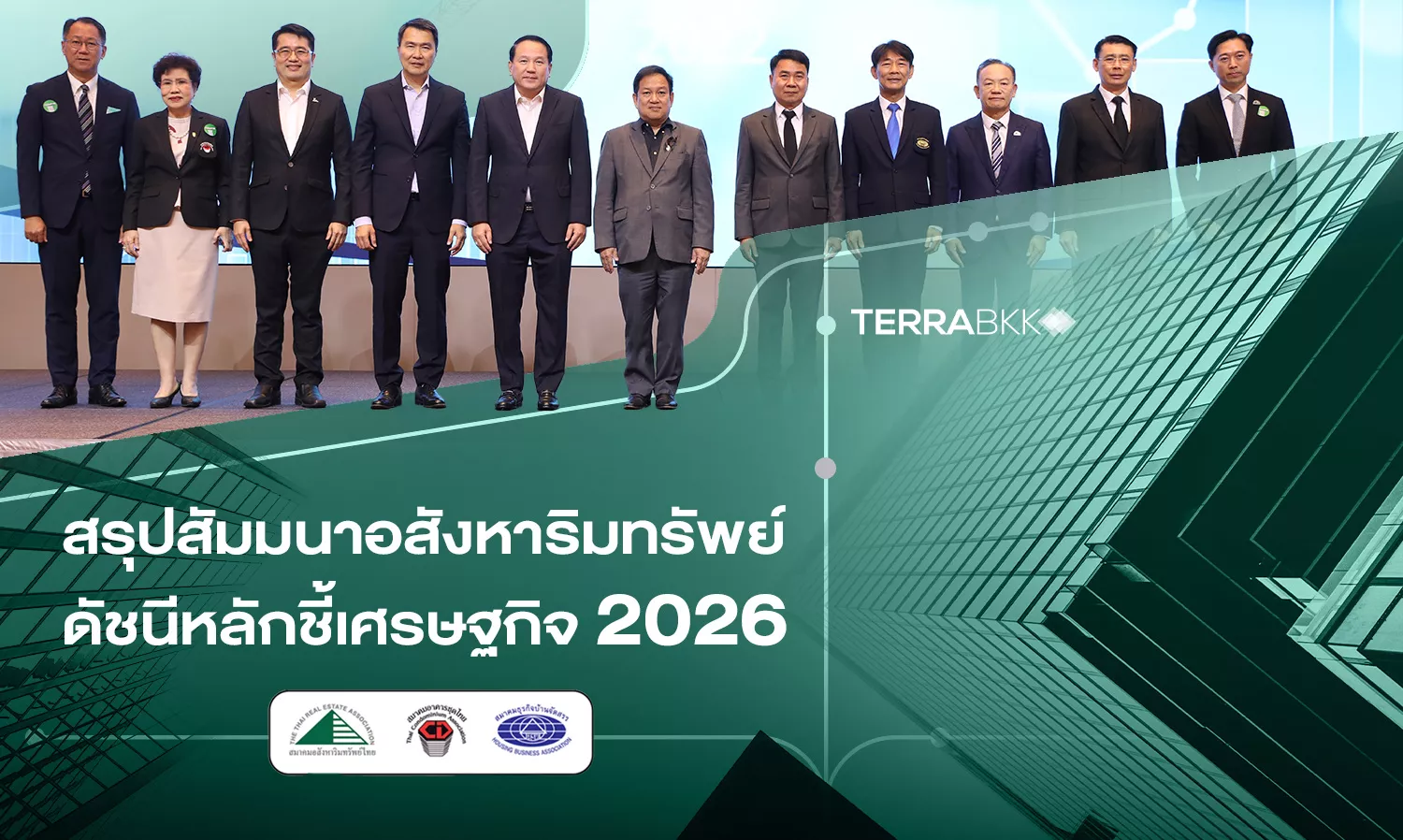
The seminar on Pathways to a Sustainable Urban Future began with remarks from Mr. Chatchart Sitthiphan, the Governor of Bangkok. ⭐ Sustainability means that we do not use future resources for present benefits. This concept encompasses not only greenhouse gases but also all aspects such as budgets and opportunities across various dimensions. If we use resources without considering the future, there will ultimately be nothing left for future generations. It is possible that our generation will die of old age, while the younger generation may perish due to climate change.
✈️ Bangkok has two rankings: number 1 and number 98 (2023). Number 1 is the city with the most tourists in the world, with 23 million visitors last year, while number 98 indicates that we are one of the least livable cities out of 140 countries. Singapore ranks 33rd and Hong Kong 94th. How do livability and sustainability relate? Bangkok aims to be a livable city for everyone, which is why the Bangkok Metropolitan Administration has established nine policies aligned with the UN's 17 Sustainable Development Goals (SDGs). These policies cover all 17 aspects of ESG (Environmental, Social, and Governance). Therefore, it is evident that livability and sustainability are interconnected; if a city is not livable, it cannot be sustainable. From these nine policies, we have developed 226 action plans. The heart of sustainability lies in these action plans, as they will ultimately lead us to our goals. We need to create detailed plans to improve our ranking from 98 to 50. The livability of a city is not just about mega projects; the past issues we faced stemmed from focusing solely on billion-dollar mega projects while neglecting smaller projects that directly impact the citizens.
Thus, a livable city must align with sustainability. We need to consider both large and small projects. For example, the distance of the subway is nearing 400 kilometers, but is it sustainable? The answer is no if the sidewalks are still impassable and people have to wait 15 minutes for a motorcycle taxi. Ultimately, people will continue to use their private cars. Therefore, Bangkok has started to improve sidewalks by painting them for pedestrian use, including manhole covers and walkways, because we believe these small projects are just as important as large mega projects. Currently, the Bangkok Metropolitan Administration is developing bike lanes and bike-sharing programs, which are sustainable initiatives that do not require significant investment. Creating covered walkways to protect people from the sun and rain is another example, similar to initiatives in Singapore, such as electric vehicles and shuttle buses.
For instance, Benjakitti Park spans 300 rai, but most people cannot access it because it is far from home. Sustainability is not just about having large parks; it requires small parks within a 15-minute walking distance from homes. The goal is to have 500 parks throughout Bangkok; we have already completed 120 parks. This approach benefits adults and the elderly who can walk from home to exercise, while children have playgrounds nearby instead of traveling to large parks on weekdays.
Even the waste management system has shifted to waste separation instead of mixing everything together. We use electric tuk-tuks to collect waste, which reduced waste collection costs by 141 million baht last year through the separation of wet waste, dry waste, recyclable waste, and food scraps, which can be processed into fertilizer.
Regarding flooding, Bangkok has invested tens of billions of baht in tunnels, with approximately 20 kilometers of tunnels in the city, while we have 6,000 kilometers of drainage pipes. However, if the large tunnels are good but the drainage pipes in front of homes are blocked, they will not function. In the past, the Bangkok Metropolitan Administration has cleaned 4,000 kilometers of pipes and improved 737 risk points.
On the night of September 30, Bangkok experienced heavy rainfall of up to 50 millimeters, which is significant. However, there was no flooding, not just because the tunnels are effective, but because the drainage system works well, allowing water to drain quickly. This is not difficult to achieve; it just requires attention.
Sustainability must have clear goals that relate to our lives, with specific details that can be acted upon. This is sustainability that comes from small plans.
Sustainability must come from all four sectors:
1. The government, which is the main driver as it creates laws and holds the budget.
2. The education sector is also important.
3. The private sector must collaborate.
4. The public sector.
Currently, Governor Chatchart acts as an ambassador, connecting talented individuals from abroad to collaborate through various projects and partnerships.
For example, the initiative to plant one million trees within four years of his governorship was met with skepticism. However, through requests to embassies and private sectors, such as Thai Beverage, the project has successfully planted nearly 1.2 million trees in just 2 years and 4 months, with each tree linked to an application through collaboration with the private sector.
Another interesting project is the Bangkok Food Bank. People often think of Bangkok as a prosperous city, but there are many beggars and bedridden patients in various communities. This project functions like a supermarket, allowing private sector donations and providing 300 points per month for vulnerable groups to choose the products they need with dignity. Currently, this program has been launched in 30 districts, and the items sold are not expired goods but consumables that are still safe to eat.
Additionally, a large sports center has been established through private sector collaboration, offering various activities.

✨ Dr. Opas Karnkawinpong, Permanent Secretary of the Ministry of Public Health
Regarding the perspective of Thai public health on sustainability:
Firstly, sustainability arises from adaptation and innovation.
Secondly, when people think of a city, they often envision buildings, houses, roads, and railways. However, the most important aspect of a city is its people. A city must consist of space, people, and the environment. One factor that determines whether a city is sustainable is its people. What kind of people will make a city sustainable? They are healthy individuals with a positive attitude and lifestyles that promote sustainability. Even if we have sustainable infrastructure, if the people do not contribute to it, it will not be sustainable.
Therefore, the Ministry of Public Health views 'people' as the core focus. Some may think that the Ministry only looks at physical health, which is certainly a priority, but we must also consider overall well-being.
What does 'sustainable people' mean?
Firstly, it means living a long life. The health system has been developed to help people live longer. In the past, people retired at 60, but now many 60-year-olds are still healthy due to the public health system that extends life. However, in large cities, life is influenced by various factors. Currently, the main causes of death among Thai people are:
1. Accidents2. Cancer
3. Cardiovascular diseases or non-communicable diseases. Environmental factors significantly affect mortality, especially pollution in air, water, and mental stress.
How can we create a good environment in the city? This is the responsibility of both the government and the private sector.
Secondly, when there is a good environment, people will be healthy, and healthy individuals will contribute to a sustainable city. Our health is influenced by our behaviors. The four key factors are: food, emotions, air, and exercise. Currently, most people buy food rather than cook at home, leading to unhealthy eating habits. How can we ensure that city dwellers have access to healthy and delicious food?
How can we promote more physical activity? For example, by offering tax reductions for those who exercise. We are considering legislation that encourages healthy living through exercise, with incentives such as tax reductions for weight loss or waste separation to reduce food waste. Maintaining good health can lower healthcare costs, as non-communicable diseases currently result in an economic loss of up to 1.6 trillion baht.
What everyone can do starts with themselves:
1. Gain knowledge about what good health means. 2. Find ways to encourage health check-ups. 3. Good physical health must be accompanied by good mental health. Currently, many Thais are experiencing increased stress due to excessive social media consumption and misinformation. How can we develop critical thinking skills when receiving information?Thus, a key component in urban development is good health. The Ministry of Public Health believes that for a city to thrive, its people must be healthy, both physically and mentally, while also adapting and innovating to improve the city.
✨ Mr. Panot Sirivadhanabhakdi, CEO of Frasers Property Limited
He emphasized the importance of the private sector connecting with communities, focusing on developing projects that benefit the community. When the private sector aligns with the government, we believe we can create opportunities for urban development that genuinely improve quality of life and provide real benefits for investments.
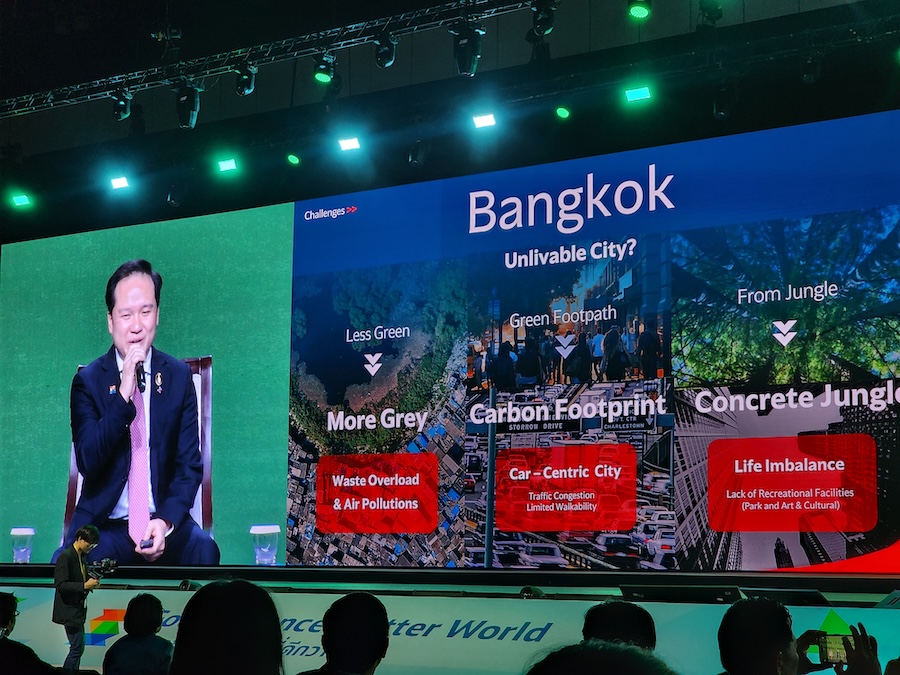
We view problems in a broader context, recognizing that what we design must enhance quality of life. We are addressing the city's weaknesses, such as air pollution and increasing traffic, as well as the global stress issues faced by people.
For the policies set by the Governor of Bangkok for 2024, the ranking has improved to 78, reflecting the collaborative efforts of the governor with the private sector.

Bangkok ranks third in Asia for traffic congestion because we have built a city for cars but not for people. Currently, there are 12.5 million vehicles in Bangkok. Given the density, we still have opportunities to reduce reliance on private cars by encouraging the use of the electric rail system, which has seen an investment of 25 billion USD. However, the infrastructure is not being fully utilized. For example, Singapore has a cost of living increase of only 3% per year, while Bangkok's is 11%, which discourages people from using public transport due to high travel costs and incomplete connectivity.
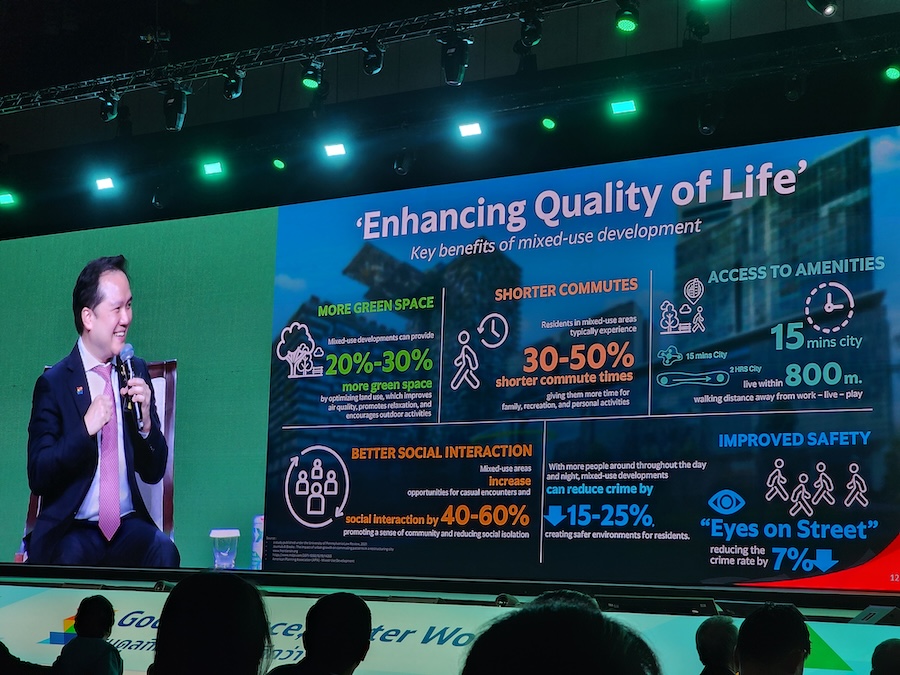
This information is part of our consideration of how we can collaboratively improve Bangkok, such as increasing pedestrian pathways, enhancing convenience for people, and expanding green spaces. Currently, Bangkok has only 7.8 square meters of green space per person, compared to Singapore's 66 square meters per person, which is seven times more. In densely populated cities like Tokyo, there are 38 square meters of green space per person. In reality, Bangkok has only 1.63 square meters of public park space per person.
Therefore, the Governor's 9 Good Policies serve as inspiration for the design of the One Bangkok project, which aligns with the city's policies. For the real estate sector, design should not only focus on materials but also on enhancing people's quality of life. Our development goal is to create mixed-use developments that optimize space efficiency and reduce various risk management costs to improve urban living. By prioritizing people, we aim to set an example globally, demonstrating that we can design projects that align with community needs and integrate public utilities effectively. We aim to ensure that everything is accessible within a 15-minute walk.
Starting from the Queen Sirikit National Convention Center to Samyan Mitrtown, we consider how these projects will complement the city, ensuring that all points connect with public utilities for easy access, thereby reducing traffic issues and enhancing quality of life. The Governor's future goal is to make the city walkable, connecting everything within just 15 minutes.
One Bangkok is a large project that aims to enhance accessibility. We are creating green pathways that are open to both people and pets, as well as developing an Art Loop. One Bangkok covers over 2 million square meters, with 1.2 million square meters of usable space, allowing people to understand and access the area while enjoying a balanced experience.
For SX2024, we aim to disseminate ideas to individuals, especially the youth, through participation. SX2024 reflects Frasers Property's stance that the key to sustainable structures lies in our youth.
We encourage everyone to consider health services when thinking about urban development. In the future, we may need health services available 24/7, similar to 7-11, including health promotion and lifestyle advice to improve urban health, ultimately making the city more livable. One Bangkok aims to be a central space that provides access to health services, facilitating annual health check-ups for the community without needing to visit large hospitals.
Real estate can establish structures that allow people to access services through data collection as a Smart City. Thus, data is crucial for efficient management. Areas designed to promote these services present opportunities to reduce costs for all sectors and directly benefit the public.
Therefore, the Smart City concept of One Bangkok emphasizes understanding data collection. If data is systematically collected, it can significantly enhance our project from day one, focusing on user pathways to minimize costs while considering quality of life and health. We collaborate with major companies like Hitachi and Huawei to implement effective data collection technologies, such as video data collection.
Thus, it is highly beneficial to integrate technology and early adoption into enhancing the quality of life for those who use our services.

✨ ? Ms. Khemapsorn Sirisukha, actress and environmental conservationist, shared her challenges of living in a city while loving the environment. The first challenge is the convenience of urban living, which often negatively impacts the environment and sustainability. In our daily lives, we must choose between fast food for convenience or cooking at home to reduce waste from the start, which is not always easy.
The second challenge is the use of single-use items. Nowadays, many people consume coffee, generating significant waste compared to carrying a reusable cup, which is less convenient. Adapting to an environmentally friendly lifestyle can be difficult initially, and we often forget.
In the future, we hope to have parks close to home that we can access without driving, or online shopping, which often leads to excessive packaging waste.
Accessing healthy, environmentally friendly, or locally sourced products is often challenging and expensive due to a lack of connection between buyers and sellers.
Moreover, adapting our lifestyles to harmonize with the environment while minimizing harm is crucial. However, we cannot change the world alone, especially for urban dwellers who often have limited living space, such as in condominiums or apartments. Creating green spaces or growing our own vegetables is not easy, but vertical gardens can help grow food at home. Separating waste meticulously, as done in Japan, may not be feasible due to limited space.
Lastly, the challenge lies in the continuity of systems that support our efforts. For instance, while we aim to use public transport more, if we live far away, the subway may not connect, and sidewalks may not be conducive or safe for walking or cycling.
The benefits of adapting for sustainability include choosing organic food, which directly benefits our health. Cooking at home allows us to know the source of our ingredients and ensures safety and cleanliness, directly impacting our health. At the same time, it can save costs; for example, we should unplug devices when not in use.
In terms of well-being, the beauty of the environment positively affects our mental state. Being close to nature calms us and reduces stress. If we focus solely on materialism, we may never feel satisfied as we constantly seek more.
It is crucial to choose options that support the environment, and collaboration among all sectors is essential; no single entity can do it alone.