HDD and Gold Continue to Support Thai Exports in August 2023 with 7.0% YoY Growth; 2023 Export Growth Forecast Adjusted to 2.5% (Kasikorn Research Center)
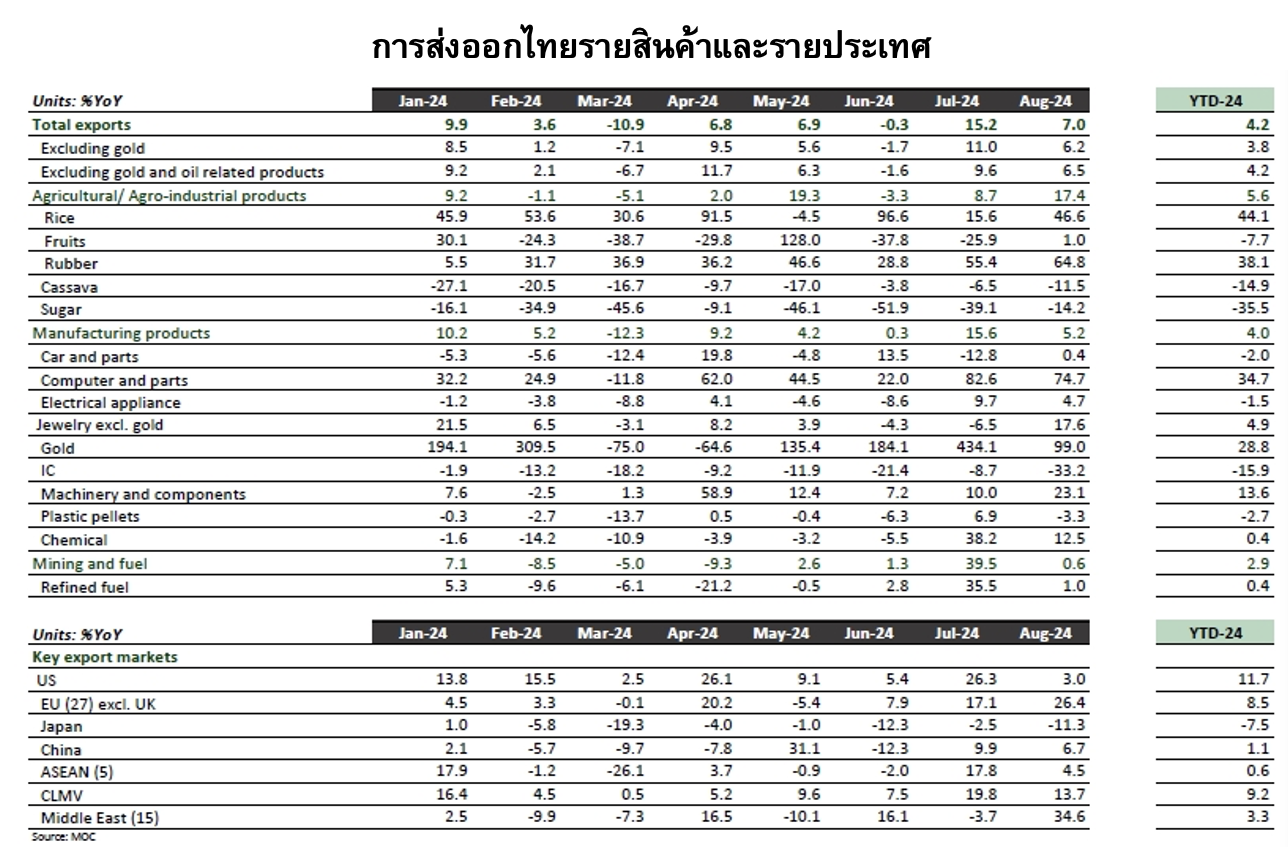
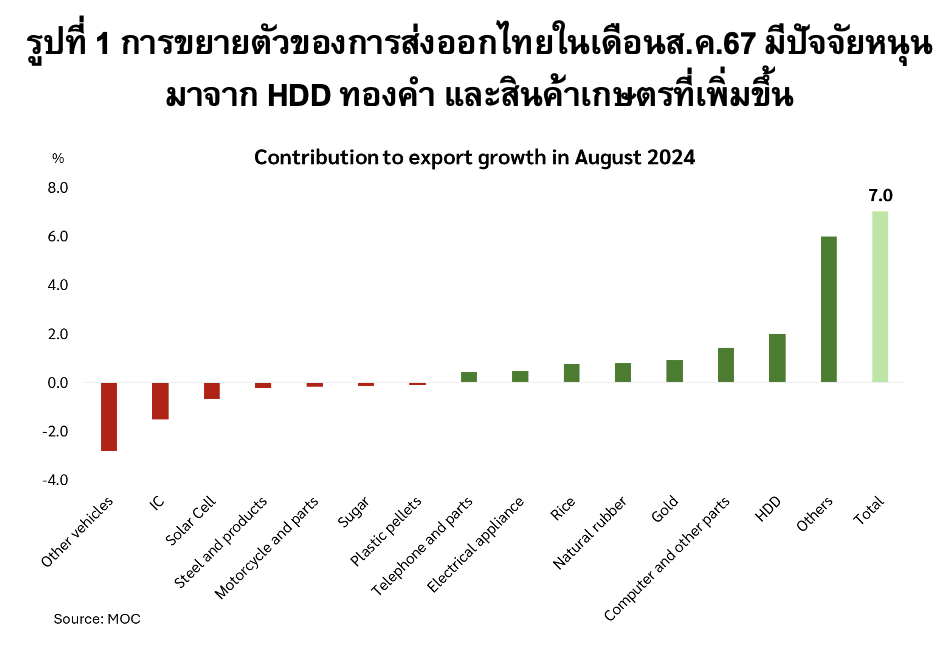
Thai exports in August 2023 grew continuously at 7.0% YoY surpassing the 6.0% YoY expected by the market, driven by the export of computer components such as Hard Disk Drives, which expanded by 112.2% YoY, partly due to a low base from the previous year. Exports were directed to several key markets, including the United States, China, and Europe. Additionally, gold exports have shown a remarkable growth for the fourth consecutive month at 99.0% YoY, making Switzerland the market with the highest growth rate for Thai exports this month at 175.1% YoY. Furthermore, agricultural exports, led by rice and rubber, continued to grow well due to increased demand and rising prices.
Meanwhile, automotive and component exports contracted by -17.9% YoY in August 2023 due to a high base from the previous year's automotive imports for military exercises in August 2022. Additionally, exports of electrical circuit boards from Thailand shrank by -33.2% YoY due to technology mismatches with market demand.
The Kasikorn Research Center has revised its forecast for overall Thai exports in 2023 to grow by 2.5% up from the previous estimate of 1.5% due to
- Thai exports in the first eight months of 2023 grew by 4.2% YoY, supported by increased electronic goods exports in line with the cyclical recovery and unrefined gold exports growing by 28.8% YoY.
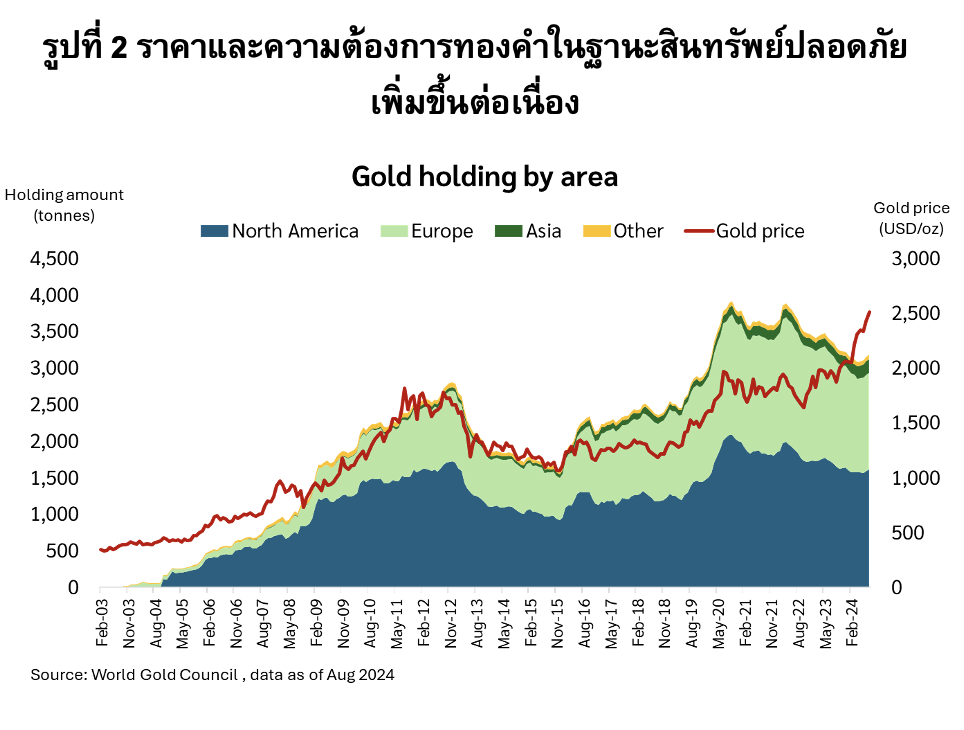
- The trend for unrefined gold exports is expected to continue rising due to the global central banks' monetary policy easing and escalating geopolitical issues, leading to increased prices and demand for gold as a safe-haven asset (Figure 2).
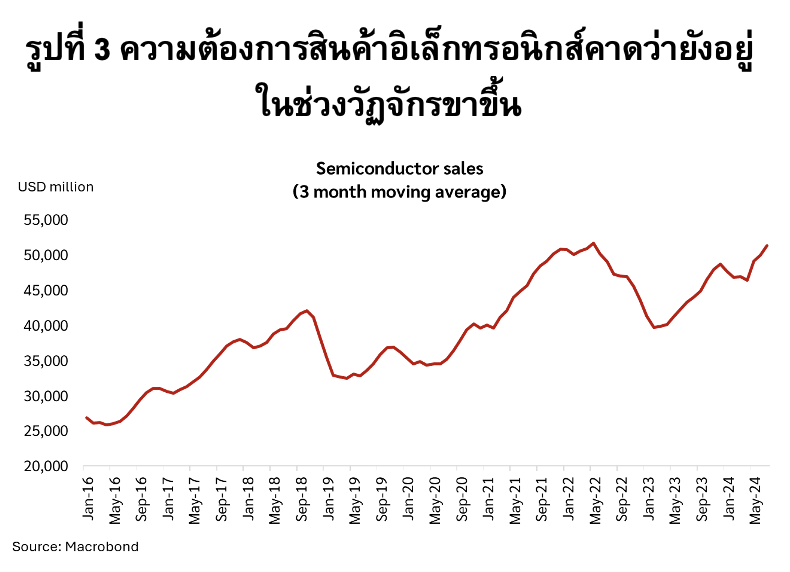
- The outlook for electronic goods exports is also expected to continue growing as the cycle remains in an upward phase (Figure 3), with data from South Korea showing strong growth in the first 20 days of September 2023, driven by semiconductor exports increasing by 26.2% YoY.
However, Thai exports for the remainder of this year are expected to grow at a lower rate than in the first eight months due to a slowdown in global trade, as reflected in the Drewry shipping index, which has decreased by over 30% in the past two months. Although the third quarter is typically a high season for global trade, it is also necessary to monitor the flooding situation that may impact agricultural production and exports.
The rapid appreciation of the Thai baht is expected to affect exporters' profit margins, while order volumes still depend on negotiations between buyers and sellers, as well as the flexibility in price adjustments of each product and industry, which varies in competitiveness with other countries. Exporters relying primarily on domestic raw materials, such as agricultural products or processed foods, will be more affected in terms of revenue compared to those using imported raw materials, as they cannot utilize the Natural Hedge mechanism to mitigate the impact of currency fluctuations.