Reducing Sugarcane Burning with Carbon Credits and Achieving Net Zero Goals
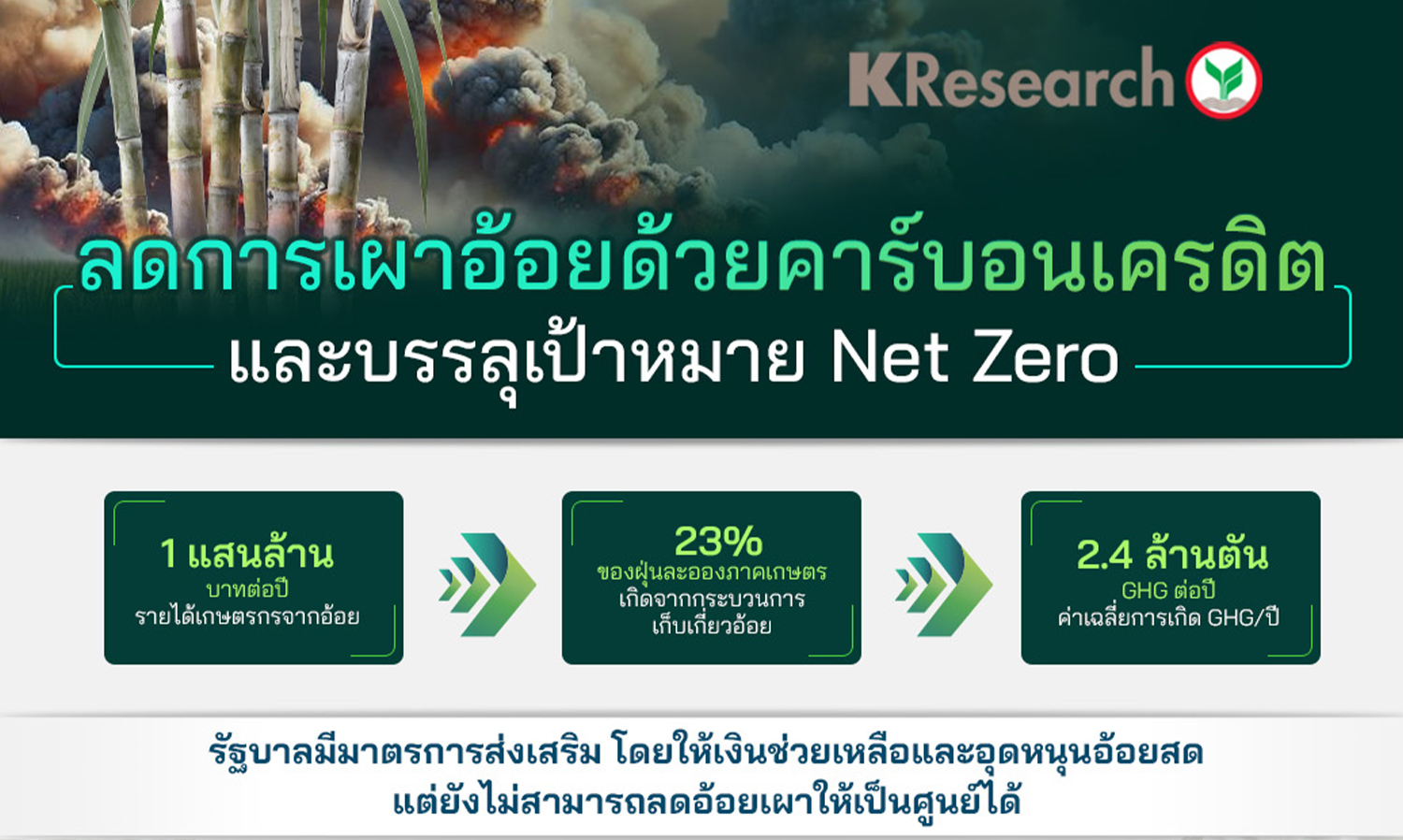
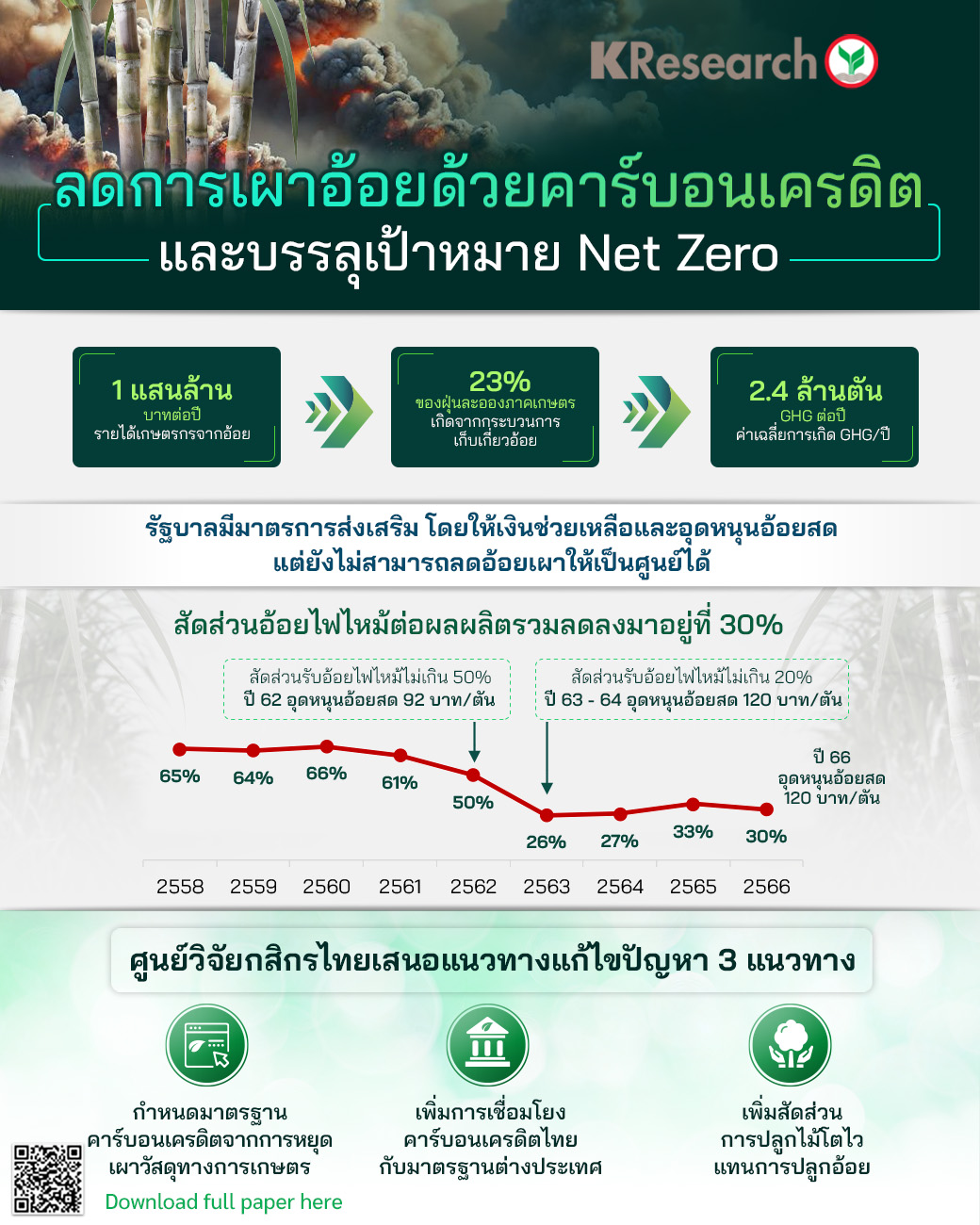
- Sugarcane is an economic crop that generates an income of 100 billion baht for farmers annually. However, the harvesting process produces 23% of agricultural dust and generates an average of 2.4 million tons of greenhouse gases (GHG) per year.
- The government has measures to promote the harvesting of fresh sugarcane by providing financial assistance. However, due to high harvesting costs, it has not yet been able to eliminate sugarcane burning completely.
- Kasikorn Research Center proposes three solutions:
- Establish carbon credit standards for stopping the burning of agricultural waste and register carbon credits. Initially, if such standards exist, the carbon credit price may need to be no less than 126 baht per tCO2, equating to 915 million baht per year to compensate for the costs of not burning (operational costs depend on individual conditions).
- Enhance the linkage of domestic carbon credits with international standards to increase access to markets with higher demand.
- Reduce the area planted with sugarcane and possibly shift to planting fast-growing trees, which can be sold for income and also registered for carbon credits.
- In conjunction with government promotion policies, including:
- Improving harvesting machinery suitable for small areas.
- Creating a forecasting and scheduling system for sugarcane harvesting.
- Supporting carbon credit certification costs.
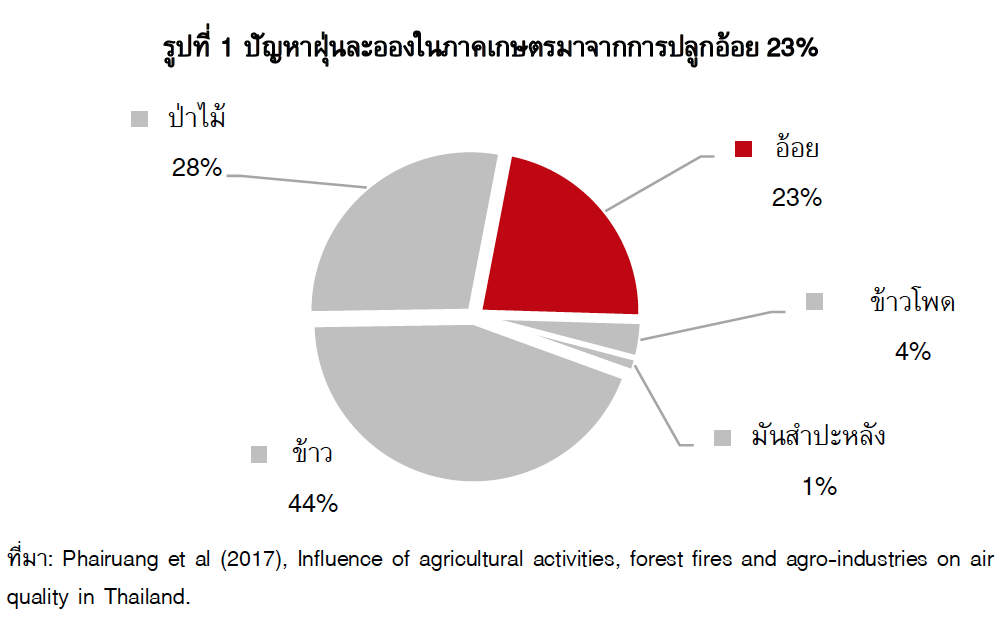
Sugarcane is an important economic crop in Thailand but contributes to PM 2.5 pollution. Sugarcane generates an income of 100 billion baht annually for farmers, but the harvesting process results in air pollution, with 23% of agricultural dust coming from sugarcane cultivation (Figure 1). This is a significant issue that the government has implemented measures to address, but results have yet to be achieved.
Structural factors prevent farmers from fully harvesting fresh sugarcane.
-
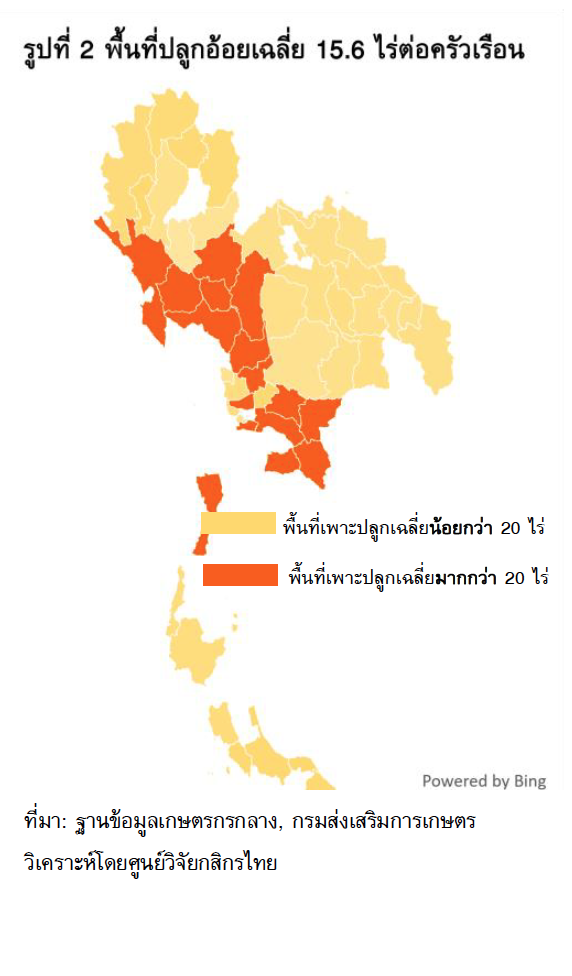
- Sugarcane harvesting with machinery must be done on areas larger than 20 rai. The average sugarcane planting area is 15.6 rai per household, with most cultivation areas in the North and Northeast being less than 20 rai (yellow). Farmers with more than 20 rai are mainly in the Central and Eastern regions (orange) (Figure 2).
-
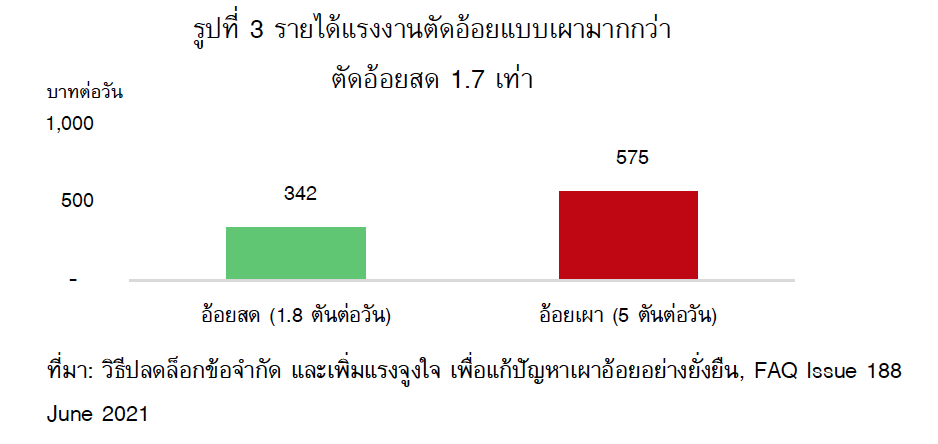
- The labor cost for fresh sugarcane harvesting is high and takes longer. In one day, fresh sugarcane can yield 1.8 tons, while burning can yield 5 tons, leading workers to prefer burning for higher daily income and less fatigue (Figure 3). However, burning sugarcane is considered a violation under the Public Health Act of 1992.
-
- The purchasing period for sugar factories is limited (the closing date for purchasing sugarcane is at the end of March to April), forcing farmers close to this deadline to harvest by burning as there are no alternatives to meet the deadline.
The government has measures to promote fresh sugarcane harvesting, but has not yet been able to eliminate sugarcane burning.
Since 2019, the government has implemented measures to support fresh sugarcane to address dust issues in agriculture, resulting in a continuous decrease in the amount of burned sugarcane purchased. However, the average amount of burned sugarcane remains around 30% (Figure 4), contributing to an average of 2.4 million tons of GHG emissions per year, or 4% of GHG emissions in Thailand's agricultural sector.
Addressing sugarcane burning and reducing GHG with carbon credits.
Carbon credits are a financial tool that encourages GHG reduction projects. The GHG reductions can be registered as carbon credits and traded. Thailand has carbon credits under the voluntary GHG reduction program according to Thailand's standards (T-VER), registered with the GHG Management Organization (TGO).
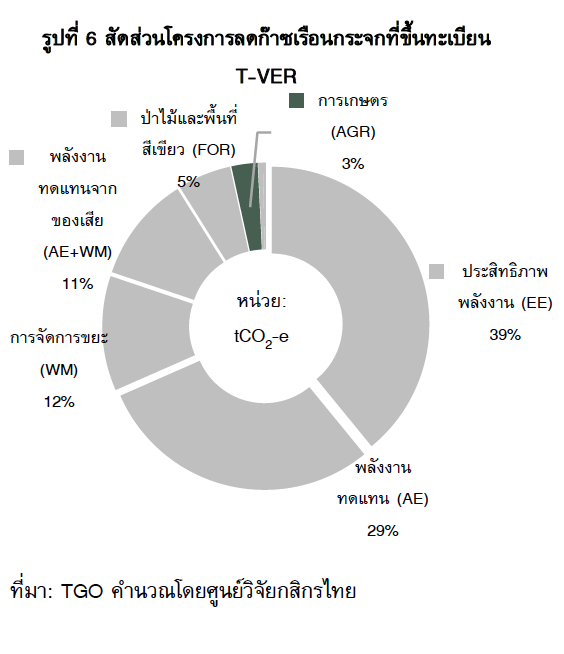
Currently, there are 429 registered T-VER projects, with an expected reduction/sequestration of 12.9 million tCO2-e, of which 9 projects are agricultural, with an expected reduction/sequestration of 343,195 tCO2-e, or 3% of registered projects (Figure 6), mostly involving rubber plantations.
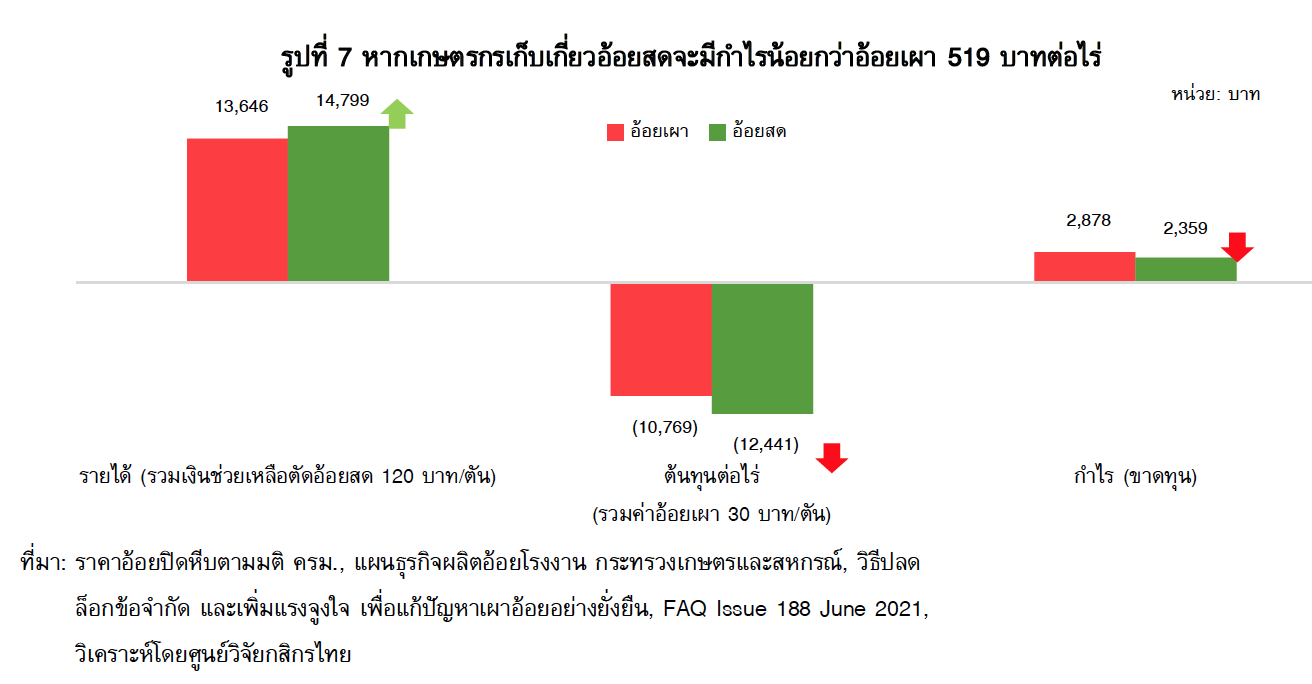
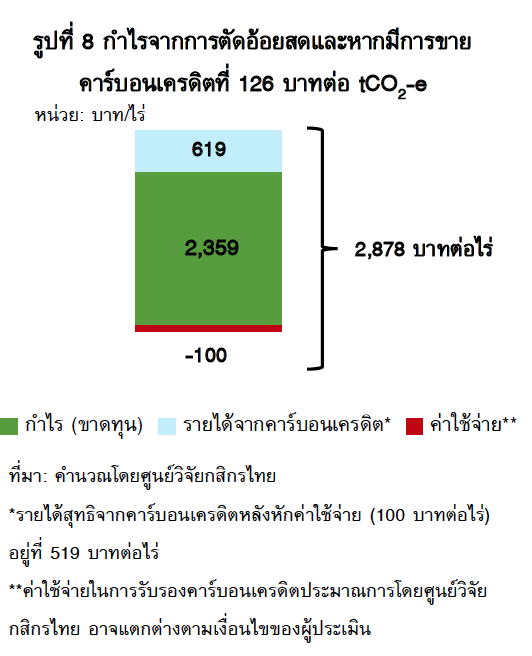
Harvesting fresh sugarcane instead of burning can reduce greenhouse gases by 4.9 tCO2 per rai[1]. However, the cost of harvesting fresh sugarcane is higher than burning, resulting in lower profits for farmers harvesting fresh sugarcane compared to burning sugarcane519 baht per rai (Figure 7) when considering only the monetary aspect for farmers.
However, the carbon credits obtained from stopping the burning of agricultural waste currently lack supporting carbon credit standards, and standards must be established to certify carbon credits from such activities.
The Kasikorn Research Center proposes 3 approaches to reduce sugarcane burning with carbon credits in addition to the ongoing government support for fresh sugarcane harvesting.
- Increase incentives for fresh sugarcane harvesting with carbon credits.
Establish carbon credit standards for stopping the burning of agricultural waste, initially estimating that the carbon credit price may need to be no less than 126 baht per tCO2-e to ensure that fresh sugarcane harvesting from group certifications covering more than 1,500 rai can yield profits equivalent to burning sugarcane at 2,878 baht per rai, or a net income from carbon credits of 519 baht per rai, covering carbon credit certification costs (100 baht per rai, but may vary depending on individual conditions), which can reduce GHG by 4.9 tCO2 per rai, or require an investment of about 915 million baht per year.
- Enhance the linkage of domestic carbon credits with international standards.
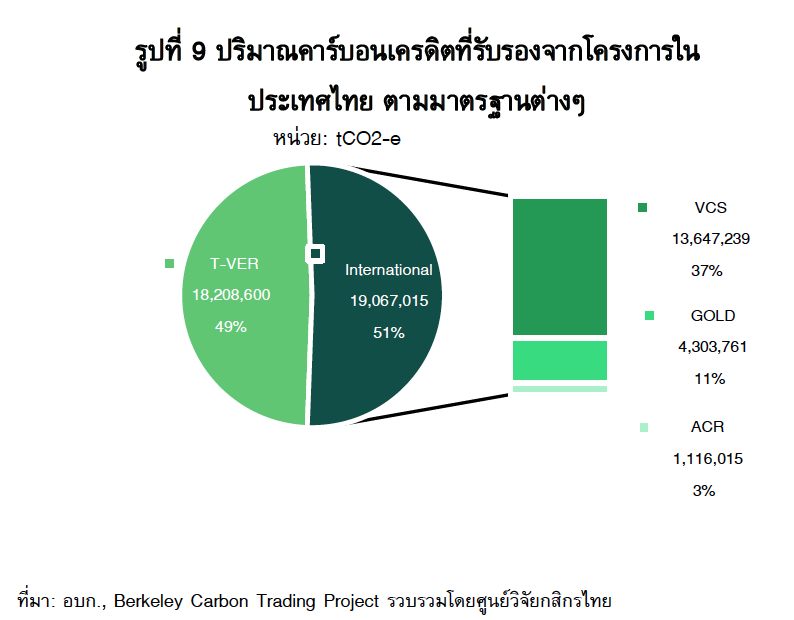
Currently, over 51% of GHG reduction projects in the country are registered with international standards (Figure 9). If Thailand can develop carbon credit standards that connect with international standards, it will increase the demand for purchasing carbon credits from abroad, which have a significant demand for GHG reduction.
- Encourage farmers to reduce sugarcane cultivation areas and shift to planting forests for long-term income.
Farmers can plant fast-growing trees, which are valuable economic crops, such as eucalyptus, mahogany, pine, and bamboo. Besides being sold for income, they can also be registered for carbon credits[2]. Additionally, the carbon credits obtained from forest planting will have a higher price, averaging 290 baht per tCO2-e.
In addition to promoting with carbon credits, regulatory agencies must implement accompanying measures, including:
-
- Improving fresh sugarcane harvesting machinery suitable for small areas.
- Creating a forecasting and scheduling system for sugarcane harvesting to align with the sugar factory's purchasing period.
- Supporting carbon credit certification costs.
- Supporting private sector expenses for purchasing carbon credits to achieve Net Zero goals.
Solving the issue of sugarcane burning to achieve tangible results requires cooperation from all sectors, including farmers, sugar factories, the government, regulatory agencies, and the private sector, to enable Thailand to address dust pollution and sustainably achieve Net Zero goals.
[1] Teerarat Jiramakar, Nattawut Khaosaat, and Prapitarn Thanarak (2020) “Assessment of Carbon Dioxide Emissions from Sugarcane Cultivation in Buriram Province,” Eastern Science Journal, Vol. 25, No. 1, calculated CO2 Emission per rai by Kasikorn Research Center.
[2] Supporting documents for the lecture on carbon credits in the forestry sector, GHG Management Organization.