The Wisdom of Kasikorn Thai Highlights International Investment Opportunities: A Deep Dive into 6 Countries to Watch in the Second Half of 2024, Advising on Core & Satellite Portfolio Strategies for Long-Term Returns
The Wisdom of Kasikorn Thai held the third seminar of ‘THE WISDOM Wealth Decoded’, focusing on economic growth and monetary and fiscal policies in the second half of 2024 for 6 countries that investors should monitor as positive factors enhancing opportunities for international investments. These countries include the United States, China, Europe, Japan, India, and Vietnam. The seminar indicated a continuous growth trend in foreign investment returns and recommended a ‘Core & Satellite’ portfolio strategy to diversify investment risks across international markets and Asian markets, some of which have recently corrected and present upside potential, thereby increasing the chances of achieving good long-term returns.

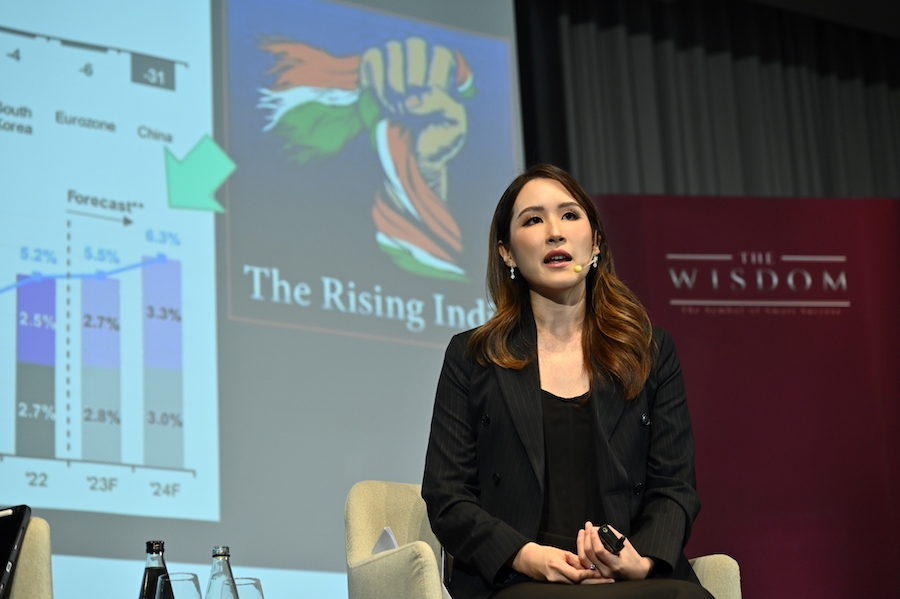
Ms. Matina Watcharawarat, CFA, Head of Investment Strategy at Kasikorn Asset Management Co., Ltd., revealed that international stock markets are showing positive trends, presenting opportunities to diversify investment portfolios to enhance return potential. She suggested allocating approximately 50% of the portfolio to U.S. stocks due to the economy's high resilience and strong fundamentals. The U.S. market is supported by two main factors:
- The growth of AI technology, which has led to continuous growth in U.S. technology stocks, particularly the seven major tech stocks known as The Magnificent Seven.
- The increasing domestic population, which brings more new labor into the market, stimulating consumption and contributing to the growth of the service sector, thus alleviating labor shortages from an aging society.
Meanwhile, the U.S. Federal Reserve has signaled a slower pace of interest rate cuts than previously anticipated, while listed companies in the U.S. continue to grow, leading to a positive outlook for U.S. investments. It is recommended to gradually invest during market corrections.

As for Europe, it is under the theme ‘Rethink’, where political issues and fiscal policies should be closely monitored. Following the right-wing party's increased seats in the European Parliament elections, there was a sell-off of French stocks and bonds due to investor uncertainty about how much public debt the right-wing party would increase. However, several economic indicators, such as consumer confidence indices, have improved, and the manufacturing sector shows signs of recovery, benefiting from the recovery of major trading partners like China. A key point for the European stock market is that stock valuations remain reasonable, and profit growth is substantial. It is advised to wait for the results of the French elections before accumulating European stocks.
Meanwhile, Japan is in a ‘Reform & Recovery’ phase, making it another interesting market. Following COVID-19, both inflation and wages in Japan have risen the most in 30 years, increasing purchasing power. Additionally, the weakening yen has boosted the export and tourism sectors. Furthermore, the Japanese stock exchange has implemented measures to encourage listed companies to invest their high cash reserves, increasing the potential for returns for investors and attracting foreign interest back to the Japanese stock market, which has achieved significant returns and reached new highs not seen in over 30 years. A cautionary note is that an excessively weak yen may lead to investor uncertainty and domestic inflation.
The Chinese market is in a ‘Rebalancing’ phase, adjusting its economic balance after issues in the real estate sector and weaknesses in manufacturing due to trade barriers. China is focusing on new industries, such as clean technology, which effectively reduces urban pollution, semiconductors, and AI. Additionally, it is essential to monitor China's economic stimulus measures to see how much they can restore consumer purchasing power and confidence.
As for India, it is in a ‘Rising Rapidly’ phase, with high growth potential due to a large working-age population and government investments in infrastructure improvements, integrating India into the global supply chain, and amending laws to attract foreign investment. Although Prime Minister Narendra Modi's BJP party did not achieve a landslide victory, it still holds a majority in the parliament, allowing government investment policies to continue, even though amending various laws may become more challenging due to the coalition government.
In the ASEAN region, Vietnam is viewed as a ‘Rising Star’, consistently showing positive prospects due to its strong infrastructure. It is one of the few countries benefiting from the trade war, and a key policy from China is the China Plus One strategy, where China remains the primary market for manufacturing but seeks new markets to diversify its supply chain. In the first four months of this year, Vietnam's export value grew by over 15% compared to the same period last year, primarily driven by demand for electronic goods, which are Vietnam's top export products.
In defining investment strategies, Ms. Matina recommends the Core & Satellite Portfolio strategy for risk diversification, investing in the ‘K-WealthPLUS Series’, which diversifies investments across various asset classes globally. This investment solution has been developed by Kasikorn Asset Management in collaboration with J.P. Morgan Asset Management, a global investment partner. It is recommended to hold this as the Core Portfolio, comprising 80% of the total portfolio, with options available based on suitable risk levels, including:
- K-WPBALANCED: Low to moderate risk, with approximately 30% in equities and 70% in bonds.
- K-WPSPEEDUP: Moderate risk, with approximately 65% in equities and 35% in bonds.
- K-WPULTIMATE: Moderate to high risk, with approximately 85% in equities and 15% in bonds.
The remaining 20% serves as the Satellite Portfolio, where investments can be made in markets of interest or to capitalize on timing for speculative gains. Recommended funds include:
- K-GLOBE: Focused on global equity diversification.
- K-INDIA: Concentrating on high-quality, high-growth stocks across large, mid, and small caps.
- K-VIETNAM: Investing in leading stocks with high growth potential across various industries.
- K-FIXPLUSED: Selectively choosing high-quality Thai bonds to reduce portfolio volatility.
*Investors are advised to understand the product characteristics, return conditions, and risks before making investment decisions.