If the National Minimum Wage is Adjusted to 400 Baht, It is Expected to Affect Inflation and Increase Labor Costs
- If the minimum wage is raised to 400 baht per day nationwide and takes effect in October 2024, it is expected to impact the costs for businesses, which will subsequently affect employment, investment, and lead to higher inflation. Meanwhile, the positive effect on consumer spending from increased wages may not be significant.
- The increase in the minimum wage will particularly affect labor-intensive businesses, leading to higher costs, especially in sectors that pay a high proportion of minimum wage, such as agriculture, personal household work, and accommodation and food services.
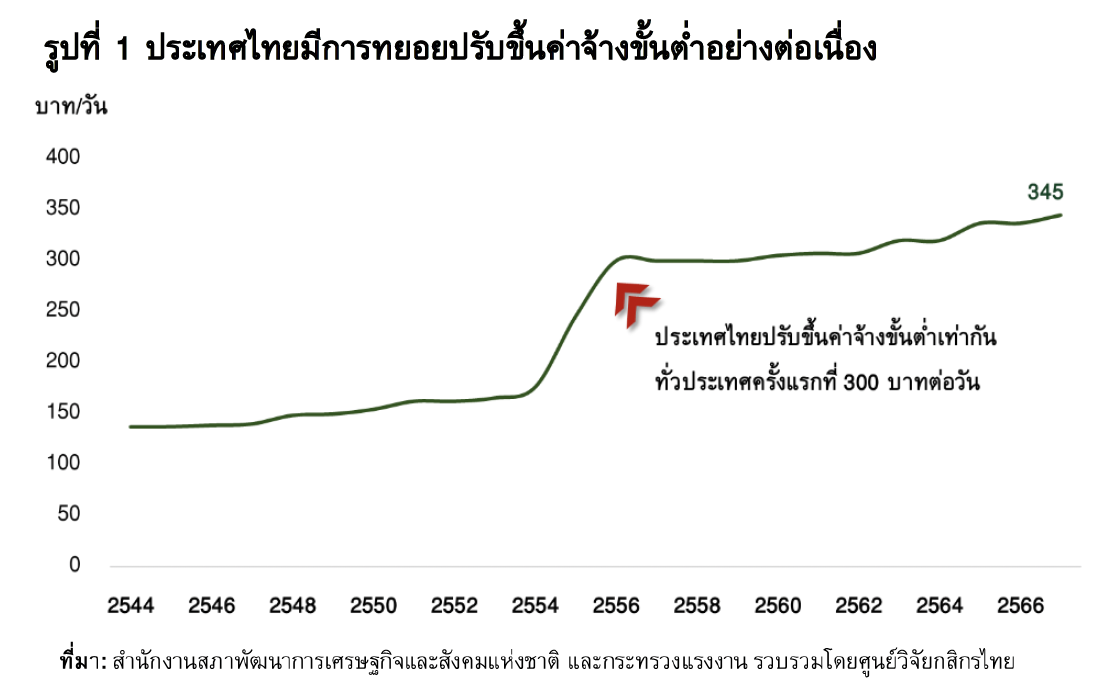
Thailand has continuously adjusted the minimum wage over the past 20 years. In 2024, the government plans to raise the minimum wage to 400 baht per day uniformly across the country, which represents a 16% increase from the current average (as of May 2024) of about 345 baht per day. This will be the second nationwide minimum wage adjustment in Thailand and the third increase since the beginning of 2024.
However, currently, the policy for increasing the minimum wage has not yet been finalized. The consideration for raising the minimum wage must be approved by the Tripartite Wage Committee. As of the latest meeting (May 14, 2024), it was decided to assign local subcommittees to propose suitable minimum wage adjustments based on the context of each province and business, to be completed by July 2024.
Kasikorn Research Center has the following perspective on the nationwide minimum wage increase to 400 baht:
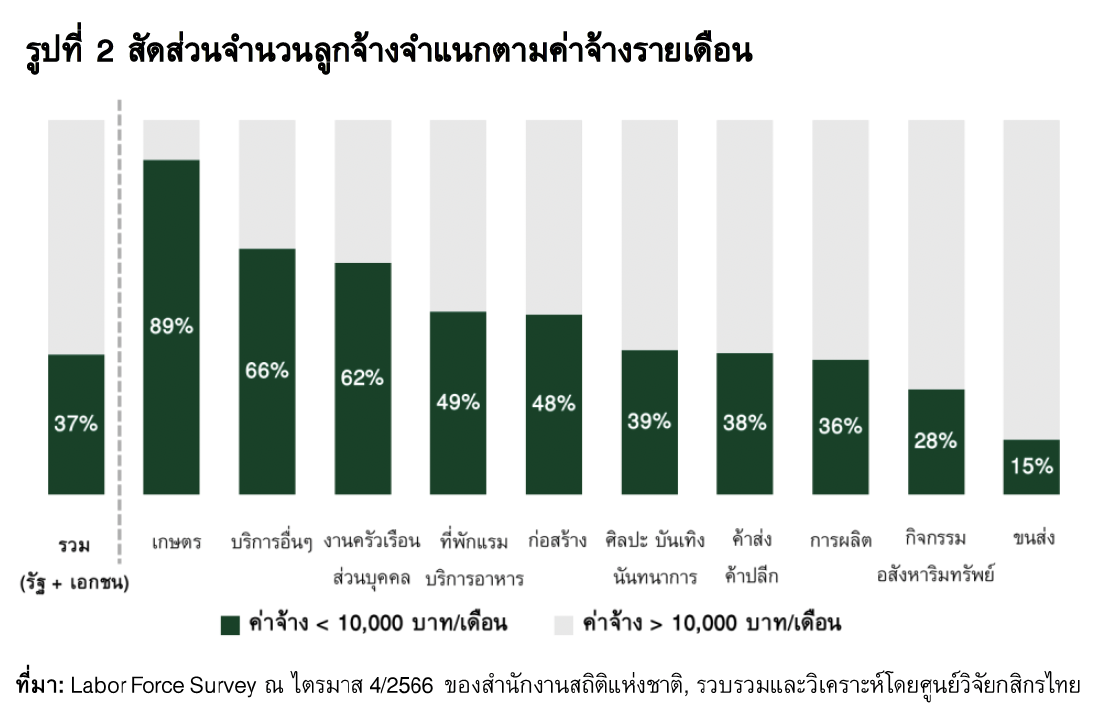
- The business sector will see an average increase in labor costs of about 6% (calculated from end-2023 data showing that about 37% of employees earn less than 10,000 baht/month).
When analyzed by industry, labor-intensive sectors such as agriculture, other services, personal household work, accommodation and food services, and construction (see Figure 2) will experience labor cost increases of about 8-14%, which is higher than the average for other businesses. In addition to the minimum wage adjustment, some businesses may incur additional labor costs unrelated to the minimum wage, depending on their wage structure.
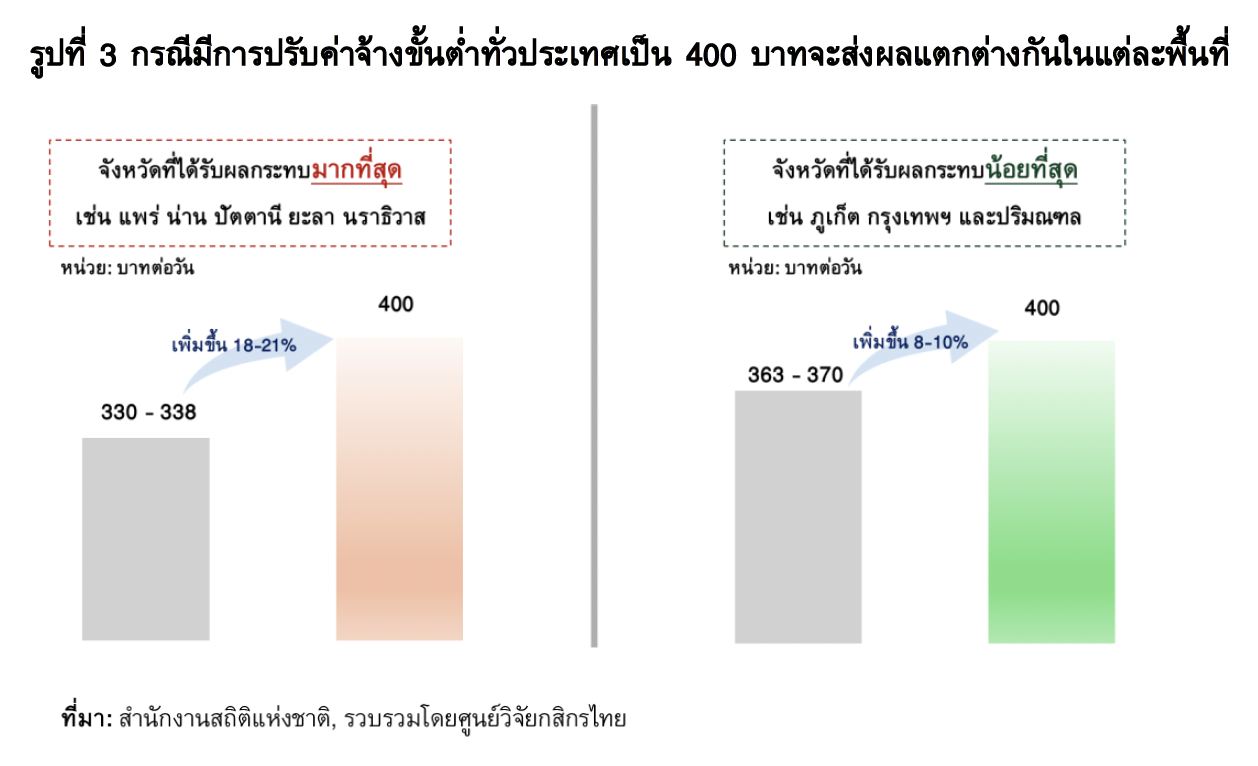
- Businesses located in rural areas are likely to be more affected by the minimum wage increase than those in major and secondary cities, as current minimum wage levels vary by province, ranging from 330-370 baht per day (from the last nationwide adjustment on January 1, 2024). This means the impact of the minimum wage increase on businesses may differ across regions (see Figure 3).
- General inflation in 2024 may rise by 0.1% as business costs are expected to increase. However, the extent to which these costs are passed on to consumer prices will depend significantly on businesses and market competition, amidst weak domestic demand. Intense price competition may prevent producers from fully raising prices. Therefore, Kasikorn Research Center predicts that if the minimum wage is raised to 400 baht nationwide in October 2024, it could lead to an overall inflation increase of about 0.1% for the year, which may pressure domestic consumption amidst already high living costs.
- Meanwhile, the positive effect on consumer spending from increased wages may not be substantial, given the high cost of living and household debt levels. Additionally, a significant proportion of workers earning minimum wage are foreign laborers, who tend to remit about 30-40%[1] of their monthly income back to their home countries. This results in a lower likelihood that the overall increase in minimum wage earners will spend significantly more domestically (Marginal Propensity to Consume: MPC less than 1), leading to a minimal positive effect on consumer spending in 2024.
In summary, while the increase in the minimum wage will provide some additional income for workers, there are risks of rising prices for goods and services, as well as potential job losses in certain sectors. Previously, some goods and services had already adjusted in anticipation of the expected wage increase. If the government does not implement parallel measures to control prices, the ultimate purchasing power of workers may not increase significantly, and they may face the risk of layoffs from larger employers who might turn to increased technology use, or from some SMEs that may not be able to bear the increased costs and may have to shut down.
[1] According to a report by the Bank of Thailand, Issue 192 (2022)