Housing Market Stimulus Measures May Reduce Decline in Property Transfers in 2024
Housing Market Stimulus Measures May Reduce Decline in Property Transfers in 2024
By Kasikorn Research Center
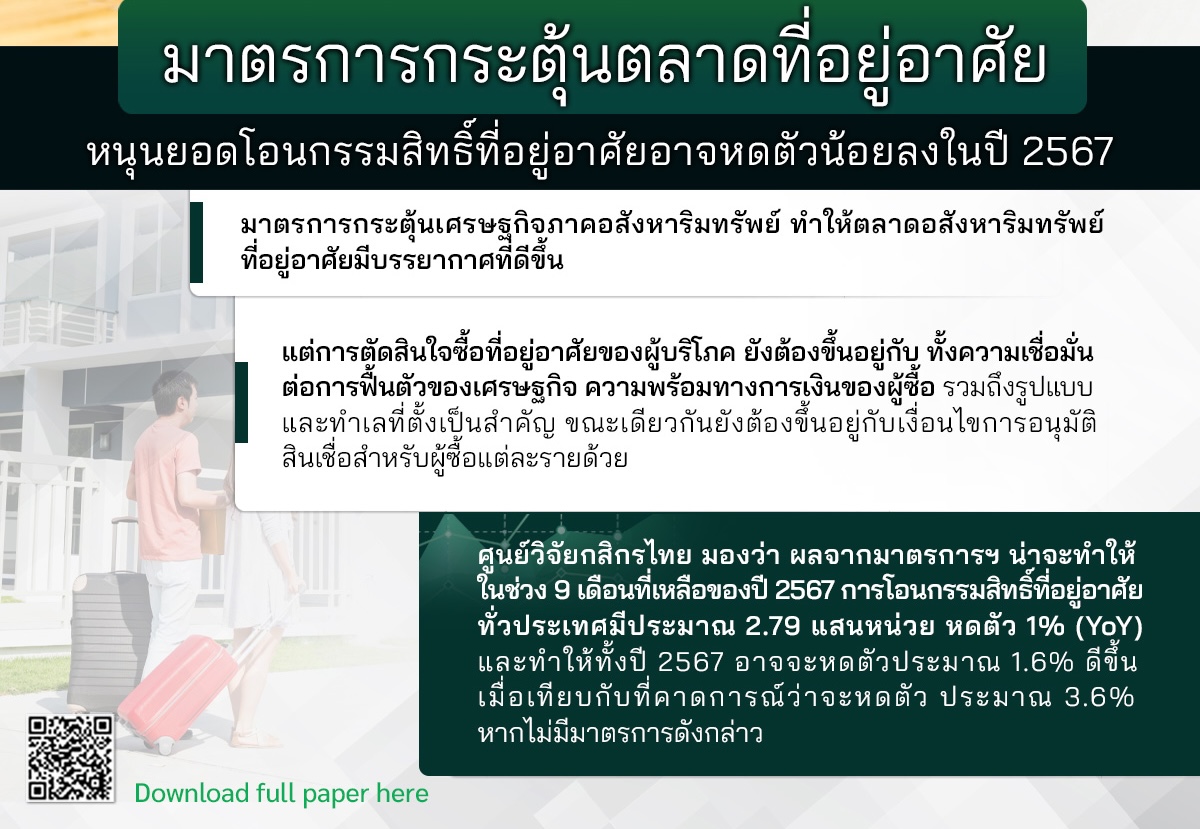
The economic stimulus measures in the real estate sector have improved the atmosphere in the residential property market.
- However, consumer decisions to purchase housing still depend on key factors such as confidence in economic recovery, the financial readiness of homebuyers, as well as the type and location of the properties. Additionally, it also depends on the loan approval conditions for each buyer.
- The Kasikorn Research Center anticipates that as a result of these measures, during the remaining 9 months of 2024, property transfers nationwide will amount to approximately 279,000 units, reflecting a 1% decline (YoY), and for the entire year of 2024, a decline of about 1.6% is expected, which is an improvement compared to the forecasted decline of about 3.6% without these measures.
The Cabinet has approved economic stimulus measures for the real estate sector, which include:
- Adjusting the measures to reduce property transfer fees and expanding the price ceiling for housing to help increase purchasing power for the public and alleviate the impact on the housing market.
The government has reduced the property transfer fee to 0.01%, down from the previous rate of 1.0% (the normal rate is 2.0% of the sale price and assessed value). Additionally, the price ceiling for both new and existing homes has been expanded from a maximum value of 3 million baht to 7 million baht, effective from the date of announcement in the Royal Gazette until December 31, 2024. As a result of these measures, the Kasikorn Research Center believes that
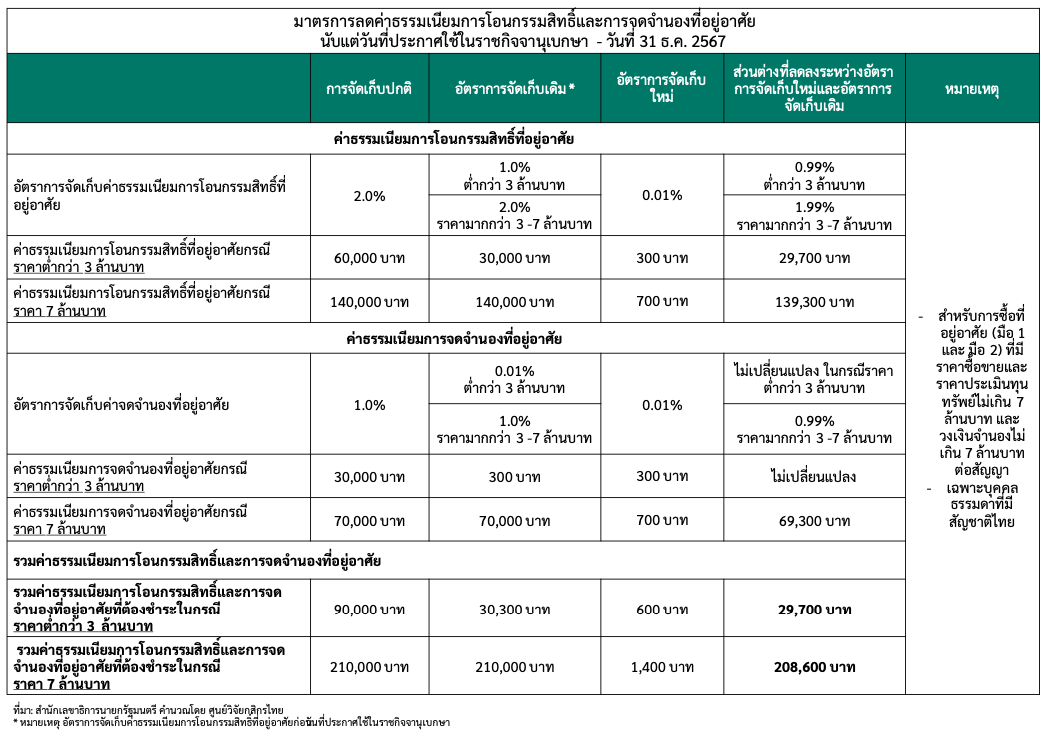
- Consumers who are financially ready and are about to transfer property during this period will benefit the most, as the transaction costs for homebuyers will decrease (see Figure 1). This allows buyers to use the savings for purchasing home furnishings, which will help inject liquidity into the economy.
Figure 1: The measures to reduce property transfer fees and mortgage fees help reduce transaction costs for consumers purchasing homes.
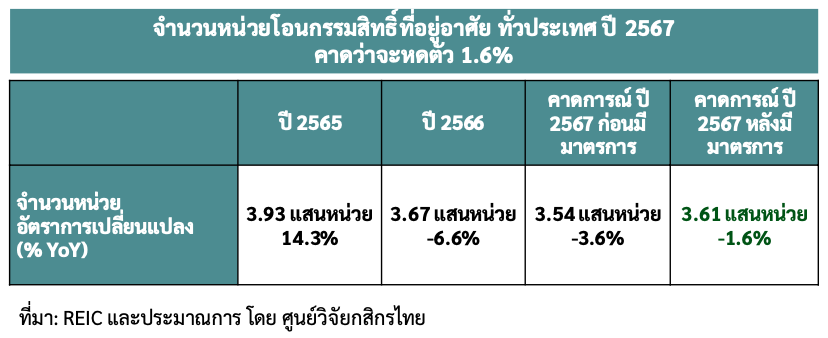
At the same time, expanding the price ceiling for housing to cover the price range of 3.01-7.00 million baht, targeting middle to upper-income buyers, is expected to encourage financially ready buyers to make quicker decisions. The Kasikorn Research Center estimates that as a result of these measures, during the remaining 9 months of 2024, property transfers nationwide will amount to approximately 279,000 units, reflecting a 1% decline (YoY), and for the entire year of 2024, property transfers nationwide may total 360,000 units, reflecting a decline of about 1.6%, which is an improvement compared to the forecasted decline of 3.6% without these measures (see Figure 2).
Figure 2: The measures to reduce property transfer fees and mortgage fees help alleviate the contraction in the market.
- The impact of these measures will support developers who still have a number of completed homes waiting to be sold, as well as those nearing completion this year, allowing them to clear existing inventory and improve cash flow, while reducing the cost burden on developers. According to AREA data at the end of 2023, there are over 400,000 unsold residential units nationwide (with Bangkok and its vicinity accounting for approximately 58% of the total unsold units). When considering the price levels of unsold residential units nationwide, it is found that 92% are priced below 7 million baht, with more than half (55%) being in the price range below 3 million baht. Meanwhile, the price range that the government has expanded the measures to cover is between 3.01-7.00 million baht, which accounts for about 37% (see Figure 3).
Figure 3: Unsold residential units under the measures account for 92% of the total.
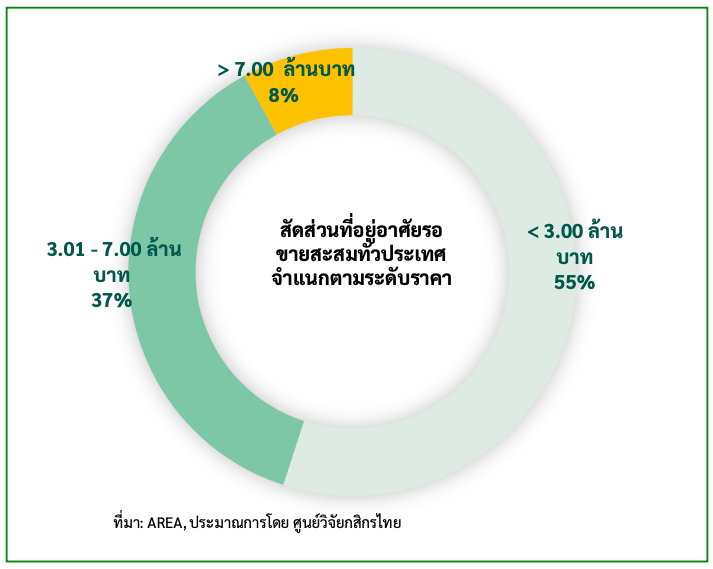
The groups that will benefit from these measures, in addition to condominiums and townhouses with a relatively high proportion of unsold inventory, will also include single-family homes and duplexes, as these categories have a high proportion of unsold units in the price range of 3.01-7.00 million baht.
- Other measures, such as housing loan projects, will support loans for low to middle-income individuals to own their homes. Tax measures to support investment include personal income tax deductions for individuals wanting to build homes, allowing construction costs of up to 1 million baht to be deducted by 10,000 baht, with a maximum deduction of 100,000 baht. Additionally, there will be a corporate income tax exemption for real estate developers for 3 years for constructing housing for low-income individuals under specified criteria and conditions, as well as promoting housing projects for low-income individuals (BOI housing projects).
In summary, the housing market stimulus measures not only help alleviate the financial burden of purchasing homes but also enable low to middle-income individuals to access loans. They serve as a tool to stimulate market activity and encourage home purchasing decisions, especially as the current real estate market has an increasing number of unsold residential units. Nevertheless, the decision to purchase a home still involves many important factors, including the value of the property and the buyer's readiness, which will be a long-term commitment amidst the uncertainty regarding income and purchasing power in the near future.
By Kasikorn Research Center
- Varithorn Sirisatyawong, Research Executive [email protected]
- Anantaporn Lapsakarn, Senior Research Officer [email protected]