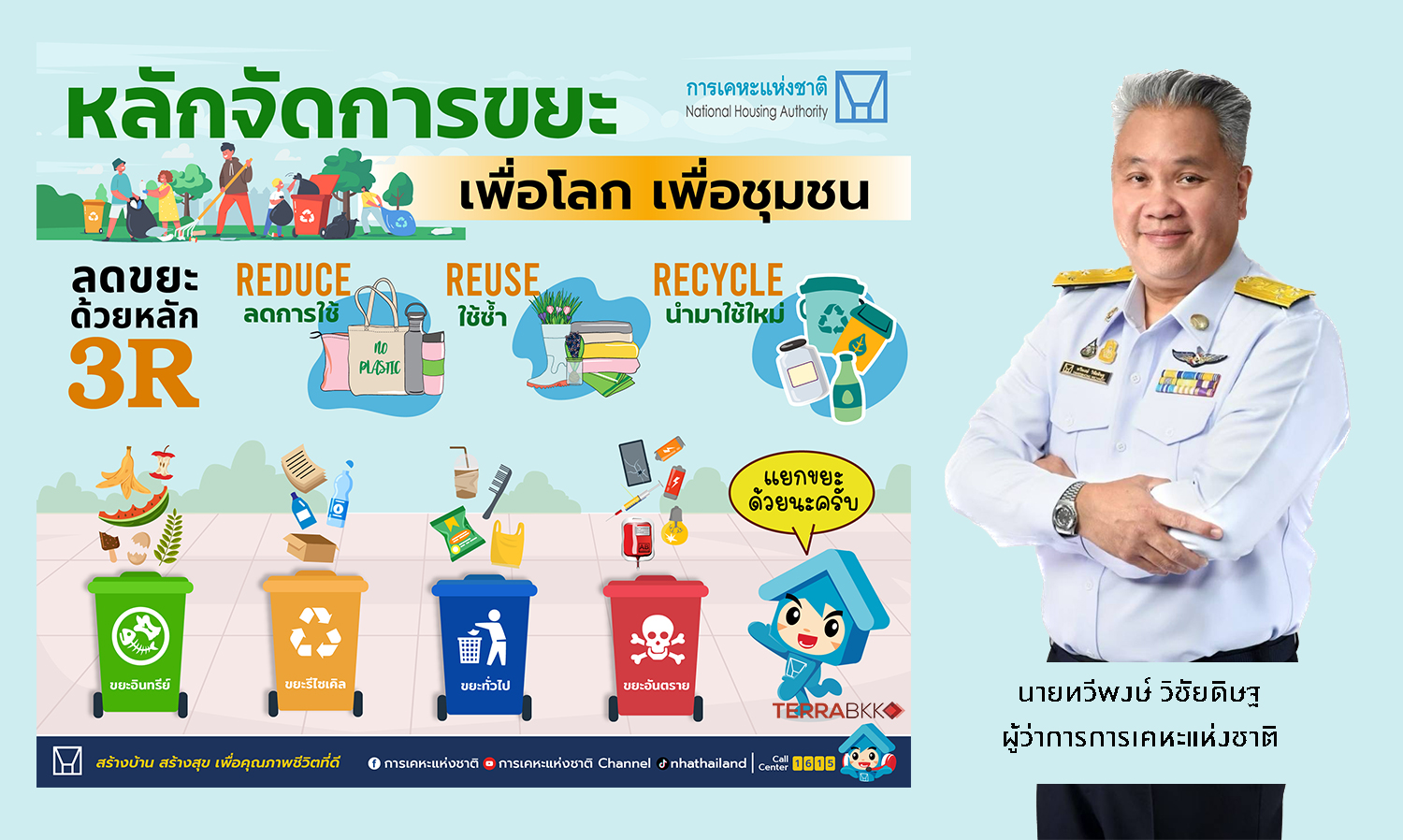
National Housing Authority Promotes 'Bang Bua Thong 2' Project with Waste Bank Life Insurance Initiative to Engage Community in Creating a Clean and Eco-Friendly Environment
Mr. Taweepong Vichaidit, Governor of the National Housing Authority, stated that the National Housing Authority has developed housing projects across more than 700 communities nationwide. In every community, households generate a significant amount of waste from daily activities, including the growth of delivery services for food and goods, as well as government policies promoting industrial development. This has led to a rapid increase in packaging waste made from plastics, such as food containers, foam boxes, shopping bags, straws, and cups.
The National Housing Authority recognizes the importance of environmental preservation in line with the policies of Mr. Warawut Silpa-archa, Minister of Social Development and Human Security. Therefore, it has implemented policies to support and promote awareness among residents in communities about waste segregation to reduce the amount of waste generated. This includes educating residents on how to sort waste at the source within their homes, categorizing it into four types: organic waste, recyclable waste, general waste, and hazardous waste. This initiative aims to raise awareness among community residents about proper waste segregation and encourage the correct reuse of materials, following the 3R principles (Reduce, Reuse, and Recycle). Additionally, it promotes campaigns to motivate residents to collectively reduce and segregate waste, while also enhancing knowledge and fostering a positive mindset towards waste management, which can also generate income for families.
“The National Housing Authority has several communities that have successfully implemented effective waste management practices, including the Rayong Province (Wang Wa) project, which serves as a model for Zero-Waste management, and the Bang Chalong (Niti 1) project, which exemplifies waste management practices that have reduced waste collection costs by 37.50%. The Bang Bua Thong 2 project is another successful initiative in waste management, particularly through the establishment of a waste bank life insurance program that provides benefits to resident members,”
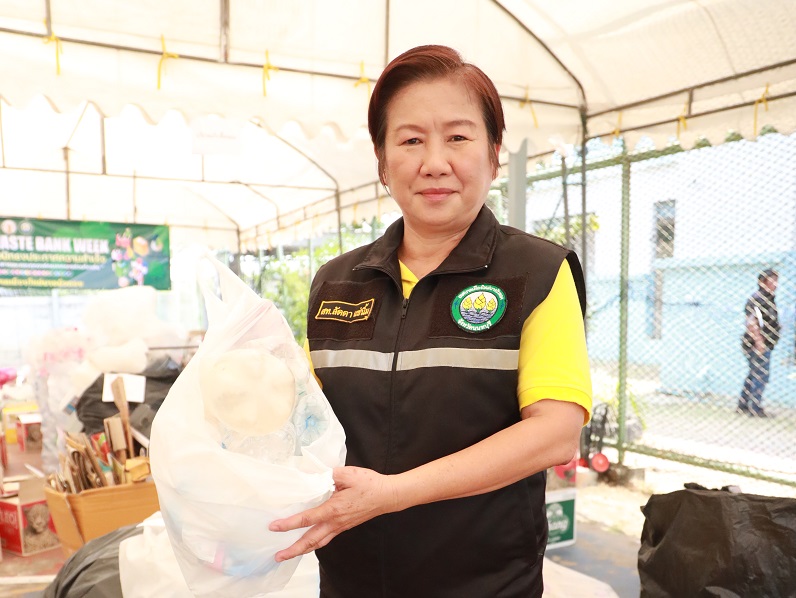
Ms. Ladda Saenim, 61, President of the Juristic Person of the Baan Uea Arthorn Bang Bua Thong 2 Condominium, mentioned that Nonthaburi Province has a policy requiring all communities to manage and dispose of waste properly, which is not difficult for our community. The National Housing Authority has continuously provided training on waste segregation and environmental management in the community, leading to the formation of a list of volunteers to spearhead the project under the local volunteer group, 'Earth-Loving Volunteers' (A.T.R.). They also received support from the King Prajadhipok's Institute to educate residents on waste segregation and management from the source, as well as selling waste to increase community income.
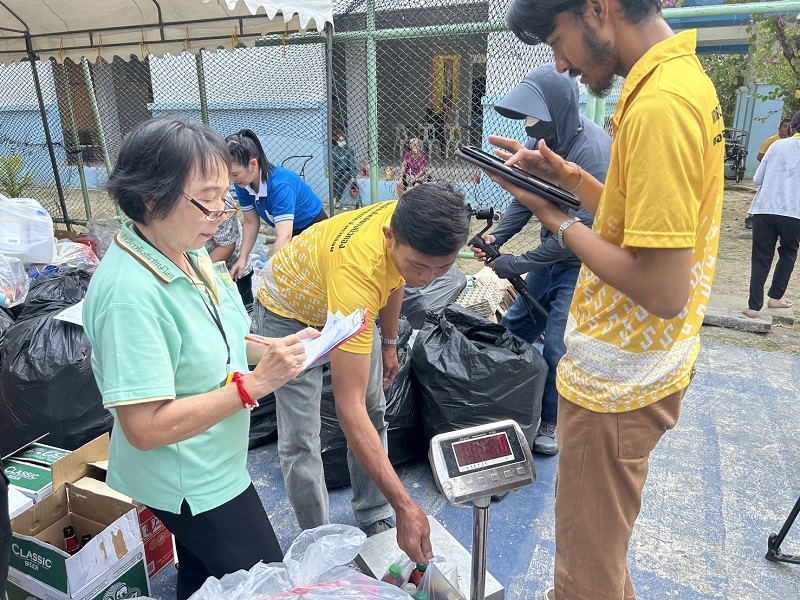
Initially, when we launched the waste bank project, there were 1,700 residents who joined as members. We then established the waste bank life insurance program and encouraged nearby communities to join, resulting in a current membership of up to 6,000 people, with a goal to increase to 10,000 members. For participation in the waste bank life insurance program, members must segregate waste and sell it to the project, including items like metal cans, paper, plastic bottles, etc., once a month. They must sell waste consistently for six months or generate at least 300 baht in income to qualify for life insurance benefits. If a member passes away, their beneficiaries will receive a contribution of 10 baht from each member to support them,”
The waste bank life insurance project in Bang Bua Thong 2 not only contributes to a clean, pleasant, and eco-friendly environment within the community but also provides members with valuable benefits and serves as a model for other communities to study and learn from.