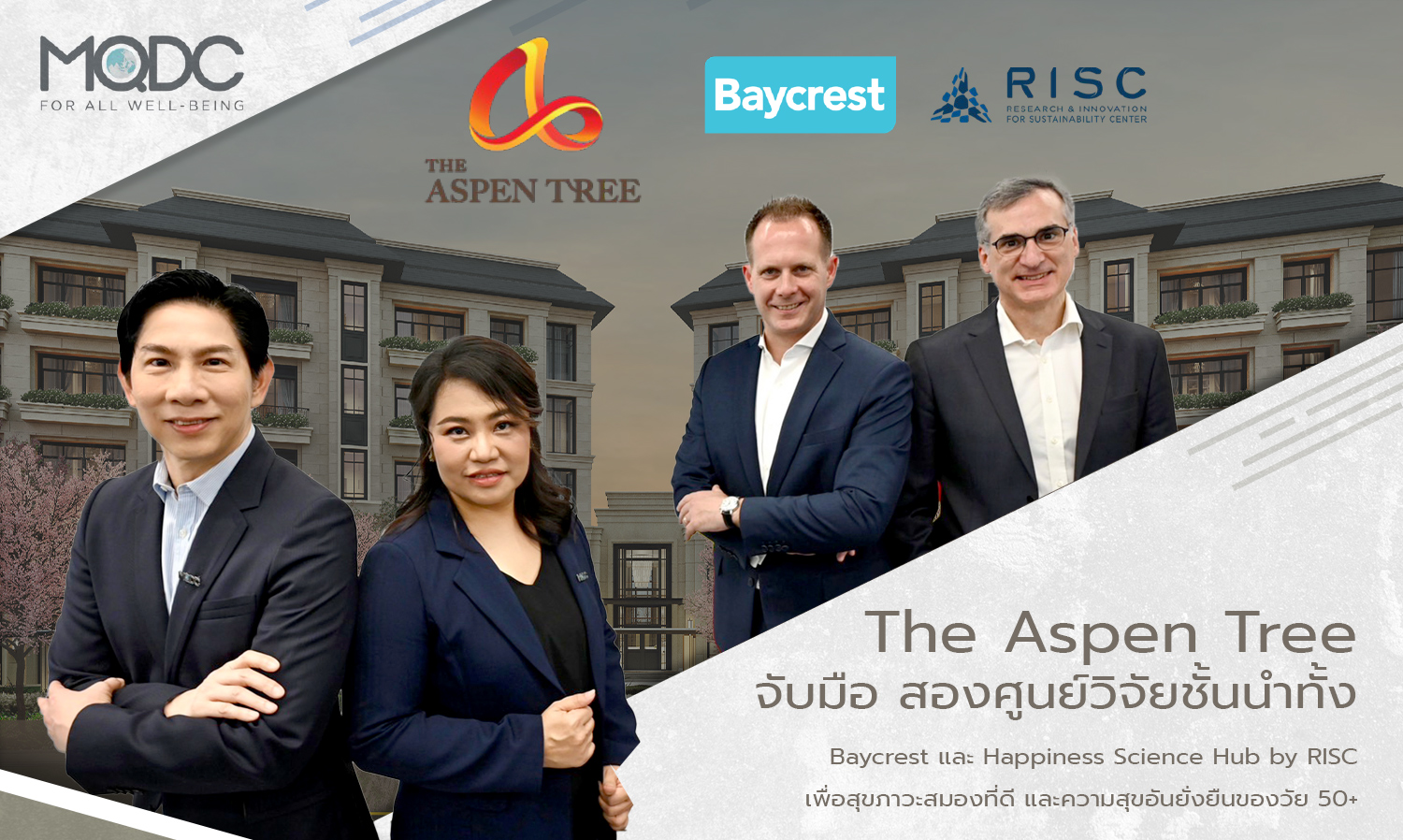
The Aspen Tree Partners with Leading Research Centers Baycrest and Happiness Science Hub by RISC for Better Brain Health and Sustainable Happiness for Those Aged 50+
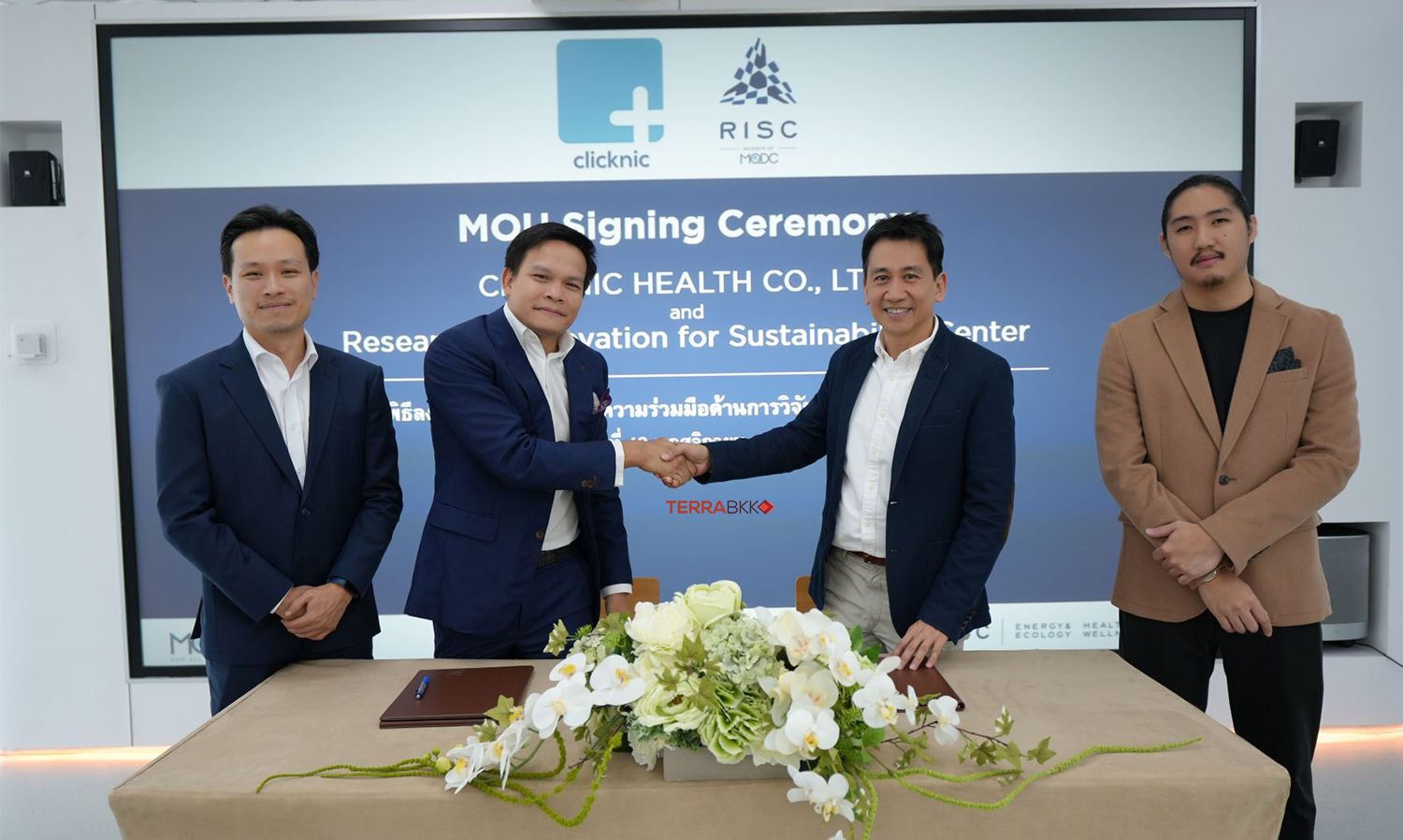
The Aspen Tree The Forestias, a residential project for independent living, collaborates with Baycrest, a global expert in elder care from Canada, and the Research and Innovation for Sustainability Center under MQDC (RISC by MQDC) to conduct in-depth research on brain health, aging-related cognitive decline, and preventive measures for age-related brain diseases, as well as research on the science of happiness. This marks a significant scientific advancement in developing new knowledge by researchers and experts, and it is a crucial step in enhancing the development of housing for those aged 50+, addressing the global aging society issue, particularly in Thailand. Furthermore, the number of dementia patients in Thailand is expected to rise at a rate higher than the global average over the next 30 years. The Aspen Tree residential project will be the first in the world to apply this in-depth research in practice for lifelong holistic care, focusing on preventive health care, promoting brain health, and ensuring a good, safe, and happy quality of life.
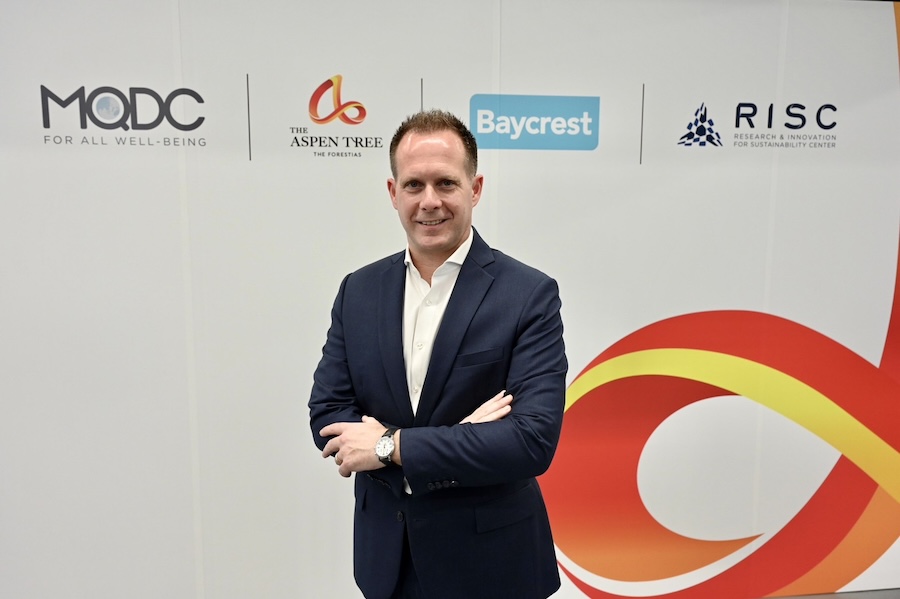
Mr. Christian Toivonen, Executive Director of The Aspen Tree The Forestias, expressed his enthusiasm for this collaboration, stating that the project is delighted to support scientific knowledge and innovations that can genuinely benefit people and the independent living community. It is also a great opportunity for the project to apply scientific research, innovations, and medical science in real-world development, making The Aspen Tree the first in the world to provide comprehensive lifelong health care to residents. Additionally, these research findings will play a crucial role in the Health & Brain Center of The Aspen Tree, which will open soon.
The Aspen Tree recognizes the increasing average age of the population in various countries, including Thailand, and has developed a residential project specifically to cater to this demographic. The goal is to be the first in the world to offer comprehensive lifelong care for good health in body, mind, brain, and society. Therefore, the project collaborates with research centers and experts in independent living care to ensure that it is fully prepared to support the independent living population from the initial design phase to the services provided after residents move in.
“The independent living group is a significant part of society because many individuals in this demographic possess substantial skills and experience. Many remain active and can contribute to society just as much as the working-age population. Encouraging this group to live independently not only brings them happiness but also positively impacts the development of a quality society in all dimensions. The Aspen Tree is pleased to collaborate with the Happiness Science Hub by RISC and Baycrest, ready to serve as a sandbox or a place for innovators from research centers and partners to implement innovations within the project for the benefit of residents and future research development,” he added.
Dr. Surakga Pongsuwan, Director of Research Integration for Dissemination at the Research and Innovation for Sustainability Center under MQDC (RISC by MQDC) and Head of the Scientific Happiness Research Team (Happiness Science Hub), stated that this collaboration allows RISC to present findings from the Happiness Science Hub, one of RISC's five research groups and the first research center in Asia focusing on in-depth studies to uncover the secrets of brain function, particularly to identify factors that contribute to human happiness. This new knowledge aims to develop innovations to enhance the quality of life for populations, especially those aged 50+, who are becoming the majority in the country.
“We will implement innovations from the Happiness Science Hub in The Aspen Tree as the first project because it is designed with the goal of creating sustainable happiness for both body and mind, aligning with our studies. Importantly, The Aspen Tree focuses on the 50+ demographic, which is the ideal group to apply our research before disseminating this newfound knowledge to the public to expand future innovation development for sustainable well-being,” Dr. Surakga said.
The scientific study of happiness (Happiness Science Hub) examines the behaviors and psychology of individuals across all ages and researches human perception through brain signals and scientific tools to foster positive emotions and happiness (Mental Well-Being). It also seeks to understand various declines in the elderly and find ways to reduce the risk of diseases such as dementia and Alzheimer's, identifying factors that promote happiness in each age group. Currently, this field is considered a new science with limited knowledge.
Dr. Surakga added, “Research in this field can be used to develop housing, cities, and environments for sustainable happiness. However, the current knowledge in this area is still limited. Collaboration among three partners and experts from various fields will help attract researchers and specialists to continue studying new knowledge.”
In this research, RISC collaborates with researchers, innovators, and experts from various fields, including the Brain-computer Interface Lab at Mahidol University's Biomedical Engineering Department, the Institute of Technology and Innovation Management at Mahidol University, the Neuroscience Research and Innovation Center at King Mongkut's University of Technology Thonburi, the Neuroscience Research Center at Chulalongkorn Hospital, and the Behavioral Science Institute at Srinakharinwirot University, among others, to further develop this knowledge.
Meanwhile, Baycrest, another key partner that has been researching preventive science and geriatric medicine for over a century, has introduced its Cogniciti innovation to address cognitive decline and preventive measures for brain diseases commonly affecting the 50+ population, which will also be utilized in The Aspen Tree project for the benefit of the Thai population.
Associate Professor Dr. Sid Feldman, Director of Family and Community Medicine at Baycrest Center and Head of the Geriatric Care Department at the University of Toronto, stated, “Baycrest is thrilled to partner with MQDC, an organization committed to developing housing in Thailand for the aging population, as seen in The Aspen Tree The Forestias project, which will pioneer and enhance knowledge about health, understanding, and quality care for the elderly. I believe Aspen Tree will lead the change in the lifestyle of the elderly in Thailand and globally, with an innovative living environment and health programs, focusing on advanced scientific research to elevate the quality of care for residents.”
“With Baycrest's unparalleled experience and expertise in elder care, we look forward to seeing the history of excellence in elder care from our 105 years of innovation and research positively impact the care of the aging population in Thailand, making The Aspen Tree a perfect residential project for independent living and a model for the development of other senior community projects,” he added.
“Moreover, through collaboration with RISC and The Aspen Tree, we will jointly develop a Thai version of our Cogniciti brain health assessment, which will be the third language in the world. This assessment will help testers gain initial insights into their brain health.”
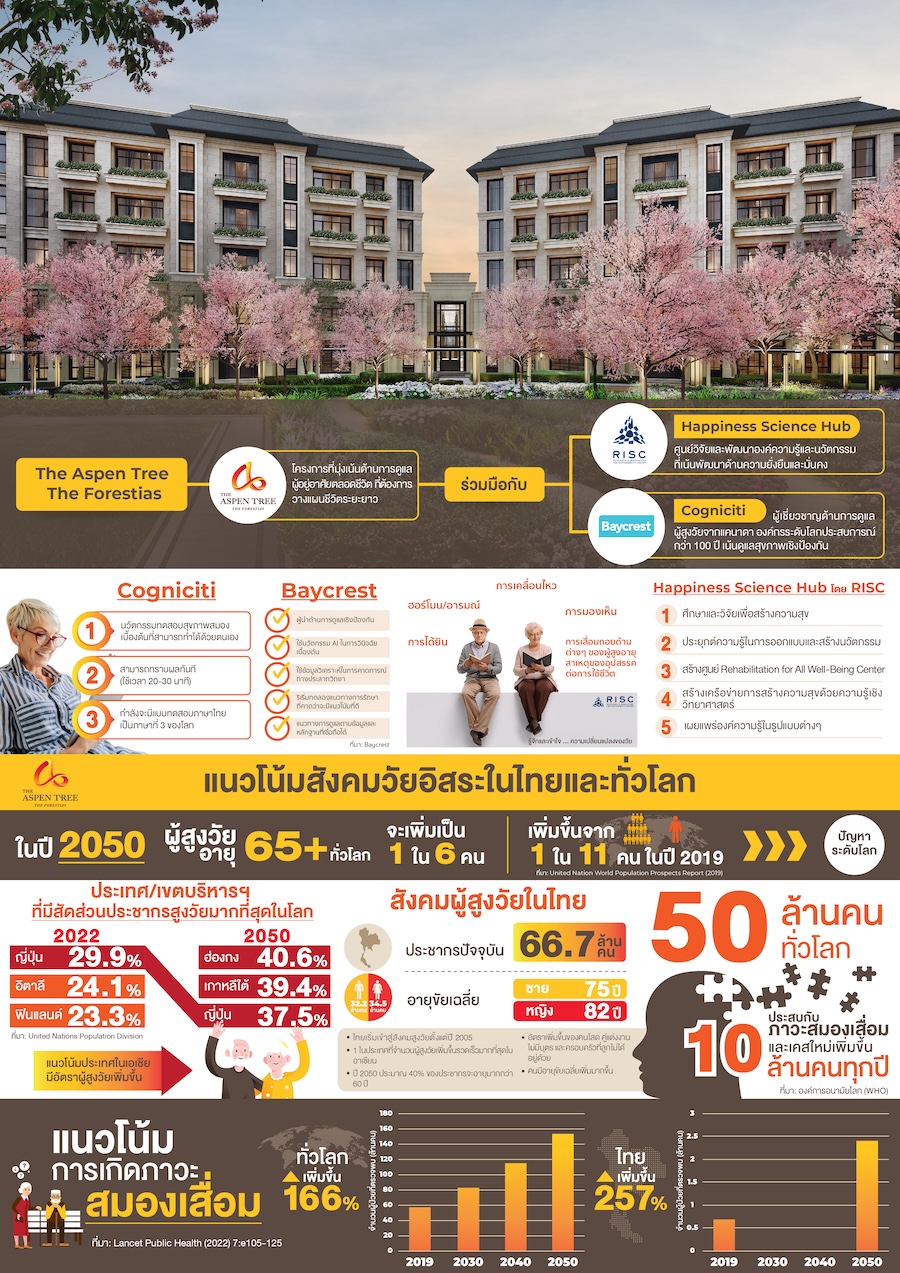
According to a report from Statista, the global elderly population is projected to increase from 20-30% of the total population in 2020 to 30-40% by 2050, meaning that 1 in 6 people globally will be elderly. Additionally, a report in the Lancet Public Health journal in 2022 predicts that the global population with dementia will increase by up to 166% by 2050 compared to 2019. In Thailand, the population aged over 60, which was about 20% of the total population in 2022, is expected to rise to 40% by 2050, with dementia cases in Thailand projected to increase at a concerning rate of 257% over the next 30 years.