RISC Launches the World's First Well-Being Design & Engineering Program to Foster Well-Being Advocates
RISC, a wellness expert, has launched the world's first Well-Being Design & Engineering Program aimed at creating advocates for well-being and promoting sustainable living.
• A special program for selected well-being advocates, or "Well-Being Champions".
• Participants will explore well-being from a broad perspective and through connections.
• The first program of its kind where learners will apply well-being concepts in real projects of various scales, sharing wellness with communities and cities.
• The program aims to foster well-being and create a Well-Being Ecosystem.
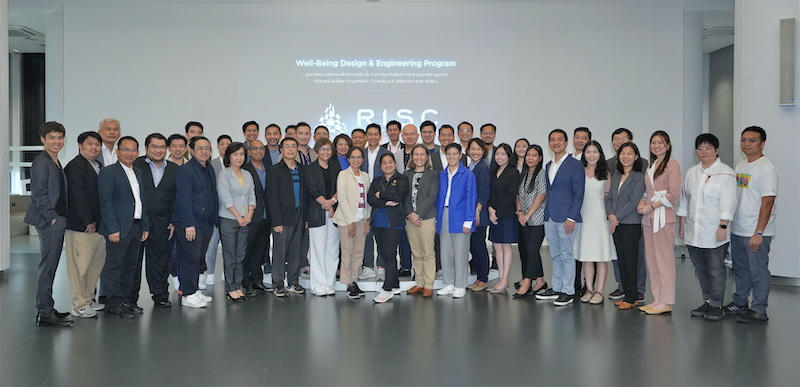
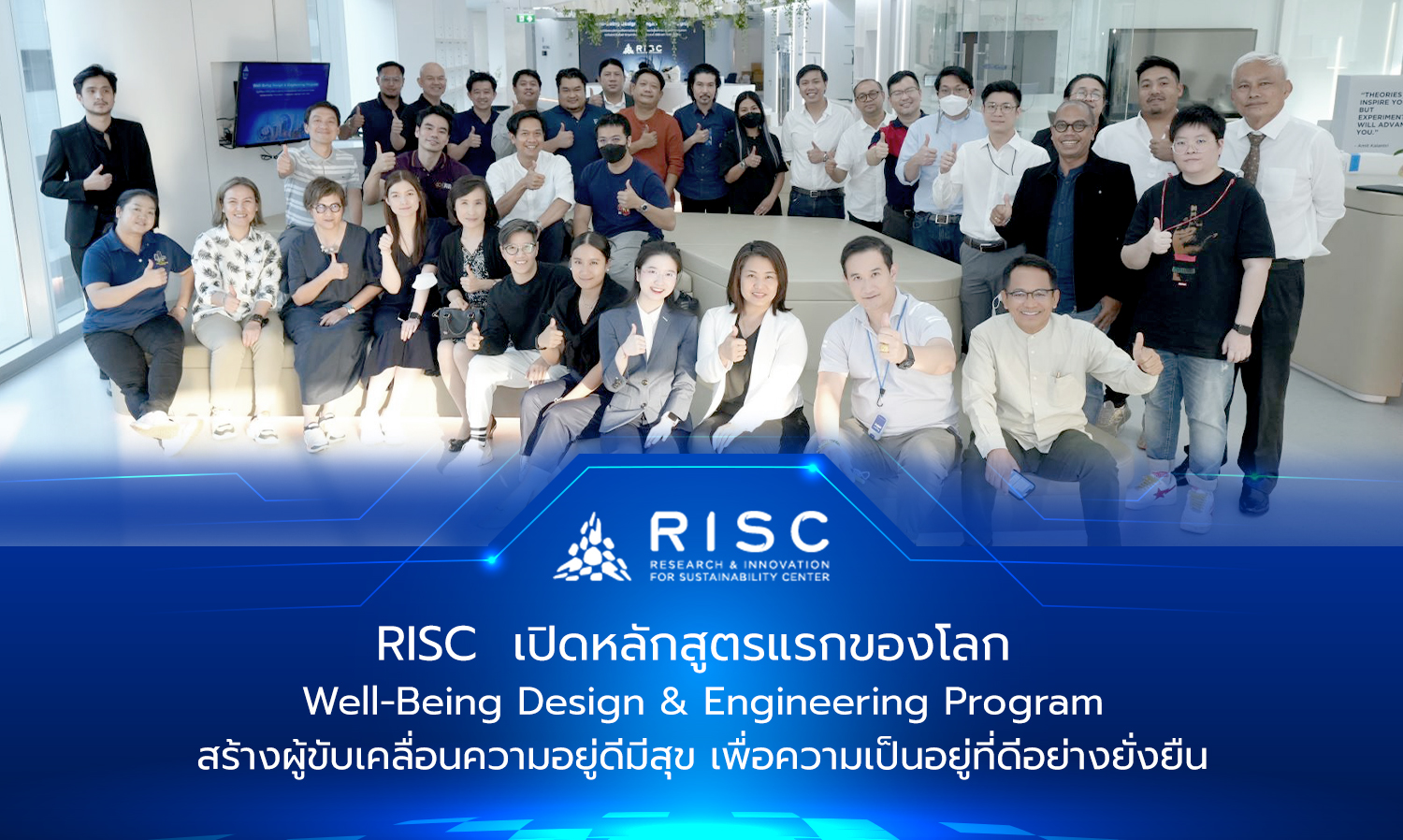
Associate Professor Dr. Sing Intarachuto, head of the advisory committee at the Research and Innovation for Sustainability Center (RISC) and program chair (center), along with Dr. Surakga Pongsuwan, director of the research integration department and head of the Happiness Science Hub, welcomed 50 selected participants for the RISC “Well-Being Design & Engineering Program” 2023, Class 1. These individuals were rigorously chosen as leaders from various professions committed to becoming "Well-Being Champions" to connect and create a genuine Well-Being Ecosystem. They will learn and exchange insights to foster well-being, receiving knowledge from in-depth research across multiple disciplines and experiences in applying knowledge to real projects at the Research and Innovation for Sustainability Center (RISC), Rajadamri, Bangkok.
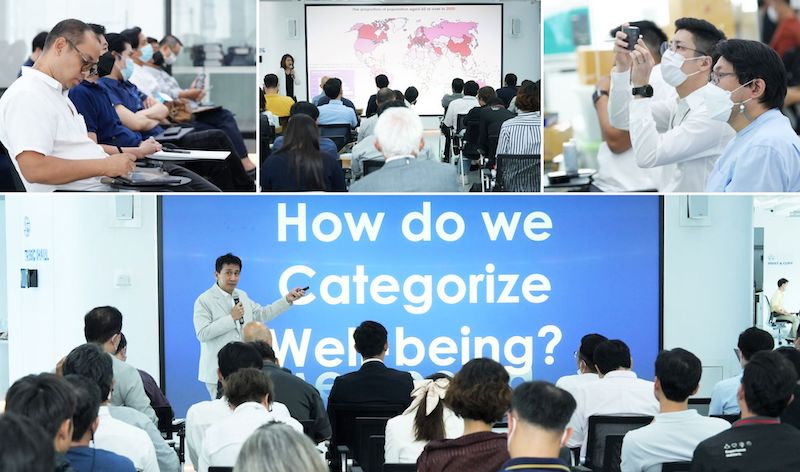
RISC by MQDC has officially launched the world's first "Well-Being Design & Engineering Program". This special program is for well-being advocates or “Well-Being Champions” who have been rigorously selected to lead various professions with the intention and commitment to create Well-Being. They will apply the knowledge gained from the program to foster good living conditions and connect to build a Well-Being Ecosystem that truly comes to life. The launch of this program has exceeded enrollment expectations, preparing participants to be key players in addressing global changes across various dimensions for the well-being of all lives in the future.
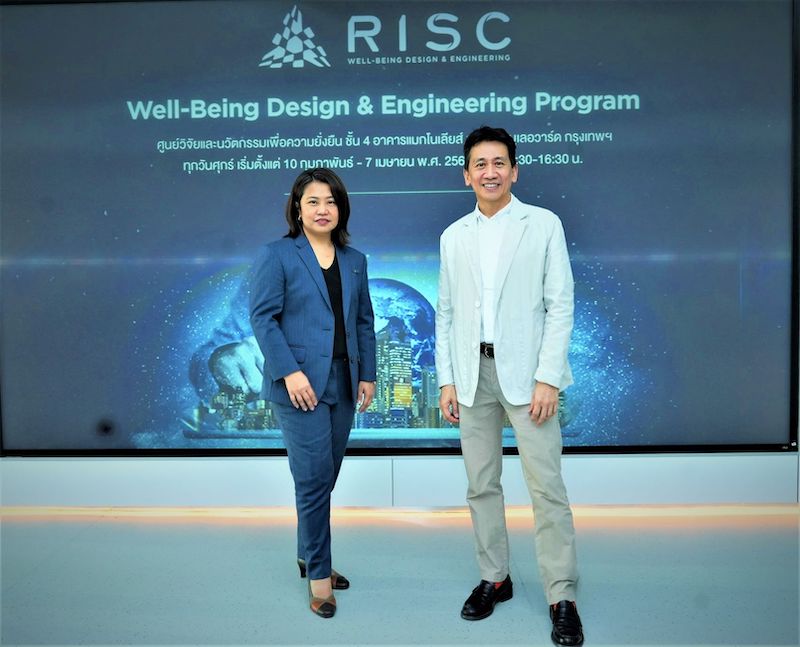
Associate Professor Dr. Sing Intarachuto, head of the advisory committee at the Research and Innovation for Sustainability Center (RISC) and program chair
Dr. Surakga Pongsuwan, director of the research integration department and head of the Happiness Science Hub and program director
Associate Professor Dr. Sing Intarachuto stated that the "Well-Being Design & Engineering Program" aims to create a group of "Well-Being Champions" or advocates for well-being. This program is considered proprietary knowledge as RISC has accumulated in-depth knowledge from scientific research across various fields over the past decade and has collaborated with experts both domestically and internationally. Participants will share experiences in applying knowledge to promote well-being in real projects through an integrated working process, serving as a guideline for collaboration and learning from real project examples to effectively apply knowledge for holistic well-being. This is the first program of its kind that learns from research and builds on real projects, not only focusing on creating a sense of "happiness" but also integrating applied systems engineering processes for overall planning and management, linking all aspects of project development to achieve sustainable well-being.
In addition to the initial lecture by Associate Professor Dr. Sing Intarachuto, who introduced the program and emphasized the importance and components of Well-Being in sustainability across three main axes:
1) Mental/Emotional Well-Being
2) Physical Well-Being
3) Environmental Well-Being, along with knowledge about adaptive frameworks for future well-being for all lives.
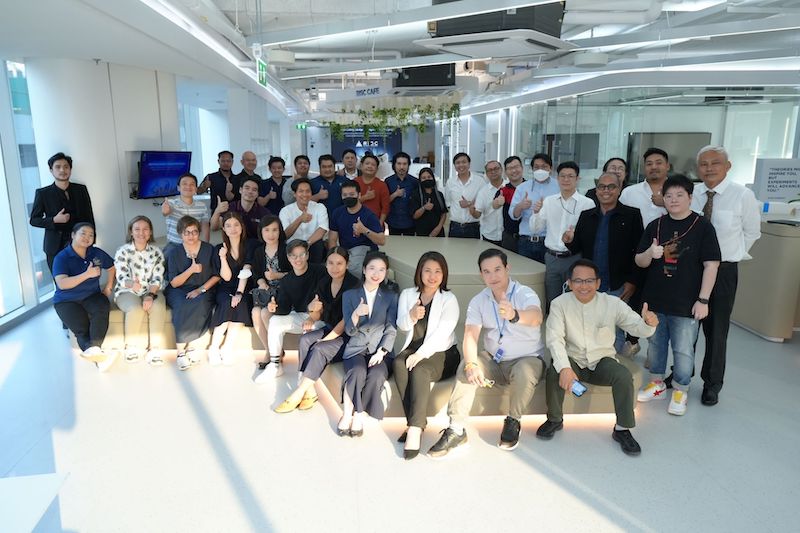
Subsequent lectures will feature insights from various experts in "Creating Well-Being" who have experience in developing real projects according to their areas of expertise, accumulating knowledge and experience in all aspects of applying in-depth knowledge ready to share. External experts who have collaborated with RISC will bring their deep knowledge to apply in real projects, such as Mr. Kesha Teerakomen, chairman of EEC Engineering Network Co., Ltd., Assistant Professor Dr. Sirawat Ittipoolpipat, head of the Neuroscience Research and Innovation Center at King Mongkut's University of Technology Thonburi, and the RISC research team with expertise in various fields, including Dr. Jitpat Charoenwiwat, senior director of Innovation Integration, Dr. Surakga Pongsuwan, director of the research integration department and head of the Happiness Science Hub, Mr. Wasutha Chain, senior research architect and LEED AP BD+C, Fitwel Ambassador, and WELL AP, and Ms. Tipthapthim Poompanit, senior research architect in Sustainable Building Materials, etc.
In the latest lecture, Associate Professor Dr. Sing discussed the Resilience Framework, which involves analytical planning to prevent or address specific issues, such as flooding or drought, before participants learn from the Forestias project, the world's first city-forest project that brings well-being knowledge into reality.
For this program, RISC selected 50 participants from a large pool of applicants, with the primary selection criterion being work experience. The aim is for the first cohort to be "Well-Being Advocates" who can drive change within their organizations or at the city level, promoting diverse applications of Well-Being across all sectors, fostering connections and building a Well-Being Ecosystem.
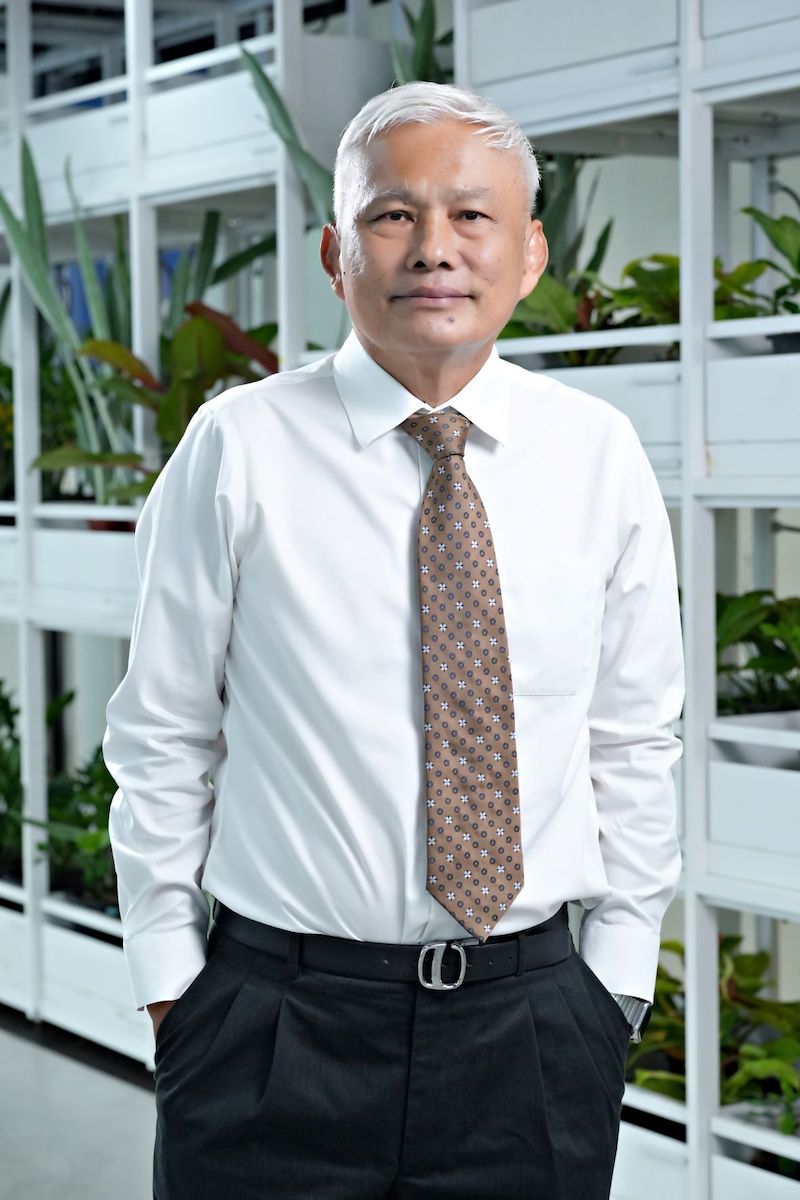
Mr. Thaveejit Chantrasak, former president of the Association of Architects and managing director of Sasidi & M Co., Ltd., a representative of the first cohort participants, expressed his joy in joining the program, stating that it is commendable for the private sector to create such a curriculum as it will positively impact national development, improving society as a whole. He believes this program will greatly assist him in the future, enhancing decision-making efficiency. He emphasized the importance of awareness and intention to promote well-being, stating, "To create good things for well-being, we must first recognize our knowledge and intention to do this, and it is also essential to establish a plan in our minds to make well-being a widespread policy in our society."
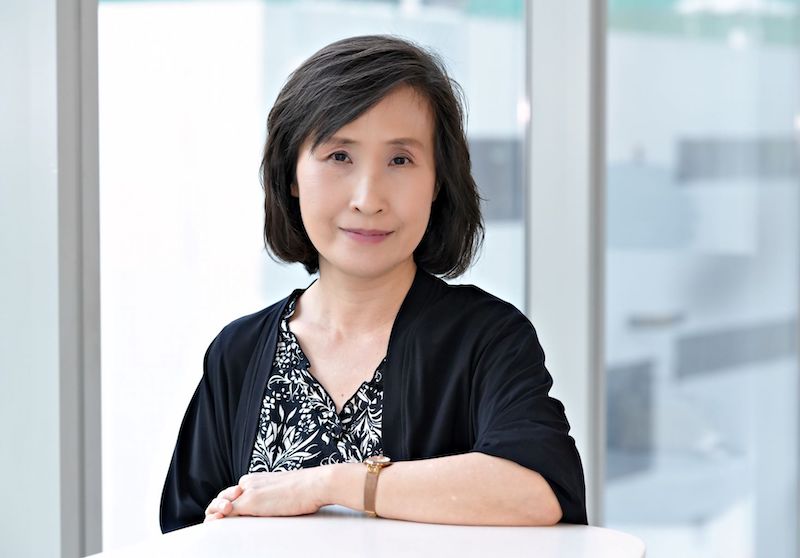
Ms. Wisuthinee Saengpradub, a board member of the Heart Volunteer Foundation, who has been pioneering sustainable development and social business in various dimensions in Thailand, stated, "I am grateful that RISC dares to lead the dissemination of knowledge about 'Well-Being' to society. I am confident that this program will create a tremendous impact on Thai society because many of my peers who are participating play crucial roles in this transformation. Personally, I plan to apply the knowledge gained from this program to develop land located 1 km from the water source, surrounded by community forests and neighbors who are supportive, creating a small well-being society locally. I intend to start applying this knowledge in this small area and inspire good practices among neighbors towards sustainable well-being, especially by creating models for learning and developing local people, which is essential. Each area will have different approaches based on its social context, so I want to provide opportunities for people of all ages, especially children, to learn from real environments beyond classroom learning. Additionally, insights from each group presented at the end can be further developed, connected, and used to promote national policies on Environmental Well-Being."
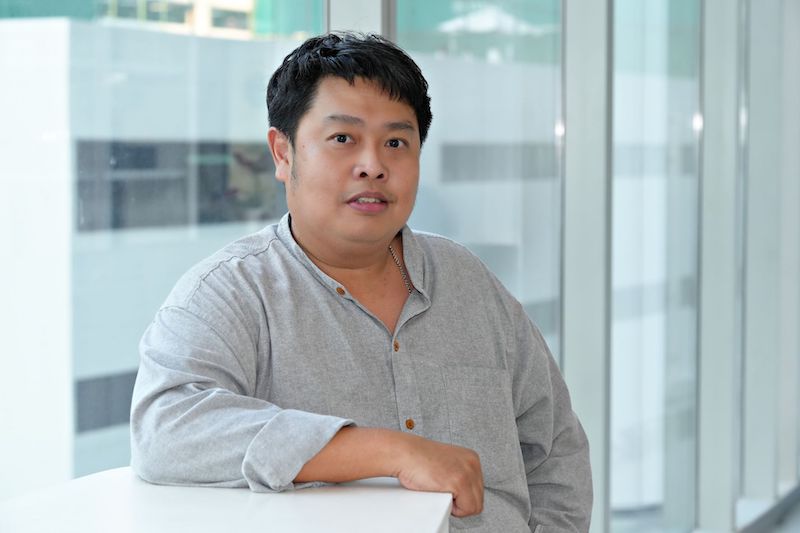
Mr. Britat Sawantrach, managing director of Atta Studio Co., Ltd., a design and architecture firm, added, "I will apply the knowledge gained from studying well-being to care for my father, who suffers from Parkinson's disease and requires regular medical visits. Generally, Parkinson's patients need living spaces with more green areas and relaxation spaces. I plan to create a model home and share it with families of Parkinson's patients who have housing limitations in urban areas, focusing on how to design spaces that enhance their quality of life because a healthy environment can alleviate symptoms."
The Well-Being Design & Engineering Program will open its second cohort in 2024. Those interested in becoming Well-Being Advocates or Well-Being Champions to help create a Well-Being Ecosystem can follow updates and application openings at www.risc.in.th.
Watch the introductory video for the Well-Being Design & Engineering Program at https://www.youtube.com/watch?v=cMDYkiZ3YCc.