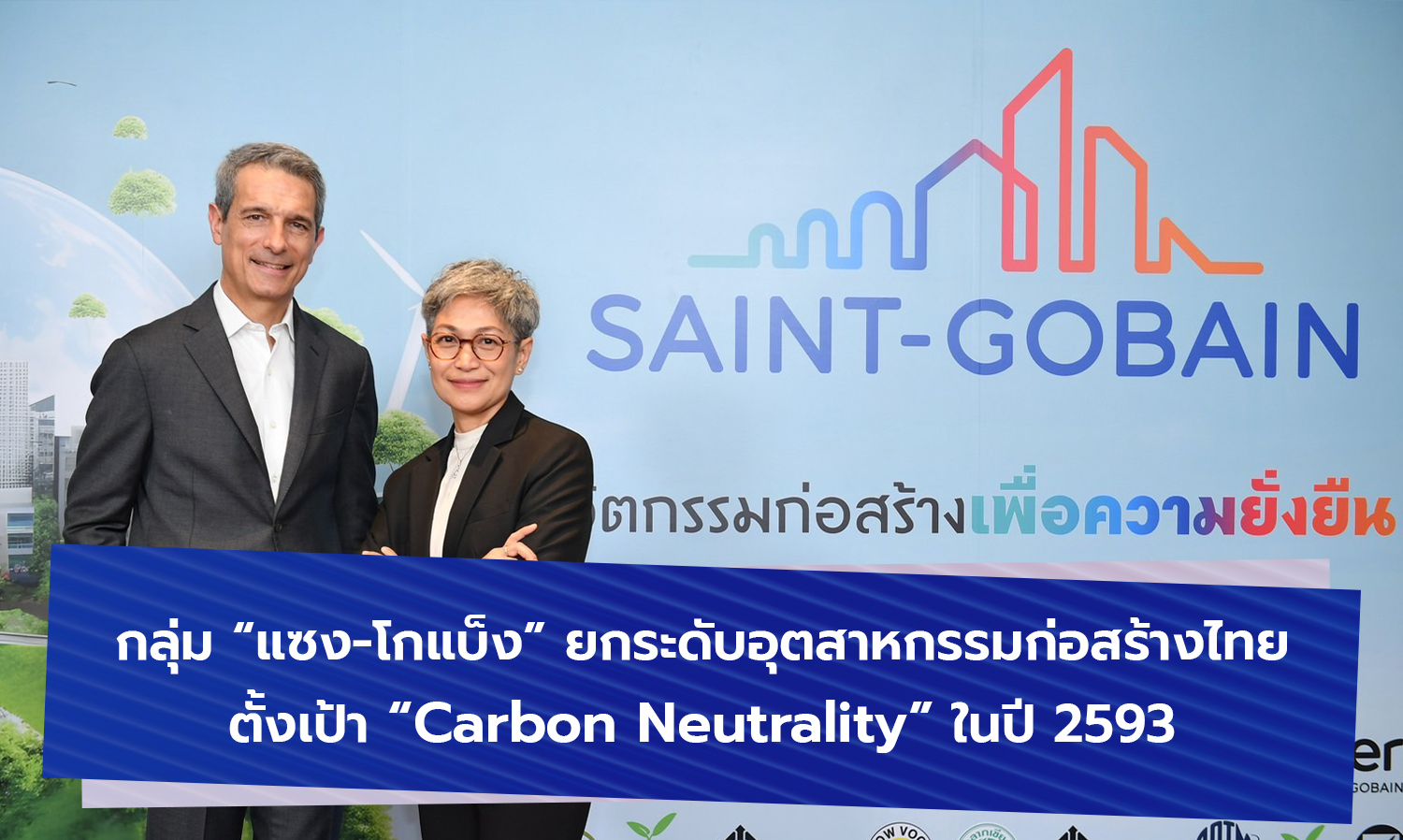
Saint-Gobain Group Aims to Collaborate for Advancing Thailand's Construction Industry with a Target of 'Carbon Neutrality' by 2050
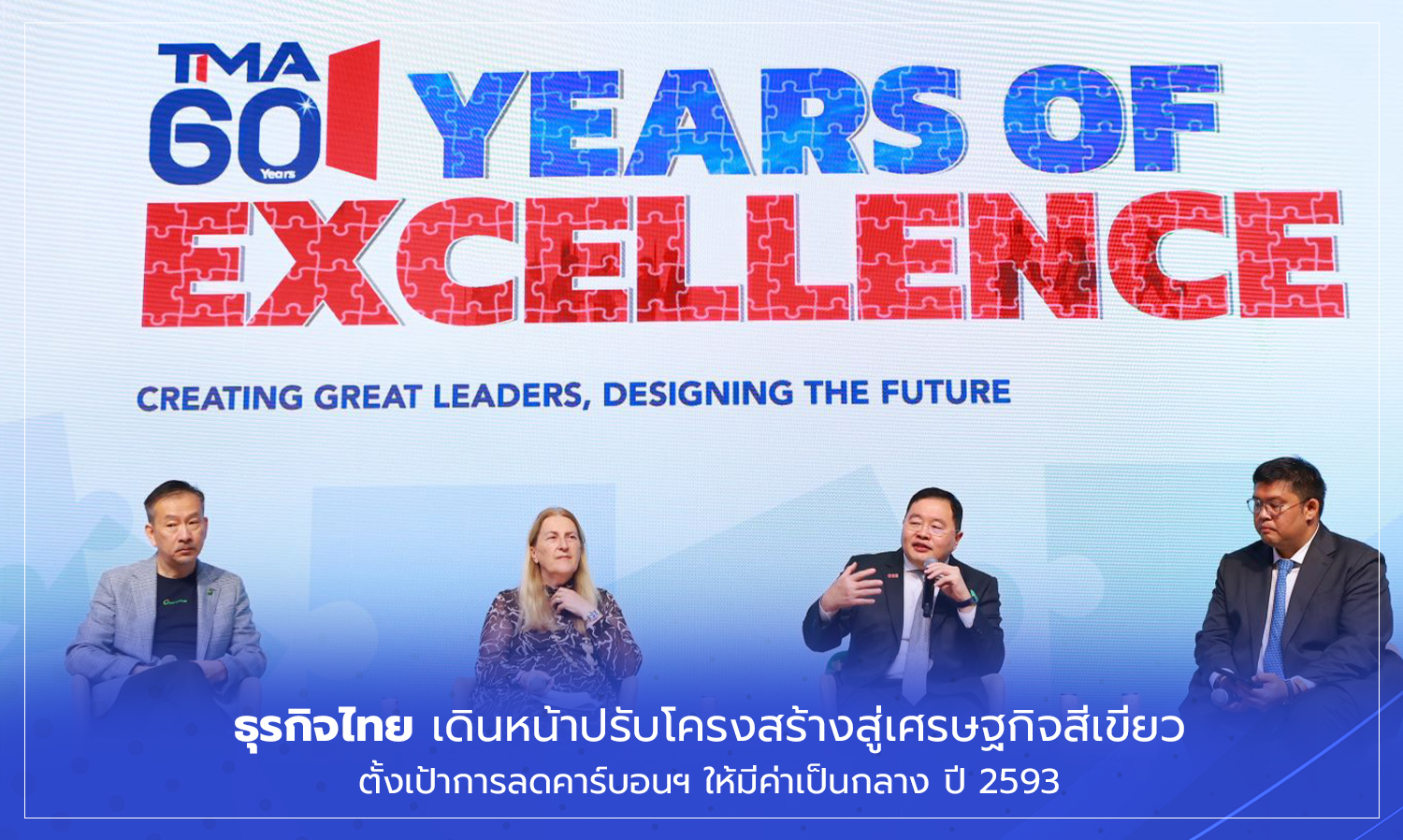
Saint-Gobain Group aims to become a 'Carbon Neutrality' organization by 2050, leading a team of executives to hold a seminar titled 'Elevating Challenges for a Sustainable Future: Promoting Positive Change in Thailand's Construction Industry,' reinforcing its commitment to conducting business alongside sustainable environmental practices.
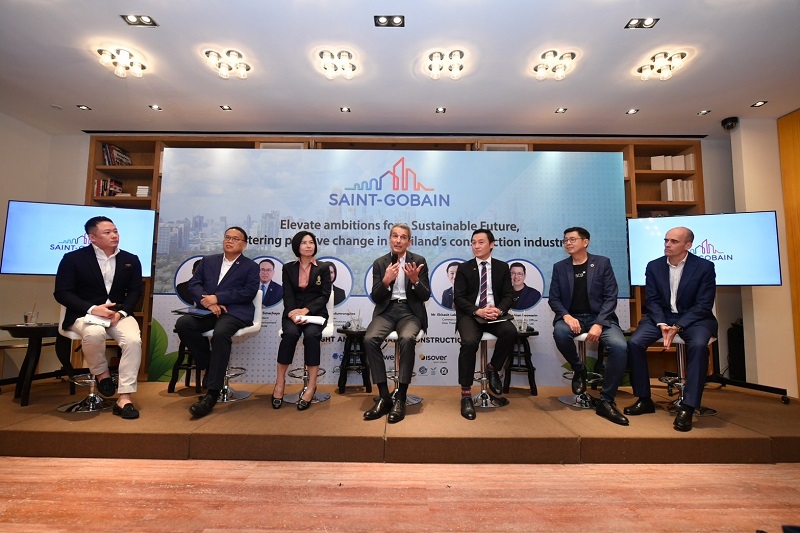
Bernard Barcen, CEO of Saint-Gobain Group, stated that to emphasize its commitment to sustainable business practices aligned with global environmental standards, the Saint-Gobain Group has set a target to achieve 'Carbon Neutrality' by 2050. Currently, the group has implemented carbon neutrality policies and a circular economy business model to collaboratively create and develop sustainable business practices, aiming to lead in 'light and sustainable construction' solutions to advance Thailand's construction industry while protecting the environment.
The Saint-Gobain Group also prioritizes the quality of life for residents sustainably, focusing on sustainability as a key goal. The group aims to make the world a better home, from material selection, production processes, circular economy systems, life cycle assessments (LCA), to the use of renewable energy, continuously setting environmental targets over the past decade.
Environmental objectives have been established over various periods in line with the EHS environmental charter, with a significant goal of driving towards a carbon-neutral organization by 2050. Therefore, the Saint-Gobain Group promotes its role in preventing and mitigating climate change in collaboration with all relevant sectors, including employees, investors, policymakers, customers, suppliers, civil society organizations, and other stakeholders.
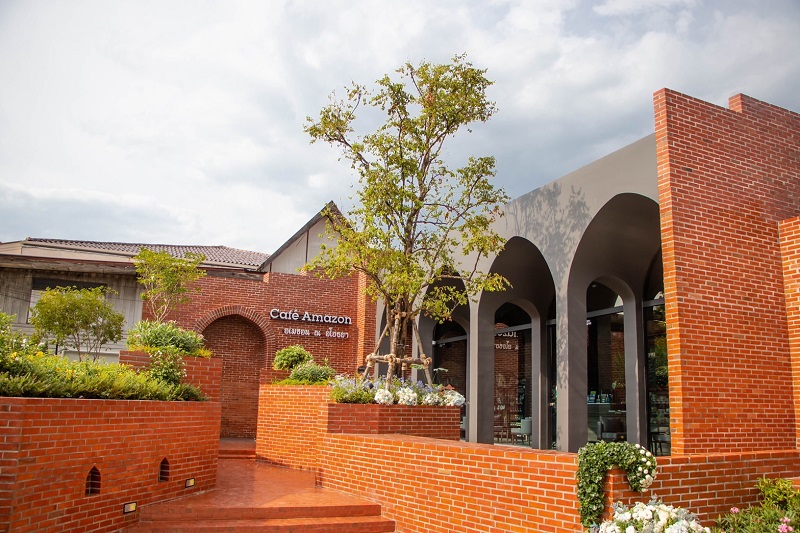
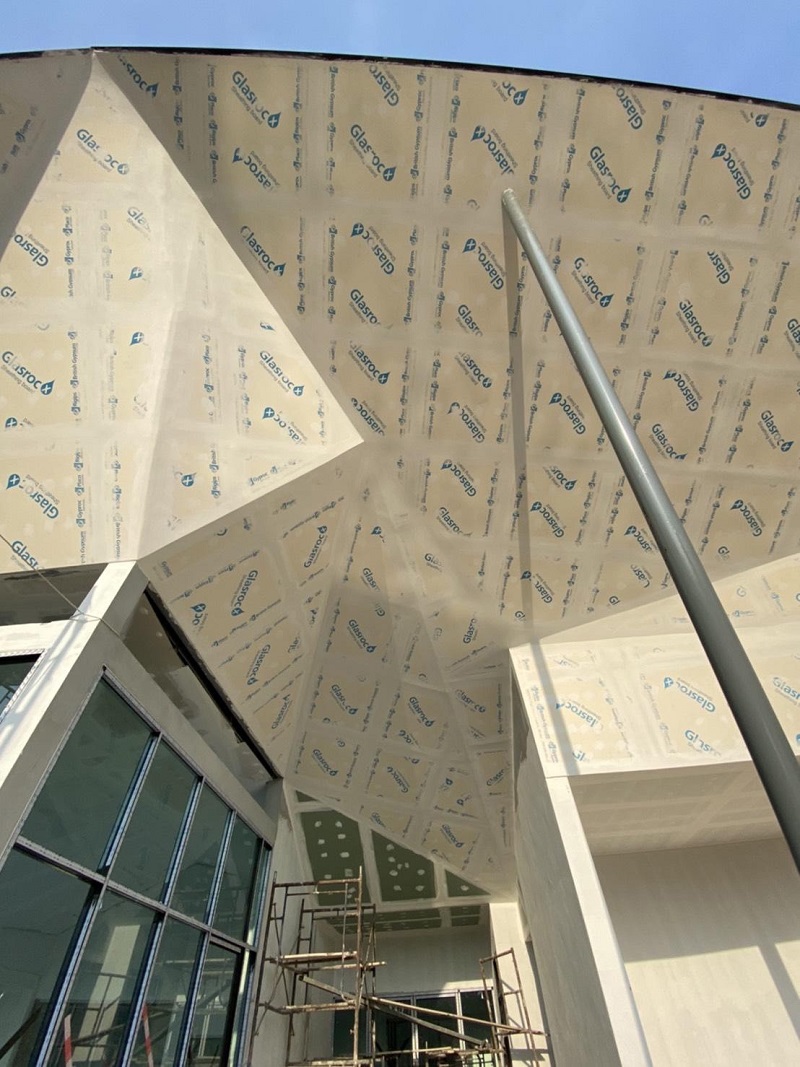
Regarding the overall construction industry in 2024, the Saint-Gobain Group views it as a challenging year due to rising product costs, construction budgets, increased labor costs, and labor shortages, along with intense price competition. This situation presents opportunities for the group to leverage innovative expertise to differentiate its offerings to customers, focusing on developing practical innovations, systems, and solutions that address real-world construction challenges for better living conditions, energy reduction, and long-term repair cost savings, along with expert technical consulting to enhance construction efficiency and quality, ultimately increasing satisfaction for users and residents, and expanding retail and wholesale business recognition.
The Saint-Gobain Group is listed on the Paris, London, Frankfurt, Zurich, Brussels, and Amsterdam stock exchanges, divided into three main business segments:
1. Construction Materials Group, which includes:
- Gyproc, the first gypsum product manufacturing plant in Thailand, providing ceiling and lightweight wall solutions.
- Weber, offering cement adhesives, sealants, waterproofing systems, and construction and repair mortar products, supported by R&D teams in Thailand and globally.
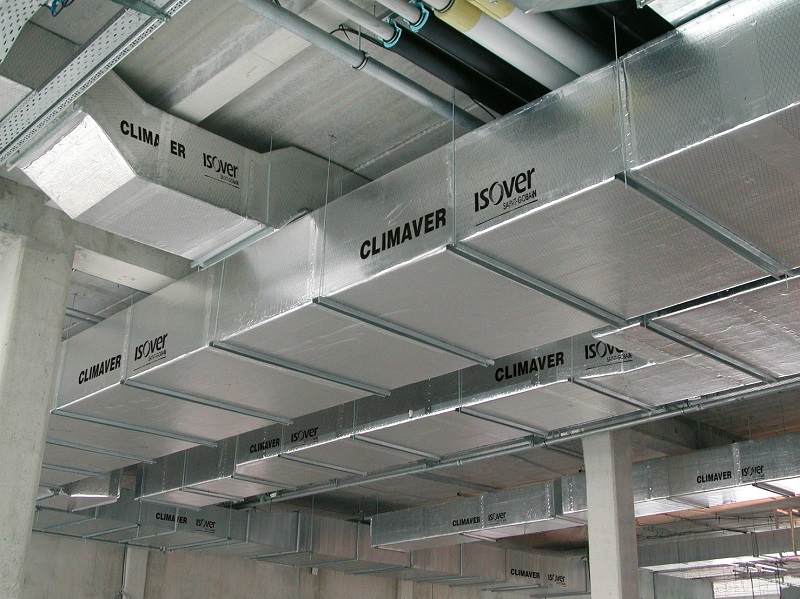
- Isover, providing thermal and acoustic insulation solutions, and Climaver, insulated air ducts.
- Saint-Gobain Glass, high-quality flat glass for homes and buildings.
- PAM, comprehensive gas and water pipe solutions.
2. Industry Group, which includes:
- Formula, high-quality industrial plaster.
- Norton Abrasives, high-quality cutting, grinding, polishing, and drilling products.
- PPL, high-performance polymer products.
3. Mobility Group, providing automotive glass products, Sekurit, for the automotive industry.
Ekkasit Luknani, Director of Low Carbon Business and Development at Dow Thailand Group, stated that Dow is a company focused on the sustainability of raw materials, producing materials and supporting sustainability to drive a sustainable economy, with a focus on packaging and the infrastructure used to create products. The first goal is to promote recycling, transforming plastic waste into quality waste by creating a quality chain. Our journey towards sustainability requires multiple aspects, including waste reduction, recycling, and commercial sustainability support across various dimensions.
Patrice Bar, Managing Director of Bwick-Thailand Co., Ltd., mentioned that for over 20 years, the company has consistently supported carbon reduction, which poses significant challenges in the construction industry, particularly regarding concrete use. The company collaborates with customers and suppliers to analyze carbon emissions from all activities in the process, such as truck usage and fuel types. Results are assessed every three months, six months, and annually to determine the carbon emissions on construction sites, allowing for optimal categorization of suppliers based on their carbon emissions. However, it is believed that having oversight and prioritizing this issue is essential, as older buildings need to be upgraded for energy efficiency and reduced carbon emissions.