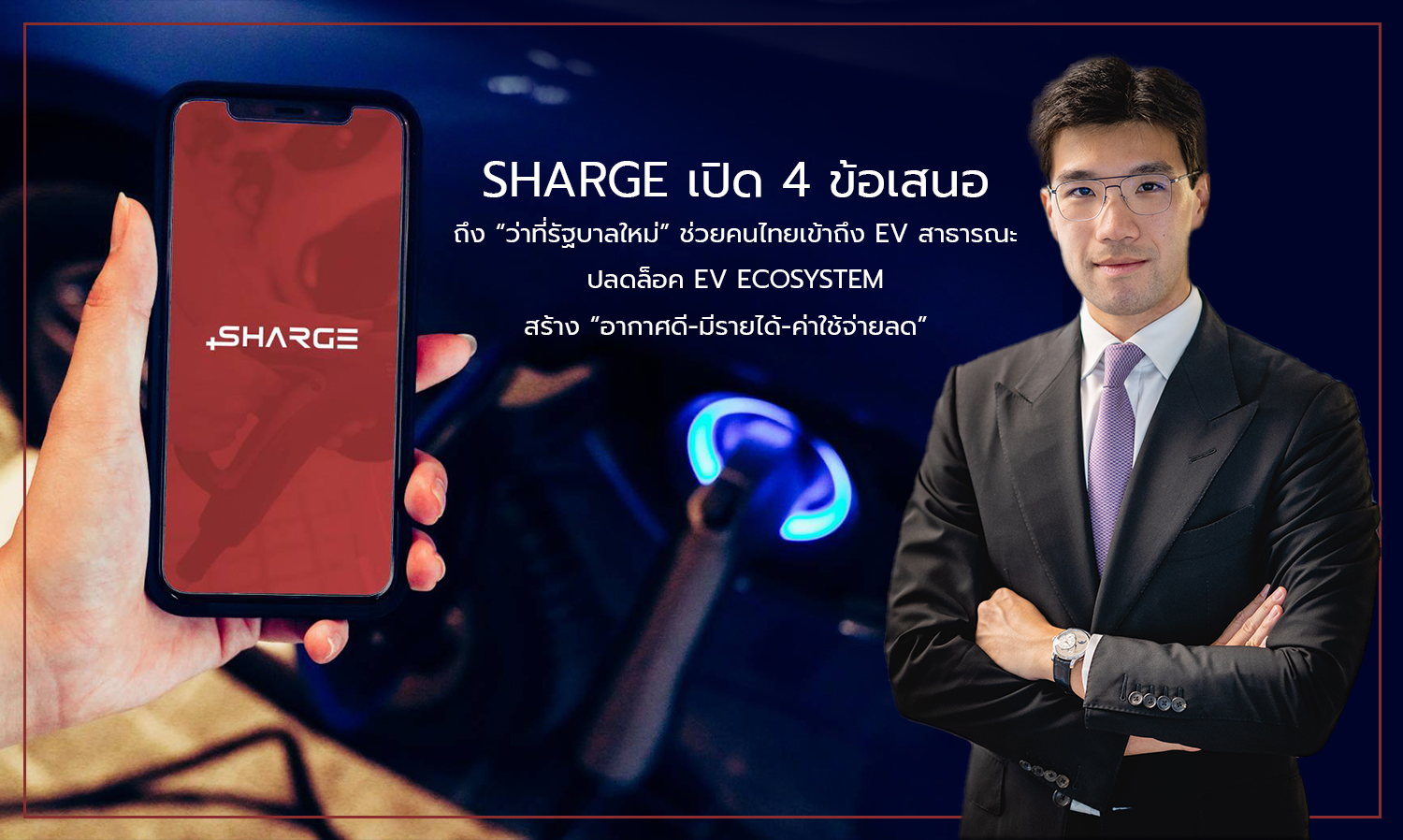
SHARGE Presents 4 Proposals to the Incoming Government to Help Thais Access Public EVs, Unlock the EV Ecosystem, Create Clean Air, Income, and Reduce Costs
The momentum surrounding the establishment of a new government is being closely watched, as it will determine the direction of policy across all sectors, including environmental and clean energy policies. In the past, several political parties have highlighted their vision regarding Electric Vehicles (EV) and policies to support the use of EVs, pushing for the transition of public transport to electric buses (EV Bus). The recent MOU for the formation of a government by eight political parties aims to achieve net-zero greenhouse gas emissions, reflecting that EVs are a pressing issue that must be accelerated to enhance the quality of life for all Thais.

Pirapat Sirichantaropas, Managing Director of SHARGE Management Co., Ltd., a leader in creating the EV Charging Ecosystem to meet sustainable lifestyle needs, stated that the recent announcement of Thailand's 30@30 policy is a significant achievement that has encouraged Thais to adopt EVs, leading to a surge in awareness of sustainable energy, resulting in long queues for overnight purchases and thousands of reservations in a single day.
“We have successfully sparked the use of personal EVs in Thailand. The next step is to continuously fuel this momentum through policy adjustments. The government needs to unlock conditions to expand opportunities for all Thais to access EVs comprehensively, while also adjusting EV policies to benefit Thai lives in three aspects: clean air, income, and reduced costs.”
Pirapat emphasized that to continue building momentum, the regulatory agencies involved in the EV ecosystem may need to revisit current regulations and support to facilitate operators, enabling the effective use of EVs. 1. Updating laws to align with current situations should consider regulations that may hinder EV market entry, such as requirements for taxis to have engines of 1.6 liters or more, while current EVs do not have engines, making it impossible to use EVs as taxis. 2. Supporting EV Infrastructure by investing in new infrastructure to promote EV usage and make it accessible to all groups. 3. Stimulating new EV users may require tax incentives or benefits for operators, such as logistics companies using EVs for the first time or having special electricity rates. 4. Creating national benefits by considering the advantages of fully utilizing EVs, such as environmental benefits, health, and competitive production costs.
“Supporting Commercial Fleets in public transport or logistics will be a key strategy to ensure EVs reach all Thai groups quickly. However, currently, Commercial Fleets have a low proportion of EV usage due to legal and initial investment constraints.”

Pirapat also believes that to encourage EV usage in the country, the incoming government must implement policies that promote “clean air, income, and reduced costs” by supporting investments that entice new operators to invest and encouraging existing operators to adopt EVs. He proposed four policy approaches:
1. Change EV manufacturer tax conditions by gradually unlocking import tax and excise tax exemptions for companies producing EVs in Thailand, increasing the number of EV manufacturers in the market to reduce monopoly risks, stimulate competition, and enhance the capabilities of domestic manufacturers in production, quality standards, and vehicle pricing.
2. Develop EV personnel by promoting the development of local personnel's expertise in EVs from production to maintenance, making it easier to maintain EVs, access skilled technicians, reduce repair waiting times, and address issues immediately, while also creating jobs and ensuring that existing mechanics have modern skills and continuous income during the transition to EVs.
3. Open pathways for cost-reduction policies to stimulate the transition as high initial investments for both vehicles and equipment prevent Commercial Fleets from deciding to adopt EVs in their businesses. Allowing the market to have multiple competitors will enable licensed providers to access efficient EV trucks, buses, and EV infrastructure at reasonable costs, such as high-powered EV chargers at lower prices, attracting operators to see opportunities for investment and developing public transport networks for EVs.
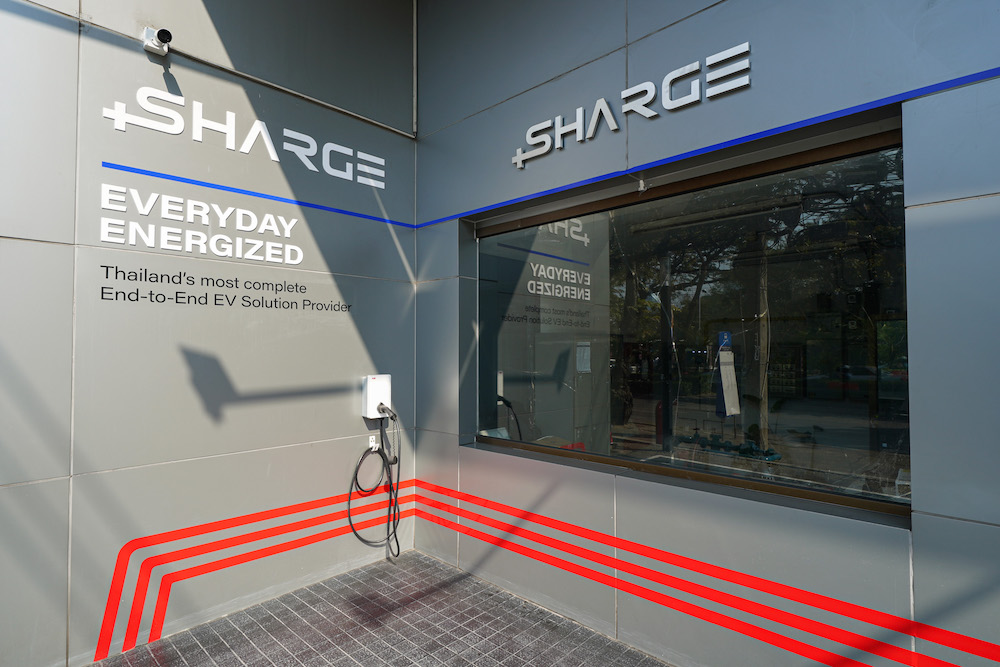
4. Unlock EV electricity costs as the continuously rising electricity costs pose another challenge for expanding EVs into public transport and logistics. The government should unlock conditions for the Low Priority electricity cost project for EV charging stations, with a special rate of 2.63 baht per unit, limited to public EV charging stations, to extend to Commercial Fleets operators, such as allowing taxi garages with 10 or more EV charging points to participate in the project. This will help taxi drivers increase their income and reduce costs simultaneously, as the electricity cost is about 1 baht per kilometer, while natural gas costs 2 baht per kilometer, leading to a reduction of over half in expenses. Unlocking this aspect will encourage Thai taxis or public transport providers and last-mile transportation services to transition to EVs.
“If Thailand can push the concept of clean air, income, and reduced costs into reality, it will elevate the EV ecosystem while driving the country's macroeconomic growth, attracting international players to establish production bases and enhance the quality of EV manufacturing in Thailand, benefiting operators, drivers, and passengers. We will see an increase in EV buses, taxis, and motorcycle taxis, reducing energy cost burdens and increasing income for taxi and motorcycle taxi drivers, creating jobs and generating income in businesses related to the ecosystem, lowering the cost of living so that Thais can use public EV services at affordable prices, and helping to create better air quality for all Thais,” Pirapat concluded.