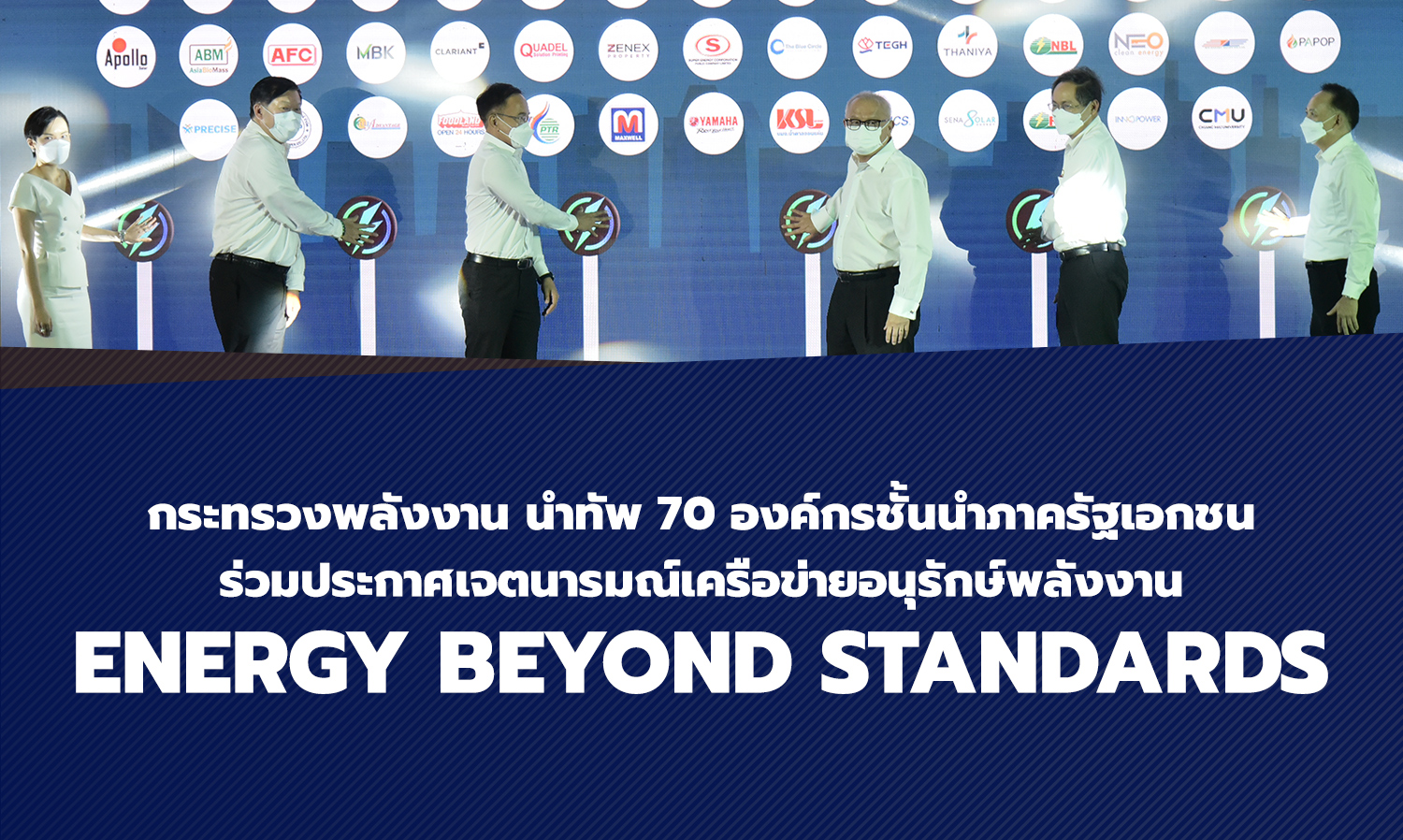
Ministry of Energy Leads 70 Leading Public and Private Organizations to Declare Commitment to the Energy Conservation Network 'Energy Beyond Standards'
The Ministry of Energy leads 70 leading public and private organizations to declare their commitment to the energy conservation network 'Energy Beyond Standards', aiming to promote energy conservation in a tangible way, creating a model for organizations to use energy efficiently. The goal is to help Thailand reduce energy imports by over 5.4 billion baht per year, equivalent to 90,000 tons of LNG, and to mitigate the impacts of the energy price crisis sustainably.
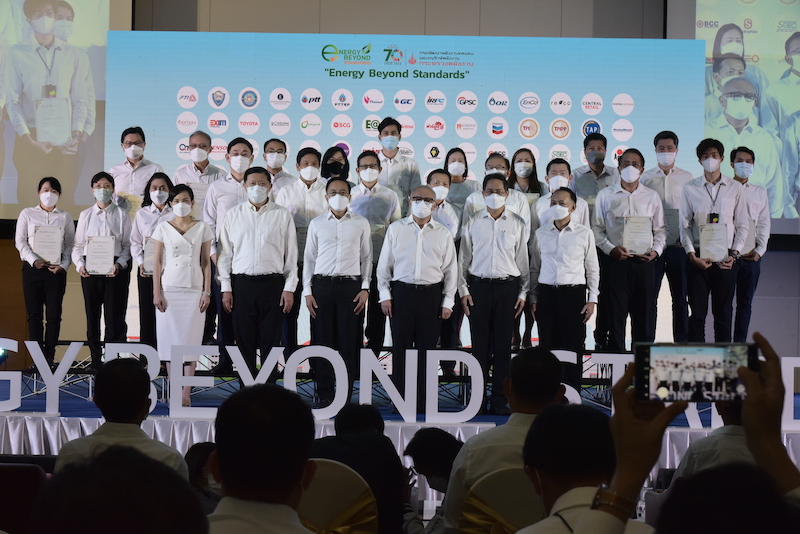
Mr. Supattanapong Punmeechaow, Deputy Prime Minister and Minister of Energy, presided over the declaration of commitment for the energy conservation network 'Energy Beyond Standards', alongside Dr. Prasert Sinsoontorn, Director-General of the Department of Alternative Energy Development and Efficiency, Mr. Nopadol Pinsupa, Vice President of the Federation of Thai Industries, and Mr. Pichai Jirathiwat, Advisor to the Thai Chamber of Commerce and Chairman of the Energy Working Group of the Thai Chamber of Commerce, as well as Dr. Chayawadee Chai-anant, Assistant Governor for Corporate Relations at the Bank of Thailand. Together with over 70 leading public and private organizations, they expressed their commitment to implement energy conservation within their organizations and to encourage increased cooperation in energy conservation to reduce the impacts of energy price fluctuations.
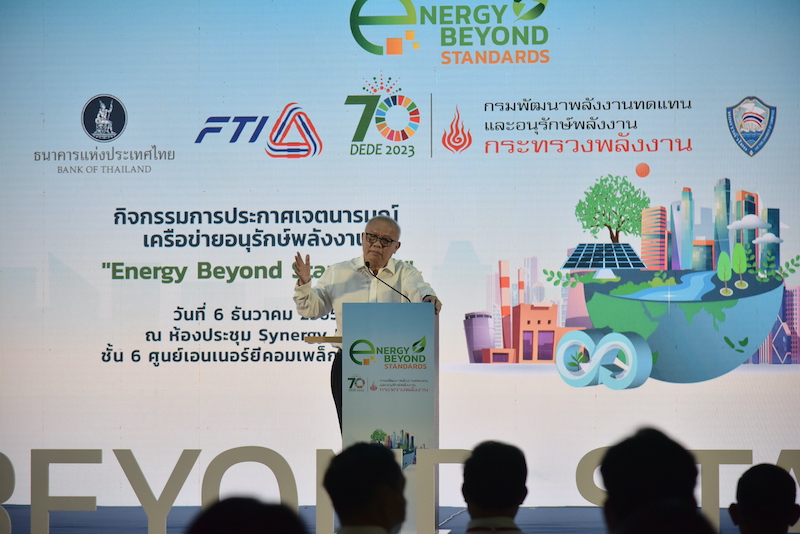
Mr. Supattanapong Punmeechaow stated that the Ministry of Energy is accelerating the implementation of energy conservation policies, particularly in the industrial and business sectors, which are significant energy consumers. The declaration of commitment from both public and private sectors today will be a crucial step in creating a network for energy conservation, fostering cooperation, consultation, and assistance to enhance energy efficiency. The measures that each organization will implement for energy conservation are expected to not only reduce electricity costs but also lead to an overall reduction in electricity consumption by over 675 million units per year, saving the country up to 5.4 billion baht annually, equivalent to 90,000 tons of LNG, while alleviating environmental impacts by reducing greenhouse gas emissions by over 296,000 tons of carbon per year. Additionally, this will support Thailand's climate change policies to achieve carbon neutrality by 2050.
Dr. Prasert Sinsoontorn mentioned that the declaration of commitment for the energy conservation network 'Energy Beyond Standards' has received cooperation from members of the Federation of Thai Industries, members of the Thai Renewable Energy Association, members of the Thai Chamber of Commerce, and 70 leading organizations, including the PTT Group, Central Group, Toyota Motor Corporation, and SCG. All participating organizations will contribute to helping Thailand overcome the energy crisis by implementing energy conservation within their organizations. The Department will provide technical support, training, knowledge sharing, consulting, and disseminating success stories and knowledge about energy conservation to the public, encouraging all sectors to be aware and use energy efficiently.
Examples of measures to support efficient energy use under this collaboration will include energy conservation measures and the use of renewable energy that yield high results and can be widely applied, such as measures to reduce energy loss from machinery and equipment by focusing on upgrading and replacing machinery with high-efficiency equipment, installing monitoring and control systems to assess energy usage, and utilizing renewable energy sources such as solar energy, biomass energy, and biogas systems, along with efficient energy control systems.
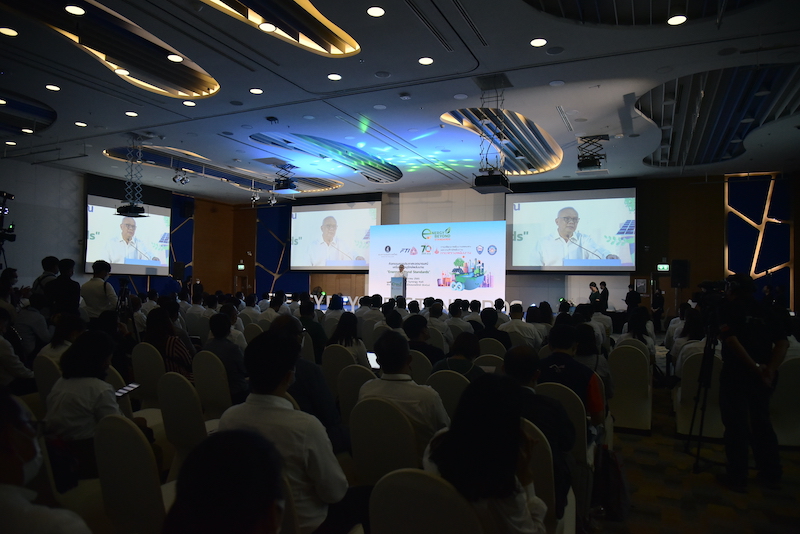
Moving forward, the Department will monitor energy savings, report through an online system, and establish energy clinics to provide consulting on both energy conservation and renewable energy, as well as offer investment source recommendations from knowledgeable experts to support these activities, Dr. Prasert concluded.