Thai Condominium Association Hosts Seminar on Business Strategies for 2023, Eyeing Economic Recovery and Foreign Market Opportunities
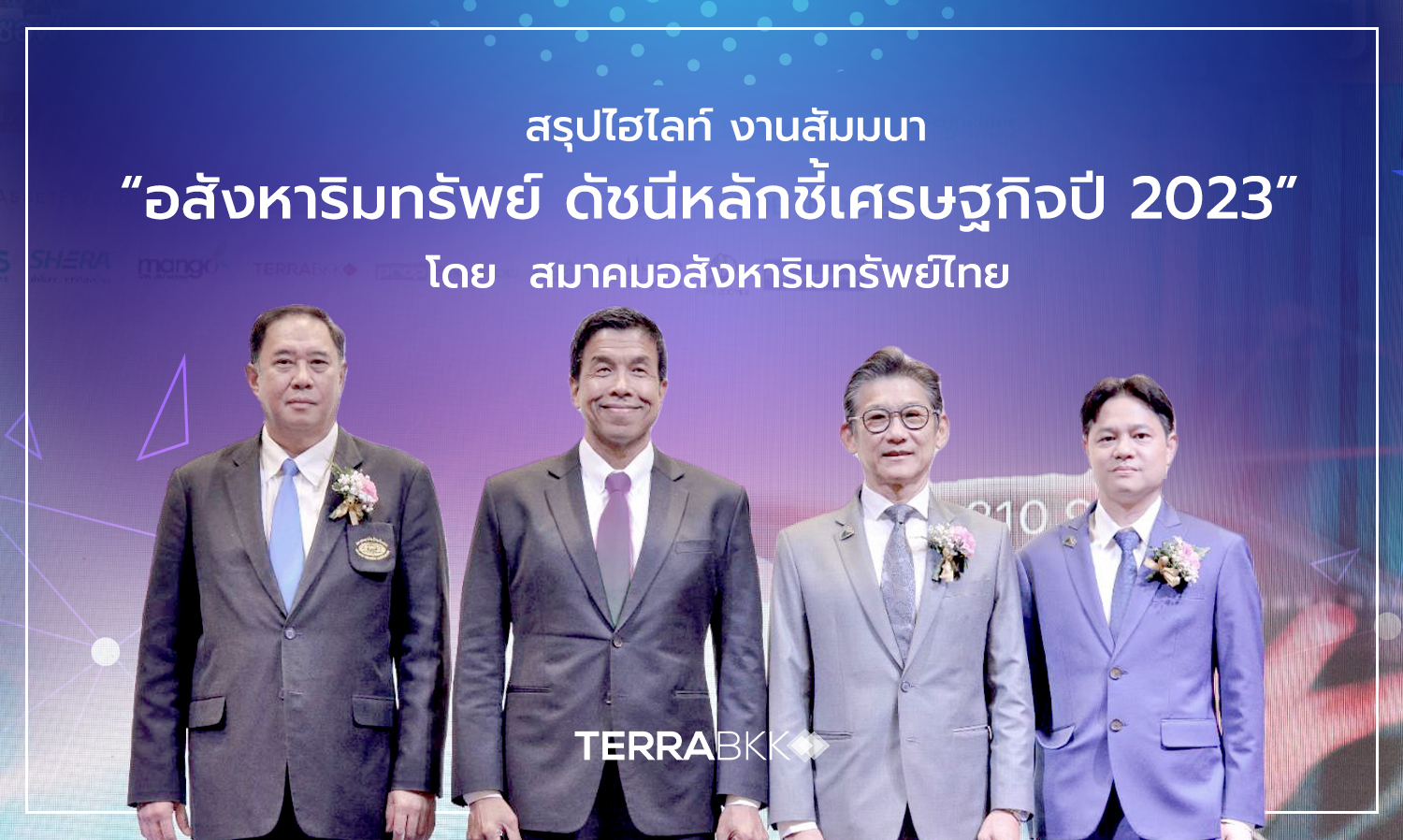
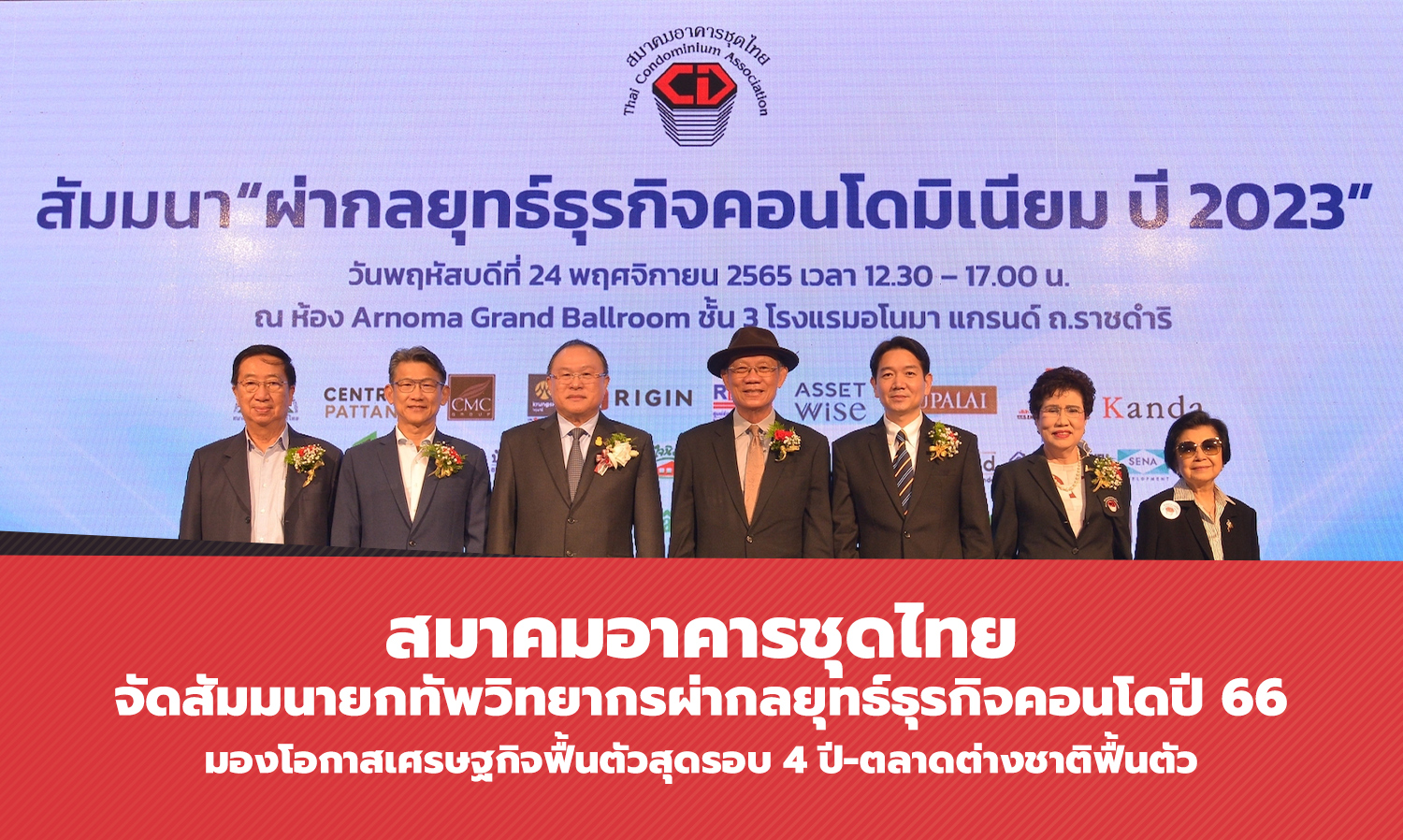
The Thai Condominium Association anticipates strong growth in the condominium market in 2023, seizing the highest economic recovery opportunities in four years as international visitors flock to Thailand. The association organized a seminar titled "Business Strategies for the Condominium Sector in 2023", aiming to provide guidance for operators of all sizes to thrive. Esteemed industry experts from JLL, Knight Frank, CBRE, Harvey Land, Supalai, Origin, and Sena participated to analyze adaptive strategies, sales stimulation methods, and trends in the foreign customer market.

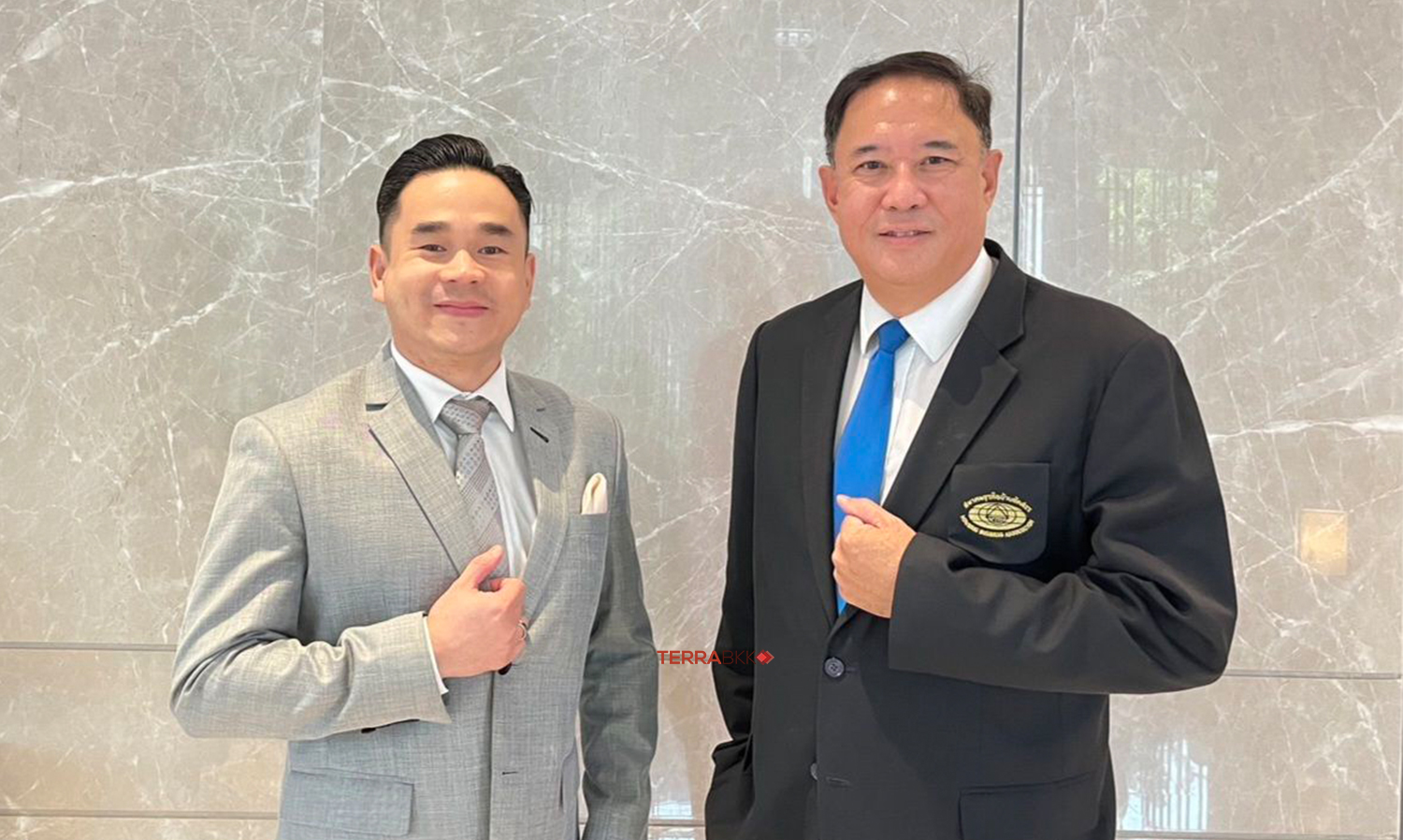
Mr. Pirapong Jaroonaek, President of the Thai Condominium Association, revealed that the condominium business in 2023 is expected to grow significantly due to the overall economic recovery driven by various factors, including the easing of the COVID-19 situation, the revival of the tourism and service sectors, and increased foreign investment and tourism following the reopening of many countries worldwide. This has resulted in a resurgence of consumer purchasing power in the real estate market, including condominiums, across all segments.

Mr. Pirapong Jaroonaek, President of the Thai Condominium Association
To enhance the adaptability of condominium developers in the coming year, the Thai Condominium Association has organized its annual seminar titled "Business Strategies for the Condominium Sector in 2023," featuring top executives and true experts from the Thai real estate industry to analyze adaptive strategies, sales stimulation methods, and trends in the recovery and growth of the foreign market. This aims to assist property developers of all sizes in applying these insights to their strategies and growth plans for 2023, while also stimulating the condominium and real estate markets in Thailand.
.jpg)
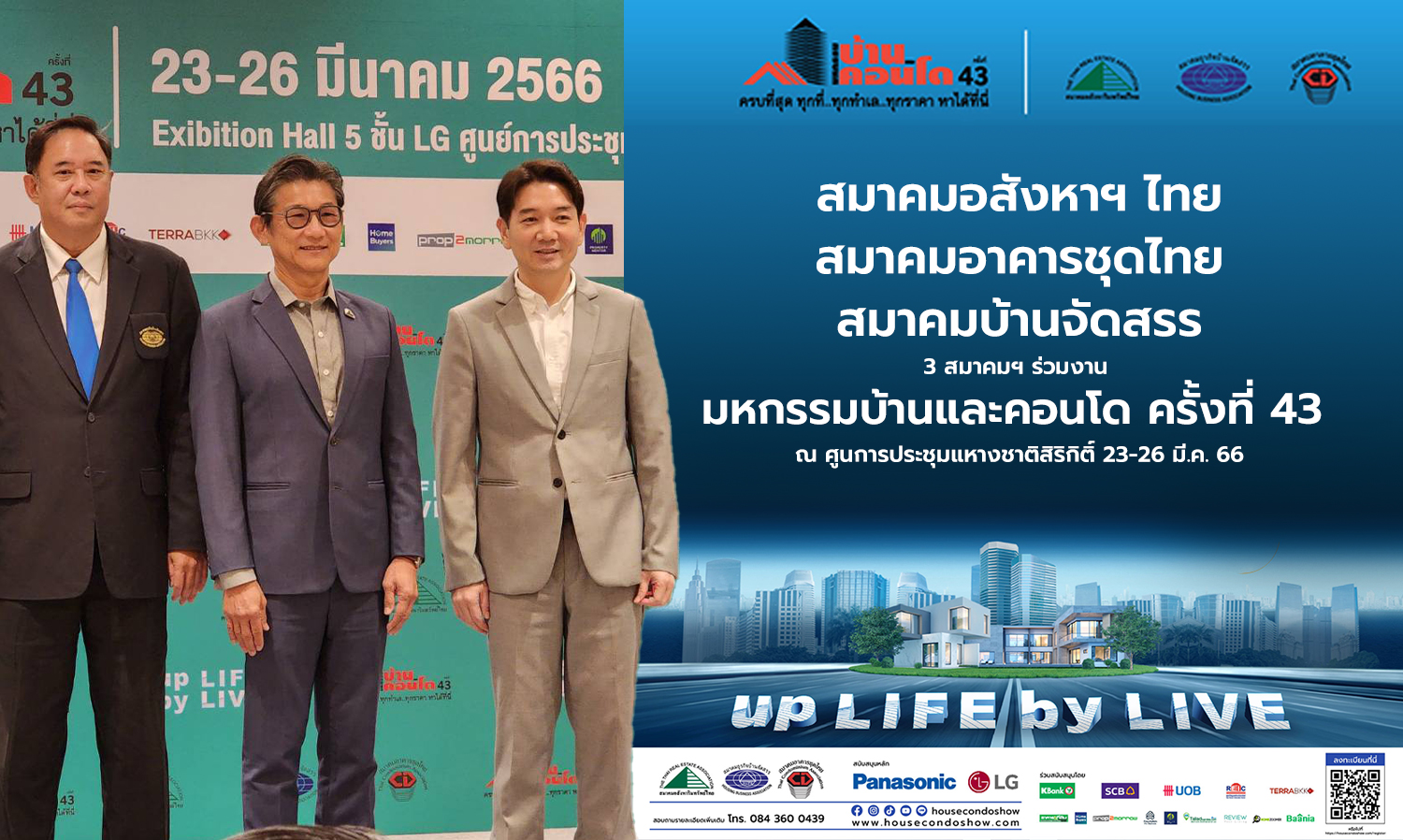
According to Mr. Kittipong Sumarnont, Chairman of the Seminar on "Business Strategies for the Condominium Sector in 2023" and Executive Committee Member of the Thai Condominium Association, the seminar will feature a special keynote address on "Thai Labor Related to the Condominium Business."

Mr. Surachai Chaitrakulthong, Assistant Minister of Labor
Additionally, the seminar will cover two hot topics for 2023:
Topic: Trends in the Condominium Market with Foreign Customers
- Mr. Suphin Mechuchip, CEO of Jones Lang LaSalle (Thailand) Ltd. provided insights that since the onset of COVID-19 in 2020, real estate developers have preferred to hold cash rather than inventory. New projects have begun flash sales in premium and luxury condominiums, leading to a significant reduction in available inventory in prime locations such as Thonglor, Sukhumvit, Ploenchit, Silom, and Sathorn, with only mass-market products remaining for sale.

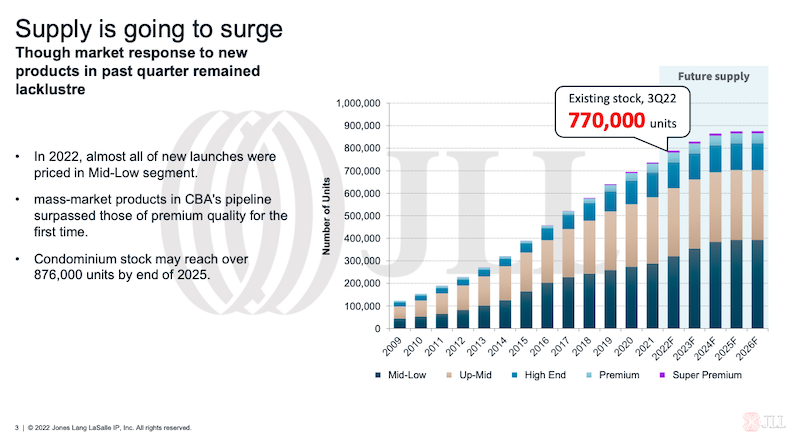

Looking at the sales rates of completed projects, the average sales rate from 2010 to Q3 2022 stands at 96.5%. It appears that the speculation market has not returned, as the presale market is slow, with high-end or premium products in prime locations being absorbed or sold directly to customers rather than speculative buyers. It is believed that speculative buyers have exited the market since before COVID-19.
Over the past three years, since the COVID-19 situation, projects that opened have seen low sales rates. The average sales rate for super premium products over the past three years since 2020 is 62%, with new project sales in Q3 2022 at 50%. Premium products are around 60%+, while high-end products are close to 60%. Up-mid products exceed 60%, and mid-low products have a higher average sales rate than the past three years.

In terms of condominium transfers to foreign customers, the number of units transferred has increased, with 58,000 units transferred in 2022, valued at 150 billion baht. Of these, foreign customers accounted for 10% of the 58,000 units, translating to 5,800 units, representing 20% of the total value, approximately 30 billion baht.
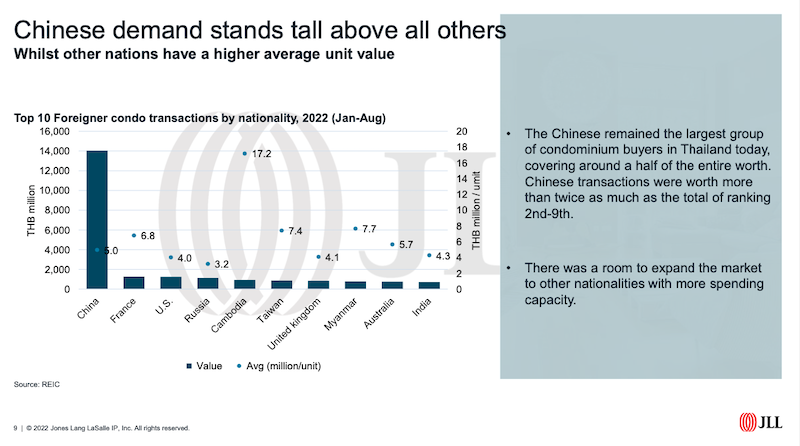
Foreign buyers remain the largest group, with an average product value of around 5 million baht per unit. However, buyers from other nationalities, including Americans, French, Russians, Cambodians, Taiwanese, British, Burmese, Australians, and Indians, tend to purchase at higher price points than Chinese buyers but in smaller quantities. Notably, in the first three quarters of 2022, Chinese buyers accounted for over 50% of the total value of the 30 billion baht.
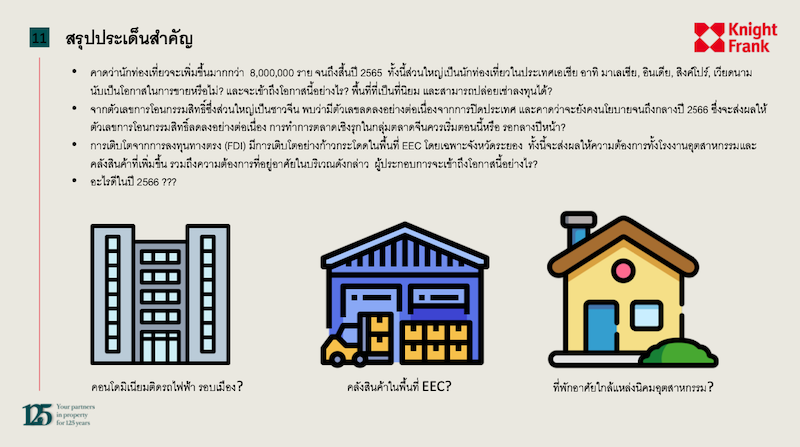
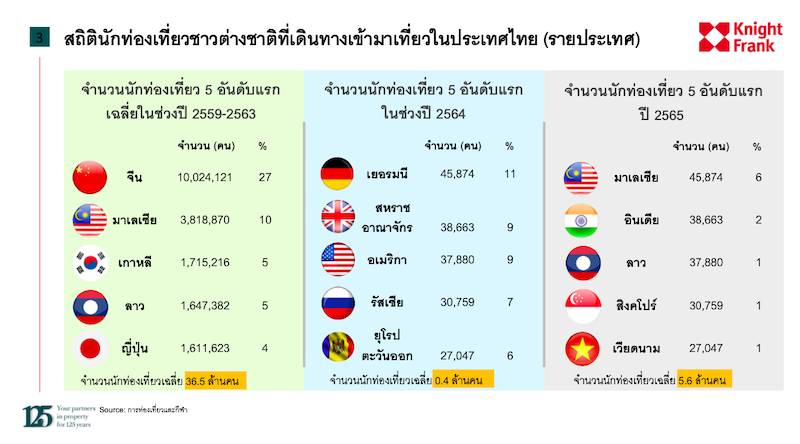
- Ms. Nattha Khaopana, Managing Director of Knight Frank Thailand Ltd. highlighted interesting indicators regarding the number of foreign tourists entering Thailand and FDI (Foreign Direct Investment). Before COVID-19, Thailand welcomed over 30 million tourists annually, with total spending reaching 1.8 trillion baht per year, averaging 49,000 baht per person. In contrast, during the COVID-19 period, the number of tourists dropped to only 6 million per year.
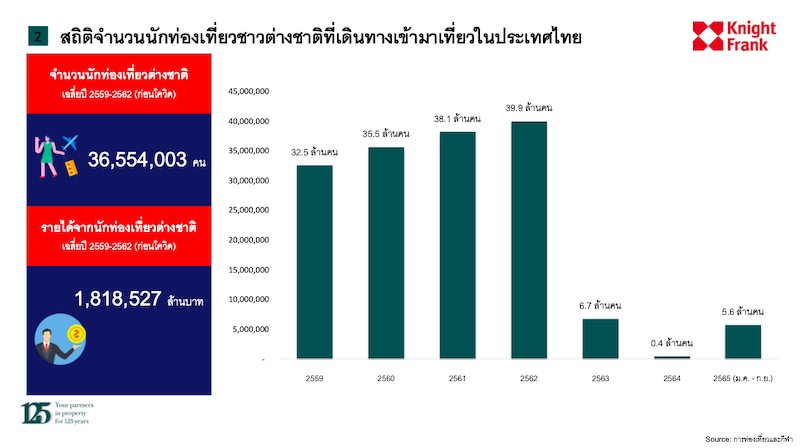
Before COVID-19, the largest group of tourists in Thailand was from China, totaling 10 million annually, followed by Malaysians, South Koreans, Laotians, and Japanese. However, during the COVID-19 period, European tourists began to enter Thailand due to the pandemic, alongside measures like the Phuket Sandbox. As COVID-19 subsided in 2022, the trend shifted back to Asian tourists.

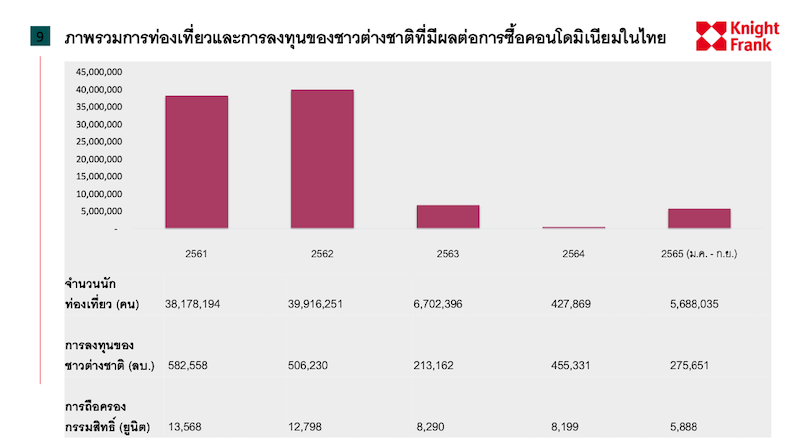
Regarding FDI, in 2016 it was approximately 500 billion baht, increasing to about 798 billion baht in 2017 and around 900 billion baht in 2018. This trend of increasing foreign direct investment continued, with figures dropping to approximately 500 billion baht in 2019, 213 billion baht in 2020, 455 billion baht in 2021, and around 275 billion baht in 2022. On average, foreign investment accounts for 30-40%. As foreign investment increases, so does the opportunity for condominium sales, with Taiwanese investors leading, followed by Japanese and Chinese investors, who come for both tourism and investment, followed by Australians and Singaporeans.

Key Takeaways
• It is expected that the number of tourists will exceed 8 million by the end of 2022, primarily from Asian countries such as Malaysia, India, Singapore, and Vietnam. Is this an opportunity for sales? How can we seize this opportunity in popular and investable areas?
• The transfer of ownership figures, primarily from Chinese buyers, has shown a continuous decline due to border closures, and this trend is expected to persist until mid-2023. Should proactive marketing in the Chinese market begin now or wait until mid-next year?
• Direct investment (FDI) has seen significant growth in the EEC area, particularly in Rayong province, leading to increased demand for industrial factories and warehouses, as well as residential needs in the area. How can operators tap into this opportunity?
• What is promising in 2023?


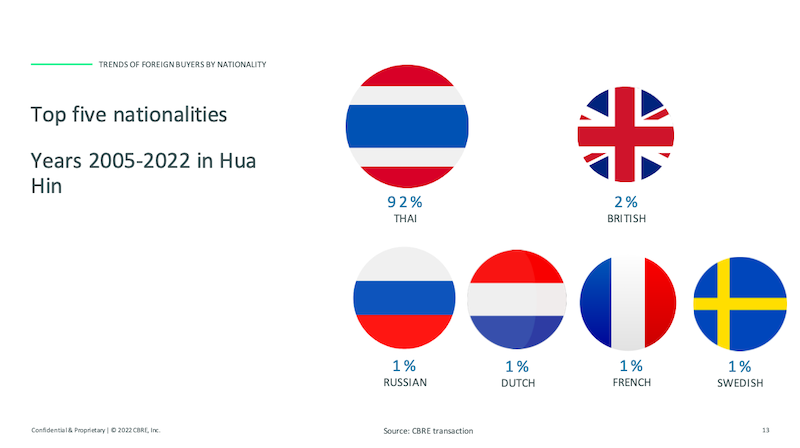
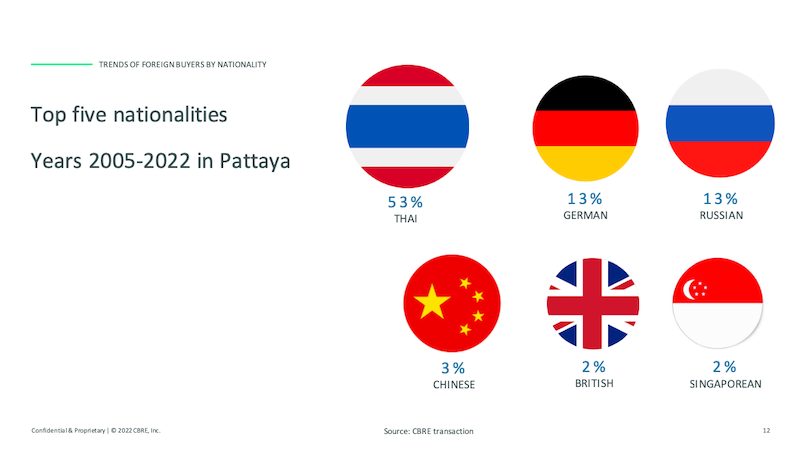
- Ms. Atthaya Kasemlawun, Head of Residential Project Sales at CBRE (Thailand) Ltd. pointed out that key factors influencing foreign buyers' decisions include:
Internal Factors:
- Cost of Living: Living in Thailand is relatively inexpensive. Retirees can stretch their savings longer here than in other countries, enjoying a better quality of life.
- Government Policy: Favorable policies, especially allowing foreigners to own up to 49% of condominiums as freehold, are attractive, unlike some countries that do not offer such rights.
- Service and Hospitality: Thailand is renowned for its service quality, making it a primary consideration for foreign buyers.
- Infrastructure and Facilities: Including international schools, convenient transportation, and well-connected airports, which enhance overall comfort and accessibility, making it easier to attract foreign customers.
- Food & Culture: Thailand's diverse and open culture attracts various nationalities, enhancing the appeal for foreign buyers. Tourism plays a significant role in fostering a connection to Thailand, leading to residential interest.
- Health & Wellness: Thailand boasts leading hospitals, making it a destination for health services, often at lower costs than in their home countries.
- Property Type: Thailand offers attractive property options.




- Mr. Keojia Tiao (Mike), Managing Director of Harvey Land Co., Ltd. mentioned that their project TC Green on Rama 9 primarily targets Chinese buyers, and the One9Five project on Rama 9 has also seen significant sales to Chinese customers. These two projects have largely avoided using agents, focusing on direct sales due to their Chinese background. They are also developing a smaller project in the Ratchada-Huai Khwang area.
Regarding the question of when Chinese buyers will return to purchase real estate in Thailand, this remains uncertain. It's not just a COVID-19 issue anymore; other factors, such as the Chinese government's policies, will influence this. If China opens up, buyers will likely flood out, creating nationwide challenges. Therefore, the government will likely open gradually, considering that China has been closed for 2-3 years. Observing the increase in flight availability, especially from cities like Hong Kong, which has already opened, is crucial. If Hong Kong opens, it won't be long before mainland China follows suit. It is anticipated that by mid-next year, Chinese buyers will gradually return, but the Chinese government will likely implement measures to control the pace of this reopening.
The question of why Chinese buyers prefer to purchase real estate in Thailand is complex. Chinese buyers have numerous options globally, including the U.S., Europe, Japan, Malaysia, and Singapore, which compete with Thailand. However, the good news is that Chinese searches for Thai real estate rank first, followed by Japan. In Japan, Chinese buyers can purchase homes, and the disciplined society appeals to certain Chinese demographics. Previously, Chinese buyers favored Malaysia due to policies that offered semi-citizenship for investments, making it easier to enter and exit. Singapore has also seen a significant influx of wealthy Chinese seeking citizenship through investment. Despite Thailand lacking such policies, it remains the top choice for Chinese seeking real estate due to the friendliness of Thai people and the welcoming attitude towards Chinese nationals. In contrast, some European countries may not be as welcoming to Asians. Additionally, cultural similarities, such as cuisine, make Thailand appealing. Chinese buyers typically purchase properties for vacation rather than as primary residences, similar to how Thais buy homes in Pattaya or Hua Hin. Thus, Chinese buyers in Thailand often acquire second or third homes, as they already own properties in China, except for those working in Thailand.
Regarding differences between Thai and Chinese condominiums, in China, units are sold without furnishings, requiring buyers to decorate themselves. In Thailand, the standard is to provide fully-furnished units, with some developers even including furniture, which is commendable. Furthermore, Thai laws regarding property management are clearer than in China, where parking spaces can be sold, despite legal prohibitions. In Thailand, this is not permitted.
To attract Chinese buyers, enhancing Thailand's image and addressing visa policies is essential. Currently, Thailand offers investment visas or Thailand Elite, but these are limited to specific groups. Most Chinese entering Thailand hold available visas, allowing them to stay for 30 days (previously 15 days). During COVID-19, this was extended for tourists, but they must leave after 30 days. It is suggested that condominium buyers be allowed to extend their visas for an additional 1-2 months or that banks be encouraged to offer loans to foreigners, even at 50% financing with higher interest rates (6-7%).
For Chinese buyers, larger units are preferred, as 21 square meters is considered too small. Common areas, such as swimming pools, are beneficial for sellers, as attractive amenities can influence purchasing decisions. Additionally, since Chinese cuisine can be aromatic, having a closed kitchen, similar to Thai kitchens, would be advantageous.
Topic: Business Strategies for the Condominium Sector in 2023
- Mr. Prateep Tangmatitham, Chairman of the Executive Board of Supalai Public Company Limited


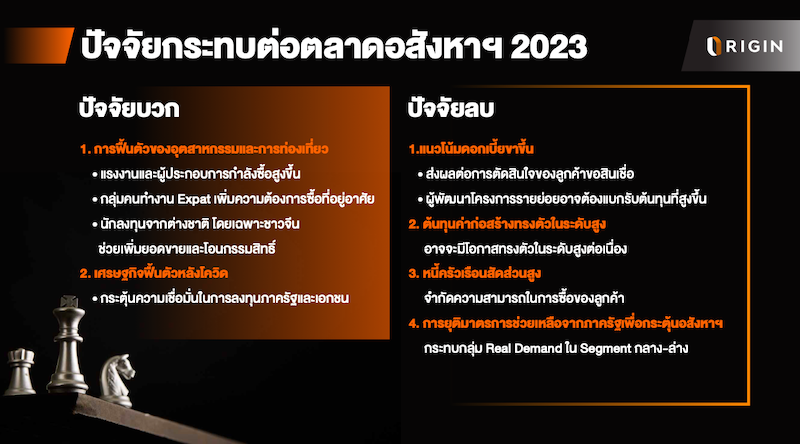
- Mr. Pirapong Jaroonaek, President of the Thai Condominium Association and CEO of Origin Property Public Company Limited


“We aim to present both government policies for the coming year and strategies to stimulate the market for both domestic and foreign customers, believing this will assist all operators. The association plans to continue organizing such events,” stated Mr. Kittipong.