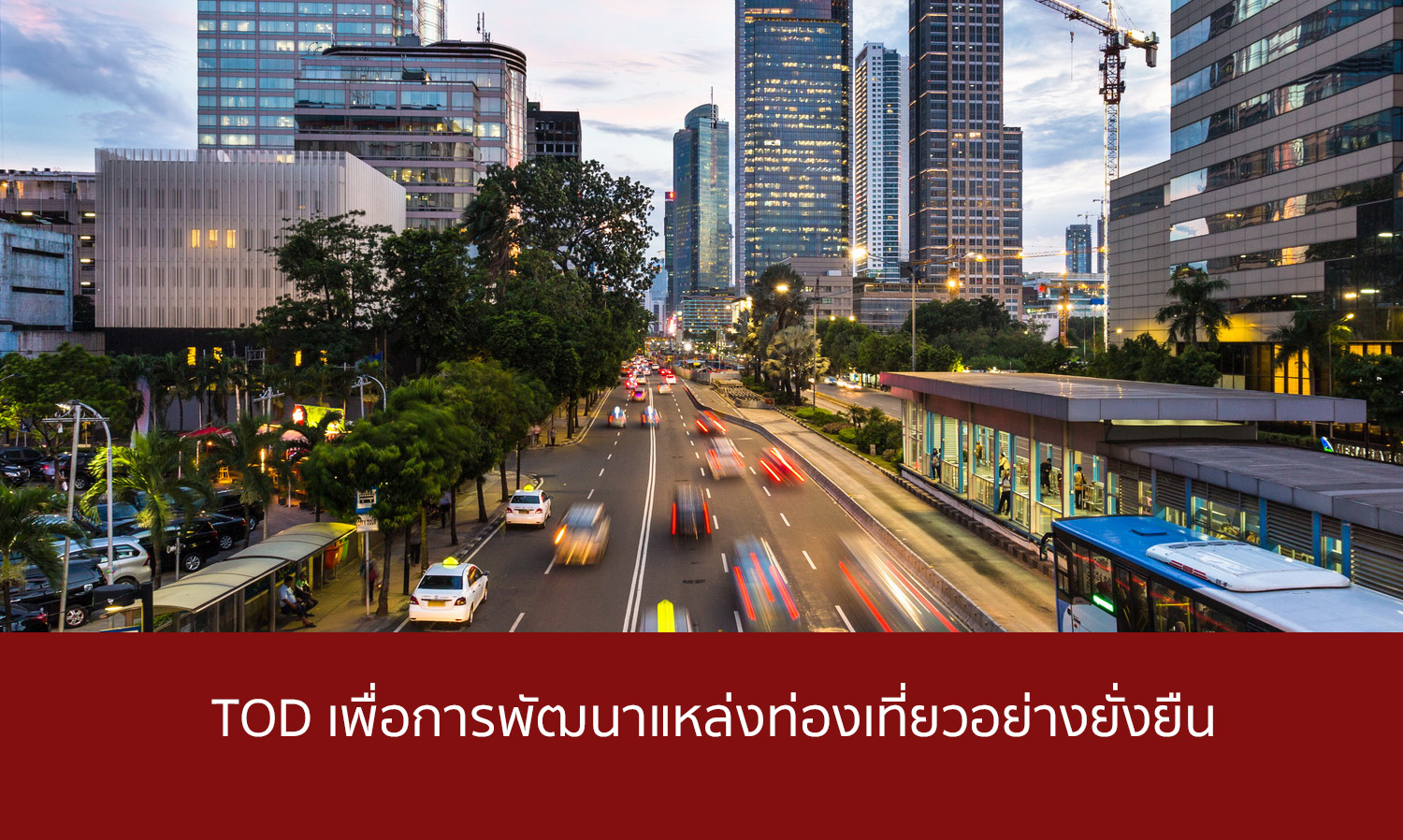
TOD for Sustainable Tourism Development
From the sea to the sky, from the mountains to the rivers, stretching out to ancient sites and communities with lifestyles and cultures passed down through generations. The natural beauty and diverse ways of life have become popular tourist destinations. However, most travel is done by private cars, leading to pollution and traffic congestion at various tourist spots. Additionally, rapid societal changes have unfortunately destroyed natural areas and traditional community lifestyles. But this is not the case for tourist destinations developed under the TOD (Transit-Oriented Development) approach, which contributes to the stability and sustainability of tourism.
A beautiful tourist city must consist of landscapes and the lifestyles of its people.
Why can tourist areas adopt the TOD approach for development? This is because TOD focuses on developing areas around public transport stations, which can take various forms and be adapted to the specific needs of each area. The key is to survey the needs of the community to understand the direction of development, especially in tourist areas that often face unplanned urban growth. Many tourist areas, whether urban or natural, are often bought up by investors to build hotels, changing their original identity and diminishing their charm.
1.jpg)
Meanwhile, local residents are forced to change their lifestyles and take up jobs unrelated to the traditional culture of the area, leaving only traces of civilization without the local way of life, which should coexist.
One of the most successful examples of TOD tourism development, which closely resembles tourist destinations in Thailand, is Kali Besar in Jakarta, Indonesia. This area is part of Kota Tua Jakarta, also known as Old Batavia, recognized as the trading center of the Dutch and a Dutch colonial city in the 17th century. This tourist area features urban planning and buildings designed in beautiful European architecture, with a rich historical narrative that attracts millions of tourists each year.
However, like other tourist areas worldwide, Old Batavia has been consumed by urban sprawl, leading to unplanned growth. Jakarta has had continuous urban development plans since 1980, collaborating with Japan to develop railway routes. By 2004, the Transjakarta bus rapid transit system was improved, marking the beginning of positive changes for the entire city, including Old Batavia, which benefited from the development of public transport stations, making access to the area much easier.
3.jpg)
After improving the public transport system, development following the TOD approach began in earnest. In 1999, Jakarta issued a local decree designating Old Batavia as a conservation area, allowing owners to renovate buildings without altering their external appearance. As a result, the buildings in Old Batavia have been preserved. However, we cannot force community members to remain in the same conditions while technology and global social changes influence everyone's lifestyle. Therefore, regulations allow for functional changes within these conserved buildings as needed; otherwise, it would indirectly force residents out due to the difficulty of living there. This has allowed Old Batavia to maintain its enchanting charm as a historic city to this day.
People can still live their traditional lifestyles or adapt their businesses to meet tourist demands, allowing locals to reside in the area and earn income from visiting tourists. This makes the city a tourist destination that offers not only beautiful buildings but also authentic interactions with local residents, rather than outside investors seeking profit from tourism.
2.jpg)
Improving Infrastructure to Enhance Accessibility
In 2018, significant infrastructure development and improvements were made in Old Batavia, including repairs and the development of pedestrian pathways, along with regulations to prevent street vendors from obstructing walkways, returning public space to citizens and tourists. Bus stops were also established at key locations such as museums, historic districts, and shopping areas, connecting to the nearest train stations and ports, with schedules aligned with tourist activities, allowing them to avoid expensive taxi fares and plan their visits independently.
As a result, tourist satisfaction surveys in 2018 showed a 98 percent satisfaction rate for the convenience of exploring attractions in Old Batavia, with 57 percent of tourists using public transport and 23 percent using private cars.
Additionally, in a survey assessing satisfaction and enjoyment of visiting Old Batavia, five aspects were highlighted, with the most selected being the beauty of the scenery, ease of travel, scent, sound, and touch. It was found that 37 percent of tourists appreciated the beauty of the attractions, while 36 percent valued the convenience of traveling to different sites. The remaining 27 percent appreciated the scents, sounds, and tactile experiences of the location, indicating that the convenience of travel is on par with the beauty of the attractions and has successfully encouraged tourists to use public transport.
If we consider the development approach of Old Batavia in Indonesia, we can see that the TOD development conditions of Old Batavia are similar to those of many old city areas in Thailand, such as the Hua Lamphong railway station, the old shophouses on Phra Athit Road in Bangkok, the old town area of Phuket, and other locations that can be developed into sustainable tourist attractions, generating income for local communities without destroying their lifestyles. This can be achieved by developing transportation routes and improving regulations to help conserve areas, creating pedestrian networks that connect all corners of the city, and designing public transport systems that make it easy for tourists to visit without significantly altering the existing environment, aside from restoring historical sites to maintain the unique character of those tourist attractions.
Thank you for the information from SRT Asset Co., Ltd., www.researchgate.net, www.transjakarta.co.id