CECI Accelerates the Construction Industry with Circular Economy and Low Carbon Concepts to Achieve 'Net Zero Carbon' Goals
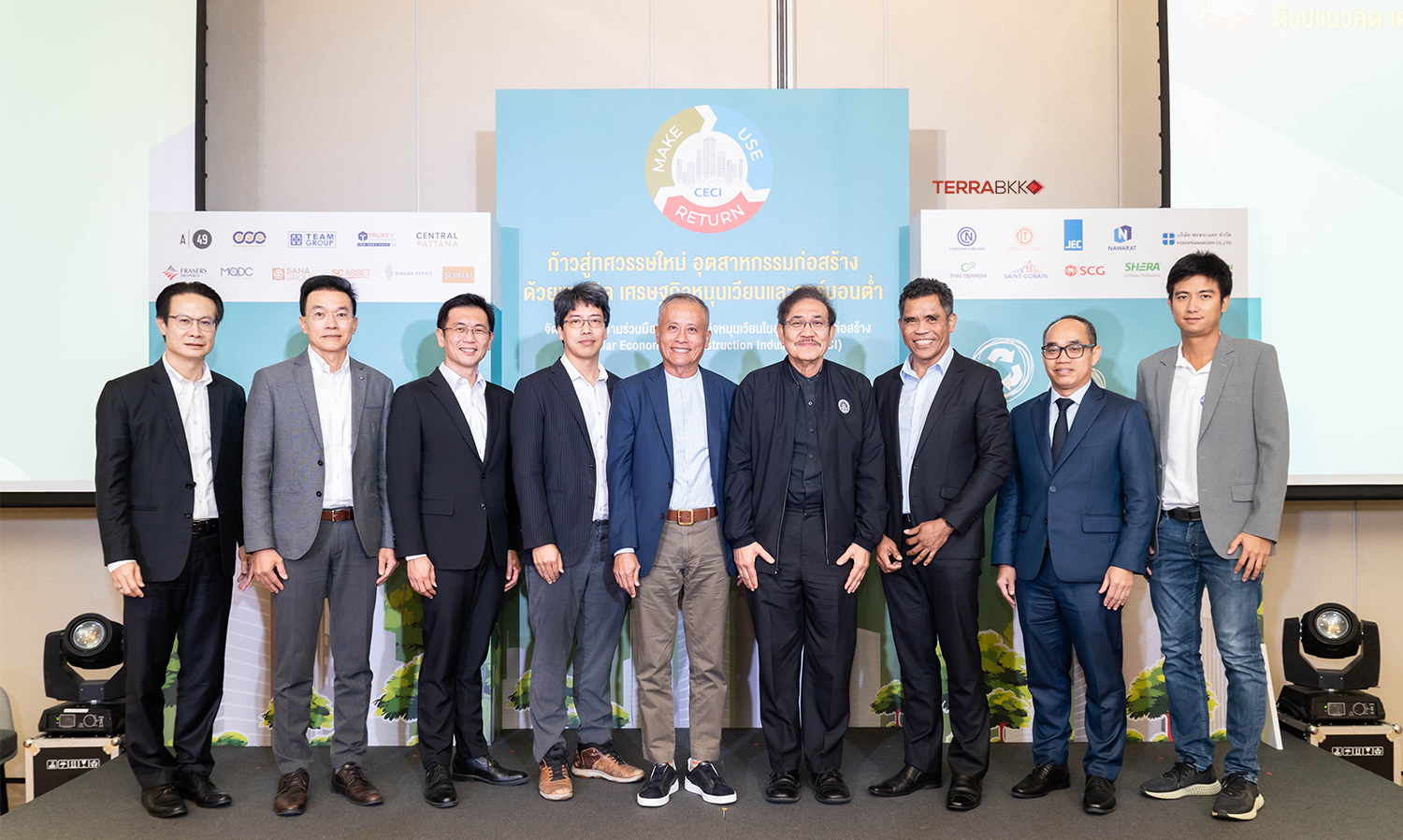
The Circular Economy in Construction Industry (CECI) group held a major seminar at the National Engineering Conference 2022, highlighting the application of circular economy and carbon reduction in the construction industry. The event aimed to exchange knowledge and broaden the concept as we step into a new decade for the construction industry, focusing on environmental sustainability and aligning with the Net Zero Carbon goals of many countries worldwide.
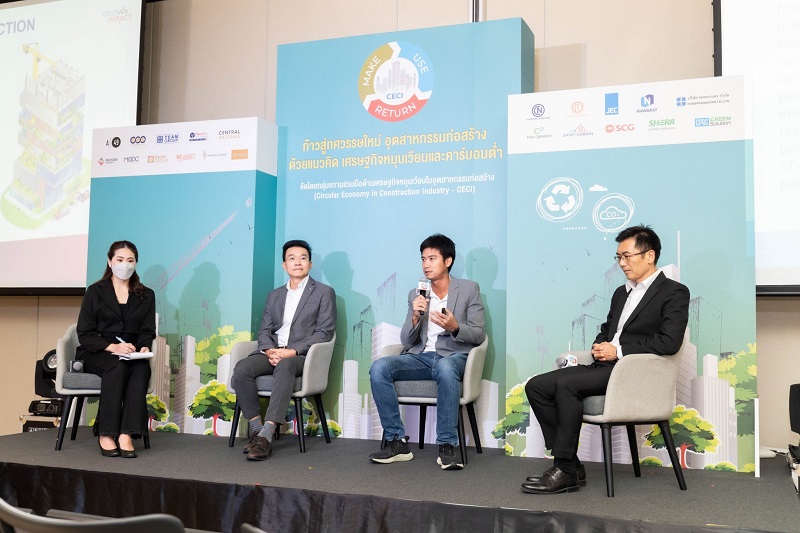
Prakakorn Watanyakul, Managing Director of Architect 49 Co., Ltd., representing the CECI group, stated that the construction industry is one of the most important and continuously growing sectors, known for its high resource consumption. It is estimated that if traditional construction methods continue, the industry may require three times the world's resources to meet construction demands. This leads to inefficient resource use and unnecessary construction, resulting in waste and debris accounting for about 30-40% of the construction industry's output. Therefore, to ensure the construction industry can continue to thrive, the CECI group is crucial in applying circular economy principles to address these issues by controlling construction processes and managing contracting from design to installation. By managing from the initial stages, we can optimize material usage and minimize waste, allowing leftover materials to be reused or recycled.
“Initially, our group started with just 8 organizations, but now we have nearly 30 private organizations involved. This seminar reflects CECI's commitment to disseminating the concepts of circular economy and low carbon practices in the construction industry. Moving forward, we aim to expand this knowledge to educational institutions to raise awareness about applying circular economy principles, enabling future professionals to continue these practices,” Prakakorn added.
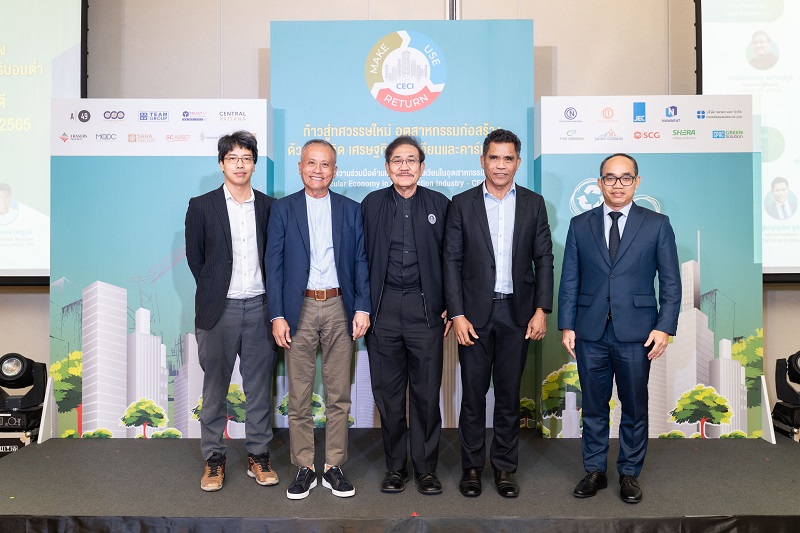
Assoc. Prof. Dr. Sing Intarachuto, Head of the Center for Creative Design for the Environment at Kasetsart University's Faculty of Architecture, and Head of the Research and Innovation for Sustainability Center (RISC), revealed that human activities and the industrial revolution are primary factors contributing to global warming, which significantly impacts natural phenomena and leads to climate change. Therefore, a crucial global goal, including for Thailand, is to reduce carbon emissions (Decarbonization) in the industrial sector to low or zero levels, aiming for Net Zero Carbon by 2050. This marks the beginning of a collective awareness in the construction industry towards becoming a low-carbon sector and mitigating climate change.
“There are two main approaches to reducing carbon in the industrial sector: transitioning to clean energy, which can achieve up to 55%, and the circular economy, which can address about 45%. The success of the circular economy relies heavily on extensive networks and collaborations. The construction industry, being resource-intensive and generating increasing waste each year, can benefit from applying circular economy principles to reduce carbon emissions and waste by repurposing materials for various projects. However, significant barriers to implementing circular economy practices today include a lack of understanding in sourcing and utilizing materials, high production costs, and the absence of standardized regulatory frameworks,” Assoc. Prof. Dr. Sing Intarachuto stated.
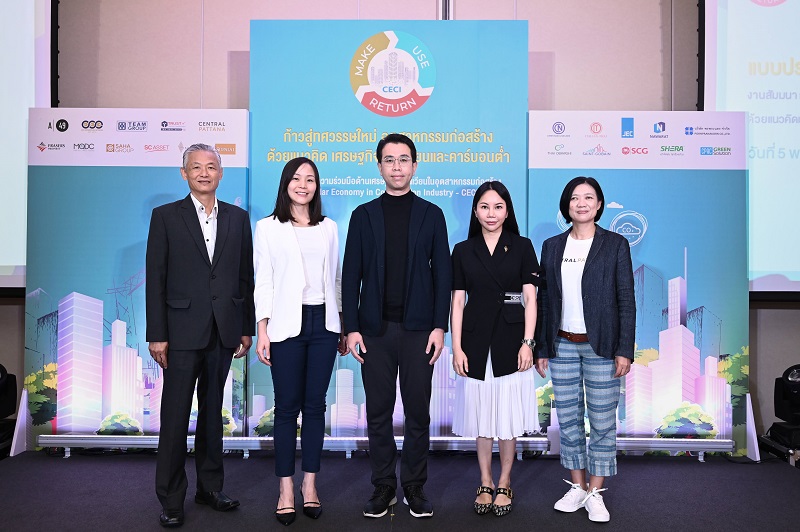
Additionally, during the seminar, executives presented creative design concepts for a livable world, such as integrating solar energy into the Green Energy Challenge, utilizing solar power for building cooling systems (Solar Cooling), creating green spaces or natural environments to lower temperatures (Eco Landscape), increasing the use of recycled materials in construction to meet customer demands and comply with environmental laws, and employing efficient design technologies like BIM to enhance management efficiency and reduce resource waste.
Regarding innovative construction with eco-friendly products, services, and solutions, suggestions were made for designing products that minimize future modifications, focusing on Off-Site work to reduce construction time, reusing leftover materials, and extending the lifespan of structures to minimize demolition waste. This represents a new approach to construction that reduces losses across multiple dimensions.
In terms of developing environmentally friendly housing and buildings, many real estate developers are increasingly adopting Green Design concepts and energy-saving innovations to ensure buildings or residences are energy-efficient and maintain lower internal temperatures. This promotes designs that enhance quality of life, emphasizes the use of environmentally friendly materials to reduce carbon emissions, and optimizes resource management within buildings and residences. The overall future of real estate development is expected to focus more on Green Sustainability to create environmental sustainability.
For effective waste management in sustainable construction, it may be necessary to address the root causes of excessive waste generation, such as design changes, cutting materials into small scraps, design errors, and lack of control and planning in material usage. By tackling these underlying issues, waste problems can be significantly reduced. Emphasis should be placed on reusing materials by lowering product value to extend the lifespan of items and prevent them from becoming waste (Downcycling) and processing waste to enhance value (Upcycling). For waste that must be disposed of, incineration should be prioritized to generate heat, electricity, and biogas for reuse in households and industries. Effective waste management requires systematic planning and execution, ultimately helping to reduce construction waste and transition to a low-carbon industry.
The CECI group hopes that the construction industry will become more aware of resource efficiency in the future, helping to reduce carbon emissions and expand the circular economy concept across industries, including education, to produce professionals who will be key drivers of this initiative as we move into a new decade for the construction industry.